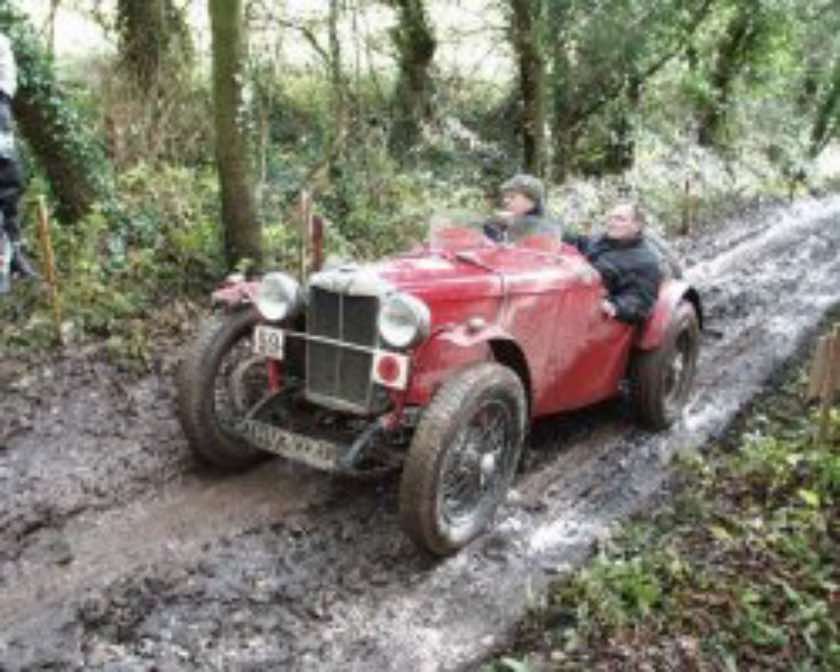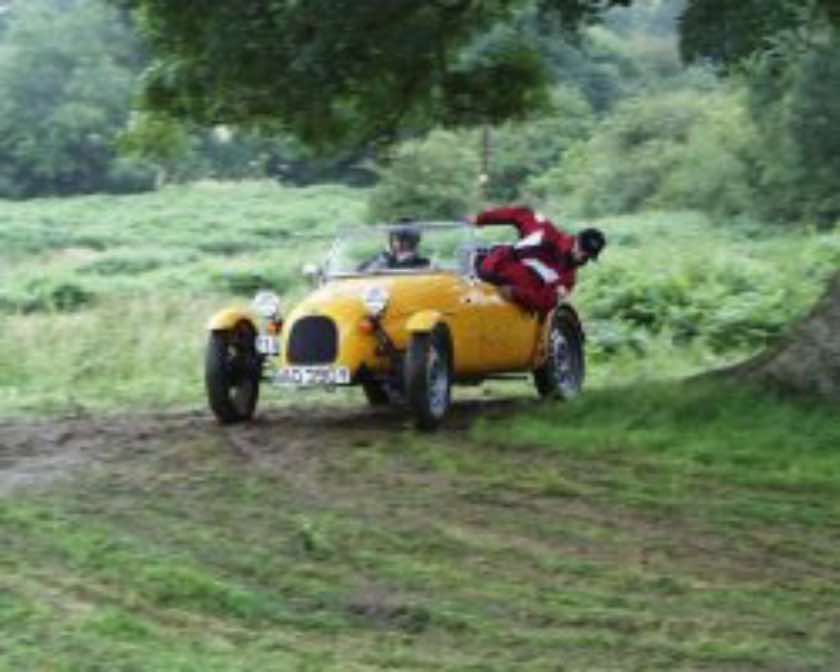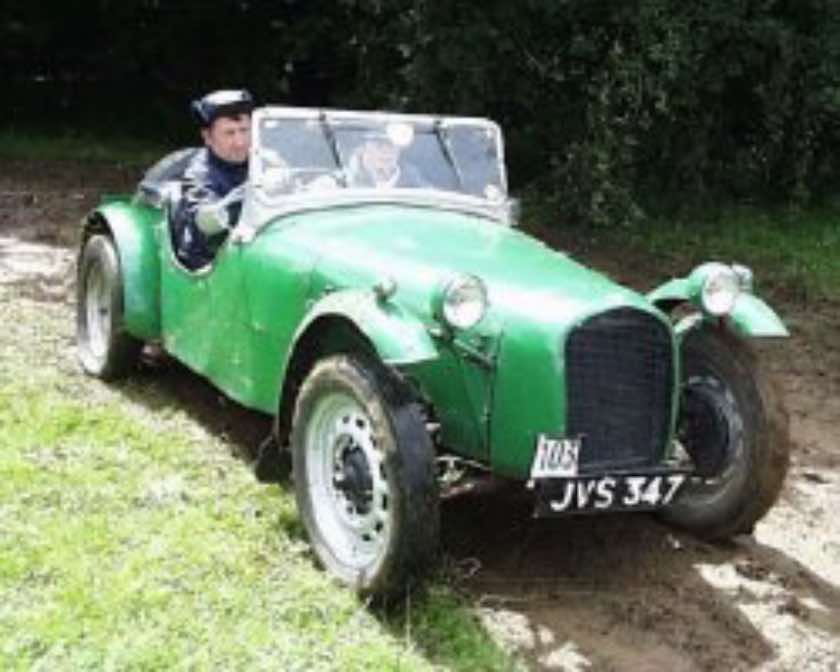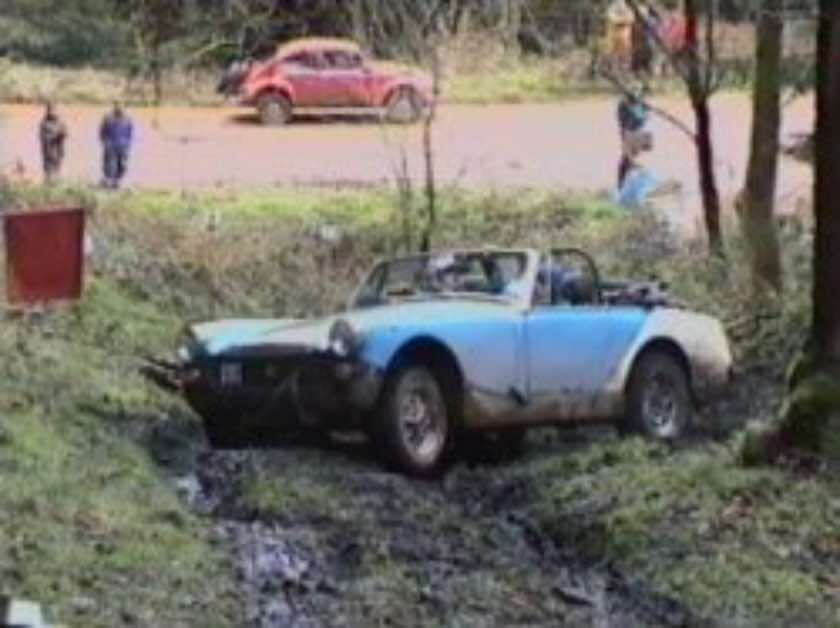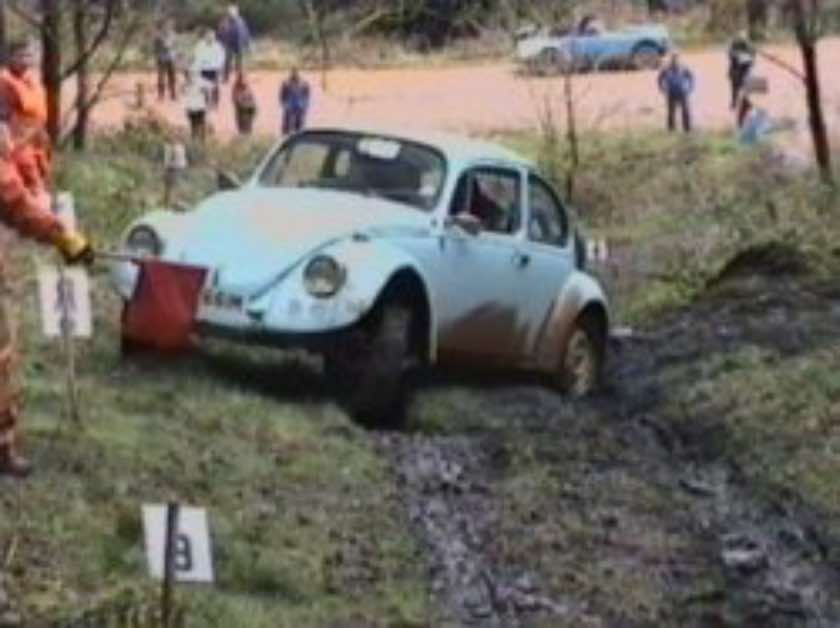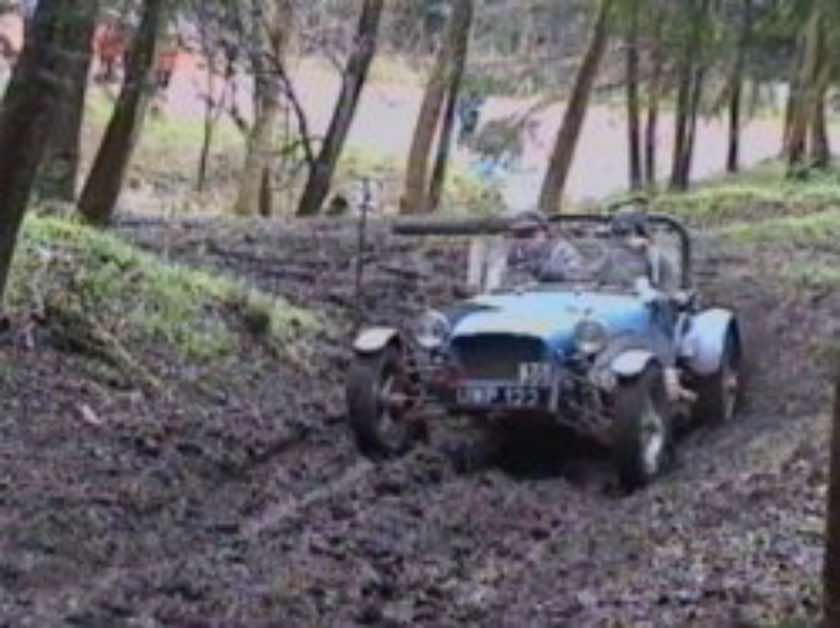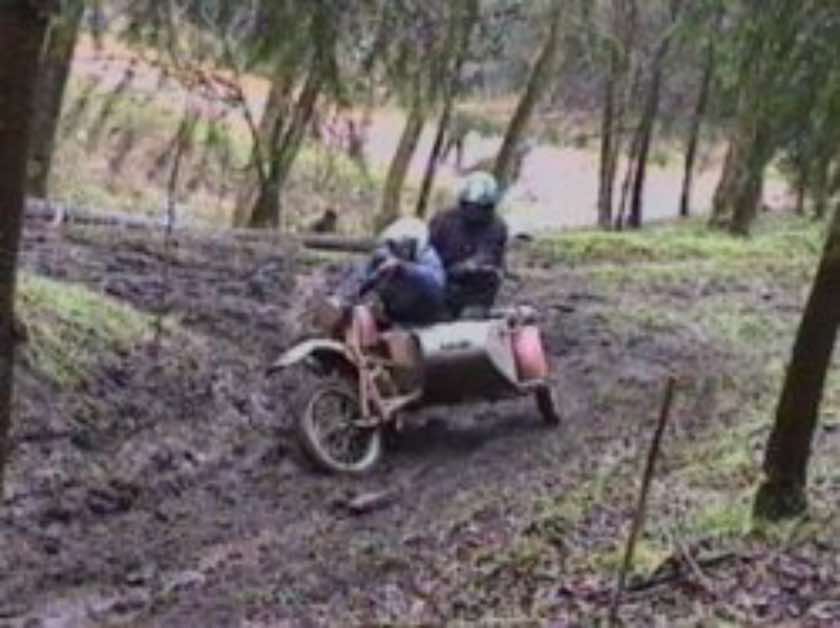
The Trials Career of Arthur Mallock

Even if Arthur’s name is not immediately familiar all Motor-Sport fans will know about the cars he and his family have created.. The modern Nissans and Vauxhall’s are well known to today’s younger generation. Those of us a little older fondly recall those front-engined U2 sports racers that even found their way into Formula Ford. But how many of you knew that Arthur Mallock had a profound influence on today’s trials cars.

The Mallock family have had a tremendous impact on UK Motorsport over the last fifty or so years. Ray Mallock’s RML company prepared the championship winning Nissans for the British Touring Car championship, were responsible for the development of the Astra Formula 2 rally kit car for Opel, and run the works Astra’s for Vauxhall in the British Rally Championship.

Earlier in the companies life it worked in a consultancy role for Aston Martin and took responsibility for the entire design, manufacture, and race management of another long-distance sports racing car, the Group C2 Ecurie Ecosse Ford. In 1985, this was placed second in the World Championship for Teams, and in 1986, with factory support from Austin Rover, RML won the World title. 

Next was an Aston Martin Cl design, with carbon-composite chassis and bodywork, but when the marque withdrew suddenly from racing on the brink of the 1990 season, RML was enrolled by Nissan to develop and run its R90C Le-Mans car. It was a potential race winning programme as the team battled with the front runners, including the eventual TWR/Jaguar victor, for over 16 hours, leading for 5 hours and setting a new lap record.

Before RML Ray and his brother, Richard worked with their father Arthur, designing and building the all-conquering clubmans formula Mallock U2 racing cars. From a personal point of view, this was my only point of contact with the Mallock family. Peter “Mad Dog” Smith and I looked at buying a U2 with a 1 litre A series engine in it and wrote to the Mallock’s asking for information. Arthur wrote back to say he couldn’t read my writing and that was that!

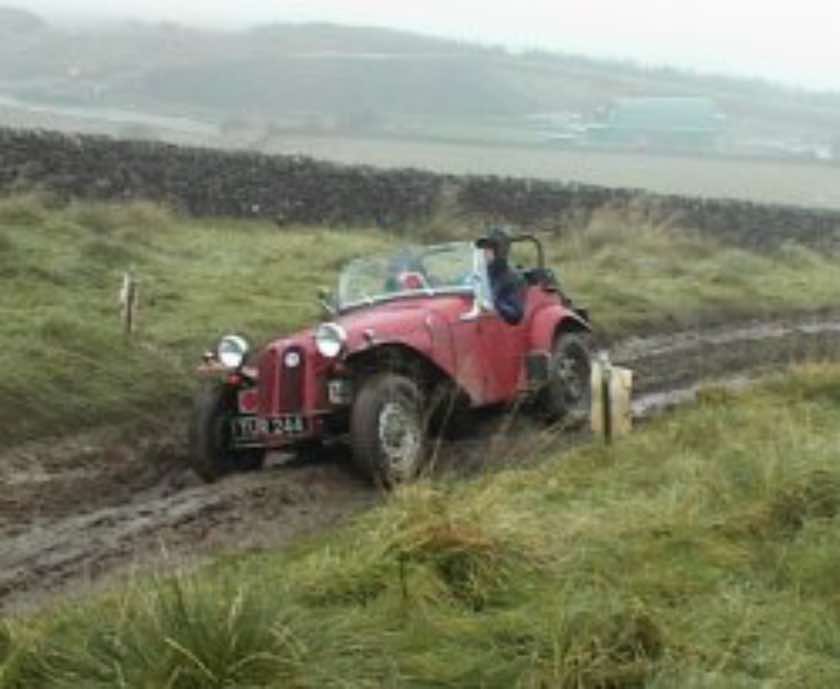
But its trials not racing cars that this piece is about, for Arthur Mallock was one of the men who laid the foundations for today’s successful lightweight, highly manoeuvrable, class eight machines. By the 1930’s, trials had very much taken the shape we know today, with the competitive part of the event being decided on non-stop observed sections. The early part of the decade was dominated by modified “off the shelf” sports cars. The MG, Singer and Austin marque’s were very much to the fore, with several works teams and a host of enthusiastic private owners. By 1936, the heavy brigade had arrived in the form of the original Allard special, which had been developed, from an ex-TT Ford.

The immediate post war years were dominated by the Ford V8 special’s, big robust machines fitted with the ubiquitous 30 hp 3.6 litre Ford V8, which provided plenty of power and torque in standard tune. These were generally installed in specially built chassis, with standard Ford axles and rudimentary bodywork. There were variations of this “big car” theme and some are still around today in the form of Roger Ugalde’s wonderful Allard and Mike Furse’s Mercury Special. The big V8’s started to sweep all before them, but they soon had challengers, for there were some who believed that a light, manoeuvrable car could beat brute power. There were several exponents of this theme. Cornishman Ashley Cleeve in his famous Morris special, Ken Wharton with his Ford 10 engine mounted in an Austin Seven chassis, a much imitated theme, and Arthur Mallock with his Austin Seven based specials.

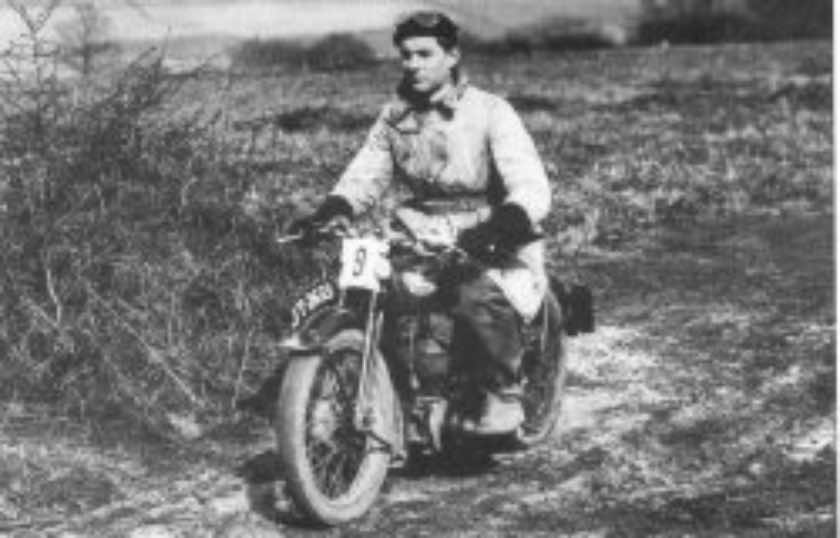
Arthur was born in 1918, just as the Great War finished. He purchased his first car, an Austin Seven, at the tender age of 17 and set off on a 200-mile journey to spectate at Fingle on the 1935 Exeter Trial. His trials debut was on two wheels, rather than four, riding a BSA in the 1936 Berkhamstead schoolboys trial. By 1939 Arthur was in the army and constructing his first “trials special” Arthur was always a chassis and in particular a suspension man. He eschewed the fashion for brute power, in the form of the dominant Ford V8’s. Independent front suspension, a lightweight body and chassis and manoeuvrability were his themes. He based his lightweight special on a 1932 Austin Seven van, which he got running just before the Second World War. Unfortunately, Arthur only managed a couple of speed events before the conflict bought motor sport to an end for many years.

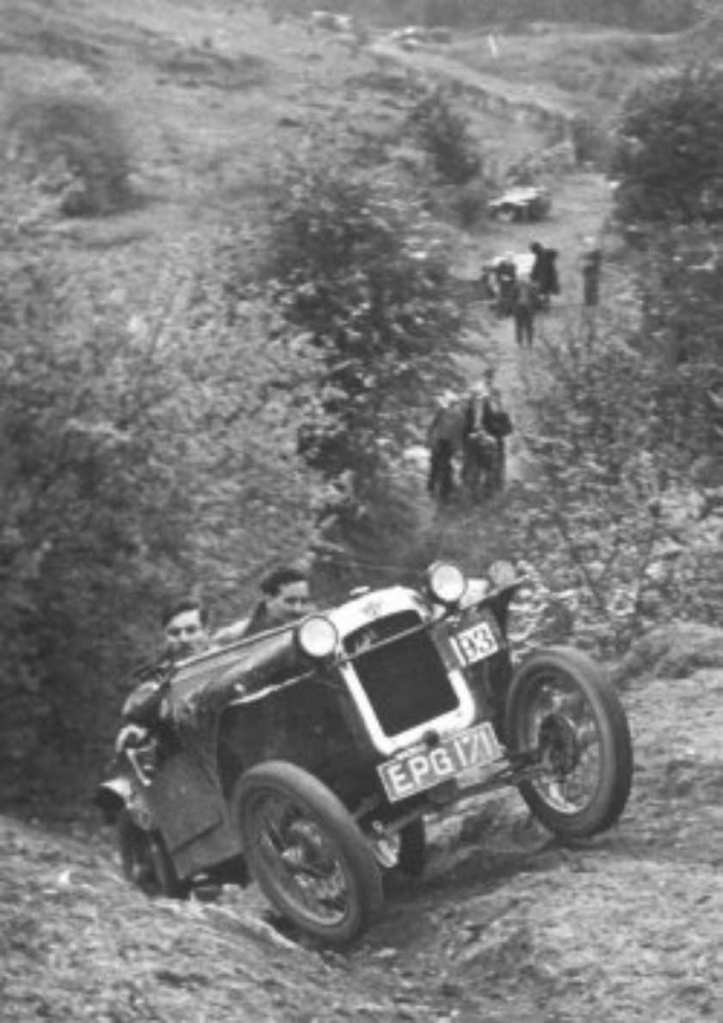
While serving in the forces, Arthur managed to find the time to develop his Austin Seven special into quite a respectable machine. EGP 171 was nicknamed “Bren”, after the gun. “Bren” had independent front suspension and skinny motorcycle tyres, designed to dig through the mud to the solid stuff in search of grip. Arthur’s theories were proved right on Burledge in the Bristol Clubs Full Moon Trial in January 1946. The hill is still used today on The Allen Trial and can be pretty tricky. The bottom part is in a tree lined gully with a reasonable solid base which is OK in the dry but can get pretty slimy when mud is washed down the hill in the rain. You go round a right hander, then it’s straight up a muddy rutted track.

It had been very, very cold for over a week, but the thaw set in just before the trial. Mud was washed down the hill and grip was very hard to find. Mallock’s little Austin, with it’s LMB Independent front suspension, locked diff and skinny motorcycle tyres, was one of only two cars to clean the hill. Arthur got a first class award on the event and would have won overall if the gear lever hadn’t broken! Further success followed during the season but Arthur was increasingly of the opinion he needed more power and less weight and decided to build a new car he could use for speed events as well as trials. 

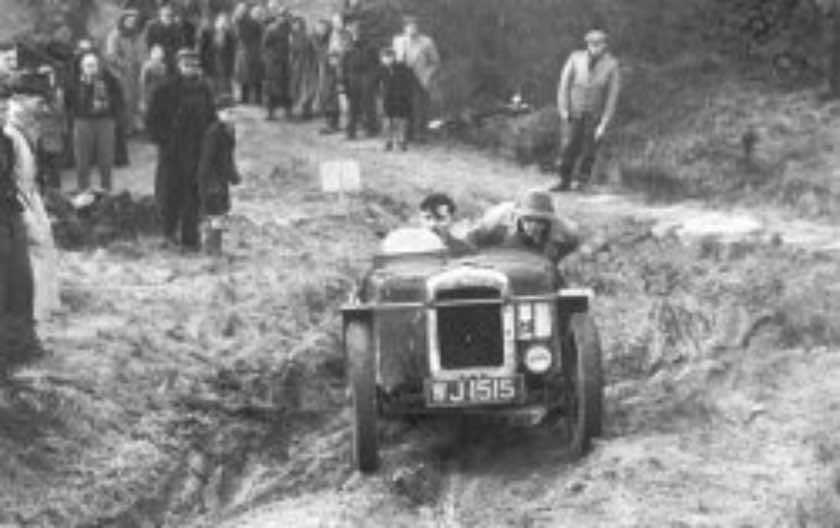
WJ 1515, sometimes known as “Bombsk” was also based on an Austin Seven chassis and the car included all the best ideas from “Bren” plus some new ones, including a blower for the 750cc motor, 19 inch wheels and a big weight reduction. The car took about a year to build, it would have taken longer but basic petrol rationing was about to be suspended, prompting a rash of events to compete in. Arthur’s new car was a runner by now and he took part in it with it straight away, before it even had a body. He caused a storm by driving it in chassis form, winning the” Northern Experts”

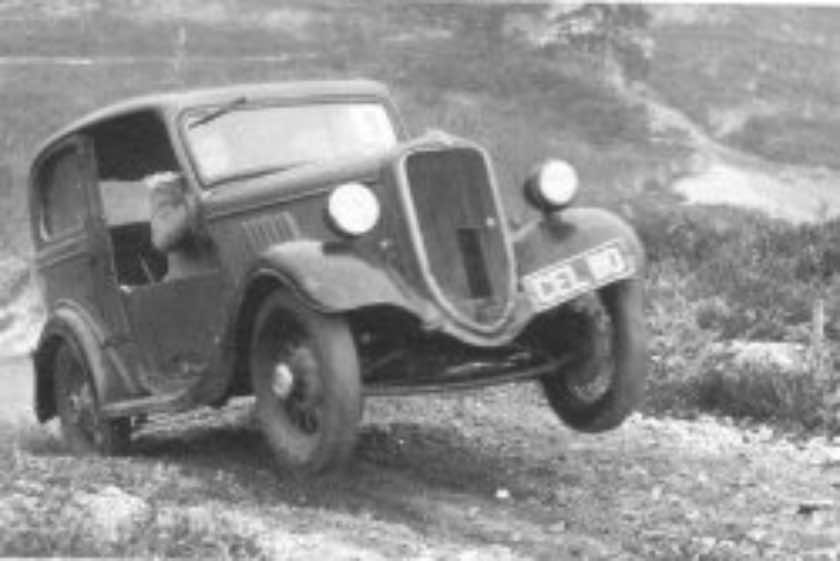
Arthur didn’t want to miss out on his Motorsport completely while building his new car. Bren had been sold so he competed in the Ford Eight family car. It was souped it up a bit for trials. The puny “eight” motor was thrown out and in went a “ten”. A couple of hundredweight of ballast was bolted across the back bumper to increase the grip and the doors to were removed to lighten the front. Eligibility was a problem even in those days!

Gradually Arthur competed in more and more speed events and fewer and fewer trials. By the time, the 50’s came along WJ 1515 was a dedicated racer, taking part in 1172 Formula races. Arthur developed and raced WJ 1515 for several more years until the winter of 1957, when he designed and built the U2 Mk 1 from scratch, cannibalising WJ 1515 for many parts in the process and the famous old car was no more.

Arthur and his family went on to design and build a whole series of Mallock U2 racing cars, Arthur remaining true to his creed by believing the secret was in the suspension. He did return to trials briefly in 1962/63, competing in the 750 MC’s championship in a newly constructed Austin Seven base special and finished runner-up. But apart from that he dedicated the rest of his life to his racing cars.

You can learn a lot more about Arthur Mallock in Paul Lawrence’s book “The Lone Furrow”, published by TFM, ISBN 0 9530052 0 8


We have been publishing stuff about Classic Trials on the Web since 1995 and always appreciate feedback. Comments, Corrections, Criticism & Concerns are all welcome. You can leave a comment to have your say here on this web site or our Social Media
A “Testing” Trial by Simon Robson

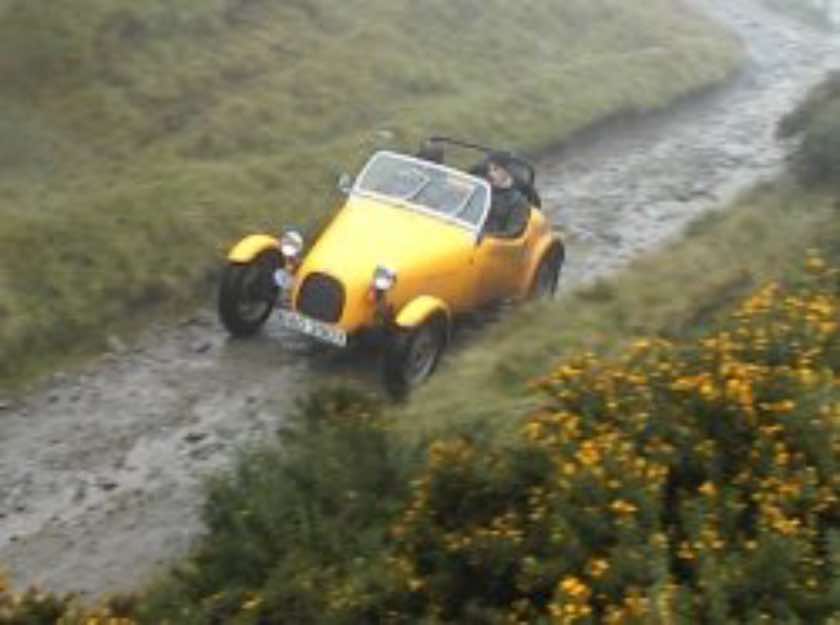
After our disappointing Lands End Matt and I were determined to début our new Liege on the MCC’s Testing Trial, even if it wasn’t quite finished. The mechanical stuff was sorted, but there was still some detail finishing to do and the hood wasn’t done yet, so the new car was still at the builders over in Evesham. We left Hitchin for Evesham in the Vauxhall on Saturday afternoon, complete with tent and sleeping bags. The plan was to pick up the Liege and drive down to camp at the venue. As well as the camping gear we had our cooking equipment and all the ingredients for breakfast.

We got to Evesham OK and transferred the gear to the Liege. Not an easy job as it’s a tiny bit smaller than the Vauxhall! We started off OK, but by the time we got to Cheltenham the engine temperature had started to rise. We stopped to find we had lost all the water because the temperature sender had popped out of it’s hole. It appears that when the car was put back together after painting the builder had shortened the hose extension where the sender fits, and the clamp wouldn’t hold it in properly any more.

We had stopped outside a house and a chap popped out to give us some water. We re-tightened the sender clamp, filled her up and crossed our fingers while we slowly warmed up the engine. It was to no avail, the sender popped out right before our eyes. Our rescuer kindly offered to drive us in his car to try to find a new hose, but we gave up after trying three or four filling stations because it was getting late and all the motor factors were now closed. The chap took us back to his house and we rummaged about in his shed and found a piece of half inch copper pipe with a valve on the end, left over from when he installed his washing machine. This did the trick and we drove off with a wave and a bit of pipe hanging from the top hose!

Like true MCC people we followed the Exeter route down to Warminster and stopped at a Little Chef for a bite to eat. It was raining pretty hard by now, they had rooms free at the adjoining Travel Lodge, so we stayed there rather than “enjoy” the camping experience.

We were up bright and early on the Sunday morning for the Testing Trial. It was the first time we had done the event and enjoyed the experience, despite the weather and problems with the fuel pump which kept packing up in the morning. This cost us a good time on the early rounds as we kept having to jump out and give it a clout. We managed to scrounge a new one from a Sprite driver during the break and thought our problems were solved. However, no sooner had we got going after lunch when the throttle cable pulled out. We soon fixed that and had a good last round but didn’t put up the sort of performance that would trouble the scorer.

With a long way to go we left the trial at 5.30, dropped the Liege off in Evesham and finally got back to Hitchin in the Vauxhall just before midnight. It was a good weekend and we found out a lot about our new car. Role on the Edinburgh.


We have been publishing stuff about Classic Trials on the Web since 1995 and always appreciate feedback. Comments, Corrections, Criticism & Concerns are all welcome. You can leave a comment to have your say here on this web site or our Social Media
Testing Trial 2000

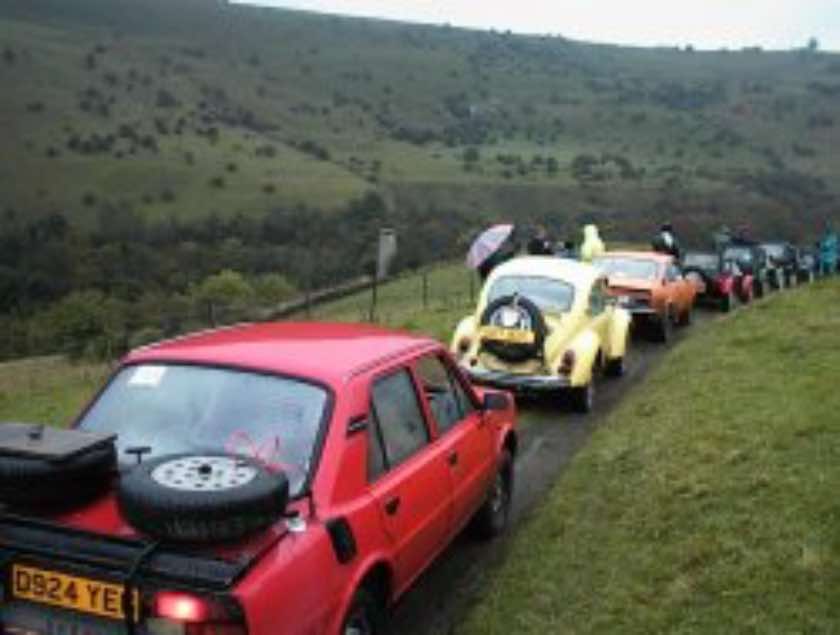
The sun didn’t shine kindly on the MCC’s summer jolly on 9th July. Never-less 70 odd boys and girls, of many ages, wound their way down their beloved A303 to Cucklington near Wincanton for their fun day. John Aley’s baby is a one-off, neither a trial nor an autotest, but a mixture of the two. Perhaps you could describe it as a series of short speed hill climbs on grass with a risk of not getting up the hill!

by Michael Leete with lots of help and pictures from John Salter, Chris Phillips and Stuart Cairney

The class structure is pretty simple. A is for Solo Bikes, B chairs and three wheelers, C closed cars and D open cars. The solo’s are by far the quickest at this game so the overall winner is awarded The John Aley trophy on an index system related to the class performances from the previous year.

Competitors did four rounds of nine or ten sections which were both timed and observed. They became greasier as the day went on and Clerk of the Course Dick Peachey had to simplify things during the day as the conditions deteriorated and in the end had to leave a couple of sections out entirely for the final round.

Geoff Hilton dominated the proceedings on his 1976 Yamaha XT500, setting fastest time of the day overall, fastest time on three of the four rounds and winning on index, so he was definitely the winner which ever way you look at things! Geoff was chased home by Trevor Hughes on a Honda L185S and Neil Browne on a 37 year old 650 Triumph twin, a varied selection of machinery!

Geoff Westcott and Robert Vivlan led the three wheeled contingent home on their Triumph chair. It was interesting to see that the chairs were faster than the three wheelers by a considerable order of magnitude.

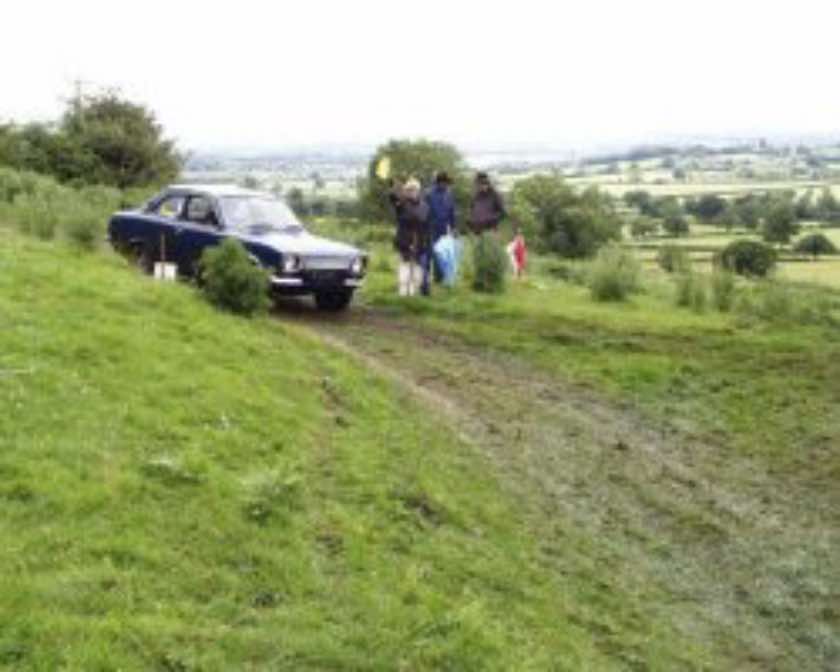
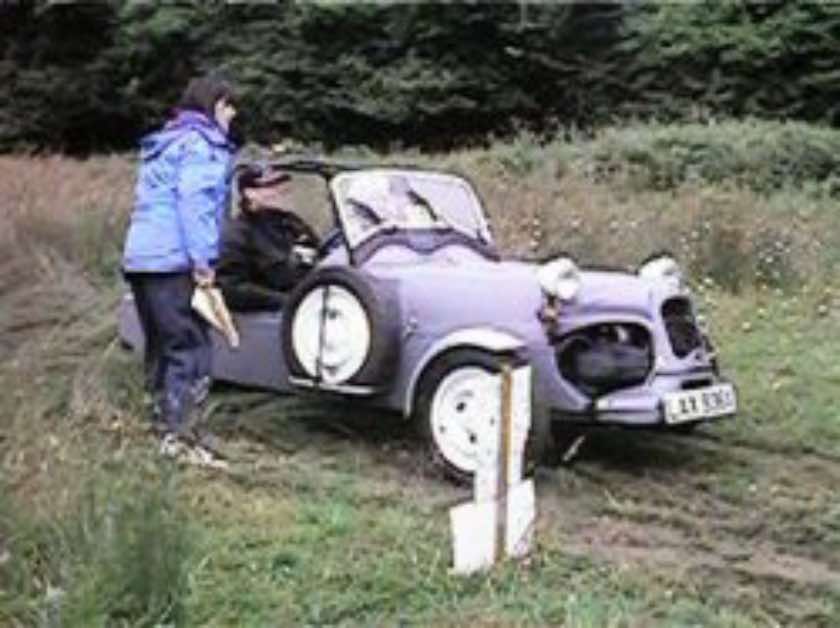
Clive Kalber was the fastest car by a country mile in his Mk1 Escort, resplendent in it’s new body shell. David Haizelden won the FWD in his Golf ahead of some interesting competition including a supercharged 2CV and Colin and Michael Weeks in their familiar PCT Mini.

John Ludford was fastest open car in his Marlin ahead of Tony Rothin in his Cannon which now sports an Alfa Romeo engine! It was great to see Rhona Boswell’s Buckler Mk 6 finish third in this class in the hands of it’s fettler Gary Booth.

Solo’s
Geoff HiltonYamaha XT500539.2Index andJohn Aley 
Challenge Trophy
Trevor HughesHonda XL 185S581.2First
Neil BrowneTriumph Metisse595.5Second
Dave MasonYamaha Serrow630.8Third
Chairs and Three Wheelers
Geoff Westcott/Robert VivlanTriumph TR7616.2First and Jack Pouncy
Trophy
John Grimshaw/George CookTriumph 635.5Second
Michael Crocker/Trvor GriffithsYamaha XS637.1Third
Closed Cars
Clive and Tommy KalberFord Escort Mk1638.9First
Martin and Tom JonesVW Variation Special798.7Second
Steve and Les AustinVW Baja821.6Third
David and Aaron HaizeldenVW Golf846.4FWD Trophy
Open Cars
John and Sue LudfordMarlin809.5First
Tony and Anne RothinCannon Alfa Romeo823.5Second
Gary Booth/TBABuckler Mk 6879.5Third
Steve and Joanne WhiteRiley 2/4 ST Tourer985.3Veteran’s award

We have been publishing stuff about Classic Trials on the Web since 1995 and always appreciate feedback. Comments, Corrections, Criticism & Concerns are all welcome. You can leave a comment to have your say here on this web site or our Social Media
Rhona’s Buckler

One of the really nice things about Classic Trial’s is the variety of machinery and crews taking part. Every event seems to bring out something or somebody new and the March Hare was no exception with Rhona Boswell making her début in the family Buckler Mk 6. The story of both car and driver are fascinating.

Rhona’s Buckler was re-built from a wreck by her husband Peter, who joined the MCC in 1992. Peter made a new body himself, using the nose cone from Stan Hibbert’s Mk 53. Peter used the car quite a lot on MCC events but Rhona never passengered him. Sadly Peter had a heart attack while he was at work a few years ago and died.

Rhona decided to keep the car and to keep it on the hills where it belonged. This was in the tradition of the cars history as it was used to hard work and had received a trophy for “most used car” at shows. It needed a lot of work but this wasn’t a problem as her daughters partners, Gary Booth and Steve Maskell are both pretty keen and it was Gary who drove the Mk 6 on the 1999 March Hare. This year Rhona decided to drive herself and enjoyed herself, despite a bit of clutch trouble. Lets hope she repeats the experience.

Some other Bucklers

There are quite a few Bucklers in the MCC. Mike Furse has one (or is it more?) and so does Exeter organiser Ken Green who owns a Mk 5 and also runs the Buckler register. You may have seen this car on this years Clee when it was driven by Dave Lucas.

Stan Hibberd is another enthusiast. Stan bough his car back in the early 60’s, used it mainly for autocross and has owned it ever since. He used to race it back then and it made it’s re-acquaintance with a race-track when Stan drove it in a most spirited fashion in a lunchtime demonstration at last years MCC Silverstone bike meeting. Not bad for a guy who had recently recovered from a heart operation!

Bucklers

The Buckler was one of the first commercially available “specials” or “kit cars”. Derek Buckler started by making a car for himself in his well-equipped engineering shop back in 1947. DDP 201 had a tubular construction, space frame chassis and a Ford 10 engine.

Derek used his car with some success in club motorsport of the day and decided to go into production with the design. He had referred to his own car as the “Buckler Colonial”, but he started production with the Buckler Mk V! Derek’s expertise was in building the frame or chassis. Constructed from 40 ton/sq. in tensile CDS alloy steel tube these frames weighed in at 60 to 75 lbs., depending on the model, and being extremely rigid did not require the panelling to help stiffen up the chassis. In consequence, most Bucklers are very light, some weighing little over nine hundredweight. Derek’s idea was to sell the Mk 5 as a general-purpose two seater competition car, that you could use for anything, from 1172 formula racing to trials.

The first production Mk 5 was ERD 96, purchased for speed events by Mike Parrott. Mike bought from Buckler without the body, which was made from aluminium by the man next door! Derek generally sold his cars without a body, thus avoiding paying the 30% purchase tax of the day. The guy next door built bodies for a lot of the cars but owners were free to go where they wished which is why many Bucklers look so different.

Derek went on to build about 500 Bucklers in his Reading factory before ill health forced him to sell-up in 1962. The new owners only built a couple more cars before they closed the business. The number of cars that still survive are testimony to the strength and success of the original design. The great variety of specifications is due to the sheer number of options that were available, most of which were produced in-house. I.F.S conversions, special springs and wheels, alternative diff and box ratio’s and many stages of engine tuning were just for starters. Clearly an enthusiasts dream.


We have been publishing stuff about Classic Trials on the Web since 1995 and always appreciate feedback. Comments, Corrections, Criticism & Concerns are all welcome. You can leave a comment to have your say here on this web site or our Social Media
Lands End Trial

Rain, sun, hail, the 79th Lands End Trial had it all. It was a cracking event, with just the right balance to give the experienced boys a bit of a challenge, but still left the beginners the chance to climb a few hills.

Gordano Services Bristol had the honour of seeing the first competitors away, and by far the majority wanted to start from here. Nobody really wants to arrive at Penzance nine o’clock Saturday night! As usual, there were dramas at the start, or before it in Alan Bellamy’s case. First, the oil pressure light stubbornly refused to go out on his Brasilia’s re-vamped dry sumped motor. Then the engine started to cut out with a re-occurrence of last years fuel supply problems and Alan decided to give the event a miss. He still came along to the Bristol start though, to wish his buddies well.

Fellow Falcon Verdun Webley got to the start but the B series motor in his Marlin wasn’t running properly and Neil Bray dived under the bonnet for the first of many carburettor adjustments. While all this was going on a breathless, Simon Robson arrived, but in his familiar Skoda rather than the Leige he was entered in. Simon had made a super-human effort to get the lightweight class 8 machine finished and through the SVA bureaucracy. He thought everything was ready on the afternoon of the start, but a quick run up the road revealed the back axle was up-the-shoot, so it was back to the Skoda.

Verdun wasn’t the only one with a sick Marlin. Pete and Carlie Hart’s clutch was all spongy and getting worse. Fortunately help was at hand and with John Salter’s help they managed to get it sorted out before the off.

The early runners managed to get to the holding control at Haynes Motor Museum in the dry, but later numbers weren’t so lucky and the heavens opened, so they were grateful that they weren’t locked out this time! Sugg Lane provided the usual warm up and a bit of a delay when Verdun’s Marlin refused to start at the head of the queue. There was plenty of grip here, the rain washing away any mud that was around. Remember last year when a new age traveller commune flanked the exit road? Not this time, as the farmer had constructed massive earth banks to flank the track, so there was no possibility to pull off the road!

Felon’s Oak was the only other section before a very soggy break at Minehead Rugby club, which had about an inch of water on the floor and seems to get seedier every year. The descent down the rough track just before Minehead caused problems for Derek Reynolds and Fred Mills, when the radiator on their venerable Volvo parted company with the engine, but the resourceful crew fixed things with a wire coat hanger. At Minehead competitors learned, that Stoney Street was cancelled. There had been an accident when the chief official and his wife drove their 4×4 off the track and over the steep drop to the left while setting up the section and had to be taken to hospital with some nasty injuries.

The route diverted by the foot of the section and through the winding lanes that by-pass Porlock where car competitors saw David Northover’s abandoned Yamaha leaning forlornly against a tree. John Lee’s was another biker to retire here when water got into his magneto, so it’s no triple for John this year.

Soon it was Beggars. A bit easy in recent years but not this time. Later numbers were warned by all the broken machinery, either being repaired or awaiting recovery. Some reckoned that the best part of a dozen car competitors broke their diffs or transmissions. Alan Selwood was one of the first, his standard Ford diff broke on his Escort and he set to in the forecourt of the garage at the foot of the hill to change it for one of the two spares he was carrying. Mike Hayward, who was just crawling off the re-start when his diff let go with a resounding, crack soon joined him. Neil Bray had stopped too high in the box, and failed, so he was able to tow the stricken class 7 Escort to the garage forecourt and help fit the spare Mike was carrying. Neil Plumridge, had also broken his Ford diff and soon joined them, but there was no changing it by the roadside as it was installed in the transaxle of an Imp! Likewise, it was a recovery job for Philip Mitchell who had felt the rear of his Skoda locking on corners ever since Felons Oak and the diff finally cried enough on Beggars. This is not Phillip’s lucky hill as he was excluded here last year for doing his tyres in the wrong place. At least he didn’t get caught this time, despite John West “lurking in the bushes” as one rather un-kind web community member put it!

The Beggars re-start area was certainly taking its toll. It seemed a lot rougher than recent years, all rough solid rock rather than the usual loose stuff. It certainly caught out David Alderson, running in convoy with Lee Dove, and Troll creator Peter James. The rain was coming down pretty steadily and the team were all pretty wet and cold. Lee and Peter jumped out, let their tyres down and stormed up. David stayed put behind the wheel, suffering a bit from cramp, caused by hours imprisoned in the tiny cockpit. He stormed off the line OK, stopped in the re-start box and there he stayed, the tyres finding no grip at all at 18psi. Verdun Webley lost revs on his Marlin and failed, but the Web Community Marlins of Pete Hart and Mal Allen made storming climbs, as did John Salter in his Vincent. Tony Branson wasn’t so lucky in his A series Marlin which didn’t have the horses to burn it’s way of the re-start line. Nick Wollett was giving his Dellow it’s MCC debut and failed when the clutch went on strike. He summoned the RAC to recover him, but they actually got the car going, and Nick was able to carry on for a finish.

The sun came out on the long 50-mile road run to Sutcombe. Dudley Sterry for one was glad of that, as he had been having problems during the night with his dynamo not charging below 3000 rpm. Dudley was a bit peeved, as he had only just fitted a new one. Dudley wasn’t the only one getting a bit fed up with Joe Lucas as Stuart Harrold’s brand new starter motor had gone on the blink. Stuart and Chris Phillips were relying on push starts and running only eight cars from the back were praying there would be always someone there to give them a shove.

Sutcombe was it’s usual picturesque self and was another hill with one of the fashionable “safety stop” lines at the summit. Poor Mike Hayward didn’t see it and carried on, to get a right rollicking from the chief official. Brian Osbourne broke the prop shaft on his venerable MGB at Darracott, causing a delay whilst it was recovered from the lower reaches of the hill.

Cutliffe Lane was next on the agenda. This is one of the Lands End’s tougher hills, a combination of gradient, roughness and mud conspiring to bring competitors to a halt. The rain had washed much of the mud away but this is a tough hill and there were a lot of failures, especially amongst the later numbers and Neil Bray was very disappointed to fail, especially when he found that Simon Robson had got his Skoda to the summit. Inertia was the order of the day in order to get over the rough bits half way up, the type of hill that made John Salter glad he had fitted a Fack diff in his Vincent! RAC PCT champion Barrie Parker was spectating here to see David Haizeldens impressive clean in his Golf.

Most competitors enjoyed the special test at Bude and put their trotter down to provide a show for the spectators. It was a good job you couldn’t get a “fail” as there were quite a few distinguished wrong courses, including John Salter, Allen organiser Pete Hart and Tony Branson who was also suffering from tight steering as the column bolt was catching something. Derek Reynolds had a good run in his Volvo, but at the expense of the transmission and they had no reverse gear for the remainder of the trial. They retired later with a smell of burning rubber from the their Variomatic transmission.

Crackington came and went without any drama. It was pretty tame as there was little or no doctoring, so it was a bit of a non-event, apart from it’s usual quota of punctures. If Crackington is getting easier, Treworld is getting harder. It doesn’t look any different, but it’s one of those sections that is all about the re-start and I guess that as the years go by the holes get imperceptibly deeper!

There was a hard to find diff test at the cattle market stop before the long run down the A30 to Hoskin, buried deep in the Cardinham Woods. This was the hill that sorted the men from the boys. David Thompson was clean up to now in his VW Buggy and didn’t loose his clean sheet here. Passenger Mike Pearson reported David just “let out the clutch and drove away from the re-start” and spectators said it was a similar storey when Dudley Sterry came along.

The whites and blues didn’t have to re-start but it was still a tough hill for them. Neil Bray couldn’t get his Skoda to the summit but Simon Robson proved it could be done and was still clean in yet another final outing for his Czech wonder machine! Simon and Matt were still running with Gari Jones but they had lost Peter Davis. The hastily prepared Leige had a series of problems and Peter finally gave up when the diffs lifeblood started bleeding all over the A30 and couldn’t be repaired.

Hoskin was John Salter’s Waterloo when he couldn’t re-start his Vincent but the spectators reckoned he gave up too soon. Mal Allen was successful in his Marlin. Mal and Donny were still clean and were to go on to get gold. Pete Hart saw Mal’s climb and reckoned he got it just right, trickling off the re-start without any wheel-spin and slowly increasing the revs as they built their speed. Pete broke traction and stalled when he backed-off. Tony Branson managed to creep off the line but used too much throttle to soon, lost adhesion and that was that. Stuart Harrold and Chris Phillips had to work hard in their Troll but made it OK to remain clean, but some of the other Troll’s weren’t so successful. Lee Dove trickled up but David Alderson blasted it and despite an incredible effort from Emma, and around four gear changes from David, he only managed to move a couple of car lengths.

Back on the A30 competitors were starting to get heavy eyed as they headed south-west into the sun on their way to Bluehills, where the MCC road gang had been hard at work since last year. It was difficult to see what they had done to Bluehills 1, perhaps nothing at all, but with tired eyes and a numb brain, after having been on the go for so long, it claimed a fair crop of failures. Tony Branson saw Jonathan Toulmin having a lot of trouble on the cobbles and went hell for leather around the hairpin. He crested the hump back onto the road in fine style before under-steering straight into the bank, bending the front suspension and nearly ripping off the front tie bar mounting. Verdun Webley wasn’t any luckier in his Marlin when the diff broke asunder. Verun had a spare but, having lost so much time helping Mike Hayward change his diff earlier, he had to retire.

There had been more changes to Bluehills 2. The chicane had been removed, but a lot of earth working had made the re-start area much steeper. Then the track through the gully had been narrowed and the corner made sharper. This was to catch out quite a few people, and damage a lot of cars, as it was necessary to tackle the steep narrow gully on full power and the hard walls were very un-forgiving if anything went wrong. David Heale and Simon Robson both did a lot of damage to the front of their cars when they hit the bank. At least they could keep going. Peter James went flying into the air when he hit the right hand bank and snapped a lower wishbone on landing. Neil Bray was another to go flying in the air, but his Skoda miraculously stayed in on piece on landing and he went on to clean the hill.

The end of the trial was near for the remaining wreckage. Trungle Mill was a nice easy section, a very welcome diversion after the recent excitement. Also welcome was the special test at Flambards. A simple, out and back affair over a spoil heap in a bus depot car park. This was also used as a holding control for Flambards as the section started just off quite a busy road. This is a good final hill for the Lands End, pretty straight, slippy and a fair gradient. It isn’t a formality though and can catch the un-wary as poor Neil Bray was to discover.

There just remained the run-in to the finish at Penzance, with a special test in the little car park just outside the pub. This was popular, despite being very tight and un-forgiving, with walls and railings waiting to trap the un-wary. Both the test and the pub had a nice intimate atmosphere and most competitors put on a good show for the spectators. Overall, most competitors voted this as a good Lands End Trial. The god of the weather was on the clubs side, there were no major delays and the finish arrangements were voted a major success.


We have been publishing stuff about Classic Trials on the Web since 1995 and always appreciate feedback. Comments, Corrections, Criticism & Concerns are all welcome. You can leave a comment to have your say here on this web site or our Social Media
Kyrle Trial

Adrian Dommett won a wet Kyrle Trial, beating Peter Fear on special test times. It went to the wire though, when both registered a three on Deep Dean. David Turner won class three in his BMW, finally breaking through the Escort domination. The results showed Murray MacDonald as winning class 4, but Murray sportingly owned up to being given a wrong score on Lane End, handing the class to fellow Falcon Neil Bray for the second successive year

The Ross Club had chosen Jack from it’s pair of horrors for it’s starter course, but this was preceded by a little canapé, a funny little reversing section called Old Down. Like last year competitors had to drive down hill, stop, and reverse back up again. Most people managed it OK but there were a few who didn’t go far enough over the line and struggled to get back over the little hump just behind their rear wheels. A few notable competitors failed here, including Giles Greenslade, who with Dennis alongside should didn’t lack expert advice! Rich Welches Beetle didn’t make it either. It wasn’t down to Rich though. He was in the passenger seat, giving Imp man Jim Scott a ride in decent car! 

David Thompson was another to fail Old Down, but made up for it with a storming climb of Jack in his VW Buggy, the only Falcon to get to the summit. The class eight’s were running at the front of the field, their spirited attempts cut the bottom of the section up quite badly for the lower classes and Nigel Allen was the only saloon to get a clean. Most of the others got a 10, 11 or 12 apart from Murray MacDonald and Giles Greenslade, who got to the nine, and David Turner who got to the six in his Beemer, which made up for “cxxxxxg up” Old Down! 

Pludds was the final hill in this part of the forest complex and was to claim it’s usual share of the un-wary. The class eight’s had quite a high tyre pressure limit and David Thompson was the only Falcon here to get away. All the Falcon class four contenders cleaned Pludds, but the others all failed, including Giles, putting Murray MacDonald into the lead of the class as Neil Bray had failed Burnbrae. Dave Turner stopped at the re-start by mistake, the marshals rather meanly failing him, even though he got going to successfully to climb out of the top! 

There was quite a long road run before the next group of hills, deep in the forest near the village of Yorkley. The Classical Gas camera was on Snompers, ready to take the pictures for http://ourworld.compuserve.com/homepages/Mleete. The whites and blues went up the normal way but the yellows and reds had a dead end diversion on pure mud up through the trees. John Parsons under-steered into the bank on the “S” bend just after the diversion, a fate that was to befall a few more of the powerful cars. The bikes got the furthest, Nick Jones was the only clean on his solo, Ray Geering got to the two on his solo, equalled by an amazing performance by Michael Crocker with his chair. Adrian Dommett and Stuart Harrold got the furthest on four wheels with three, followed by Nigel Allen in his big Beetle, who got a four and then spent over a minute fruitlessly burning rubber and digging a hole to mess things up for the following cars. The other class six Beetles had under-steer problems on the lower “S” bend but Simon Woodhall did well to get the Baja around and go on to climb to the higher reaches. 

The Blues and Whites went the normal way up Snompers, although they had to negotiate a nasty little chicane just before the re-start. The re-start marshal was rather under-deployed as only two cars reached him! Most of the others got cross -rutted and ran out of grip. Neil Bray and Bill Bennett (MG J2) were the only two cars to get round the chicane and successfully climb the hill. They both managed to more or less stay in the ruts by judicious use of the throttle to stop the front end going to far awry. Peter and David Manning followed suit but ran out of ground clearance and bottomed out just inches away from the re-start line. Carl Talbot made one of the best performances in his Renault 5, getting around the corner OK but at the expense of losing so much momentum he lost all his grip. 

Tolmins Splash was another hill where ground clearance was at a premium and most of the lower slung cars grounded out in the lower reaches, including Peter Manning, Simon Robson and Richard Peck. Special Test Bravo was the final challenge in this complex. It involved a bit of reversing and this was all too much for Richard Peck’s and Neil Bray’s transmissions. They both lost reverse gear but managed to continue never less.

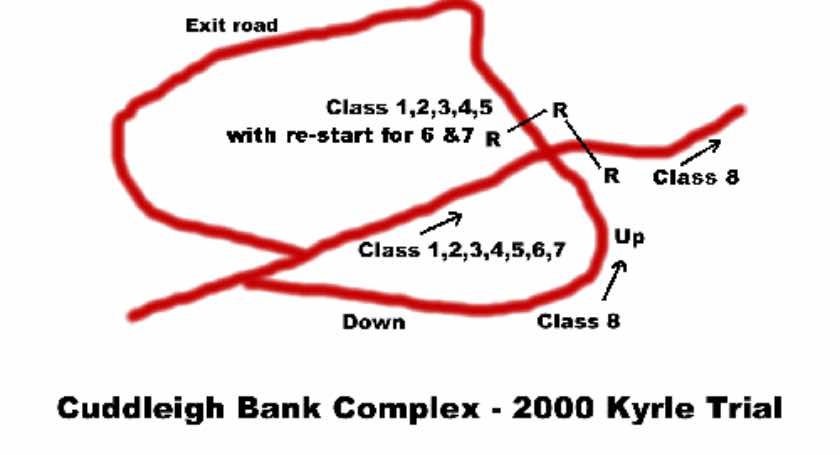
Cuddleigh Bank was a complicated affair as the Bristol Club, under Pete and Carlie Hart; had to change things for the lower classes after the class eight’s went through. Last year it was a straight run up the track with a blast up the steep bank at the end. This year the class eight’s had to divert down through the trees to the right before climbing again to assault the traditional bank. The other classes diverted up a theoretically easier bank to the left. The problem was that it dropped away to the right and with precious little grip after the re-start, this made things quite exciting. Neil Bray fell off the section at the four marker and had to be rescued by fellow competitors. Giles Greenslade cleaned the section but then got into trouble descending the hill on the exit road. Murray MacDonald watched this from behind and soon he was sliding towards the trees with all wheels locked. Rich Welch jumped out of the passenger’s seat of the following car and tried to hold Murray’s Beetle bank but he couldn’t do it despite putting a dent in the wing. Murray slid on and was fortunate to slide gently into a tree before building up too much speed. Even so, it took fellow competitors half an hour to extricate JAZ. 

Waterworks was being given a rest this year so the route went via Wallsprings, a long run up a nice track with a good stonw bottom, to Lane End and High Garlic. All the Falcon class eight’s got up OK, despite a difficult corner at the start. This caused problems for Giles Greenslade who couldn’t get around and most of the threes and fives had problems as well. 

Deep Dean provided the traditional Kyrle finale with its two tough challenges, a very difficult re-start for the higher classes, followed by an “impossible” hairpin for everyone. The only successful re-starter according to the results was Ray Geering on his solo, but even he had problems controlling his machine around the hairpin. Most of the spectators thought that early runner Peter Fear had cleaned the hill but the results showed him dropping three, the same as for those who failed the restart. The problem on the re-start was that the first few cars dug such a huge hole there was no way following competitors stood a chance. Most of the class eight’s really tried though and quite few punctured in the process, including Dudley Sterry and John Parsons. 

Experienced non-restarters knew what was in store and threw their machines at the obstruction, but most then couldn’t get around the following hairpin. The only exception was Dave Turner who put up a superb performance. He managed to get out of the ruts to the right just after the restart and power around the hairpin, blower whining, to a superb clean and class win. 

The dramas weren’t over though. Nigel Allen broke the gearbox on his class six Beetle but still limped to the finish for a class win. Julian Dommett was disqualified for putting his car on his trailer before the finish. Finally, although Murray MacDonald was shown as winning class four, Murray noticed he had been given a wrong score on Lane End, which will put him in second place behind Neil Bray, who takes the class. 

Overall, a difficult trial for the lower classes who struggled in the wet conditions which produced such a great event for the class eight’s. It’s always difficult for the organisers when so many of the sections don’t have a “bottom”. They are at the mercy of the conditions and it isn’t everyone’s cup of tea to drive a heavy saloon amongst the trees in deep mud! However, the Kyrle is an established trial and experienced competitors know what is in store! The event had a new Clerk of the Course in Adrian Marfell and most of the competitors reckoned he and the Ross club had dome a good job, keeping much of the old, but experimenting with some new things.

Kyrle TrophyAdrian DommettFord Special12
Class 1David HaizeldenVW Golf21
Class 3David TurnerBMW35
 Paul BartlemanEscort Estate40
 David HealeEscort Estate45
Class4Neil Bray*Skoda36
 Murray MacDonaldVW130239
Classes2 & 5Peter ManningMidget56
Class6Nigel AllenVW18
Class7Roger BricknellVincent28
Class8Peter FearDingo12
 Anthony YoungVW Special18
 Stuart HarroldTroll26
Class A1Ray GeeringKawasaki KMX20013
Class A2Richard ThompsonHonda XR25040
Class EMichael CrockerYamaha45

* Assumed outcome after Murray Macdonald’s e-mail to the organisers


We have been publishing stuff about Classic Trials on the Web since 1995 and always appreciate feedback. Comments, Corrections, Criticism & Concerns are all welcome. You can leave a comment to have your say here on this web site or our Social Media
Murrays March Hare by David Alderson

Sunday 12th March was a lovely spring day, clear blue sky, light wind and not too cold for the time of year, in fact everything Falcon MC could have wished for the second running of their Murray’s March Hare mini classic trial. Just one thing could have improved the day, a week of heavy rain beforehand to spice up the sections. Thirty crews, from the thirty-four entered, gathered at the “Hungry Bear”, Graveley for scruitineering and signing-on formalities. Falcon had drawn a varied entry, with representatives from all but class 6 turning out on the day. Peter Thompson led away in his Opel to section one at Cress Beds, where the dry stony surface favoured everyone, despite Murray MacDonalds marshalling team having introduced a restart part way up the climb. Under strict marshal control competitors crossed over the tarmac road at section ends to section two, Water Tower. Once again dry conditions had rather pulled the teeth of this long tree lined climb and it was clean sheets for all.

The road run to sections three and four at Mile Tree farm near Leighton Buzzard caused headaches, even amongst Herts/Beds based crews, many of whom were previously unaware of the maze of narrow lanes behind Luton airport. Two tricky sections were laid out amongst the worked out clay pits of Mile Tree Farm and almost two thirds of the entry forfeited marks here. Careful navigation through the section markers was essential on both sections and a tricky restart on section three required some thought. Notable casualties at Mile Tree were John Bell in his Escort, Keith Oakes’ Dutton, Reg Taylor’s Dellow like RDT, the Dellows of Ross Nuten and Clive Booth, and Hazel MacDonald in the Beetle.

A short drive west on the A5 bought competitors to Brickhill for two more sections and the first timed test of the day on Falcon’s prime trial’s site. Although the first of these sections was of relatively gentle gradient, the route wound it’s way tortuously amongst the trees, calling for accurate placing of the car to maintain a good line and continuous forward motion, there were further casualties. The first timed test followed immediately, with Richard Tompkins Imp claiming fastest time at 19.88 secs from Adrian Tucker-Peake in the Peugeot 205 on 20.62 secs. The other regular hot-shoes all managed to blot their copybooks by tearing off in the wrong direction looking for the hidden “B” line; seconds piled up as they corrected their mistakes. Andy Curtis, VW Buggy, effectively lost the trial here when he inadvertently crossed the “C” line and recorded fail. Before leaving, Brickhill there was a further long section in and out of the sand gully. Dave Turner blotted his copybook here, collecting a six in the Bee-Em. Eventual winner, Matthew Sharratt was so confident playing in the sand here that he followed the 7/8 deviation in his 1300 Beetle and still cleaned the section!

On now to Ivinghoe for Falcon’s now traditional brain teasing average speed regularity special test. Despite the required time/distance calculation being ridiculously simple, almost every crew completed the test with vague or troubled expressions on their faces. Michael Leete was the only competitor to hit the exact second and even he later admitted that it had been a fluke since both the Leete crew were still in the throes of mental arithmetic when they suddenly reached the stop line! The following Ivinghoe section contained a steep route deviation for classes 7/8 and a tricky re-start for classes 3-4-7-7-8. Poor Reg Taylor hit trouble again and despite considerable effort failed to encourage the RDT away from the restart. He was joined in his misery by the smart polished alloy, 16 inch wheeled, Dellow of Nicholas Woolett. More severe problems for Colin Stevens ensued when a stripped drive shaft meant retirement for the Skoda Carbriolet driver. Another short drive this time alongside the site of Queen Boadicea’s brave stand against the invading Romans just below Dunstable Downs, bought competitors to another of Falcon’s regular trials sites at Eddlesborough.

Two further sections here, both involving re-starts. The dry conditions at Eddlesborough meant plenty of grip despite the C of C’s efforts to include all the steepest climbs and most difficult adverse cambers of the site into the two sections. Once again, it was heartache for both Reg Taylor and Nicholas Woolett with most of the rest going away unpenalised. It would have been a different story if we had seen some rain at Eddlesborough, as all Falconers are well aware!

Time for a sandwich now, before moving on to the third Falcon pct site at Kensworth and two further sections. Cliff Morrell had laid out a tricky section in the main field, the re-start was perfectly placed and the long, steep grassy climb to the section ends was the undoing of several competitors including Keith Oakes, Adrian Tucker-Peake and pct expert, Robin Howard, in his Dutton. The second Kensworth section had a sharp sting in the tail and saw yet another fancied runner throw away the premier award by a silly mistake. The Alderson Troll dropped a three when it’s driver allowed the engine to drop off the cam within arms length of the section ends board. Passenger Boswell later maintained that it was the driver who had dropped off, not the cam! Previously clean Dave Nash in the Skeetle, Hazel MacDonald and Marlin mounted Jonathan Baggott all contrived to drop three points on Kensworth’s short but steep final bank, only two clean sheets remaining now.

Back onto the tarmac and heading south east now the trial took in a new find close to Markyate, glorifying in the name of Half Moon Lane, incorporating a long, chassis deep, quagmire middle sector. Those who up to this point had been planning to give the trials car a light rinse off at the finish were suddenly made rudely aware that it was going to be pressure washers at dawn after Half Moon! Roughly half the entry forced their way through unpenalised but the low slung Midgets of David Sheffield and Alan Shaw came to an abrupt halt at nine when they were joined by several others whose vehicles were less endowed in the ground clearance department.

The final section at Nortonstreet Lane near Whitwell was again under the control of Murray MacDonald who had moved his crew over from their earlier section and set up another difficult re-start. To the delight of a sizeable gathering of spectators, Murray’s mob extracted a further bag of sixes from over a third of the entry, and this was on a dry day! Finally the trial returned to the Hungry Bear for signing off and results. Only Matthew Sharratt and Andy Curtis finished with clean sheets but as we know Andy had overshot the line at the Brickhill timed test so it was Matthew’s day and Murray MacDonald was delighted to present his trophy to the VW Beetle driver.

Andy Curtis took the Best Falcon award whilst the class winners were Adrian Tucker-Peake, John Bell, Hazel MacDonald, David Sheffield, Dave Nash and David Alderson. Once again, despite route problems and dry ground conditions, Falcon had produced an enjoyable little trial. The atmosphere as ever was relaxed and friendly, the deceptive nature of the sections took points from newcomers and experts alike. The trial is never likely to become a full blown “blood and guts” classic but that isn’t Falcon’s intention. Murray’s March Hare trial looks set to become a regular feature in the calendar. Give it a try next year, you’ll enjoy an excellent day out.


We have been publishing stuff about Classic Trials on the Web since 1995 and always appreciate feedback. Comments, Corrections, Criticism & Concerns are all welcome. You can leave a comment to have your say here on this web site or our Social Media
The Cotswold Clouds in a Marlin by Jonathan Baggott

I like to picture and write about Falcon members trialling exploits. One man has escaped me until recently as I always start so far away from him in the field I never see how he gets on. So I e-mailed Jonathan and persueded him to pen a few word for the worlds favorite internet trials site.

This was an event I had heard so many good reports about and wanted to have a try for myself. Having competed in 3 previous Ebworth Trials (also organised by the Stroud & District Motor Club) I was reckoning on this providing all the thrills and enjoyment of an MCC classic trial but without the excessive road mileage.

The choice of a passenger was quickly solved by my sister in law, Jane, who had been nagging me to take her trialling for the past 5 years. Being almost the last to start, took some of the pressure off driving to Stroud from Buckinghamshire in 1 and 1/2 hours, which helped as I hadn’t got bed until 1.30am the previous night.

I am never very good at remembering the individual sections, but several things stuck in my mind: · The scenery was spectacular and the route took us to some idyllic out of the way places, with challenging sections to climb · Most of the sections were a good test of skill but were very rough. We managed to clean just 2 and each one reminded me that I must adjust the torsion bars give my poor Marlin some additional ground clearance! · Falcon members were everywhere, which is good for having a friendly face to talk to, but means that your failures (my failures) were witnessed immediately and at first hand. · Jane enjoyed herself, but I failed to give her proper pre event training. Her solution when we failed to get off a restart was to sit and roar with laughter. I don’t claim to be an expert triallist ( I’ve only been doing it for 5 years) but I’ve never yet seen anyone laugh themselves to the top of a hill!

With 2 sections to go before the end, we decided to quit while the Marlin was still in one piece. Just at that moment as the daylight was failing completely, we stumbled upon another competitor who had broken down. A yellow and blue Imp had broken its sump and needing towing to the finish. We acted as good Samaritans and learnt during those last few miles that the car had not been fitted with a sump guard! Those Stroud Motor Club folk are renowned for their hardiness but remembering the sorts of terrain we had just encountered, the lack of undercar protection was asking too much.

As we got to the finish so the weather changed into a steady downpour, perfect for cleaning the mud off during the drive home.

On reflection, a tremendous day, I can’t wait to do it again, but I must get some narrower wheels, more ballast and a big dollop of extra skill.


We have been publishing stuff about Classic Trials on the Web since 1995 and always appreciate feedback. Comments, Corrections, Criticism & Concerns are all welcome. You can leave a comment to have your say here on this web site or our Social Media
Arthur Bowden won The Cotswold Clouds

The first Cotswold Clouds of the Millennium was a rough, tough, competitive event, and Clerk of the Course Paul Bartleman ensured victory was won on the hills rather than the special tests! The result was a host of closely fought battles throughout the field and overall victory went to the Stroud Club for putting on such a good event!

There was drama at the start when Mike Pearson arrived with a broken alternator pulley. He went off in search of an accessory shop that was open on Sunday morning, while Arnold Lane set about removing the offending item. Mike came back after a fruitless search to find a beaming Fred Gregory with a spare alternator in his hand! The field was soon away, to follow a route where the first five sections were all used before the war, and are featured in Wheelspin. 

Sandfords only presented problems to a few cars but Crooked Mustard was a different problem of course. At the start, Ken Green reminded me that “Mustard” was originally known as “Breakheart”. It was a stopper then and it is a stopper now. Apart from David Heale, all the blues and whites ground to a halt on or before the steps on the third corner. A special mention here must go to Terry Coventry who persuaded his Citroen AX to climb to the five marker, which was better than many “more suitable” cars! ‘Mustard started to sort out the pecking order in class seven, catching Jonathan Baggott, Simon Woodall and Fred Gregory. Now Tommy and Clive Kalber are trialling a Melos Fred has a good benchmark for his car and they got up Mustard! So did all of the Web Communities red Marlins. The old hill was not very kind to Falcons class eight’s. Ian Davis got up OK but both Mike Pearson/Arnold Lane and David Thompson/Verdun Webley ground to a halt at the five. 

A few years ago Axe went through a “stopper” phase but these days it doesn’t create to much of a problem unless you are in a front wheel drive car, or don’t attack it with enough speed. It didn’t trouble Terry Coventry’s AX though, but poor old Collin Perryman, he who cleaned Simms in his Skoda!, failed half way up for the second year running. Dave Foreshew hit problems when he heard air escaping from a rear tyre just a few yards from the line, and had to nurse the powerful car to the summit, for fear the cover would roll of the rim. 

The route continued to follow a well-trodden route and soon reached the foot of Nailsworth Ladder. The old hill didn’t pose too many problems for the lower orders, but it was a different storey for the yellows and reds who had re-starts. In class eight David Thompson got way OK but Mike Pearson didn’t make it and Ian Davis lost his clean sheet as well. Nailsworth also shook things up in class seven as well. Andrew Brown, Pete Hart and Tommy Kalber retained their clean sheets, but Mal Allen lost his and neither Jonathan Baggott or Fred Gregory could get away and Fred broke his throttle cable in the attempt. He had a spare cable but didn’t have a pair of long nosed pliers to reach up under the bulkhead to reach the nipple. Fred and Pete were pondering the situation when Mike and Arnold rolled back down and dived into their tool kit to re-pay Fred’s earlier help. 

Ham Mill started the “trial by re-start” that was going to be a feature of the rest of the route. It defined the shape of the class 4 battle as only Jim Scott, Neil Bray, Dick Glossop and Richard Peck got away cleanly. Stuart Cairney was particularly disappointed not to get away, but was enjoying his first ‘Clouds never less. This was not to be a great Falcon hill as apart from Neil Bray and Ian Davis, we all failed and Michael Leete picked up a puncture. 

The Mackhouse’s were next on the agenda. They may follow directly after each other, but they are two completely different hills. Neither are proper tracks. “1” involves the dreaded “tree weaving” on slippery mud, where the descent from the higher reaches (they tell me!) is heart stopping. Personally I like “2” as much as I hate “1”. It starts by traversing some muddy grass before diving down into a stream bed, filled with what Fred Gregory describes as Dinosaurs eggs, the rest of us cal them bxxxxy great boulders! Assuming your tyres, transmission and underside survive this challenge you get to climb out the other side where, just as you crest the lip, the rocks end, the mud resumes and you get to do a little tree weaving before emerging into a grassy meadow. The competitive class threes all got out OK but Michael Leete and Mike Hayward were the only class fours to go clean, using the well known technique of foot flat to the floor and hang on! This is one of the occasions when paying all that money for a four planet “super diff” pays off as it gives you confidence! The Yellows and Reds had re-starts to slow down their progress and the reds had a bit of a chicane in theirs as well. It was on for most, but still caught out Andrew Brown and David Thompson. Andrew actually got out of the section OK but the re-start marshal adjudged that backing off the re-start and having a run didn’t constitute a clean! 

There then followed an organisational disaster. There was no rest halt at Tesco’s this year! It’s hardly surprising as I never understood how us dirty lot were tolerated in their nice clean cafeteria, but it was super to have such a civilised lunch! Actually, it was just as well, because the time taken in extracting cars down Mackhouse 1 caused delays to build up and later numbers faced a huge queue. 

Paul Bartleman and his team had spiced up Freds Folly, with a slippery re-start on the steepest part of the hill. This caused problems for some of the lower classes and caught both Michael Leete and Stuart Cairney, both of whom had severe cases of “pilot error” and were to have problems on all the remaining re-starts. Hazel MacDonald got away fine and was going well. In fact, she would have been challenging for the class lead if she had got away on Ham Mill. 

Catswood was a new hill for some of us. It didn’t trouble the scorer as they say, but it did involve a nice bit of green laning through the woods to get there, and it was worth including the hill for that alone. Rich Welch was doing a diff check here and Jim Scott had his Stiletto jacked up alongside. It all looked pretty terminal, but turned out to be a routine donut change before Jim’s charge on Merves Swerve! At this stage, class 4 was pretty close, with Jim and Richard Peck on 14 and Neil Bray just one behind. However, it was Simon Robson who was to be the class 4 hero here, gunning his Skoda out the top in fine style in what may be one his last drives in this well used car. Tommy Kalber and Pete Hart cleaned the hill in Melos and Marlin respectively, and so did Dave Foreshew in class 8. Dudley Sterry lost 5 here, putting him out of contention. A special mention again for Terry Coventry, who got over the first hump in his fwd AX to score 3. OK he had a preferential start line, and no re-start, but that doesn’t take anything away from his achievement. 

The two Highwood sections were pretty difficult. The first one had a fiendish, muddy, re-start which stopped all but three of the field. Likewise the second Highwood was tough, with different re-starts for the higher orders and nobody saw the summit here. The delays at Mackhouse meant the field was pretty spread out by now, and the later numbers arrived at Climperswell in the rain and dark. Stuart Cairney let the tyres down too much and bellied out in the ruts, dropping six. Michael Leete’s Beetle popped out of the ruts and Michael stopped to reverse rather than write the car off against a rather solid tree. The re-start marshal saw he had stopped and waved him through without stopping, but clearly took pity on him and recorded a clean. Thanks Dad! 

Only the two Bulls Bank sections remained. Both slippery, polished stone affairs. Jim Scott got away from both successfully and won class 4 by one mark from Neil Bray. Most of the other leading contenders were fine as well but Bulls Bank compounded the misery for some, including Fred Gregory, David Thompson, Simon Robson and Michael Leete who failed both. Notable Falcon double cleans were achieved by Stuart Cairney, Hazel MacDonald and Mike Pearson who was reported as trickling off both at under a thousand revs. Allen organiser Pete Hart failed both as well, dropping him from second to third in class. 

All in all a pretty good day, the delays at Mackhouse being the only problems on an otherwise smoothly run, competitive, event.

Overall WinnerArthur VowdenMarlin11
Best Stroud MemberMick WorkmanGVS13
Class1Terry CoventryCitroen AX31
2Bill BennettMG J238
3Mark LinforthFord Escort23
4Jim ScottSunbeam Stietto29
5Peter DaviesPanther Lima60
6Mike HobbsBeetle22
7Tommy KalberDutton Melos11
8Tony YoungVW Special16

We have been publishing stuff about Classic Trials on the Web since 1995 and always appreciate feedback. Comments, Corrections, Criticism & Concerns are all welcome. You can leave a comment to have your say here on this web site or our Social Media
Classy Clee

The regulations for the Midland Automobile Clubs Clee Hills promised some interesting “new” sections and the event more than lived up to this commitment. Regulars like Longville and Hungerford were retained, but out went much of the artificial stuff of recent years, replaced by a host of “new” hills, two of which were brand new, and two revived pre-war sections not used since the 50’s. There were three clean sheets. Overall victory went to Paul Bartleman who was faster than Adrian Dommett and Stuart Harrold on the special tests.

Stuart Harrold and Chris Phillips pictured leaving the start on the way to a clean sheet. Unfortunately they lost out to Paul Bartleman on special test times

Pat and Jonathan Toulmin had thought of everything, and even organised good weather for their trial. So conditions were ideal when Falcons David Thompson led the entry, in class order, away from the start. Unfortunately this didn’t include David Alderson’s Troll. No sooner had he fixed the clutch he blew on the Exeter, than there were major problems with the front suspension and the bits to fix it didn’t arrive in time. The thorough Toulmin organisation had started the class eight’s at one minute intervals, but spaced the lower orders two minutes apart so they wouldn’t get in each others way too much when they got stuck! Jonathan must have been reading the “hanging back” debate over on the Web Community, because he instituted penalties for slipping too far back down the field. 

Classical Gas Web Community member Tony Branson’s dramas started before the off, when he had had minor problems with his lights at scruitineering. But it was good to see that Sally Bolam had recovered from the cuts to her face that she sustained when their Marlin dived into the bushes on the Exeter’s Normans Hump.

Tony Branson and Sally Bolam weaving through the trees at Starvecrow. At the time I thought this section had no place in the event, but reflecting afterwards it sorted out the results so I think it was a good thing.

Farlow has been the Clee’s first section in recent years, but there were problems with the neighbours this year so Jonathan substituted the woods at Starvecrow. These were very muddy and several competitors, including Mike Hayward and Robin Howard, had problems getting to and from the sections. It wasn’t David Thompson or Maureen Chattle’s favourite place either, as they both failed in the lower reaches of the section and the following special test as well. 

Starvecrow was followed by a long 20-mile road run to Allez Oop, a hill first used in 1938 and described in detail in C. A. N. May’s book “Wheelspin”. These days the hill is surfaced with shale so there was a fair amount of grip and Jonathan spiced things up with a re-start for the yellows and reds.

Mike Hayward got off the re-start OK, but with a slipping clutch and massive clouds of white smoke, so much that he was concerned the engine was on fire! At the summit Mike found a fair amount of oil all over the engine, so stopped to clean it up and adjust the clutch before the next section. 

There was a diff check just before the next section called Stanbatch which was a long easy section, much loved by the VSCC. A bunch of marshal’s leapt out from behind the hedge with a trolley jack and proceeded to check the diff in the middle of a single-track road. 

Adstone was approached down a steep muddy rutted track that would have been a good challenge for the class 8 boys if used uphill. There was a rocky ford at the bottom, which was the downfall of Robin Howard, as he hit something nasty in the middle causing the front brakes to lock on and even the Land Rover had problems in dragging the Dutton Sierra out of the section.

Gatten’s Gamble was a great section but a bit heavy on tyres!

This was followed by a long blast up Ratlinghope and Jonathan continued to delight by finding a brand new hill he called Gatten’s Gamble. This long section stated with a steepish bank before the gradient eased off. It didn’t get any easier though, as the surface changed from rocks to mud and the ruts got pretty fearsome as well. This was certainly not one for the faint hearted, as you would stop if you eased off, as Neil Bray found out when he punctured. Mike Hayward had tyre problems as well, but kept his trotter down and came out of the top OK. There were a couple of notable class eight failures here as both Mike Pearson (Dellow Replica) and Bill Foreshew (GVS) ground to a halt on the final grassy bank. 

The traditional Clee sections of Harton Wood and Hungerford didn’t trouble the scorer too much, although it was pretty difficult to get out of the latter because of some very deep ruts. Peter Thompson had come all the way from Essex in his Opel Kadett and must have thought it was never going to get back there when he well and truly grounded out. The route card suggested straddling the right hand track, but this wasn’t practical as the car just slipped back in the ruts again. Finally Peter managed to back out, lightened his load by jettisoning his passenger and charged the obstacle at full speed to get out. 

Longville was nice and simple for the lower orders, but the yellows and reds had restarts actually on the steep ramp onto the main road. This was a gathering point for spectators, who included web community participants Kevin Barnes and Falcons Dave Nash and Alan Bellamy. This was Anthony Young’s downfall as he dropped his only mark of the day. If he hadn’t he would have been the overall winner as he had by far the best time on the special tests. Mind you he wasn’t the only one as very few class eights got away cleanly, and even Dudley Sterry dropped a three. Notable class eight cleans were Adrian Dommett and Stuart Harrold, both retaining their clean sheets. David Thompson was also successful in his Buggy, a small consolation for all the marks he had dropped at Starvecrow first thing in the morning. 

The Railway Special Test was a funny affair. To get a good time you had too crawl up a steep hill very slowly by slipping the clutch. Until you got half way when you blasted the rest. Yes was an interesting variation but not popular amongst those who liked to take care of their clutch! This was where Paul Bartleman won the event. He was one of three drivers to still have clean sheets and his time here was light years ahead of Adrian and Stuarts. 

The trial was drawing a close now. The leading contenders are growing wise to the hairpin at Ippkins Rock and it didn’t influence the result. It still catches out the unary though including ace class seven man Roger Bricknell.

Just as the trial started with a muddy section through the woods so it finished, this time with Hillside, located within the Boyne Estate, just a mile or so from the finish. The principle class eight contenders and Paul Bartleman all went clear so it had no effect on the overall result. None of the Falcons got up but like everyone else I spoke to they enjoyed the event enormously. It was imaginative, with the challenge judged to perfection as the results show. Jonathan and Pat must be congratulated for finding those new sections and devising such a beautifully scenic route. They have run The Clee for four years now, during which thy have listened and improved their trial. Long may this excellent event continue under their stewardship.

OverallPaul BartlemanEscort Estate0
1 and 2Terry CoventryCitroen AX14
3 and 5Ian MossEscort7
4Richard PeckBeetle8
6Nigel AllenBeetle3
7Tim LakinMarlin4
8Adrian DommettSpecial0
0David LucasBuckler4