You have stumbled on a delightful box of tricks, Classic Trials & other perverse stuff from Michael Leete. MCC ACTC and other trials. VW Beetles, Dellows, Marlins, or even Suzuki X90's
After our disastrous showing in the 2004 Allen trial (someone has to come last) it was obvious that the Golf was suffering a severe lack of traction. With mods over the winter to improve weight distribution and a new set of tyres to replace the previous motley assortment, we set off early full of hope for the event ahead. This would also be the first event we had done before, so we would be able to discuss the perils of old “diff mangler” or “slippery precipice” knowledgeably rather than being constantly surprised by what the organisers were throwing at us.
In fact my recollection of the first section, Nortonstreet lane was so hazy that we might have been doing it for the first time, nonetheless we completed it successfully, as we did the next 3. At Eddlesborough hill the element of surprise was our undoing, as I was so disorientated by the series of dips at the top of the section that I proceeded to miss the next corner and loose an argument with a tree. This necessitated some impromptu body repairs but we were able to continue. On section 6 we made good progress, but the 1300cc engine just couldn’t pull the Golf up the last steep part. The very dry conditions, plus the mods had exchanged a problem of lack of grip with one of lack of grunt. A quick search of the field failed to reveal any spare 1800cc engines lying about, so we limited ourselves to some panel beating and carried on.
It would be impossible to anticipate anything at Brickhill, as it is effectively a PCT Mecanno kit, where the organisers can assemble a variety of steep bits to make an infinite number of routes. We could perhaps have done better on the first section (7) had we taken the corner before the last steep bit a bit wider, but again the little engine was really struggling. On section 9 (which was a bit familiar) we go to the end, but I was concerned that we had taken the wrong route and this was borne out by the scorecard. By this time we had been on the road for some time and it was noticeable that as each crew arrived at the rest halt, they immediately broke out the sandwiches.
At the Ivinghoe special test, the difference in temperament between driver and navigator and the still unfixed reverse gear (refer to last years article) was our undoing. Despite good advice my “gung-ho” approach took over as soon as the flag dropped. This lead to a “discussion” as to whether we had crossed line ‘A’, followed by gear selection and handbrake problems, leading to a time that must surely be a record for this test. At least it provided some amusement for the waiting crews. The section (10), I could clearly remember the from last year and avoided the bit that stopped us before, but again lack of power was our undoing, however, I see that a Fiat 500 made it so perhaps I’m being a bit hasty.
This was followed by a section from last year, (Hawridge lane), but run in the opposite direction, another fiendish trick. My navigator is convinced that it would be possible to get stuck on your side in the deep ‘V’ shaped groove in the track, but I prefer not to think about it.
To finish; 2 new sections in another wood, with a more cautious approach, as the navigators view was prevailing by now, so we avoided the trees and climbed the last steep bit with just the right balance between traction and power, very satisfying.
At the finish, apart from the prospect of another Saturdays panel beating on the damaged wing we were a little disappointed with how things had gone especially the lack of power and more importantly skill. We were therefore very surprised to find that we had been awarded the Clubsport class 1 award, a good end to what had been a very enjoyable day. Setting aside the technicalities, what I had remembered from 2004 was the friendly atmosphere, good organisation and enjoyable driving and the same was true for 2005. Thank-you to all the organisers and officials for an excellent event.
Chris Clarke
We have been publishing stuff about Classic Trials on the Web since 1995 and always appreciate feedback. Comments, Corrections, Criticism & Concerns are all welcome. You can leave a comment to have your say here on this web site or our Social Media
Please help spread the word and share this on your Social Media:
Dave Sargeant reports on his day marshalling the perfect hill.
Over the past ten or eleven years I have been a competitor, either driving, or as a navigator for my dad, on the Cotswold clouds trial. As this year I decided not to compete I thought I would join my dad marshalling a section.
Being familiar with the sections I looked forward to the day, and particularly the hill that we would be marshalling, would it be Merves Swerve, Nailsworh Ladder or even Crooked Mustard? No, it was Highwood 2, a fantastic hill I have certainly never climbed over the top of, although I have balanced on the peak of it a few times but never quite managed to get enough power to finish it properly.
As we didn’t have to be there until 12.15 we didn’t have to leave our Worcester homes until 11am. It seemed funny to be leaving knowing that usually we would be half way around the sections by now.
We got to the hill and parked the car, to be greeted by a familiar face, Mike Workman, who kindly saved our legs and gave us a lift to the section itself. Along with myself and my dad, were Mike James, Andrew Brown and Guy and family at the top.
We all walked up the section to see what the competitors had in stall for them The hill looked very wet and deep mud at the top, starting by the 4 marker, the rest of the hill was covered in leaves so hard to tell what lay beneath. To clear the section the whole car had to go right over the top at the 2 marker then go right and then finally left to clear the section.
We all commented that we would be surprised to see many if any out of the top, as we waited for the first cars to arrive with us we got into our positions and took a look at the entry list, the first few cars were down as class 8 so it would be interesting how high they were going to get.
First car to arrive was Tony Underhill, who attacked the section with vigour but only reached an 8. It certainly was greasy under those leaves. A few more class 8s attempted the section no one getting any higher. Then came Jonathon and Pat Toulmin, trying to get the class 7 Marlin up this tricky section reaching an 8 also A couple of Escorts from class 3 started to push the marks higher. Paul Eamer had a great climb up to 7, bring on the Trojans!!. The lack of speed made them look like they weren’t even going to reach the 11 marker, but these amazing vehicles plodded their way up to 10.
Bill Bennett had a good run at the hill to reach 8, hearing Ian Moss had retired from a broken gearbox the first class 4 car arrived driven by Dave Shaylor a nice climb up to 7 nearly reaching the marker for a 6.
Next came Paul Bartleman. Up until now the marshals and spectators had been able to comfortably stand across the top of the section, would Paul be able to push up past the 6 marker, we didn’t have to wait long for the answer, he blasted past the highest previous mark up to a 4, and warmed my feet up with his exhaust as well, did that mean the hill was unclimbable today?.
Nicola Wainwright and Emma Flay pushed class 4’s effort up another notch as they got the Beetles’ front wheel past the 7 for a well earned 6.
Simon Woodall and Barbara Selkirk fresh from their success on the Clee Hills were clear up to Highwood 2, could they get over the top? Not even the power of this Buggy could reach any higher than 7. Eric Wall reached 7 and Brian Partridge reached 8.
The first of the Class 6 beetles arrive driven by Mark Smith. Could this 2 litre Beetle make any impression on the Hill? No Mark reached 7 for all his power and effort.
On came Anthony Young with his fantastic VW special, surely this could be the car that broke the top of the hill, everyone moved back as Tony unleashed the power, the road speed was impressive as the car went higher and higher finally stopping higher than anyone had been all day on the 2 marker, he certainly cleared all the deep mud out of the ruts.
Gregor Dixon–Smith was out in Geoff Margetts old class 5 Morgan, I passenger this car on two Exeter’s and a Lands End trial when it was driven by Morgan man Bill Beck, unfortunately I didn’t see much of it as he reached 9 on the hill.
Tony and Ann Rothin attacked the hill, had Tony Young’s climb made the hill any easier, it didn’t look like it, as Tony reached a respectable 5, and George Linnecor reached 3 with a nice bouncing motion along with his passenger.
Now half way through the entry list I spanned over the names of who was to come, there were still some big names that could do what seemed now impossible and clear the section.
Ian Davis attempted it but stopped at the 9 board, leaving us looking at Stuart Ridge, Dudley Sterry, Mike Chatwin and Carl Talbot from class 8 left in the entry list surely one of them could make our day and climb the hill.
In class 7 there was Derek Tyler in the Baja Bug he had a great climb up to 3; David Haizelden reached the highest in class 1 with a 5. Simon Groves pushed his Escort up to 6 in class 3. This left us with 3 determined class 4 drivers left, Terry Ball, David Dyer and Adrian Marfell, winner of the Clee Hills trial.
David Dyer attempted the section and really nailed the throttle, the mud on the 4 marker slowed his progress and he stopped between the 4 and 3 marker. Next came Adrian Marfell, you could feel the expectation in the air, surely he would go that bit further and we would see the first clear of the day! He drove the hill in his usually style with head out of the window, the Beetle sounding lovely as it powered up the hill, but even Adrian couldn’t beat Highwood 2 on this day he stopped just past the 4 marker. Terry Ball attempted the section later and reached a 7.
And so the wait went on, Dudley Sterry’s attempt ended with a 7 even with the supercharger whistling away merrily, up came Mike Chatwin could the Troll get to the top, no Mike finished with a 7 also.
With 5 cars left to go, the only class 8 car left was driven by Carl Talbot, he was certainly clear up till now, he blasted up the section and finally we saw what we all had waited for as Carl drove the Morris Trialsmaster over the crest and turned past the section ends board, what a fantastic end to our day. A great cheer went up and we all agreed how the hill had really tested all classes and in fact we had ended up with a car stopping on every number apart from 12 and 1, reflecting was this the perfect hill. I certainly think so, well done to Carl Talbot after cleaning this section he went on to win the trial overall with a clean sheet. Paul Bartleman only dropped 4 and Simon Woodall dropped 7, The first 4 cars overall were from class 8 and then Adrian Marfell came in 5th overall only dropping 12 points. Well done to all the Cotswold Clouds organisers they have always done a fantastic job of running this event and we all enjoyed marshalling this section.
See you soon
Dave Sargeant.
We have been publishing stuff about Classic Trials on the Web since 1995 and always appreciate feedback. Comments, Corrections, Criticism & Concerns are all welcome. You can leave a comment to have your say here on this web site or our Social Media
Please help spread the word and share this on your Social Media:
Stroud attracted their usual full entry for the Cotswold Clouds. The route followed a familiar path, with just a few subtle changes, including, substituting Mackhouse with a new section called Wicked Juniper.
There had been a lot of rain on the Saturday, which made the hills very slippery. This affected Crawley, put in to be an easy opener, but proved to be a problem for Murray MacDonald who found that his un-ballasted Mk2 Golf had very little grip and needed pushing to get going. After a similar experience on the lower slopes of Crooked Mustard, Murray and Hazel decided to call it a day and head for home rather than cause more hold ups. But watch out Dave Haizelden, he will be back.
During their inspection the week before the Stroud organisers had reckoned that Crooked Mustard was going to be easier than usual, but the rain on Saturday put paid to that. The first cars had a definite advantage as the rock steps were quite clean, but as the morning went on mud was drawn down from the banks making it more and more slippery.
As Andrew Brown says, “Crooked Mustard is all about taking the right line”. The flyweights in Class Eight had a definite advantage as their short wheelbase and ample power to weight ratio’s allowed them to revise their strategy if they got it wrong. Most succeeded, as did the buggies of Simon Woodall and Ian Davis. Two of the best climbs were made by father and son Wall. David storming up early on in the Canhi special and Eric making it all look effortless in his big wheeled Dellow, which has the smoothest, sweetest, engine I have ever heard. Geoff Hodge has quite a wide wheelbase on the RDT and with this disadvantage wasn’t able to correct a bad line and failed between the two corners.
Class Seven had a challenge. Their lower power to weight ratio and longer wheelbases meant they had to have a perfect line to succeed. Only four made-it, three Marlins and Derek Tyler in his Baja Beetle. Rick Neale was one of many to get the line wrong in his Dutton Melos, cutting the corner too tight to the sound of an enormous crack as the transmission broke.
Two Class six cars were clean. Gary Browning in the Course Opening car, which doesn’t count of course! and Mike Hobbs amongst the competitors. It looked all over for Mike when he cut in to tight on the right hander and lost a lot of speed. He recovered and got things absolutely perfect on the left hander but he had lost so much momentum it looked as if he would come to a stop. Mike kept his foot down, the Beetle swayed from side to side, and just found enough grip to be the only saloon to go clean. Mark Smith used all the power of his 2-litre motor to throw his Beetle at the left hander but it ploughed into, rather than around, the bank and he came to a halt.
Everyone was looking forward to class Four to see if Ian Moss and Adrian Marfell would get up. We will never know if Ian would have got the right line. His new engine proved too powerful for the transmission, which let go with a loud bang on the lower reaches and could be heard destroying itself as he backed down. Adrian tried his hardest but hit the step between corners two and three all wrong and it just wouldn’t go over.
Class three provided the biggest spectacle. Tristan White performed perfect walls of death on corners two and three only to stop when a plug lead came off. Simon Grooves tried a similar trick but it didn’t quite come off, leaving the Escort with a front wheel four feet in the air and needing a fair few bodies to hang onto it to stop it turning over while he backed down. Then Colin Perryman came along and broke a half shaft on his nice BMW so it definitely wasn’t a Class Three day! Steve Potter deserves an honourable mention, getting his Trojan right up to the third corner before running out of puff but getting a huge handclap from the appreciative spectators.
Nailsworth was a challenge for the re-starters in the higher classes as it was pretty slippery and they had to stop just before the step. The fact it was a challenge was revealed when none other than Dudley Sterry couldn’t get away. The lower classes didn’t have to restart, their challenge was for their transmissions to survive as they hit the step at speed and leapt into the air. Neither Colin Biles (Midget) nor Nigel Scotford (Escort) diffs survived. Simon Groves’ Fack stayed in one piece for him to win the high jump!
Ham Mill incorporated the new deviation pioneered last year and this was where the restart was situated. It was very slippery lower down and Mike Chatwin and Robert Grounds bounced so much they lost their spare wheels. The re start wasn’t to bad for the class eights but was a challenge for the lower classes and Simon Groves and Verdun Webley couldn’t get away cleanly.
Mackhouse was omitted this year and a new section called Wicked Juniper introduced. This is in the same area near Stroud as the famous pre-war trials hill pictured in Austen May’s book, but is not the original section. The inspiration for the “Wicked” part of the name probably came from its location in Wick Street. Ian Davis reports that the new section was excellent, much better than Mackhouse. It had a long, steep, muddy climb up a track through trees until the four marker over bare earth. Many didn’t get past the initial bend and rise at the ten. There were nine clears including Ian, Simon Woodall, Paul Bartleman, Dudley Sterry, Tony Young and Brian Phipps in his Marlin. The new section saw the end of Bill Foreshew’s Trial when his GVS retired with a holed piston. In the lower classes Adrian Marfell got a long way up but eventually the engine bogged down and he stopped.
The action after lunch commenced with a special test followed by the familiar Freds Folly which has definitely got more difficult over the years. Class eight had to restart on polished stones which defeated Ian Davis and Robert Gregg who had to retire his Troll with a broken prop shaft.
Merves Swerve was back to the straightforward climb over the hump, without last years tricky deviation. It didn’t matter, the conditions were enough to make it difficult, especially for the class sevens. There were two restarts. The class eights were right up against the hump, the sevens a little further down. The extra distance to attack the hump didn’t do any good as it was so slippery none of them got off the line. There was some confusion on the restart as the marshal was standing on the class eight line and quite a few class sevens went up to this instead of stopping on their own line. In some cases they were allowed to back down to their line and have a go. This could have caused some dispute but in the end was nullified as none got away. Most of the top men in class eight got up, despite their restart, but none of the saloons apart from the amazing David Haizelsen could get over the big bump although Simon Groves came very close.
Highwood 1 was very slippery around the restart as usual, but was cleanable with a struggle. Highwood 2 had a high limit of 16 psi and some of the class 8’s struggled for grip. Ian Davis failed at the 9. Fellow Buggy driver Simon Woodall at the 7 and Paul Bartleman the 4. In Paul and Simons case these were the only marks they lost all day. Tony Young got right up to the two but had already failed to get off the Nailsworth restart. It was left to Carl Talbot in his Class Eight Morris Trialsmaster to prove the section was possible and he flew up to be the only car to reach Andrew Brown who was marshalling the top of the section.
Climperwell was the usual trek through the trees. It had a comparatively easy restart but you had to stay in the ruts to avoid the trees and Ian Davis was one of many who didn’t to the detriment of his score.
The trial drew to a close with the restarts on Bulls Bank 1 and 2 which got more tricky as the day went on. Ian Davis failed the first one, in front of the marshalling Foreshew family but no problems for Carl Talbot who cleaned both to win the Cotswold Clouds with a clean sheet.
We have been publishing stuff about Classic Trials on the Web since 1995 and always appreciate feedback. Comments, Corrections, Criticism & Concerns are all welcome. You can leave a comment to have your say here on this web site or our Social Media
Please help spread the word and share this on your Social Media:
With no car available Michael Leete and Mike Hayward marshalled on the Clee Hills
Jeff Buchanan arriving at the hairpin on Phils Folly. It was t0o difficult in the morning, their were delays and the section had to be cancelled.The landowner came to the rescue and tried to improve conditions for the afternoon.All was well for a while but there were problems on the exit road and when Andrew Martin slid into the barbed wire the section was cancelled again.
As I am out of action regarding Trials Driving at the moment Mike Hayward and I decided to marshal on The Clee. We were sent to Phil’s Folly, a new section before the farm on the approach to Gattens Gamble, on the lower slopes of The Long Mynd. The journey there was interesting to say the least, because there was snow on the Shropshire hills so discretion was the better part of valour and we detoured around The Long Mynd.
The section started on a level, rutted track, hair-pinned round a tight right hander and went straight up a muddy tree lined gully before emerging on to the exit track which was recessed into the side of the hill. This was to be the scene of some problems as it was very slippery and later some cars went over the edge.
There were four of us on the section, Michael (Chief Official) and Richard from the MAC, Mike Hayward and I. It was an enjoyable, if challenging, day but we really struggled at times.
The first disaster was that the driver of the Discovery recovery vehicle went up to the hairpin and decided that he would get his vehicle too muddy, went back to the farm and spectated on Gattens Gamble for the rest of the day! After this, the four of us had real problems running the section and had to call on competitors and the farmer to help us.
The first car along was Jeff Buchanan. He couldn’t get his ex Dennis Greenslade Reliant round the corner, he was really stuck and we had to go and ask the farmer for help. He came along with a Mitsubishi 4WD but even that struggled and it was more than 30 minutes before we got Jeff out of the section.
Then David Bowlas got his Midget stuck in the same place but we managed to turn him round in the field and gave him a run at the section. However, he half slipped off the bank on the escape road and in the end, the only way we could extricate him was to lower him down the bank with a rope and winch (the farmer’s idea). By that time, we called Clerk of the Course Jonathan Toulmin and cancelled the section for the lower classes.
Determined not to give up the farmer bought along his JCB and scrapped the mud of the hairpin, coming down to a stone surface to give the afternoons runners a chance at the section.
Falcons Ian Davis was the first class eight. He rounded the hairpin without any difficulty and blasted up the muddy hill. We thought that as each car went up it would clean more mud away, making it easier for the later numbers. To some extent this was true, but it was too bring other problems as it wore the edge away at the top of the section and on the exit road, tending to drag cars off the track and down the bank.
Most of the class eights cleaned the section OK. It was all a question of getting the line around the hairpin right. Simon Woodall clearly knew all about the hairpin as he came along the approach track with one wheel out of the ruts and up the bank. Although this should have given him the possibility of a wider turn it didn’t work out somehow and his buggy under-steered straight on into the trees. The same befell Stuart Ridge in his flyweight. Tim Foster and Harry Butcher were two more who couldn’t get around in one bite and failed. Dave Foreshew got round OK but his GVS fluffed and stalled at the two marker and took a while to get going.
Difficult as the hairpin was the real drama was at the top of the section on the exit road.
Extricating the two class fives in the morning had weekend the edge of the bank and Simon Woodall’s VW Buggy slipped off the edge into the field below, only Simons skill as a driver preventing a nasty accident. The same thing almost happened to Stuart Harrold and Chris Phillips. The Troll was right on the edge and in the end Chris hoped out, and swung the front round at 90 degrees so Stuart could make a graceful if rather scary slide down the bank.
Most of the cars traversed the exit road OK but Tony Young saw what was happening and drove off the track and down the bank voluntarily.
By now the edge of the track at the top of the section itself was deteriorating and when Andrew Martin slipped off into the barbed wire on the section itself we had a group meeting with the experienced competitors in the queue and decided to call it a day! The farmer was more than disappointed and said that he would dig the track out and put some stone down so the section would be OK for next year!
We have been publishing stuff about Classic Trials on the Web since 1995 and always appreciate feedback. Comments, Corrections, Criticism & Concerns are all welcome. You can leave a comment to have your say here on this web site or our Social Media
Please help spread the word and share this on your Social Media:
Dave and Jayne burning rubber on Longville (picture by Dave Cook)
We started out early from home and took a steady ride from Worcestershire into Shropshire; the old beetle has never been famous for its heating so we knew we were going to have a chilly day ahead. One thing guaranteed from the day ahead was picture postcard scenery from the glorious Clee hills.
Scrutineering was swift as ever with John and June Blakely doing a great job. We signed on and collected our route card with amendments from Pat Toulmin, looking at the first amendment it was clear there was plenty of snow around with us having to divert from going over the Long Mynd.
Off we set for the first special test of the day in our class 4 beetle:
Ratlinghope:
The scenery was fantastic as we waited for the escorts in front of us to go; the test was quite straight forward all wheels across line b then back across b and astride c. The B board was quite slippery and certainly made pulling away again for the c board difficult. From the C board we went straight into Ratlinghope hill not a difficult section but with a great view of the countryside.
Phil’s Folly:
On we went to a new hill Phil’s Folly which was located next to Gattens Gamble. We arrived to see the first car attempt the section which was Jeff and Carol Buchanan in the Reliant, the car was at the top of the hill being towed out by a four wheel drive jeep, but unfortunately was not having much success and with the edge of the field looming, the watching competitors decided to go and help.
It took about 10 people to push first the jeep then the Reliant away from the edge and off towards the next section, By this time it had been decided they would cancel the section for all the classes who were there and we all had to back up and form a new queue at Gattens Gamble, it was a shame for the marshals and the competitors as it did look a good section.
Gattens Gamble:
Straight forward climb no real problems for anyone.
Walkmill:
We set of with 12 psi in the tyres, I probably would have been more comfortable being at 10 as the car didn’t stop wheel spinning I had to keep backing off the power to get grip but no real worries.
On to Adstone:
The hill was straight forward, but getting down to it was another matter!!
We slowly followed the other beetles down the section, having to wait for quite a length of time as an Austin 7 was nearly consumed by the ruts. Then I edged too close to the right and consequently fell into the gully with both left hand wheels the further I went down the more the car got stuck leaving me with the front bumper hard against a tree and the floor of the car wedged on the bank stuck fast I couldn’t go backwards or forwards, as the oil light came on as I was on such an angle I turned off the engine and waited for help. It came from a couple of marshals and Colin Perryman, Peter Barr and his passenger, armed with a hand winch and ropes they tied around a tree and connected the cable to my rear tow eye. It was at this stage Jayne decided it was better if she could get out of the car while it was attempted to be retrieved so she climbed out of the passenger door and waited down the hill.
The winch did its job the guys soon pulled the car back from the tree by a few metres problem was it was still in the ditch and no way of getting the wheels out.
Colin Perryman and Peter Barr rallied the guys and promptly lifted the front of the Beetle onto the track; I then drove the car forward back upright. Our heart felt thanks go out to all the people who helped us and I only damaged the back wing.
Allez oop:
18 psi needed I certainly did I struggled to pull away as I had so much grip on the first corner after the bend we picked up momentum and it was a straight forward climb, I see from the results it stopped a few of class 1 and 2. The views were fantastic especially with the snow on the ground; we just had time for a quick snow ball fight at the top before moving off to harton wood special test.
Harton wood special test:
I remember marshalling this as a hill years ago, this greasy special test was extremely slippy on the B board, I think it would have been a great test as a section with a restart, how about it Jonathon?
Longville special test:
I promised myself last year that I would definitely go far enough back this year, but what did I do exactly the same as last year only less smoke surrounded the car as I struggled to get back up to the B board, I said to Jayne that’s far enough back, to which she replied I don’t think it is, she was right !!
Onto Diff test it was nice to see Paul and Ann Fairbanks out, will Paul ever get that old special back out?
Easthope:
A really difficult section, the only way to climb it is flat out straight away, but with the added problem of hitting a tree as the track slopes to the right hand side at the start. We arrived just as Terry Ball in his beautifully prepared Beetle took of the start line, and whacked the rear wing off the first tree, it didn’t stop his climb though and he managed to get a 4.
Next to attempt the climb was Adrian Marfell in his orange beetle, he left the line in his usually attacking mode, and drove superbly up to the corner where the 4 marker was and was able to back off and go around the bend to clear the section, I stood with Bill Bennett and we watched with awe. The cries of follow that rang in my ears as we watched David Dyer attempt the section, he too attacked the section with vigour, missing the tree by inches, he climbed well until the bend where he fell of the track into a tree badly damaging the wing and front panel again getting a 4.
Bill Bennett was next with his gorgeous old MG, Bill too attacked the start and made a good climb up to a 5, finally we attempted the section, I thought I may as well join the club and go flat out from the start 8 psi in the rear tyres and we were away, the Beetle went well apart from slowing drastically up as we reached the bend and resulting in us nearly reaching the 4 marker. We were pulled out of the section by a land rover.
This hill proved difficult for most of the competitors, only a handful of class 8 and 7 managed to clear the section, and of course overall winner Adrian Marfell.
Easthope 2:
We got there in time to see David Dyer get a 5 a really great attempt as the corner was very difficult, Adrian got a 4 and Terry got an 8 the same as we did, Pete Barr got a useful 7.Great climbs from Adrian Dommett with a 3, and Simon Woodall, Mike Workman and Ian Davis in Class 8 getting a close as you can with a 2.
Jenny wind:
As ever Jenny wind was as greasy as ever, we climbed out of the ruts and got a 4, as did Terry ball, David dyer climbed well to a 3 and Adrian unbelievably cleared the section! David Haizelden had a fantastic climb with a clear, as did Harvey Waters, Adrian Dommett and Andrew Martin. Class 6 best climb came from Gary Browning with a 3. Only 3 cars in class 8 got as high as a 4 included in that was class 8 winner Simon Woodall.
Harley Bank:
Quite a straight forward climb we could have done with a lawn mower to clear the grass from the centre of the track.
Hungerford steps:
We got to Hungerford as Ian Bates came over to us and said that after the section ends board the ruts were very deep and to treat the rest of the way out as a section , he stopped the other classes attempting it while we were there to try and get all of class 4 out of the section first, so off we went one by one all of class 4 cleaned the section and got through the ruts comfortably David Dyer had a puncture on the way out and was helped out by Adrian so that we could all get out. We had fun trying to find the rear tyre valves at the end to blow the tyres up though.
Back to Craven Arms Hotel to sign off and get back to pick the kids up from the baby sitters. A great day out shame I mucked up Longville special test still there’s always next year I’ll listen to Jayne as to when I decide to put it into first gear.
Many thanks to all the organisers and Marshall’s for all their hard work, we did manage to not only finish in the light but we also got home in the light, Perfect.
See you next year
Dave & Jayne Sargeant.
We have been publishing stuff about Classic Trials on the Web since 1995 and always appreciate feedback. Comments, Corrections, Criticism & Concerns are all welcome. You can leave a comment to have your say here on this web site or our Social Media
Please help spread the word and share this on your Social Media:
There was snow on the Shropshire Hills for this years Clee Hills. Fortunately not enough to bring things to a halt, but quite enough to make conditions difficult. Adrian Marfell mastered the difficult conditions in his Beetle to win overall, dropping only four marks. Adrian Dommett was second in his Class 2 Wolsley Hornet.
Adrian Marfell, pictured here at Gattens Gamble, dropped only four marks on Easthope 2 to win overall. (picture by Dave Sargeant)Adrian Dommett, bettered Adrian by one mark on Easthope 2 but dropped another three on Easthope 1 to finish second (picture by Dave Cook)The fantastic view from the summit of Allez Oop (picture by Dave Sargeant)
Like last year the field was split and went on two separate loops. Classes 0 to Five tackled the Western loop first, embarking on a long detour around The Long Mynd because of the treacherous conditions. Ratlinghope came first, a special test, then a section which was cleaned by everyone. A long descent followed, crossing a road to the farm at the foot of Gattens Gamble.
There was a new section this year, the route turning left at the tank to Phils Folly. This was new section on an old coach road that is now privately owned. The section started on a level rutted track, hair-pinning right where the gradient started up a muddy tree lined track. Unfortunately Jeff Buchanan couldn’t get his ex Dennis Greenslade Reliant round the corner, neither could David Bowlas who was following in his Midget. Extracting the cars took so long that the section had to be cancelled.
By the time the higher classes came along in the afternoon the farmer had scrapped the mud off the hairpin and there was plenty of traction. The problem was getting round the hairpin. Regrettably there were problems at the top of the section and the exit road, making it rather to hairy for comfort and it was necessary to cancel it again. Gattens Gamble was cleaned by most of the field but Derek Reynolds found his DAF’s drive belts struggled with the steep gradient at the start. The views at the top were as magnificent as ever.
After a straightforward Walkmill came Adstone for the lower classes, who descended what was to be Medicot for six, seven and eight in the afternoon. Adstone was not a problem but the descent of Medicot certainly was. The track has really suffered at the hands of 4×4 traffic and the right hand rut was very, very deep. This caused major problems as cars were leaning so far they were practically on their side. Some suffered damage, including Colin Perryman whose BMW ended up with damaged doors and rear quarter panel.
Ian Davis was the first class eight in the afternoon and described the ascent of Medicot as a nightmare. After a delay waiting for some trail bikes Ian hit a root, throwing the front of his buggy so high in the air it came out of the ruts and beached on the left hand bank. Ian managed to reverse a few yards and get going as there was plenty of traction. Delays built up, causing the section to be cancelled for classes six and seven but not before Stuart Harrold deranged his steering on the same root that caused a problem for Ian Davis.
The route round its way up the hills to the historic Allez ‘Oop, first used in 1939 and featured in C.A.N. Mays book Wheelspin. It was grass in those days but has a hard surface now. It was covered in snow and a delightful climb to the summit with its magnificent views where the class three and four competitors waited for each other and a had a snowball fight! Most of the entry got to the summit, but it wasn’t a class one friendly hill and three of them got a six.
The Harton Wood special test was all about time but the challenge at the Longville test was actually re-starting after the reverse. After last year most of the experienced competitors were ready for Longville and backed right down to make sure they cleaned the section, rather than worry about the time. Not Tristan White. He and Emma Flay risked a modest reverse and gave the Escort a blast. They made it in a huge cloud of rubber smoke but the time it took was probably as much as backing right down!
Ippikins Rock couldn’t be used this year because of logging, so the lower classes tackled Easthope 1 and 2. One was the section new for last year, two was new for this. It wasn’t very long, just a short blast up a gully and a sharp right turn up the bank. This was the events stopper and nobody was successful. Simon Woodall and Mick Workman were the most successful, both reaching the two. Overall winner Adrian Marfell scored four, the only marks he was to drop all day.
After Much Wenlock came The Jenny Wind, an old cable railway incline. This was slippery in the morning for the higher classes and only Andrew Martin in his Dutton Melos reached the summit. Fellow class seven driver Tony Branson didn’t get that far in Jonathan Toulmins Marlin which suffered a persistent misfire all day. Conditions had improved in the afternoon and there were some cleans. Adrian Marfell and Adrian Dommett reached the summit, So did Harvey Waters and the amazing Dave Haizelden in his Golf. The first time a Front Wheel Drive has achieved that distinction.
Harley Bank saw problems for Dick Bolt when the UJ on the end of his prop-shaft broke, possibly weakened when he broke his CWP on Simms. Fortunately Dick has a two piece shaft on his Escort and carries a spare, so he was able to change it and drive back to the finish although he had to retire. The higher classes had a different section too last year and Ian Davis couldn’t get across the frosty grass on the lower reaches, dropping six. Fellow Buggy driver Simon Woodall did well here, only losing two marks which gave him the class win.
Hungerford was the last section on the Eastern loop for the lower classes and is another to have suffered badly from 4×4 traffic. There were ground clearance problems, both on the section and the exit road, where even some of the class eights had to be towed out. Simon Groves was a little late in arriving at Hungerford, having had no less than four punctures. Because of the penalties on the Clee, for slipping back down the field, his fellow competitors let him back to his place at the head of the class. Simon duly let his tyres down, only to ground out his diff at the six, and had to reverse back down. Seeing this his classmates duly pumped their tyres up to give more ground clearance and cleaned the hill!
The higher classes had to tackle Meadowley, another historic Clee section, but again one that has suffered severe erosion. There was a tree root across the track, followed by a huge hole and that was as far as most competitors got. There were exceptions of course. Two of the flyweights came out the top and March Hare winner Andy Curtis did exceptionally well to get to the two, benefiting from the increased ground clearance he has generated by fitting dropped spindles to the front, even though it gives the buggy a pronounced nose up stance.
Despite the problems caused by the conditions, all the competitors signed off in daylight, and first man home Ian Davis was back at The Craven Arms by 2.30. This years Clee was more difficult than usual, both the snow and 4×4 damage taking their toll. It was still a success though. Beautiful views, historic sections and six different classes in the top ten, all a tribute to Jonathan Toulmin and his team.
We have been publishing stuff about Classic Trials on the Web since 1995 and always appreciate feedback. Comments, Corrections, Criticism & Concerns are all welcome. You can leave a comment to have your say here on this web site or our Social Media
Please help spread the word and share this on your Social Media:
This years Exeter benefited from a lot of work on the sections, making them more palatable for many and Simms achievable for the mortal. Normans Hump was difficult but there were still 67 gold’s awarded.
It was a stormy night for the run down to Haynes museum. Rain and gusts of wind making driving conditions difficult and a tough night for bikers and drivers of open cars. A couple of the Falcons were lucky to make the start. John Parsons had found problems with the lights on his buggy, discovering that mice had gnawed their way though the wires and had a go at a CV joint gaiter as well! Neil Bray ran Primrose back and forth to work for a few days before the event to make sure everything worked OK. It was a good job he did, as the engine coughed and died. Neil eventually found the problem was with the Rotor arm and had problems finding a replacement for the special distributor that has to be used with side draft Webers.
Scriutineering generated a bit of excitement, with numerous competitors given tickets because their rear lights couldn’t be seen from one side, obscured by the spare wheel carrier. The first competitive section was Windmill Hill, which is of course the exit road from Sugg Lane, which in turn became the exit road from Windmill Hill this time. This didn’t present any problems and neither did the next section.
After Gatcombe Lane it was into Bovey Woods for Normans Hump and Clinton. Normans was challenging this year, especially for the higher classes who had to restart, as the box was positioned on the gradient after the cross track. This caused severe problems, either with getting going at all or failing to build up enough momentum to carry the car over the steep bit at the end.
This fate befell a number of people, including Ed Nikel, who got within half a length of the section ends board. Peter Thompson didn’t have a restart in his Opel but was another to come to a stop within sight of his objective. It was certainly possible though. Peter Mountain and Mike Pearson both got cleans in class eight but Ian Davis didn’t get to the summit and John Pasons was given a run back on the restart.
Class 5’s were denied the challenge of the upper reaches and deviated off with the ones and twos. Colin Sumner probably wished he was back in his Morgan. He had to do the full hill in his class four Beetle and couldn’t get out the top. Clinton was easier, with only the upper part of the section being used and the restart on the level so it didn’t trouble the scorer too much.
Across the road was Waterloo, where there was a long delay, even for the early numbers in the main trial, as the class 0’s were having problems with their section, known as Rockenhayne, which is the failure route for the main trial. One of the Mini’s had got stuck broadside across the hairpin and by the time it was extricated a long queue had developed. Then a car over-turned. Even when the class 0’s had gone there was still a problem as classes one, two and five were using the escape road as their section, and every time one came along the recovery Landrover had to reposition from one section to another, causing the minutes to tick by. When the queue got all the way back to the road the marshals sent some of the cars up the escape road to keep things moving and the section had to be scrubbed from the results.
Plyford didn’t stop anyone but there were more delays at Stretes, again caused by the Class 0’s who had difficulty with the leaf mould at the top and a few of them got well and truly stuck, a Beetle broke its transmission and a car turned on its side reversing back down. Things weren’t a lot better for the early runners in the main trial and the chief official soon cancelled the restart in order to get things flowing.
The first cars were over an hour late at Exeter services, but still had to have the full 60 minutes rest break, time enough for many to pop to the local supermarket for petrol rather than pay motorway prices. In Fred Gregory’s case he and Pete Stafford tried to insert a spare leaf into the nearside rear suspension of their Rickman Ranger as it was sagging and the exhaust was banging on the prop-shaft. The delays built up and running down the field Stuart Harrold and Chris Phillips were two hours late for their breakfast.
Tillerton was smoother than in recent years, but its still a difficult one and Peter Mountain ran back on the restart to loose his clean sheet. Fingle was its normal glorious self. A super blast round the hairpins with little chance of failing. Unless you had a puncture that is, like Dave Nash who had to resort to a tow from the rescue Land Rover when the wheel started to spin inside the tyre. Ian Bovill also had problems with his magnificent ISOC Sport, not surprising he had problems with the hairpins when you consider the wheelbase!
Fingle was the scene of Nick Ikin’s first MCC retirement in 14 years of competition. Halfway up the car started making horrible noises and then it stopped steering. Nick kept going but after a couple more bends the car ground to a halt, lying on its belly. A critical eye-bolt had broken and it took considerable manhandling to get it onto a side track. Nick managed to rob a similar eye-bolt from the rear and block that corner up with a block of wood. This enabled the car to roll back down the hill to await the RAC.
The MCC had been concerned they would be able to use Wooston because of PR problems with the exit road. Fortunately these problems were solved and classes seven and eight were able to tackle the steep hill after the fork. Michael Collins had a go at this route as well in his Golf and was well on his way to getting up the hill when he realised his mistake and had to back down. This was a shame as his fail cost him a gold and probably the FWD All-Stars the team award as both Paul Allaway and Dave Haizelden went round clean.
The restart caused problems for the early numbers and apart from Ian Davis the Falcons either failed to get away or couldn’t build enough momentum to keep going when the gradient was at its steepest. John Parsons made a valiant attempt but his wheels were spinning as he came away from the restart, he tried to back-off but lost speed on the steep bit and finally stopped. Ed Nikel made a good climb but again his wheels were spinning too much and he stopped on the upper reaches, high enough for the marshals to push him out the top.
Running further down the field Mike Pearson made his climb when there was more grip but there was little doubt he would have cleaned the section anyway with his smooth driving style. Peter Mountain was smooth as well in his Mk1 Dellow and cleaned the section. The climb of the day was made by David Wall in the family Dellow. He pulled smoothly away from the restart, accelerated away and was still increasing his speed as he passed the section ends board.
The lower classes were denied an assault on the main track and deviated off to the right as usual, with only class six having to restart. It wasn’t too much of a problem for most but neither of the Trojans had the momentum to get to the fork and nor did Derek Reynolds in the DAF who came to a halt with an un-believable scream of the drive belts. Ted Holloway had to retire his rear engined Mini here after failing the restart.
The MCC road gang had spent done a lot of work on Simms during the summer, including bringing a Ready Mix truck along the exit track to the top of the section. So the organisers were concerned when a couple of weeks before the trial they heard their work had been damaged by a 4×4 invasion. Roger Uglade visited the week before and pronounced the section OK to use and on the day most competitors thought it was much smoother than the late few years.
The old hill is a tough one, even though the restart for the higher classes gave them more of a run at the gradient than usual. Stuart Cairney was spectating on Simms, reporting that the results showed a number of failures as clearing the section! These included Dave Nash who’s MGeetle couldn’t make the gradient and neither could Fred Gregory. Barrie Parker also came to grief here with the big Audi 80. This was shame as Falcons multiple PCT champion was otherwise clean. There were organisational problems as the summit marshal didn’t record who got to the top of the section un-aided. So anyone who got to the A boards was given a clean.
In class 5 Peter Manning didn’t clean the section but got past the A boards in his Midget to win class five. Keith Pettit wasn’t so lucky in his venerable Frogeye Sprite which was a pity as he had faster special test times. Like Dave Nash Keith had no less than three punctures during the event. Ed Nikel and Peter Thompson were both thrilled to clean Simms. It’s a tough section though and both Peter Mountain and Simon Groves had to retire with broken cars. Simon’s half shafts snapped as he bounced over the step, captured on video by Stuart Cairney, as was Dick Bolt who suffered a similar fate. Peter Mountain had the A frame sheer off the axle on his Mk1 Dellow. This damaged the rear of the gearbox and the prop-shaft and was glad to have a steel transmission tunnel to keep the flailing UJ away from his vitals. There were soon problems in recovering the car as the A frame was digging in the ground preventing Peter coming back down but it was soon accomplished with the many bodies that are always at Simms.
The trial was drawing to a close now, with only two sections remaining. Tipley was just over the road from Simms and was quite rough as usual. The gradient isn’t to severe though, so drivers can chose their line and it didn’t stop many, although it did catch out Colin Sumner in his shocking pink Beetle, quite a change from his usual Morgan. Slippery Sam was the final hill and only claimed a handful of victims this year as it didn’t’ have its usual re-start.
The days activities were concluded by the usual club supper at the finish venue which was enjoyed and appreciated by All. MCC President Gerry Wollcott presented last years premier awards although he lost his struggle with an ineffective PA. The general conclusion was that this was good Exeter which finished on time despite the delays during the night.
We have been publishing stuff about Classic Trials on the Web since 1995 and always appreciate feedback. Comments, Corrections, Criticism & Concerns are all welcome. You can leave a comment to have your say here on this web site or our Social Media
Please help spread the word and share this on your Social Media:
Neil Bray’s restoration of a “C” Type Ford was much admired by the C & Y type register. So much that they persuaded him to restore another car.
A while ago I wrote about Neil Bray’s restoration of a Ford “C” type and subsequent Round Britain run. Neil got to know the members of the club very well and in a complex deal became the owner of a number of boxes of bits that were rumoured to be a 1937 Ford Y when they were all bolted together. Graham Miles had rescued them from no less than three lock up garages in Ipswich and the club had been looking for an enthusiast to assemble them and write a series of progress reports for the Y and C type magazine.
Neil’s new car had an interesting history. It was actually one of the last cars built when production ceased in favour of the model “7Y” in 1937. His first job was to un-pack all the boxes and lay the bits out in the clubs container. Graham had assured Neil that 98% of the bits were there and Neil was more than delighted to discover he was right! As I said earlier Neil’s acquisition of the car was a complex deal, part of which involved him completing the restoration to drive the car on the clubs 2004 Welsh Rally, so time was at a premium!
An earlier owner had started to convert the poor little Y into a hotrod and Neil soon discovered that the three cross members had all been removed in a failed attempt to fit a V8. All the bits were shot blasted across at Finish Line UK and Neil then had to solve the puzzle of which bit went where, and which way round, before bolting and welding it all together. It was important to get this exactly right otherwise the suspension mounting points would be all wrong. Inevitably the tin worm had been nibbling away as well and some of the rather thin sections had to be plated. The rear of the chassis was in a very bad way and had to be replaced with fresh U sections that Neil had fabricated.
The next job was to fit all the bits and pieces to the chassis in an un-restored state to make sure they were all there. The container yielded a main brake rod centre bracket, front suspension and a steering box with rather worn track rod ends. Neil then came to fit the gearbox, only to find that there were no rubber mountings in the container. Fortunately he was able to purchase some new ones from the club and the box soon went in along with the axle and torque tube. This as important as it defined the exact location of the rear cross member.
Now came a big decision, which motor to fit? What with Primrose and his “C” type restoration, Neil had acquired a few 8 and 10 hp power units over the years, so he went hunting amongst his stock. He had in mind his silver 8hp engine, which he knew was a runner, to get the car rolling. In digging around he noticed a 10hp lump with a large starter attached. This was acquired from Ross Nuten when Neil became the proud owner of Ross’s 1935 Morris 8 Series 1 2-door saloon.
Taking the engine into his workshop Neil soon discovered it was seized solid, so out came the plugs and in went a couple of cans of WD40. Coming back a week later it now spun, although not too freely. Removing the head and sump there was a lot of solidified oil but underneath there was a brand new engine that had never turned in anger! Out came the crank and pistons to reveal rings and white metal bearings in perfect order! All that was necessary was to lap the rust off the valve seats, clean everything up and apply a bit of paint.
Returning to the chassis Neil fitted the handbrake lever and attempted to sort out the brake rods. Four hours later he decided that while he had the right number of rods they weren’t a set, but the club soon sorted that out. Then it was back to the container to find the final bits and pieces. But there were no shock absorbers to be seen and what’s more no mountings on the chassis! The club came to the rescue again with a set of shocks and enough information to fabricate the mountings. Now for the body!
The Container revealed its secretsThe Chassis and BodyThe Chassis is complete. Now where is the body
Part 2
We left Neil’s Y as a rolling chassis waiting for it’s body. With a sound chassis what was left of the body shell was gently lifted on to it and bolted in place. Neil and his helpers then used scissor jacks and wedges to get all the gaps around the doors, bonnet etc right before the welding started.
The first job was to rebuild the rear wings and secure them to the chassis to hold the back half of the shell in the correct position. This was essential as the lower parts of the B posts were very rusty and were going to have to be removed completely and replaced by new fabricated sections. The bulkhead was next. Rust wasn’t a problem; it simply wasn’t there as the previous owner had removed it to create the space for a V8! Fortunately Neil had a spare bulkhead in his pile of bits and this was soon in place along with newly made toolbox panels.
The basic shell was now ready for paint preparation. It was rubbed down to bare metal, filled and painted with no less than five coats of primer ready for the colour to be applied. Here came a problem but not a technical one. Neil had his heart set on maroon but the powers that be in the Y and C club ruled that a 1937 Y had to be either Vineyard Green or Black. Searching through the paint catalogues a Datsun colour was found to be near to Vineyard Green and the decision made to paint the shell with that in two-pack.
Having sorted the chassis and the shell the time consuming work of fitting out began. A nice pair of running boards came, courtesy of Dave Tebb. They fitted perfectly and were soon painted black and fitted with the proper spec rubber. The windows were not so easy. Neil had looked at a lot of Y’s at rallies and had never worked out how they went up and down without falling out and the bare shell in the garage didn’t exactly provide much inspiration! A ring around Y and C club members turned up the wonderful John Argent of Hatfield. John not only let Neil look at his car, he let him take it away and dismantle it to work out how the windows operated . A truly super guy.
With the aid of John Argent’s car Neil soon worked out how to assemble the windows, after freeing off the seized winder mechanisms with heat and penetrating oil and obtaining new runners from Woolies of Peterborough. John’s car also revealed a lot of other detailed information about various brackets and braces that had been removed or rusted away when Neil got his car.
The next job was to tackle the woodwork. It was possible to repair the wood surrounding the rear window but the roof rails were too far-gone and were replaced with a kit Neil managed to acquire. The detail fitting out took a tremendous amount of time, doing lots of work, but seemingly achieving very little. The door panel’s were shot blasted, prepped and painted, the floor boards fitted and the gauges assembled to the dash which was then bolted in place.
With the Y taking real shape it was time to bolt on the wings and other detachable panels. Most of them had come with the car and been restored but the rear offside wing had been to far gone so Neil had a new one made by Ken Arthur, a superb craftsman who was making a complete body for a SS100 Jaguar at the time of Neil’s visit!
Neil kept thinking about the back axle, as although it had been fitted to the car it had not been checked. He had a spare axle, which from the outside looked nearly new, but Neil decided to do the right thing and strip and inspect it first. With tools borrowed from the Y and C club the job was started. The first thing was to spread the rear spring by welding a large nut on a gigantic G clamp tool and using this to compress it. This took forever and despite being really worried that the clamp would slip it was finally possible to undo the shackles and remove the spring. With the axle spit the crown wheel and pinion revealed a complete tooth was missing from the pinion and part of another was missing. Neil managed to locate a replacement CWP and bearings and reassemble the parts with the necessary pre-load.
The Y was now looking like a real car but oh there were so many little parts missing. Neil made a huge list and started searching. The clutch and brake pedals needed return springs. These were found during a trip to the local MG specialist where two clutch slave cylinder return springs for a Morris Minor 1000 were found to be exactly the right length. Walking round the show room Neil put his head inside an MGA to see the Pull Starter and Choke Cables would fit the Y so these were snapped up. They only had the letters C and S on them rather than the complete words that Mr Ford had but beggars can’t be choosers at this stage!
By now it was Christmas time. Only a few moths to go before the Y and C clubs 2004 Welsh rally. The deal was that for the car to be his Neil had to finish the restoration and take part in the event. Will he succeed?
There was a lot of work making and fitting new panels to the body and getting all the gaps right but finally it was ready for painting.There was a lot of work making and fitting new panels to the body and getting all the gaps right but finally it was ready for painting.
Part 3
Neil came back from a family Christmas holiday in Florida, fit and ready to get on with the Y. It was despatched to the electrician on 1ST February. A new loom was fitted and the components connected until he got to the semaphores. Neil particularly wanted the flashers to flash, and the semaphores to activate, on the same switch. Eddie the electrician had a board that would do this but it was 12 volt! A decision had to be made and quickly, so Neil decided that it would be best to convert the car to 12 volt. This involved removing and rewinding the dynamo. Then all the bulbs and the coil were changed for the 12-volt variety. The fuel gauge was a big headache. This was overcome by putting a bulb in the circuit, which dropped the voltage to 6 volt. Success.
The only thing that was left was the starter, which would spin much faster on the higher voltage, and those good old semaphores. They had to be either rewound or replacements found. With all this completed the car was taken from Eddie the electrician to Fred Pounds, the upholsterer, in Baldock. It arrived there on 14th February, spot on schedule. Neil had given Fred six weeks to complete the upholstery but as usual he had loads of work. Neil visited him every day to try to induce him into getting on with the job. He had to have excuses of course, but you can only remove the bumper for re-chroming a limited number of times! Neil had hoped to have the car completed by the Y and C clubs AGM, but that passed by. Never less Neil went along and was able to buy some hubcaps, oilcan and bracket, bumper ends etc. That gave him lots more excuses to visit Fred. And after much hounding he finally got the Y back. It was Thursday the 3rd June 2004.
Neil worked through the night, sorting split pins, adjusting brake rods etc. Friday saw Fred working on the upholstery while Neil and his helpers were working on the mechanical jobs. Fred was back working on the car Saturday morning. The moment of truth was Saturday the 5th June. It was 10.30 am, time for the first road test. Out of the garage and down the road. Then silence, as the car coasted to a halt with a dead engine, the distributor had disintegrated. Neil fitted a replacement but still no spark. The leads were changed and finally a new coil solved the problem and the engine burst into life. However, it was running very roughly. The carburettor was dismantled and in the end that had to be replaced. Finally at 4:30pm Neil left the garage to pick the kids from Stevenage and drove home in the Y.
Cruising at a healthy 45 mph Neil looked at the dash and noticed to his horror that the oil pressure had dropped to only 6 P.S.I oil. Saturday night was spent playing with the oil pressure release valve to finally produce 12 P.S.I when hot. Neil also noticed that the front of the car had sagged so a new front spring was needed, but time had run out. So with the car nearly finished, with no power, hardly any oil pressure and a low front end Neil phoned mentor Graham Miles. He advised Neil not to take the car on the rally to Wales but Neil felt he had got so close that it wouldn’t be fair to not give the Y a chance. Dave (MGeetle) Nash turned up on Monday morning and the pair set of for Wales Neil driving the Y and Dave the C. It was to be a real adventure. How far would they get…………
Fred the upholsterer didn’t have a lot to work with and was still working on the seats while Neil was finishing the mechanicals.Neil’s Y and C at Upper Caldecote, ready and raring to go on their long trip to Wales.
We have been publishing stuff about Classic Trials on the Web since 1995 and always appreciate feedback. Comments, Corrections, Criticism & Concerns are all welcome. You can leave a comment to have your say here on this web site or our Social Media
Please help spread the word and share this on your Social Media:
In the early 60’s Ron Warren published a booklet about Falcon Motor Club. Recently I managed to obtain a copy. It provides a fascinating insight into how different things were in those days.
1. The Beginning
1948 cannot be considered as a good year for motoring, lean days because petrol was still rationed as an aftermath of the second World War, but Motor Sport was making a slow come-back even if the cars were mostly of 10 years or more in age. A new car was indeed rare, but enthusiasts were meeting and talking motor sport, and it was from the talk of cars round a bar that the Falcon Motor Club was formed in 1948.
It was not long before the six founder members were joined by others and within a year the club was recognised by the R.A.C. and registered to promote competitions. To gain experience members would go and marshal for other clubs and the number of our events was very limited. When a kindly farmer would allow the use of a field, members would pay sixpence a time to have ago at a few simple driving tests.
In the Autumn of 1949 a closed trial was held and the major award was the President’s Cup, our first trophy presented to the Club by Mr. J. Frye who became the first President. To have achieved so much in such a short time was due to the inspiration of David Chiles the Competition Secretary (he was one of the six founders) who was supported by his wife Edna, who was the Secretary, and such stalwarts as the Tucker-Peake brothers, Herbert and John, Jeff Bradford, Cliff Smith, John Mosely, Ralph Smart, Bill Avery, etc., and the full support of all the members.
At this time motoring sport in Hertfordshire centred on just three clubs, Herts County were in the middle and Berkhampstead in the west were both pre-war clubs, whilst Falcon in the east were the youngsters of the trio, but such was the Falcon determination to get on, when Berkhampstead suggested we should have a sprint meeting at Tewin Water, a course which they used, this idea was not turned down.
At first, it seemed impossible because we had no equipment and no money. A special meeting was held and it was agreed to carry on and have a sprint meeting in June, 1950. The members were so keen they pledged an extra subscription in case of any financial loss.
Tewin Water was a private driveway used by farm vehicles and crossed by cattle, so fences would be needed to keep the cattle out and make car parks. With no equipment we had to borrow rope and posts, etc., and members dived into tool sheds for brushes, shovels and hammers and everyone pitched in including wives and girl friends.
2. The First Guy Fawkes
Needless to say with the spirit that existed the extra sub was not needed. The key to the club’s success can be summed up in one word – organisation. Whatever the event, the aim was always to have sound organisation, and the reward is our present fine reputation as good organisers.
That summer of 1950 saw the end of petrol rationing so road events could now be held and in the Autumn the Club took another step forward by making the trial a closed invitation event. (Today’s status is restricted). This trial was held on November 5th so naturally it was called the Guy Fawkes Trial. I remember this day so well because of the sunshine, it was glorious, so nice, in fact, that to make the re-start line better on Tatmore End a small water trailer was towed up just above the line and the contents were then released. Who said nice types!
With the route taking in parts of Hertfordshire and Bedfordshire it meant diving in the tool sheds again and on Sunday afternoons in late October members turned out armed with all kinds of clippers, axes, etc., to cut down the summer growth of brambles, nettles and such like along those parts of the route known as unmade roads.
No one minded the work, in fact, they were happy days because everyone turned out to help. In 1951 the programme was enlarged a little and amongst the events held was another sprint meeting at Tewin Water on Whit Monday, but by this time the Landowner had the idea he was on a good thing and started holding out his hand. The condition of the road was not very good. and at the end of the year the property changed hands. The new Landowner had been told of the revenue to be had by letting Motor Clubs have a speed event on Bank Holidays (we had been liaising with Berko and Herts County) so with the road in poor condition and lacking the funds to carry out the necessary repairs. we had to cancel our sprint in 1952.
Other events were developed and gradually our programme was getting larger. In Coronation Year on a scorching hot Whit Monday we had a sprint at Hundson. Closed invitation driving tests were also held there, but being a disused airfield the runways were deteriorating rapidly and parts were being broken up to reclaim farm land, so we had to move our speed meetings to Tempsford.. Although we were the first club to go there, other clubs soon followed, so did local driving instructors and the motor cycle boys, who are now referred to as coffee bar cowboys, and because of this later brigade Temsford was closed to all motor clubs after 1955.
3. Six Years On
Having passed the six-year mark, we had of course made some good friends and had had some changes in our Officers. I pipped David Chiles to the post by suggesting we have some Vice-Presidents and was very pleased to propose Jeff Bradford and Paul Sapsed as our first Vice-Presidents.
Jeff Bradford is often affectionately called the granddad of the Club. Anyone who watched our last Autocross will tell you that in spite of sixty odd summers, Jeff can still show younger members how to drive a sports car.
Paul Sapsed is remembered for his support to events and for his generosity to the club. Every motor club has its personalities and today we have our share. To start with we have four more Vice-Presidents. I have already mentioned the contribution to the club’s history of David Chiles and when he retired in 1958 he was one of three elected Vice-President. In ten years David had held office as Secretary, Competition Secretary, Chairman and Vice-Chairman.
Peter Elbra had played his part in the early years of the Club as a committee member and for two years our Secretary.
Peter Harper was by 1958 well noted for his achievements in International Rallies. To us he was also known as a former committee member and organiser of club events.
Although small in statue, Tommy Bridger has made his mark in the racing fraternity as a top notch Formula 3 driver. He also drove for Pop Moss and in recent times been successful in one of the well-known M.G.A’s of Dick Jacobs. When Tommy retired from the committee last year he was elected Vice-President No.6.
In our second President, Desmond Scannell, the club is fortunate in having another personality. For about twenty years Desmond was secretary of the British Racing Drivers Club and became known as one of the foremost organisers of motor racing in the world. Not all his motoring was connected with racing though, on two occasions he crewed with Stirling Moss and late John (Autocar) Cooper in the Monte Carlo Rally.
Very early on in this preamble I mentioned the Tucker-Peake brothers and no story could be complete without more of their contribution to the Club. From 1949 to 1953 Herbert Tucker-Peake was Chairman and since then he has been our Competition Secretary .
4. Personalities
John Tucker-Peake is now our longest serving committee member and like older brother Herbert is a first-class organiser or official. Both brothers are also committee members of the Motor Cycling Club.
Peter Allison, our present Chairman has been a steady and reliable member for a number of years now, Peter had only been on the Committee a short while, when he became Vice-Chairman and he has been Chairman since 1956.
No Club can exist on just sporting events, the social side is just as important and Bety Tucker-Peake (wife of H.T.P.) is now well-known as our Social Secretary and organiser of our Annual Dinner and Dance. The Dinner she arranges is so popular that tickets are soon sold out.
Anyone who follows motor races will know the name of Henry Taylor and we are proud that Henry’s first competitive event was as a Falcon member. Henry is still a member and is a former winner of the President’s Cup in the Guy Fawkes Trial.
One of our best Clubmen is Michael Lawrence, who is also a long serving committee member. Ever willing to give a. hand. Michael has put in some hard work for the Club. The word hard can be taken to mean just that, before our first Autocross. Michael and myself put up some 400 yards of fence so that 60 head of cattle could be moved to allow practising to start. When behind the wheel of his Lawford Special (which he built in a barn at home) Michael is a fearless driver and in 1960 had a tremendous year winning four major awards.
Derrick Fleming and Ted Dives drive their own specials in trials, whilst Allan Piggott is known as a rally expert. I must not forget Van Fortin, as a stop watch clicker or marshal, Van has been a regular for many years and is our most experienced marshal.
A study of the programme for a few events would reveal quite a number of regular names and of those I have not mentioned already names which spring to mind are Roy Robbins and his wife Ann, Reg Horsnell, Dennis Allen, Dennis Williams, John Sheldrick and many more.
If we had a cap for a backroom boy it would have to go to John Jarman, who has been one of our steady behind the scenes workers. For seven years John was treasurer and as well as making frequent and rapid journeys to the bank to halt that red line, John made our timing equipment and pas spent many hours with rolls of wire, lights and batteries getting ready for various events. He is the type of person who can be shown a trials section and you can go away knowing everything will go as planned.
5. 1961
In actual numbers Falcon is quite a small club when compared with others, but size can have its compensations and we have been able to stay a member’s club. Not being too big also means in running a fairly comprehensive programme that we have made many friends outside the club.
A valuable asset to the Club is our headquarters, The Chequers, Woolmer Green, where all members get a warm welcome from our hosts, Laurie and Kay Turness.
The programme for 1961 has 11 events, five of which are restricted and six closed. Starting with January we have the Mardleybury Rally named after the major award. The Mardleybury CUp was donated to the Club by Paul Sapsed and previous winners of this popular half-night rally race are:
1953 J. Jarman 1954 P. C. E. Harper 1955 A. Joyce 1956 D. R. J. Emmett 1957 P. D. Sapsed 1958 J. Sheldrick 1959 Mrs. A. Newland 1960 R. Winder
February is reserved for our Annual Dinner and Dance and presentation of awards, an occasion which is now very much apart of the club year, so motoring activities pass on to March when we hold a restricted trial called (you are so right) the March Hare.
This trial was first run as the Midsummer in June, 1956 and again in 1957, the major problem was in finding a course which was not overgrown, so in 1958 we moved to March to miss growing hedges, and now we have an appropriately named trophy in the Mad Hatter.
Previous winners are:
1958 N. Tyler 1959 N. Tyler 1960 M. Lawrence
In April a night rally has been held for some years and early in 1958 when organisers were being agreed on somehow a suggestion was put forth that the ladies should have a crack at a rally. The idea was taken up and so the Rally Venus came about and is now a regular fixture. Ladies the sole organisers of a rally, many a man has scoffed at the idea and many a man has entered for a laugh. Many a man has also scratched his head afterwards and grudgingly admitted that our ladies can organise a first class rally.
6. Autoscross
On the grapevine I hear they have some new ideas for this year.
Previous winners of the Venus Cup (presented by Miss Patsy Bickell) are:
1958 P. D. Sapsed 1959 P. D. Sapsed 1960 R. I. Winder
May will find us in Stevenage for our restricted Driving Tests. This event is known as the Falcontest and was first held under this name in 1959. To find a suitable venue for driving tests is a problem and this time we have a new and possibly unusual venue in the Football Ground at London Road, Stevenage. Actually, with the changes in Stevenage through the New Town this ground will cease as a football pitch at the end of the present season. However, a grass course should prove interesting and I expect competition to be keen amongst Falcon members competing for the Pictorial Cup.
1959 N. Tyler 1960 M. Lawrence and N. Tyler
Flaming June (we hope) and the permit will be closed for some friendly club driving tests which for several years have been held in a field at Woolmer Green by courtesy of Dudley and Tommy Bridger. With long summer evenings this has been a family affair with the children playing in the field while Dad gets tied up in knots and picnic parties under the trees.
1958 was quite a significant year for the Club for three reasons, the first was our tenth birthday, the second was an event run by the ladies, and number three our first Autocross. Ever since Tempsford closed we had been looking for a course not too far away to hold a speed event, but having had no luck for two years, we approached our farmer members and now hold an Autocross meeting in July. Apart from individual awards the main competition centres on club teams. Norman Tyler, who often delighted spectators with some hair raising runs in his Chandler Special presented the cup for the winning team.
Winning Cub teams are:
1958 Sporting Owner Drivers Club 1959 Cambridge 50 Car Club 1960 East Anglia Motor Club
7. Falcon Express
For several years a daytime rally was held in August or September. Being a time of the year when holidays are talked about, the competition was not too serious, the main theme being to have an event in which the family could take part. Last year the Royal Automobile Club brought in new limits on the number of road events we can hold, we had one too many so we changed the family rally into a Gymkhana, and we have one this year. A Gymkhana is good fun and the family can all take part. It is another occasion for a picnic as well, and the winner collects the Rally Cup-Presented by Ralph Smart:
1951 J. Jarman 1952 P. C. E. Harper 1953 R. Smart 1954 P. G. Elbra 1955 J. Christopher 1956 P. Angus 1957 P. D. Sapsed 1958 H. W. Tucker-Peake 1959 Mrs. B. Fleming 1960 E. Singer
September and the scene is Snetterton for the Falcon Express. Such a name makes one think of moving quickly and the original booking of Snetterton in 1959 was for a sprint.
This first booking came about after Tommy Bridger had seen the circuit managers, we were busy with our preparations when we received a smack in the eye. It transpired our date clashed with a National Hill Climb and the organisers objection to our sprint was upheld by the Royal Automobile Club. So we had a course and no event. Out of disappointment the idea was born to have driving tests with a difference. The rules say no test must exceed 200 yards in length, so with plenty of space we had tests of 199 yards. The competitors loved it and asked for more, so the Falcon Express has quickly become a regular fixture.
The major award for a Falcon member is the Duckham Trophy presented to the Club by the well-known Oil Company: Winners are:
1959 J. Sheldrick 1960 A. M. B. Piggott
October is blank this year but whilst members are taking things easy, a few of us will be burning the midnight oil in readiness for Novembers main fixture, the Guy Fawkes Trial. Very early in this story I referred to this event which is now our oldest fixture. The character underwent a major change in 1954, when a night route was first used together with the Cotswolds. Every year since then the entry has increased, reaching the 100 mark last year.
8. Guy Fawkes Develops
For me the Guy Fawkes is my favourite event, for four years I was Secretary of the Meeting and on my first run as a competitor in 1958 I was the lucky man with the only clean sheet and the President’s Cup.
Going back to early 1954 for a moment, and before the change in style in the Guy Fawkes, David Chiles had had the idea of a long event as far back as 1950, but the Committee wanted to wait a year or two before undertaking a full scale trial, so it was early in 1954 when a small party went exploring in the Cotswolds. Maps were carefully checked, and anyone who we knew who could possibly help was contacted, and so gradually a route was found, then letters were sent out to various clubs asking if they would like an invitation to such a trial. This idea appealed to other clubs, and the Guy Fawkes as we now know it was started. To be able to say that the Guy Fawkes is a ” Classic ” gives me a lot of pleasure, as it does to record that our Club although started after the War, has in the Guy Fawkes one of the only remaining links with pre. war trials.
The only other “Classics” are of course the “Exeter” and the “Lands End.” In these latter two events it must be remembered that the competitors compete against the Club, whereas in the Guy Fawkes competitors compete with one another, and we have an outright winner.
For the club the Guy Fawkes has brought us many friends. and many new members. It has also made the club known amongst motoring circles over a wide part of the country.
Trials of this nature have an atmosphere which is quite different from the average rally, time is the deciding factor in a rally. and competitors have not the time to stop for one another, but in a trial the time schedule is easier, because the observed sections decide the winner. So, the atmosphere during the event is , much more friendly, and the newcomer can be sure of some friendly advice when tackling his first observed section. A lot of firm friendships have developed from trials, and many of the regulars run together as a team. Three of us (H. Tucker-Peake, D. Fleming, and myself). who run together on M.C.C. events formed a team, and “The Falconers” are well known amongst trials folk, and when- ever we are out, the talk always turns to Falcon events. “The Falconers” are also the spearhead of the sub-committee which organises the Guy Fawkes. One of the tasks we have to do is a trip right round the route. On these occasions, Peter Allison usually joins us, not that the trip is any joyride though. The big problem is to find a new hill, and our searching has taken us many hours, when we are lucky enough, then we reckon to walk it first, to look for any snags, then if the hill is alright we have the route card to change, and a route card must be accurate, otherwise the whole entry can take the wrong road.
9. Guy Fawkes Hills
Mind you, on some of these expeditions whilst being long as regards hours, because we have to leave early in the morning, and only have time for a sandwich and an odd beer while making the most of daylight, we have had some amusing experiences. The first year we had a look at Axe, we were told,by the good people in the pub at the bottom that we would not be able to go up in a saloon car. We told them not to worry, we were used to driving up such hills. Unfortunately we got stuck, and having said we could get up, we could not go back, so we did some pushing and got up.
One year we did our route survey in a Mark VII Jaguar, and got stuck on the approach to Battlescombe, and the funny part was after a lot of pushing we found a very easy route out of the field.
Although we are always on the look-out for something new, the Guy Fawkes retains some hills which were used for pre-war trials, amongst the favourites are Postlip, which is a timed climb in the dark, Ferriscourt is a daytime timed climb, and Nailsworth Ladder is a first-class observed section, which always attracts a large crowd of spectators. Locals usually gather in large numbers on Fort I and Fort II.
As the event has grown, so the number of cups we have for the Guy Fawkes has increased. Previous winners of these cups are:
Presidents Cup :
1949 H. W. Tucker-Peake 1950 B. Brown 1951 J. C. Smith 1952 J. C. Smith 1953 J. C. Smith 1954 H. Taylor 1955 D. Price 1956 D. Price 1957 A. D. Joyce 1958 R. E. Warren 1959 D. G. Fleming 1960 M. J. Lawrence
10. The Guido Vase
Falcon Cup: Presented by Mr. and Mrs. D. Chiles.
1954 J. T. Skinner 1955 J. T. Skinner 1956 G. S. Edwards 1957 P. S. Banbury 1958 Miss D. Freeman 1959 P. Scott 1960 C. W. Ellison
Peregrine Cup: Presented by M. J. Lawrence.
1956 J. P. Davis 1957 G. A. Robins 1958 C. E. Warfield 1959 J. P. Davis 1960 G. S. Edwards
Kestrel Cup: Presented by D. G. Fleming.
1959 M. J. Lawrence 1960 M. Barker
Bouncer’s Bowl: Presented by Ron Warren.
1959 Mrs. Betty Fleming 1960 Miss Pat Masters
Another competition is now run in conjunction with the Guy Fawkes and is known as the Guido Vase. The course is not quite so difficult and the object of the Guido Vase is to give the newcomer the chance to gain experience before having a crack at the Guy Fawkes.
Previous winners of the Guido Vase, presented by Mr. and Mrs. H. Tucker-Peake are:
1957 F. A. Freeman 1958 R. H. Porter 1959 H. J. Norris 1960 W. W. Bridges
11. The Mudlark
November ends with the Zelly Cup Rally. The formula is similar to our other rallies and usually starts around 8 p.m. with the first man home by midnight, sometimes depending on the length of the route all have finished (or should have) by midnight.
Previous winners of the Zelly Cup, presented by E. M. Zelly Esq:
1953 P. G. Elbra 1554 P. G. Elhra 1955 P. C. E. Harper 1956 V. Prior 1957 P. D. Sapsed 1958 P. D. Sapsed 1959 P. D. Sapsed 1960 E. Singer
Last December saw the revival of an old event, The Mudlark. The main idea being an informal event with no time schedules, rather it is in the nature of a conducted tour of a few local trials hills with a small competition included. For the newcomer this is a wonderful] chance to have some practice before entering in a trial.
The cups listed in this summary of fixtures are by no means all we have, because we have 3 cups which are won on a points basis over the year, the year for these cups being Dinner to Dinner.
Everyone who is connected with any event either as a competitor, organiser, navigator or marshal is allocated a number of points, and committee man Ted Dives keeps a log of all these points. These Cups are as follows :
The Clubman Cup presented by Mr. H. Crowe goes to the most consistent member who has not won an award in the year.
1953 Mrs. B. Tucker-Peake, V. Fortin. P. Allison 1954 E. Dives 1955 E. Dives 1956 E. Dives 1957 R. Horsnell 1958 E. Dives 1959 R. Robbins 1960 Mr. and Mrs. H. Tucker-Peake
12. London Counties
The Angels Cup presented by Cecil Ritch.
1954 Miss J. Ritch 1955 Mrs. B. Tucker-Peake 1956 Mrs. B. Tucker-Peake 1957 Mrs. B. Tucker-Peake 1958 Miss G. Warren 1959 Mrs. B. Tucker-Peake 1960 Miss G. Warren
Joint Vice-Presidents’ Trophy presented by Jeff Bradford and Paul Sapsed.
1955 V. Fortin 1956 H. W. Tucker-Peake 1957 A. Piggott 1958 R. Horsnell 1959 D. G. Fleming 1960 R. E. Warren
Just before I started this booklet the Club was given another new trophy by North Central Wagon and Finance Co. (London) Ltd.
Quite early in this story I said we had three clubs in Hertfordshire. That was so when Falcon first started but by the mid 1950’s many new clubs had been formed including many Works Clubs.
With an eye to the future the Falcon Committee recognised the need for clubs to get together and so after the exchange of many letters and views spread over some eighteen months, I was able to call a meeting early in 1958. At a second meeting in July 1958, Falcon were one of twelve clubs who took part in the formation of the London Counties Association which now has nearly 40 member clubs. For 2 years I was Secretary of the Association and now serve on the Committee. Our Competition Secretary is Association Chairman for the third year running.
My little story may recall some pleasant memories for the club member. The newcomer may after reading these few lines realise that all motor sport organised by a club which is registered with the R.A.C. is properly organised by people who know and love their part as members of a motor club. Perhaps they would like to join us.
For the present, my tale is complete. but who knows in a few years time maybe I’ll have another story to tell from Behind the Falcon Badge.
We have been publishing stuff about Classic Trials on the Web since 1995 and always appreciate feedback. Comments, Corrections, Criticism & Concerns are all welcome. You can leave a comment to have your say here on this web site or our Social Media
Please help spread the word and share this on your Social Media:
Michael with Mike Hayward in his Dellow on The March Hare. The high bonnet line, outside fiddle brake and abscence of doors identify it as a Mk 1.As can be seen from this picture there is a lot of work to do to bring the car back to good condition.
I have had many years of enjoyable trialling in my Yellow Beetle since I bought it back in 1990. It’s been developed into a very capable Classic Trials car, but in recent years I found it lacking in two respects.
When I changed to a 1300 so I could compete in class 4 to reduce the number of re-starts I managed to obtain the ex-Robert Clough Triple winning engine. This is a great motor for classics, but is far to “peaky” for the local PCT’s,.
The family bought me a Nova for Christmas and I had fun in that until Murray arranged for me to passenger Dudley Sterry which decided me I wanted an open car. A Troll was my first choice and I had my eye on David Aldersons car before David Thompson snapped it up.
Then, on this years Clee Hills I suddenly decided to get a Dellow. Not an original spec car, an 1172 side valve and 3 speed box wasn’t appealing, No, I wanted a class 8 cross-flow car.
It was remarkably easy to find one. An e-mail enquiry to The Dellow register put in me in touch with Jim Harvey who told me there were two cars available that fitted my spec. One was in the West Country in good nick, the other in Yorkshire and a bit tatty. They were both the same price! Further questioning revealed that the good one had worn three registration numbers in its career and it didn’t have a chassis number. The tatty one had a complete provenance and that was the one that ended up in my garage.
It’s a Mk1 which means no doors, a high bonnet line at the front and that glorious outside fiddle brake. It left the factory on 8th December 1950 for The Regal garage in West Croydon who had it on their books until 2nd May 1951 when it was bought by a Mr Herbert Wilson. He sold it three years later and it went though a succession of owners until it ended up disused in a barn near Chichester.
It came to light again during a house clearance and was acquired by Porsche enthusiast Peter Wilson who had it converted to its present spec by his local agricultural engineer.
The conversion is functional rather than elegant. The Escort axle has a much wider track than the original so the wheels stick out. Most conversions use the narrower axle from a 105E. The other very noticeable thing is that the air filter sticks out of the bonnet which rather offends the purists.
Frankly a lot of the engineering on the conversion was not done very well and as the body has never been restored it is not a pretty car. That is part of its charm. It goes and I can use it but there is plenty of scope for me to exercise my mechanical skills.
In the time I have owned it I have completely stripped and rebuilt the brakes, introducing me to the joys of making brake pipes. Fifty years of grime and rust have been cleaned from half of the chassis and new paint applied. I have also done quite a bit of re-wiring and got some of the instruments to work.
It has had five competitive outings, two PCT’s, the March Hare and two autotests. I have discovered that under high bonnet temperature can cause it to refuse to start when hot, so I have fitted a decent electric fan which seems to solve the problem.
So I am certainly enjoying my Dellow but it will be a while before it ventures to far from home. First because it needs a lot more work before it can be trusted mechanically. The second is that I have to find a way to fit my lanky 6ft frame into it properly!
Following “Me and My Dellow” I had an interesting email from Nigel Brown which he has given me to publish here:-
Michael,
Very pleased to see you have joined the Dellow brigade. I ran my Mark 1 in various forms over the 17 years that I trialled it.
Gutless E93A on original SU’s.
E93A plus Shorrocks.
100E plus Willment OHIV on SU’s
100E plus OHIV plus Shorrocks
and finally 1500 pre cross-flow Ford on SU’s.
Sold ECL 787 in ”87 as I had got the Allard Special well sorted by then and I needed the money to help restore our C16th ruin of a cottage! I still have the (basket-case) Lightweight Dellow (and the above OHIV engine) that Tony Marsh built for speed events. Terrific photo of it on the grid at ’54 Silverstone over on the Dellow Register website.
Even with the well tuned 1500 my Dellow never ran hot on its original radiator. Yours looks to have been fitted with a very much smaller modern rad.
Terminology. Dellow’s don’t have “fiddle brakes”. NTF cars do – to operate either back wheel, Dellows never did. The outside handbrake on mine (when on original cables) operated front brakes when pushed forward and vice versa.
Wide axle. When Peter Le Couteur and I set about putting a “modern” axle in our Dellows we discussed and arrived at the following. 105E axle. In standard form the pinion flange is in fact offset to one side. By cutting opposite side casing only (around 2″ from memory) we brought axle width down and centralised pinion. We had just one halfshaft to respline, recut along shaft (using originals to register cutter) and then finally took the approx. 2″ off the end. This, with 4-to-5 stud adaptor plates we made, gave us exactly the same width rear track as the original axle.
If you have any queries and think I may be able to help, please don’t hesitate to email or phone me. You deserve a medal for the website, it is informative and unfailingly interesting. It is now the only way that I keep in touch with the sport.
Good luck with the Dellow.
Regards
Nigel Brown
We have been publishing stuff about Classic Trials on the Web since 1995 and always appreciate feedback. Comments, Corrections, Criticism & Concerns are all welcome. You can leave a comment to have your say here on this web site or our Social Media
Please help spread the word and share this on your Social Media:
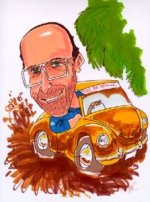

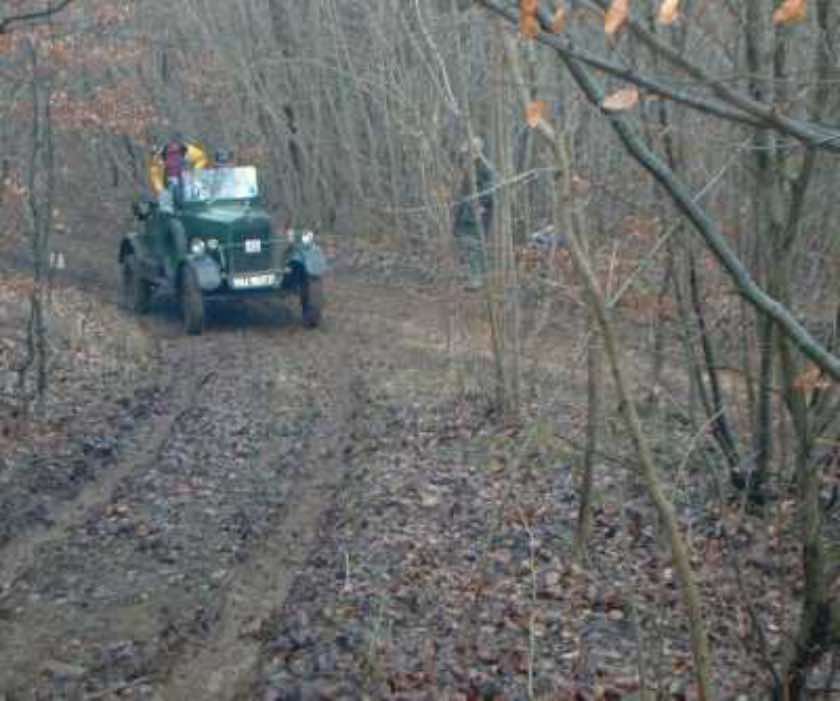


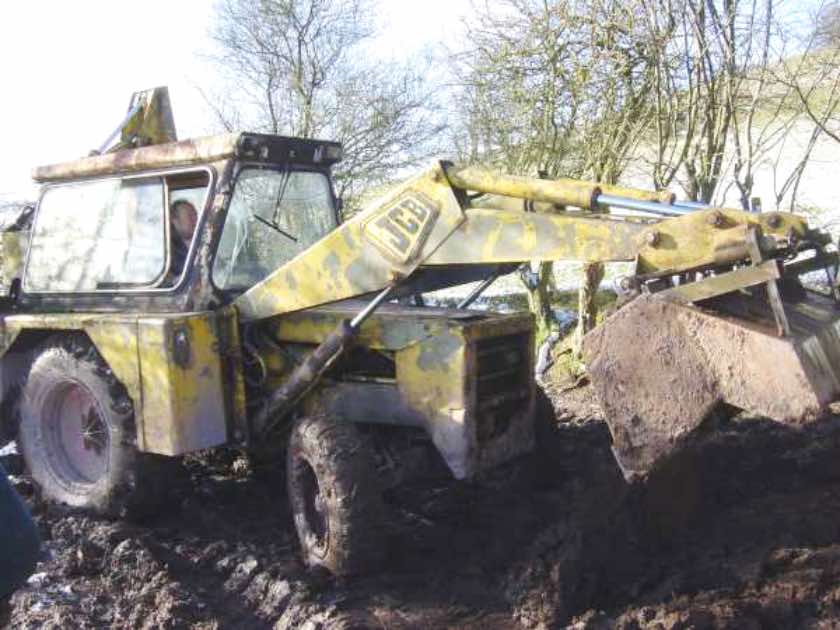


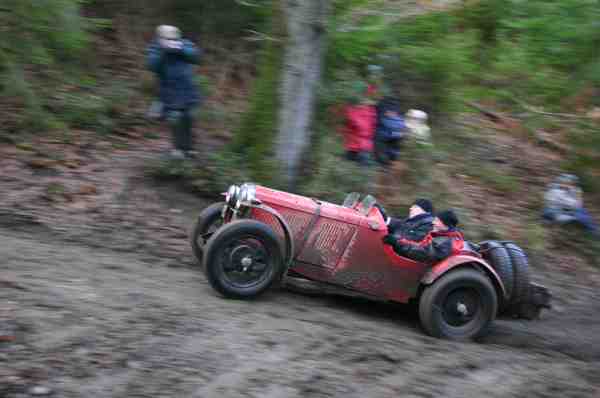
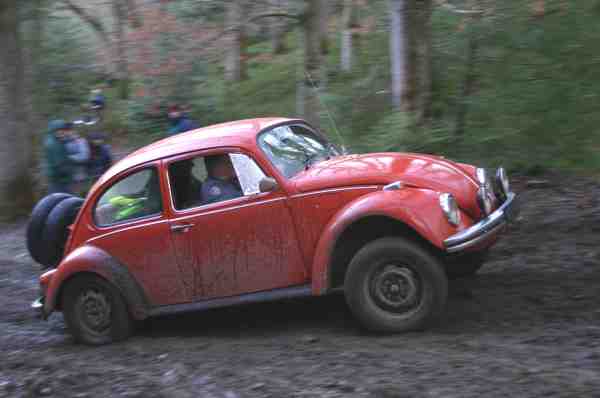
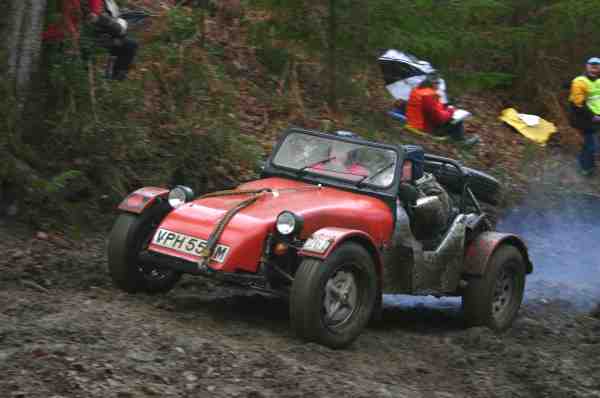
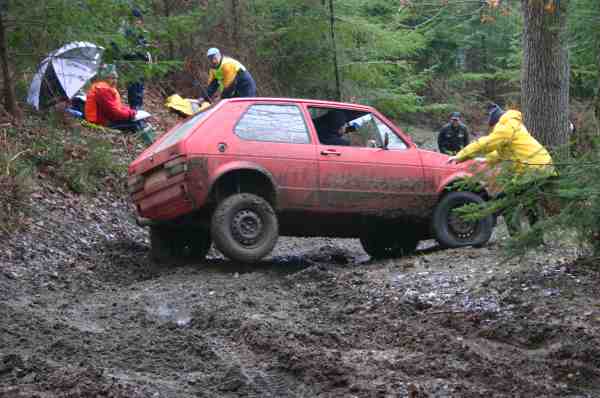



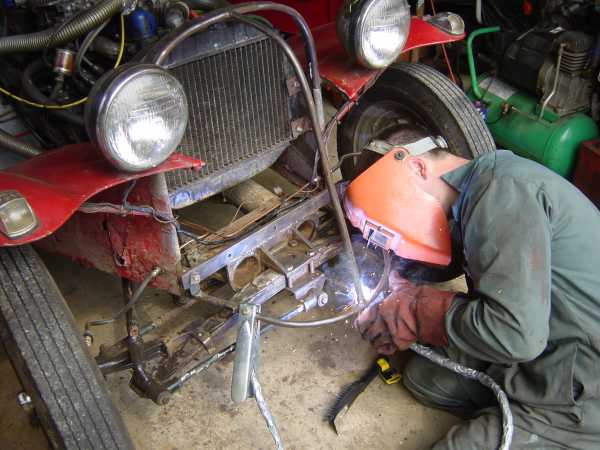

 Classical Gas