Behind The Falcon Badge by Ron Warren

In the early 60’s Ron Warren published a booklet about Falcon Motor Club. Recently I managed to obtain a copy. It provides a fascinating insight into how different things were in those days.

1. The Beginning

1948 cannot be considered as a good year for motoring, lean days because petrol was still rationed as an aftermath of the second World War, but Motor Sport was making a slow come-back even if the cars were mostly of 10 years or more in age. A new car was indeed rare, but enthusiasts were meeting and talking motor sport, and it was from the talk of cars round a bar that the Falcon Motor Club was formed in 1948. 

It was not long before the six founder members were joined by others and within a year the club was recognised by the R.A.C. and registered to promote competitions. To gain experience members would go and marshal for other clubs and the number of our events was very limited. When a kindly farmer would allow the use of a field, members would pay sixpence a time to have ago at a few simple driving tests. 

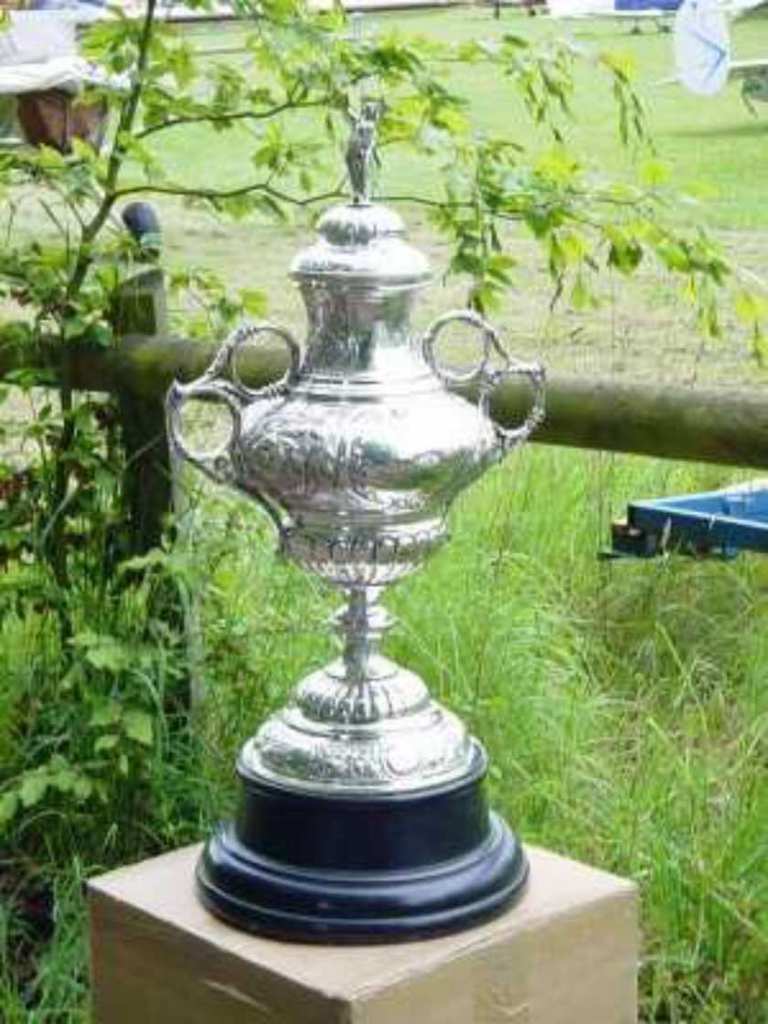
In the Autumn of 1949 a closed trial was held and the major award was the President’s Cup, our first trophy presented to the Club by Mr. J. Frye who became the first President. To have achieved so much in such a short time was due to the inspiration of David Chiles the Competition Secretary (he was one of the six founders) who was supported by his wife Edna, who was the Secretary, and such stalwarts as the Tucker-Peake brothers, Herbert and John, Jeff Bradford, Cliff Smith, John Mosely, Ralph Smart, Bill Avery, etc., and the full support of all the members. 

At this time motoring sport in Hertfordshire centred on just three clubs, Herts County were in the middle and Berkhampstead in the west were both pre-war clubs, whilst Falcon in the east were the youngsters of the trio, but such was the Falcon determination to get on, when Berkhampstead suggested we should have a sprint meeting at Tewin Water, a course which they used, this idea was not turned down. 

At first, it seemed impossible because we had no equipment and no money. A special meeting was held and it was agreed to carry on and have a sprint meeting in June, 1950. The members were so keen they pledged an extra subscription in case of any financial loss. 

Tewin Water was a private driveway used by farm vehicles and crossed by cattle, so fences would be needed to keep the cattle out and make car parks. With no equipment we had to borrow rope and posts, etc., and members dived into tool sheds for brushes, shovels and hammers and everyone pitched in including wives and girl friends.

2. The First Guy Fawkes

Needless to say with the spirit that existed the extra sub was not needed. The key to the club’s success can be summed up in one word – organisation. Whatever the event, the aim was always to have sound organisation, and the reward is our present fine reputation as good organisers. 

That summer of 1950 saw the end of petrol rationing so road events could now be held and in the Autumn the Club took another step forward by making the trial a closed invitation event. (Today’s status is restricted). This trial was held on November 5th so naturally it was called the Guy Fawkes Trial. I remember this day so well because of the sunshine, it was glorious, so nice, in fact, that to make the re-start line better on Tatmore End a small water trailer was towed up just above the line and the contents were then released. Who said nice types! 

With the route taking in parts of Hertfordshire and Bedfordshire it meant diving in the tool sheds again and on Sunday afternoons in late October members turned out armed with all kinds of clippers, axes, etc., to cut down the summer growth of brambles, nettles and such like along those parts of the route known as unmade roads. 

No one minded the work, in fact, they were happy days because everyone turned out to help. In 1951 the programme was enlarged a little and amongst the events held was another sprint meeting at Tewin Water on Whit Monday, but by this time the Landowner had the idea he was on a good thing and started holding out his hand. The condition of the road was not very good. and at the end of the year the property changed hands. The new Landowner had been told of the revenue to be had by letting Motor Clubs have a speed event on Bank Holidays (we had been liaising with Berko and Herts County) so with the road in poor condition and lacking the funds to carry out the necessary repairs. we had to cancel our sprint in 1952. 

Other events were developed and gradually our programme was getting larger. In Coronation Year on a scorching hot Whit Monday we had a sprint at Hundson. Closed invitation driving tests were also held there, but being a disused airfield the runways were deteriorating rapidly and parts were being broken up to reclaim farm land, so we had to move our speed meetings to Tempsford.. Although we were the first club to go there, other clubs soon followed, so did local driving instructors and the motor cycle boys, who are now referred to as coffee bar cowboys, and because of this later brigade Temsford was closed to all motor clubs after 1955.

3. Six Years On

Having passed the six-year mark, we had of course made some good friends and had had some changes in our Officers. I pipped David Chiles to the post by suggesting we have some Vice-Presidents and was very pleased to propose Jeff Bradford and Paul Sapsed as our first Vice-Presidents. 

Jeff Bradford is often affectionately called the granddad of the Club. Anyone who watched our last Autocross will tell you that in spite of sixty odd summers, Jeff can still show younger members how to drive a sports car. 

Paul Sapsed is remembered for his support to events and for his generosity to the club. Every motor club has its personalities and today we have our share. To start with we have four more Vice-Presidents. I have already mentioned the contribution to the club’s history of David Chiles and when he retired in 1958 he was one of three elected Vice-President. In ten years David had held office as Secretary, Competition Secretary, Chairman and Vice-Chairman. 

Peter Elbra had played his part in the early years of the Club as a committee member and for two years our Secretary. 

Peter Harper was by 1958 well noted for his achievements in International Rallies. To us he was also known as a former committee member and organiser of club events. 

Although small in statue, Tommy Bridger has made his mark in the racing fraternity as a top notch Formula 3 driver. He also drove for Pop Moss and in recent times been successful in one of the well-known M.G.A’s of Dick Jacobs. When Tommy retired from the committee last year he was elected Vice-President No.6. 

In our second President, Desmond Scannell, the club is fortunate in having another personality. For about twenty years Desmond was secretary of the British Racing Drivers Club and became known as one of the foremost organisers of motor racing in the world. Not all his motoring was connected with racing though, on two occasions he crewed with Stirling Moss and late John (Autocar) Cooper in the Monte Carlo Rally. 

Very early on in this preamble I mentioned the Tucker-Peake brothers and no story could be complete without more of their contribution to the Club. From 1949 to 1953 Herbert Tucker-Peake was Chairman and since then he has been our Competition Secretary .

4. Personalities

John Tucker-Peake is now our longest serving committee member and like older brother Herbert is a first-class organiser or official. Both brothers are also committee members of the Motor Cycling Club. 

Peter Allison, our present Chairman has been a steady and reliable member for a number of years now, Peter had only been on the Committee a short while, when he became Vice-Chairman and he has been Chairman since 1956. 

No Club can exist on just sporting events, the social side is just as important and Bety Tucker-Peake (wife of H.T.P.) is now well-known as our Social Secretary and organiser of our Annual Dinner and Dance. The Dinner she arranges is so popular that tickets are soon sold out. 

Anyone who follows motor races will know the name of Henry Taylor and we are proud that Henry’s first competitive event was as a Falcon member. Henry is still a member and is a former winner of the President’s Cup in the Guy Fawkes Trial. 

One of our best Clubmen is Michael Lawrence, who is also a long serving committee member. Ever willing to give a. hand. Michael has put in some hard work for the Club. The word hard can be taken to mean just that, before our first Autocross. Michael and myself put up some 400 yards of fence so that 60 head of cattle could be moved to allow practising to start. When behind the wheel of his Lawford Special (which he built in a barn at home) Michael is a fearless driver and in 1960 had a tremendous year winning four major awards.

Derrick Fleming and Ted Dives drive their own specials in trials, whilst Allan Piggott is known as a rally expert. I must not forget Van Fortin, as a stop watch clicker or marshal, Van has been a regular for many years and is our most experienced marshal. 

A study of the programme for a few events would reveal quite a number of regular names and of those I have not mentioned already names which spring to mind are Roy Robbins and his wife Ann, Reg Horsnell, Dennis Allen, Dennis Williams, John Sheldrick and many more. 

If we had a cap for a backroom boy it would have to go to John Jarman, who has been one of our steady behind the scenes workers. For seven years John was treasurer and as well as making frequent and rapid journeys to the bank to halt that red line, John made our timing equipment and pas spent many hours with rolls of wire, lights and batteries getting ready for various events. He is the type of person who can be shown a trials section and you can go away knowing everything will go as planned.

5. 1961

In actual numbers Falcon is quite a small club when compared with others, but size can have its compensations and we have been able to stay a member’s club. Not being too big also means in running a fairly comprehensive programme that we have made many friends outside the club. 

A valuable asset to the Club is our headquarters, The Chequers, Woolmer Green, where all members get a warm welcome from our hosts, Laurie and Kay Turness. 

The programme for 1961 has 11 events, five of which are restricted and six closed. Starting with January we have the Mardleybury Rally named after the major award. The Mardleybury CUp was donated to the Club by Paul Sapsed and previous winners of this popular half-night rally race are: 

1953 J. Jarman
1954 P. C. E. Harper
1955 A. Joyce
1956 D. R. J. Emmett
1957 P. D. Sapsed
1958 J. Sheldrick
1959 Mrs. A. Newland
1960 R. Winder 

February is reserved for our Annual Dinner and Dance and presentation of awards, an occasion which is now very much apart of the club year, so motoring activities pass on to March when we hold a restricted trial called (you are so right) the March Hare. 

This trial was first run as the Midsummer in June, 1956 and again in 1957, the major problem was in finding a course which was not overgrown, so in 1958 we moved to March to miss growing hedges, and now we have an appropriately named trophy in the Mad Hatter. 

Previous winners are: 

1958 N. Tyler
1959 N. Tyler
1960 M. Lawrence 

In April a night rally has been held for some years and early in 1958 when organisers were being agreed on somehow a suggestion was put forth that the ladies should have a crack at a rally. The idea was taken up and so the Rally Venus came about and is now a regular fixture. Ladies the sole organisers of a rally, many a man has scoffed at the idea and many a man has entered for a laugh. Many a man has also scratched his head afterwards and grudgingly admitted that our ladies can organise a first class rally.

6. Autoscross

On the grapevine I hear they have some new ideas for this year. 

Previous winners of the Venus Cup (presented by Miss Patsy Bickell) are:

1958 P. D. Sapsed
1959 P. D. Sapsed
1960 R. I. Winder 

May will find us in Stevenage for our restricted Driving Tests. This event is known as the Falcontest and was first held under this name in 1959. To find a suitable venue for driving tests is a problem and this time we have a new and possibly unusual venue in the Football Ground at London Road, Stevenage. Actually, with the changes in Stevenage through the New Town this ground will cease as a football pitch at the end of the present season. However, a grass course should prove interesting and I expect competition to be keen amongst Falcon members competing for the Pictorial Cup. 

1959 N. Tyler
1960 M. Lawrence and N. Tyler 

Flaming June (we hope) and the permit will be closed for some friendly club driving tests which for several years have been held in a field at Woolmer Green by courtesy of Dudley and Tommy Bridger. With long summer evenings this has been a family affair with the children playing in the field while Dad gets tied up in knots and picnic parties under the trees. 

1958 was quite a significant year for the Club for three reasons, the first was our tenth birthday, the second was an event run by the ladies, and number three our first Autocross. Ever since Tempsford closed we had been looking for a course not too far away to hold a speed event, but having had no luck for two years, we approached our farmer members and now hold an Autocross meeting in July. Apart from individual awards the main competition centres on club teams. Norman Tyler, who often delighted spectators with some hair raising runs in his Chandler Special presented the cup for the winning team. 

Winning Cub teams are: 

1958 Sporting Owner Drivers Club
1959 Cambridge 50 Car Club
1960 East Anglia Motor Club

7. Falcon Express

For several years a daytime rally was held in August or September. Being a time of the year when holidays are talked about, the competition was not too serious, the main theme being to have an event in which the family could take part. Last year the Royal Automobile Club brought in new limits on the number of road events we can hold, we had one too many so we changed the family rally into a Gymkhana, and we have one this year. A Gymkhana is good fun and the family can all take part. It is another occasion for a picnic as well, and the winner collects the Rally Cup-Presented by Ralph Smart: 

1951 J. Jarman
1952 P. C. E. Harper
1953 R. Smart
1954 P. G. Elbra
1955 J. Christopher
1956 P. Angus
1957 P. D. Sapsed
1958 H. W. Tucker-Peake
1959 Mrs. B. Fleming
1960 E. Singer 

September and the scene is Snetterton for the Falcon Express. Such a name makes one think of moving quickly and the original booking of Snetterton in 1959 was for a sprint. 

This first booking came about after Tommy Bridger had seen the circuit managers, we were busy with our preparations when we received a smack in the eye. It transpired our date clashed with a National Hill Climb and the organisers objection to our sprint was upheld by the Royal Automobile Club. So we had a course and no event. Out of disappointment the idea was born to have driving tests with a difference. The rules say no test must exceed 200 yards in length, so with plenty of space we had tests of 199 yards. The competitors loved it and asked for more, so the Falcon Express has quickly become a regular fixture. 

The major award for a Falcon member is the Duckham Trophy presented to the Club by the well-known Oil Company: Winners are: 

1959 J. Sheldrick
1960 A. M. B. Piggott 

October is blank this year but whilst members are taking things easy, a few of us will be burning the midnight oil in readiness for Novembers main fixture, the Guy Fawkes Trial. Very early in this story I referred to this event which is now our oldest fixture. The character underwent a major change in 1954, when a night route was first used together with the Cotswolds. Every year since then the entry has increased, reaching the 100 mark last year.

8. Guy Fawkes Develops

For me the Guy Fawkes is my favourite event, for four years I was Secretary of the Meeting and on my first run as a competitor in 1958 I was the lucky man with the only clean sheet and the President’s Cup. 

Going back to early 1954 for a moment, and before the change in style in the Guy Fawkes, David Chiles had had the idea of a long event as far back as 1950, but the Committee wanted to wait a year or two before undertaking a full scale trial, so it was early in 1954 when a small party went exploring in the Cotswolds. Maps were carefully checked, and anyone who we knew who could possibly help was contacted, and so gradually a route was found, then letters were sent out to various clubs asking if they would like an invitation to such a trial. This idea appealed to other clubs, and the Guy Fawkes as we now know it was started. To be able to say that the Guy Fawkes is a ” Classic ” gives me a lot of pleasure, as it does to record that our Club although started after the War, has in the Guy Fawkes one of the only remaining links with pre. war trials. 

The only other “Classics” are of course the “Exeter” and the “Lands End.” In these latter two events it must be remembered that the competitors compete against the Club, whereas in the Guy Fawkes competitors compete with one another, and we have an outright winner. 

For the club the Guy Fawkes has brought us many friends. and many new members. It has also made the club known amongst motoring circles over a wide part of the country. 

Trials of this nature have an atmosphere which is quite different from the average rally, time is the deciding factor in a rally. and competitors have not the time to stop for one another, but in a trial the time schedule is easier, because the observed sections decide the winner. So, the atmosphere during the event is , much more friendly, and the newcomer can be sure of some friendly advice when tackling his first observed section. A lot of firm friendships have developed from trials, and many of the regulars run together as a team. Three of us (H. Tucker-Peake, D. Fleming, and myself). who run together on M.C.C. events formed a team, and “The Falconers” are well known amongst trials folk, and when- ever we are out, the talk always turns to Falcon events. “The Falconers” are also the spearhead of the sub-committee which organises the Guy Fawkes. One of the tasks we have to do is a trip right round the route. On these occasions, Peter Allison usually joins us, not that the trip is any joyride though. The big problem is to find a new hill, and our searching has taken us many hours, when we are lucky enough, then we reckon to walk it first, to look for any snags, then if the hill is alright we have the route card to change, and a route card must be accurate, otherwise the whole entry can take the wrong road.

9. Guy Fawkes Hills

Mind you, on some of these expeditions whilst being long as regards hours, because we have to leave early in the morning, and only have time for a sandwich and an odd beer while making the most of daylight, we have had some amusing experiences. The first year we had a look at Axe, we were told,by the good people in the pub at the bottom that we would not be able to go up in a saloon car. We told them not to worry, we were used to driving up such hills. Unfortunately we got stuck, and having said we could get up, we could not go back, so we did some pushing and got up. 

One year we did our route survey in a Mark VII Jaguar, and got stuck on the approach to Battlescombe, and the funny part was after a lot of pushing we found a very easy route out of the field. 

Although we are always on the look-out for something new, the Guy Fawkes retains some hills which were used for pre-war trials, amongst the favourites are Postlip, which is a timed climb in the dark, Ferriscourt is a daytime timed climb, and Nailsworth Ladder is a first-class observed section, which always attracts a large crowd of spectators. Locals usually gather in large numbers on Fort I and Fort II. 

As the event has grown, so the number of cups we have for the Guy Fawkes has increased. Previous winners of these cups are: 

Presidents Cup : 

1949 H. W. Tucker-Peake
1950 B. Brown
1951 J. C. Smith
1952 J. C. Smith
1953 J. C. Smith
1954 H. Taylor
1955 D. Price
1956 D. Price
1957 A. D. Joyce
1958 R. E. Warren
1959 D. G. Fleming
1960 M. J. Lawrence

10. The Guido Vase

Falcon Cup: Presented by Mr. and Mrs. D. Chiles. 

1954 J. T. Skinner
1955 J. T. Skinner
1956 G. S. Edwards
1957 P. S. Banbury
1958 Miss D. Freeman
1959 P. Scott
1960 C. W. Ellison 

Peregrine Cup: Presented by M. J. Lawrence. 

1956 J. P. Davis
1957 G. A. Robins
1958 C. E. Warfield
1959 J. P. Davis
1960 G. S. Edwards 

Kestrel Cup: Presented by D. G. Fleming. 

1959 M. J. Lawrence
1960 M. Barker 

Bouncer’s Bowl: Presented by Ron Warren. 

1959 Mrs. Betty Fleming
1960 Miss Pat Masters 

Another competition is now run in conjunction with the Guy Fawkes and is known as the Guido Vase. The course is not quite so difficult and the object of the Guido Vase is to give the newcomer the chance to gain experience before having a crack at the Guy Fawkes. 

Previous winners of the Guido Vase, presented by Mr. and Mrs. H. Tucker-Peake are: 

1957 F. A. Freeman
1958 R. H. Porter
1959 H. J. Norris
1960 W. W. Bridges

11. The Mudlark

November ends with the Zelly Cup Rally. The formula is similar to our other rallies and usually starts around 8 p.m. with the first man home by midnight, sometimes depending on the length of the route all have finished (or should have) by midnight. 

Previous winners of the Zelly Cup, presented by E. M. Zelly Esq: 

1953 P. G. Elbra
1554 P. G. Elhra
1955 P. C. E. Harper
1956 V. Prior
1957 P. D. Sapsed
1958 P. D. Sapsed
1959 P. D. Sapsed
1960 E. Singer 

Last December saw the revival of an old event, The Mudlark. The main idea being an informal event with no time schedules, rather it is in the nature of a conducted tour of a few local trials hills with a small competition included. For the newcomer this is a wonderful] chance to have some practice before entering in a trial. 

The cups listed in this summary of fixtures are by no means all we have, because we have 3 cups which are won on a points basis over the year, the year for these cups being Dinner to Dinner. 

Everyone who is connected with any event either as a competitor, organiser, navigator or marshal is allocated a number of points, and committee man Ted Dives keeps a log of all these points. These Cups are as follows : 

The Clubman Cup presented by Mr. H. Crowe goes to the most consistent member who has not won an award in the year. 

1953 Mrs. B. Tucker-Peake, V. Fortin. P. Allison
1954 E. Dives
1955 E. Dives
1956 E. Dives
1957 R. Horsnell
1958 E. Dives
1959 R. Robbins
1960 Mr. and Mrs. H. Tucker-Peake

12. London Counties

The Angels Cup presented by Cecil Ritch. 

1954 Miss J. Ritch
1955 Mrs. B. Tucker-Peake
1956 Mrs. B. Tucker-Peake
1957 Mrs. B. Tucker-Peake
1958 Miss G. Warren
1959 Mrs. B. Tucker-Peake
1960 Miss G. Warren 

Joint Vice-Presidents’ Trophy presented by Jeff Bradford and Paul Sapsed.

1955 V. Fortin
1956 H. W. Tucker-Peake
1957 A. Piggott
1958 R. Horsnell
1959 D. G. Fleming
1960 R. E. Warren 

Just before I started this booklet the Club was given another new trophy by North Central Wagon and Finance Co. (London) Ltd. 

Quite early in this story I said we had three clubs in Hertfordshire. That was so when Falcon first started but by the mid 1950’s many new clubs had been formed including many Works Clubs. 

With an eye to the future the Falcon Committee recognised the need for clubs to get together and so after the exchange of many letters and views spread over some eighteen months, I was able to call a meeting early in 1958. At a second meeting in July 1958, Falcon were one of twelve clubs who took part in the formation of the London Counties Association which now has nearly 40 member clubs. For 2 years I was Secretary of the Association and now serve on the Committee. Our Competition Secretary is Association Chairman for the third year running. 

My little story may recall some pleasant memories for the club member. The newcomer may after reading these few lines realise that all motor sport organised by a club which is registered with the R.A.C. is properly organised by people who know and love their part as members of a motor club. Perhaps they would like to join us. 

For the present, my tale is complete. but who knows in a few years time maybe I’ll have another story to tell from Behind the Falcon Badge.


We have been publishing stuff about Classic Trials on the Web since 1995 and always appreciate feedback. Comments, Corrections, Criticism & Concerns are all welcome. You can leave a comment to have your say here on this web site or our Social Media

Me and My Dellow

Michael with Mike Hayward in his Dellow on The March Hare. The high bonnet line, outside fiddle brake and abscence of doors identify it as a Mk 1.
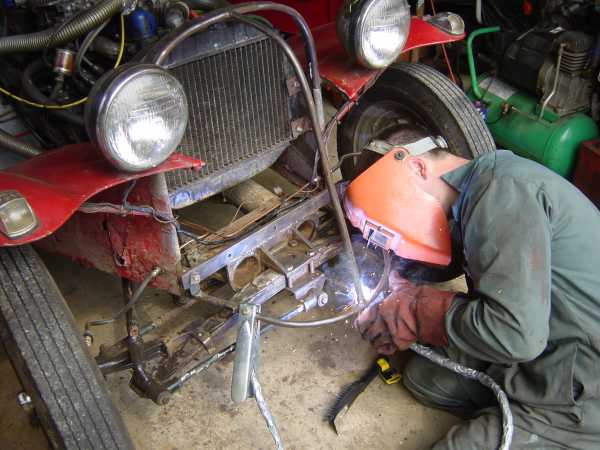
As can be seen from this picture there is a lot of work to do to bring the car back to good condition.

I have had many years of enjoyable trialling in my Yellow Beetle since I bought it back in 1990. It’s been developed into a very capable Classic Trials car, but in recent years I found it lacking in two respects.

When I changed to a 1300 so I could compete in class 4 to reduce the number of re-starts I managed to obtain the ex-Robert Clough Triple winning engine. This is a great motor for classics, but is far to “peaky” for the local PCT’s,. 

The family bought me a Nova for Christmas and I had fun in that until Murray arranged for me to passenger Dudley Sterry which decided me I wanted an open car. A Troll was my first choice and I had my eye on David Aldersons car before David Thompson snapped it up. 

Then, on this years Clee Hills I suddenly decided to get a Dellow. Not an original spec car, an 1172 side valve and 3 speed box wasn’t appealing, No, I wanted a class 8 cross-flow car. 

It was remarkably easy to find one. An e-mail enquiry to The Dellow register put in me in touch with Jim Harvey who told me there were two cars available that fitted my spec. One was in the West Country in good nick, the other in Yorkshire and a bit tatty. They were both the same price! Further questioning revealed that the good one had worn three registration numbers in its career and it didn’t have a chassis number. The tatty one had a complete provenance and that was the one that ended up in my garage. 

It’s a Mk1 which means no doors, a high bonnet line at the front and that glorious outside fiddle brake. It left the factory on 8th December 1950 for The Regal garage in West Croydon who had it on their books until 2nd May 1951 when it was bought by a Mr Herbert Wilson. He sold it three years later and it went though a succession of owners until it ended up disused in a barn near Chichester. 

It came to light again during a house clearance and was acquired by Porsche enthusiast Peter Wilson who had it converted to its present spec by his local agricultural engineer. 

The conversion is functional rather than elegant. The Escort axle has a much wider track than the original so the wheels stick out. Most conversions use the narrower axle from a 105E. The other very noticeable thing is that the air filter sticks out of the bonnet which rather offends the purists. 

Frankly a lot of the engineering on the conversion was not done very well and as the body has never been restored it is not a pretty car. That is part of its charm. It goes and I can use it but there is plenty of scope for me to exercise my mechanical skills. 

In the time I have owned it I have completely stripped and rebuilt the brakes, introducing me to the joys of making brake pipes. Fifty years of grime and rust have been cleaned from half of the chassis and new paint applied. I have also done quite a bit of re-wiring and got some of the instruments to work. 

It has had five competitive outings, two PCT’s, the March Hare and two autotests. I have discovered that under high bonnet temperature can cause it to refuse to start when hot, so I have fitted a decent electric fan which seems to solve the problem. 

So I am certainly enjoying my Dellow but it will be a while before it ventures to far from home. First because it needs a lot more work before it can be trusted mechanically. The second is that I have to find a way to fit my lanky 6ft frame into it properly!


Following “Me and My Dellow” I had an interesting email from Nigel Brown which he has given me to publish here:-

Michael,

Very pleased to see you have joined the Dellow brigade. I ran my Mark 1 in various forms over the 17 years that I trialled it.

bulletGutless E93A on original SU’s. 
bulletE93A plus Shorrocks. 
bullet100E plus Willment OHIV on SU’s 
bullet100E plus OHIV plus Shorrocks 
bulletand finally 1500 pre cross-flow Ford on SU’s. 

Sold ECL 787 in ”87 as I had got the Allard Special well sorted by then and I needed the money to help restore our C16th ruin of a cottage! I still have the (basket-case) Lightweight Dellow (and the above OHIV engine) that Tony Marsh built for speed events. Terrific photo of it on the grid at ’54 Silverstone over on the Dellow Register website

Even with the well tuned 1500 my Dellow never ran hot on its original radiator. Yours looks to have been fitted with a very much smaller modern rad.  

Terminology. Dellow’s don’t have “fiddle brakes”. NTF cars do – to operate either back wheel, Dellows never did. The outside handbrake on mine (when on original cables) operated front brakes when pushed forward and vice versa. 

Wide axle. When Peter Le Couteur and I set about putting a “modern” axle in our Dellows we discussed and arrived at the following. 105E axle. In standard form the pinion flange is in fact offset to one side. By cutting opposite side casing only (around 2″ from memory) we brought axle width down and centralised pinion. We had just one halfshaft to respline, recut along shaft (using originals to register cutter) and then finally took the approx. 2″ off the end. This, with 4-to-5 stud adaptor plates we made, gave us exactly the same width rear track as the original axle. 

If you have any queries and think I may be able to help, please don’t hesitate to email or phone me. You deserve a medal for the website, it is informative and unfailingly interesting. It is now the only way that I keep in touch with the sport.

Good luck with the Dellow. 

Regards 

Nigel Brown


We have been publishing stuff about Classic Trials on the Web since 1995 and always appreciate feedback. Comments, Corrections, Criticism & Concerns are all welcome. You can leave a comment to have your say here on this web site or our Social Media

Baldrick’s Allen

Baldrick Goes Dirty on the Allen

by Myke Pocock

Myke Pocock and Chris Veevers in Baldrick on Birch Hill

The Allen was to be my 2nd ACTC trial and my 4th in total having failed on this years Edinburgh due to mechanical failure due to poor car preparation. No use trying to blame it on anyone else as it was my fault. The plan was to have one last trial in 2004 then possibly the Kyrle next year before my friendly surgeon exercises her, I hope, not inconsiderable talents on my knackered left ankle. Due to the Edinburgh problems Baldricks new semi-independent rear end and accompanying new found ground clearance had not been blooded in serious competition so I was looking forward to a change in the handling characteristics and boy did I get it! 

Er’ indoors declined my invite to occupy the left hand seat so a secret weapon in the guise of Chris Veevers was drafted in to offer knowledge and bounce. Whilst Chris had not actually competed on the Allen he and Martin Willis had spectated and video’d in 1999 as part of their research prior to the first Northern Trial. He was therefore able to offer valuable advice from that and previous competitive outings in his old Skoda and more recent Beetle. I also found Michael Leets reports on his site from previous Allens gave valuable information on some sections making tyre pressure choice a little easier. That and the comments freely given by other competitors at the section starts make it such a delight to compete. 

With a one way mileage of near on 300 we had decided to travel on the Saturday, B&B overnight, compete and then travel home on the Sunday. Collecting the trailer from Chris’ and loading Baldrick gave little indication of the trauma to follow later in the day. Setting of at a little past mid-day and simply travelling through Carlisle to the M6 gave a little indication that all was not well in the handling department but it was on to the motorway and increase speed only to discover that at anything over 50 the trailer started to snake slightly. Chris then announced that I had loaded the trailer up with the car facing forward and consequently the engine was at the back. Not exactly conducive to good handling! We stopped at the next junction to re-organise. Was this going to solve the problem? Setting off back on to the motorway showed little improvement. My God, this journey at 50 was going to take some time. After a few more fishtails I was getting increasingly worried then the BIG ONE. Going down hill and a little over 50 everything happened. It must have looked spectacular as the cars in the middle and outside lane anchored up and put their hazards on. Was that just to look at the entertainment or were they worried as well? I suspect the latter. We immediately turned around, set off back home where the trailer was substituted for our club A frame then got back on to the road, some 3 hours later than planned. We decided that the combined car and trailer weight was simply too much by far for my tow vehicle. A lesson learned with, fortunately no drastic outcome. 

Due to our delay we arrived in the area beyond 9pm and failed twice to find somewhere to get a meal. Ironically we finally managed to get fed and watered at The Cross House, the trial start venue and 2 minutes drive from our B&B.

Following signing on the following morning and a pretty comprehensive scrutineer we had time to chin wag and drool over some of the assembled machinery. Chris was particularly interested in the Beetle spare wheel carriers on display as his failed on the Ilkley Trial and a new one is planned. It looks like one manufactured from large section tube as fitted to Giles Greenslades new Class 6 Beetle will fit the bill. 

Eleven minutes past ten saw car 72 set off for Section 1, Tog Hill where, with 18psi in the tyres, we had an easy run to the top to shake things down well for the rest of the day. There then followed a 10-mile road section to the next section. This involved passing some earlier competitors cars well covered in mud prompting an in car discussion on just what lay in store at Birch Hill. On arrival we were greeted by a queue of at least 15 cars waiting to cross the field to the start of the section. In threes they set off, some having trouble even with the ruts on the access track to the section. The return of a Marlin and Dellow down the track certainly put in question our ability to clean the section. Anyway, after a good half hour we set off and had a brief wait at the section start with time to drop the tyres to 12 before our chance. From my research I knew to keep momentum going to the right hand deviation into the field and that there was a patch of clay to negotiate. Some understatement that!!! What a cracker. We were faced with a field covered with deep tyre tracks in thick mud from previous cars and my thought was no way were we to get though THAT. However Baldrick had other ideas and we kept going, and going,……. and going but I was convinced that as it got a bit steeper we would bog down. Not a bit of it and with Chris’ instructions shouted in my ear to “Keep going Myke, we haven’t finished the section yet”, we cleared the brow of the hill and negotiated the mud lagoon in the corner of the field before the road, declining the route book request ‘to stop there and remove mud’. I don’t think so. We now had the answer to why all those cars were mud covered. 

A further 7 miles or so saw us tackle Bitton Lane which eludes my memory apart from our note that it was stony and muddy with a tyre pressure of 12 this time and we made the restart OK and cleaned it. It was then on to Guys Hill which I knew slightly having seen it on the video. No restart for us Class 4’s on this one and 12 psi once again but we ran out of puff at the 3 marker after generating a good quantity of tyre smoke. Perhaps we should have kept the tyres a bit harder but it probably wouldn’t have made any difference as it was pure power that we lacked. 

A further short run to the two Special Tests where 1 went OK and 2 is best forgotten about with an over run on the CC line. Now, I had decided that a quick time was not necessarily required as I wouldn’t be in line for class honours but a fail was definitely not on the agenda. However, when push comes to shove and the red mist comes down you go for it don’t you? What a difference 6 points made in the results. If my leg had been long enough I would have kicked my own backside. 

The next Section was Travers Hill which we noted as a rough section with much banging from the underside and, following a clean and run out at the top of the section I detected a familiar noise from the front end. My Edinburgh this year had started and finished after the first section due to a failure of the two lower shocker mounting bolts on each side at the front end. This was due to me raising the front end by swapping the wishbones side to side and failing to re-weld the mounting nuts. This time it appears that one new weld has failed but the bolt was still captive so apart from a slight rattle battle could continue. Nevertheless I double checked the bolt at the following lunch halt but all was in good and useable nick. 

After feeding and watering ourselves it was a short run to another of my top hills of the trial, Burledge. Again we had something of a wait here, cars being allowed up in threes to the start which gave us time for another chin wag, some research on how to drive the section and what pressures where advisable. There was also a rather tasty Lotus 6 parked at the bottom that got my attention. It was here that Harvey Walters came hurtling back down to the holding area and parked it on the verge with gearbox selector problems. Once again we dropped pressures to 12 and we knew that there was a ridge across the section shortly after the start needing a bit of care but after that it turned slightly right, increasing in steepness, getting narrower and narrower and the ruts deepening towards the top. Once again a terrific hill but I don’t think we could have got any better than our 4, simply running out of grunt, but how the hell does Adrian M clean that hill with 1300cc? 

It was now getting towards dusk as we headed to Nanny Hurns where we passed a sad looking Class 8 parked up by the roadside having lost its offside rear wheel. Once again I had something of an idea of what to expect, or thought I did. as Chris had also videod this hill. I liked this one too but thought there was no way we would get around the bend. Baldrick, however, had other ideas and with something like a wall of death technique, the banking keeping us on line, we shot round the bend with me expecting the section to go on and on. Not so as it ended just a little further on. 

By the time we got to Little Uplands headlights were needed and we had to negotiate what looked like seriously deep puddles in the lights on the track to the section start. After a short wait all I can recall were some serious bumps on this one, looking far worse than they were I suppose as the headlights cast large shadows. The last hill of the day, John Walker was also known to Chris and I know he had been looking forward to this all day. Following a brief stop in the holding control, time to drop pressures to 10 I think, we were at the start. The marshal reported that the water in the beck was not to deep so remembering Chris’ instructions to take care through the beck we set of, once clear of the water giving it some stick as instructed. After the slight deviation about half way up it seemed to get rougher and rougher, at one stage the whole of the front end lifting off and crashing down. Terrific!!! With about ¾ of the section complete we were just about celebrating our success when I suddenly lost traction. Suspecting that the gearbox had jumped out of gear I pushed the clutch peddle down and the gear-stick forward with no apparent result. Drop the clutch again and boot the throttle, but slightly suspecting that we had stopped for a brief moment, we slowly but slowly crept to the top of the section and parked on the road. Inspection revealed that we had rolled a near side rear tyre off the rim, at the time I thought due to probably having the pressures too low. The well of the wheel was polished down to bare metal with no hint of paint with the friction and spinning of the tyre Had we made it though? On Chris instructions I ran back to the marshal who, with a comment that was music to my ears, announced that “I will give you that one”. Subsequent investigations a few days later revealed the failure had been due to two adjacent cuts in the outer side wall of the tyre of about 1 and 11/2 inches caused presumably by a sharp rock. 

A quick change of wheel, a short drive back to the Cross House, sign off at about 6pm then back to the tow car to set off home. We finally got home at about 12.30 after a cracking days sport. Baldrick had run a treat with the new semi-independent rear end and raised ground clearance performing as hoped for. All there is to do is fit a new tyre, weld the shocker mounting and apply a little delicate momentum to a club hammer to knock some dents out of a couple of wheels. 

My thanks to Chris Veevers for acting as passenger and mobile expert and to Bristol Motor Club for a very enjoyable and well run event. Finishers certificates individualised with competitors names was a nice touch as was the short article from the organisers that accompanied the results that arrived by post a few days later.The problem is, of course, as I begin to experience all these cracking competitions I want to do them again every year. Cost and mileage will prevent that one though so it is nice to see that Ilkley Motor Club are to become members of the ACTC and to hope that their trial will become a regular fixture in the North of the country.. Wouldn’t it be nice for us northern competitors to see more new trials in this neck of the woods. Who will be next to organise one? A Scottish club perhaps? 

Myke Pocock with Chris Veevers and Baldrick.


We have been publishing stuff about Classic Trials on the Web since 1995 and always appreciate feedback. Comments, Corrections, Criticism & Concerns are all welcome. You can leave a comment to have your say here on this web site or our Social Media
Ian’s Allen

Class Eight winner Ian Davis reports on his Allen Trial

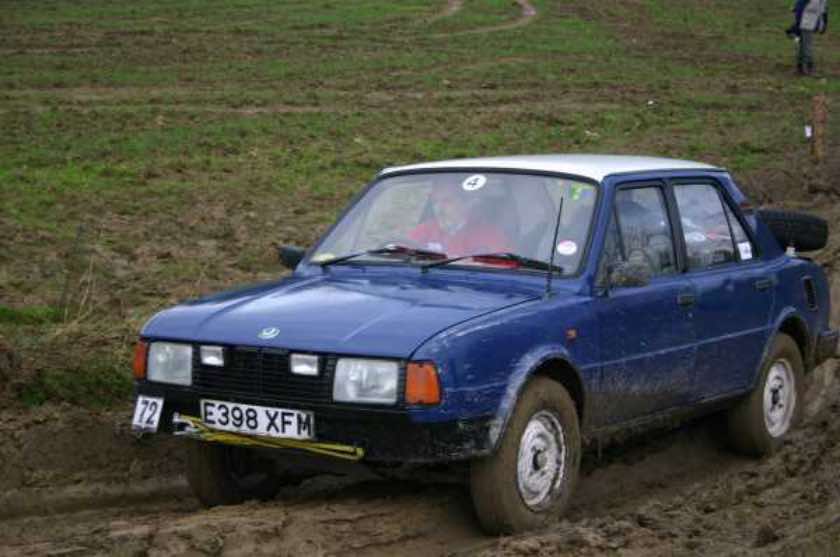
Ian Davis climbing Birch Hill in his VW Buggy. Ian won class eight despite arriving at the finish with a broken diff.

I haven’t done the Allen for five or six years and was surprised at how much we enjoyed a trial with only 9 sections, where the first class 8 car finished 14th overall! We drove down from Oxford on the day but as things transpired this was not such a good idea. 

I had never seen Birch Hill before, it was enjoyable at the time but how much clay is there stuck to the car now? Not as much as to Paul’s Troll by all accounts, but still plenty. 

We were travelling with Brian Partridge, Adrian Marfell and Tony Young and watched Tony fail to trickle off the Guy’s restart. We wondered how we would get on, as I can’t remember ever getting off it. We already knew Paul Bartleman was the only one to get away, so the pressure was on for us to pull something out of the bag. We just managed it, with much bouncing, a quick change to second gear and lots of tyre smoke! In the end the two of us were the only Class 8’s to get off the restart and there was only one from classes 6 & 7, Gary Browning in the Type 4 engined Beetle. 

On to the special tests which were well laid out. Long enough to be worth doing, but not just a question of most power wins. The second one, which went through a lake of smelly water, was great fun in an open car as you can imagine! We managed Travers OK and went on to the lunch stop where we watched Camel organiser Hans Viertal and Pete Barr effecting some running repairs to Pete’s 1300 Beetle which wasn’t going too well as its brand new twin carbs were out of synch. 

Burledge was the first hill after the break. Brain Partridge had retired with a broken diff by now, it must have happened on Travers as the diff test was immediately before. No one had got up Burledge so a chance to pull ahead of Paul who had grounded out (running at the front). Tony Young was first car to get up followed by Adrian who stormed up in his 1300 and then us in the Buggy, again with the use of second gear after the restart. We watched a valiant effort from Dave Shaylor in the 1300 Beetle, but he stopped just yards from the top. As did one of the Trojans which apparently got pushed out the top, what a great effort! 

Harvey Walters jammed the Escort’s gears trying to change up near the top of the section. The solution? Chisel through the floor of the car, take the top of the gearbox off, un-jam the gears and complete the event….obvious really when you think about it 

A very slippery Nanny Hurns and on to Little Uplands. Conflicting reports from the start marshals as to whether anyone had got off the Class 8 restart. In the event no-one did although we tried long and hard before finally having to give best to a cunningly placed restart line. Dave Foreshaw unfortunately stopped on the Class 7 restart line which looked somewhat easier. At the top of Little Uplands we were pretty down, having failed the restart, as we knew Adrian Marfell in front of us was still clear and we were trying for a top 10 finish for the Wheelspin points. Bizarrely Adrian wanted to finish outside the top 10 but win his class as he wanted Crackington points not Wheelspin points. 

We went up John Walker too fast, smashed the car on the ground (I don’t remember it being so rocky), punctured a tyre and experienced very strange steering on the road on the way back to the finish. Half a mile away the diff broke and we coasted down to the pub to sign off. The real trial for us then began, getting home courtesy of the RAC…but I’ll save that story for another day. I must remember to tow the car to events more often in the future! 

Also seen on the day was the latest of the Jones family from Bristol in a lovely old Lotus. He hill climbs and sprints it but tells me he’s going to maybe start trialling a Cannon next year. His elder brother Matthew was a leading contender in the early 90’s in the Dingo now owned by Pete Fear. Dad has also competed – in a blown Dellow I think but more recently in a VW special. 

That’s it, must stop now and finish replacing the gearbox in time for the Camel this Sunday.


We have been publishing stuff about Classic Trials on the Web since 1995 and always appreciate feedback. Comments, Corrections, Criticism & Concerns are all welcome. You can leave a comment to have your say here on this web site or our Social Media
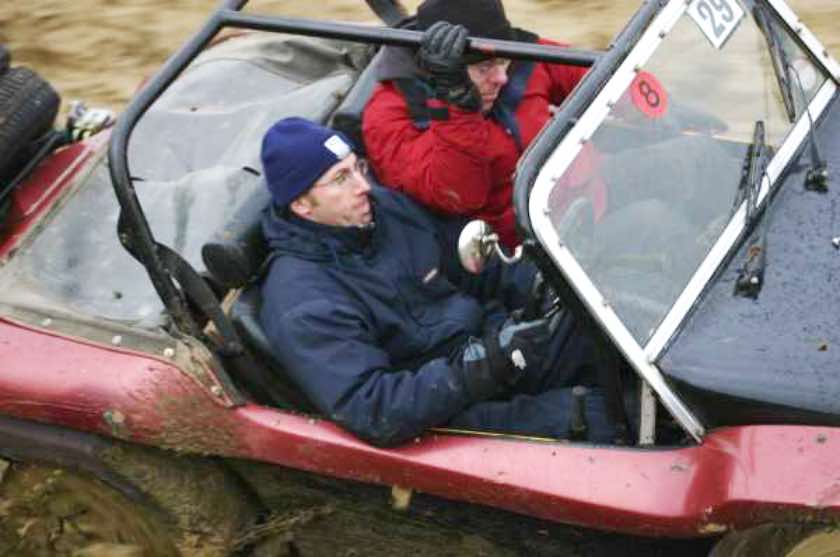
FWD Victory on Allen Trial

David Haizelden was won The Allen Trial with one of six clean sheets. Victory going to the Green Golf on special test times. Take nothing away from David though, as getting a FWD Golf on 13 inch wheels to the summit of Burledge is a fantastic achievement and he earned a well deserved victory.

Allen Trial winner David Haizelden on Birch Hill

Pete Hart, Mark Tooth and their team had a full entry, and ideal trialling weather, for The Allen which maintained its well established format. All the sections, with perhaps the exception of Nanny Hurns, being run on real old roads, with no Mickey Mouse stuff marked out with tape. 

Togg Hill was a nice easy starter before venturing back across the M4 to Birch Hill. This starts on a nice stony surface before venturing into deep, glutinous, mud as the track goes uphill alongside a field. The problem is that there is quite a camber, dragging the cars against the side of the bank where the ruts are deepest. The early numbers were at a definite disadvantage, as were class eight who had a restart. It was necessary to build up a fair head of steam to get through the mud and Duncan Welch was one who didn’t have the speed to get through. 

Ground clearance was a big factor as well as speed, and none of the sports cars in class 5, or Stuart Cairneys Imp made it though to the summit. Stuart had the misfortune to get a puncture and got wedged against the bank, necessitating a Land Rover tow as did Andrew Brown later on. The most spectacular climbs came in class two. Adrian Dommett and Bill Bennett just stormed up, but climb of the day was Jeremy Flann, whose passenger bounced the little Austin Seven up at about half a snails pace! 

Bitton Lane was all about the usual slippery restart, for all, accept classes one and two, on a corner surfaced with polished stones. Dave Nash and Neil Bray couldn’t get The MGeetle away but at least this time it was down to them rather than the bad advice they had received from Michael Leete on Birch Hill! Andrew Brown was another to fail here as was Morgan man Rob Wells having his first outing in a Troll. 

The infamous Guys Hill was next, with separate restarts for yellows and reds, and a straight run through for the others. Only three re-starters got away and went on for a clean. Gary Browning managed it in class six, which saw Giles Greenslade debuting his Nigel Allen built 1835 Beetle and discovering how much harder it is than class four! Duncan Welch was the first class eight to attempt the hill and used a little too much right foot. Paul Bartleman saw this and successfully trickled his Troll off the line for a clean climb. The only other car to succeed was Ian Davis in his VW Buggy, with the aid of a lot of bouncing, a change to second gear and a fair amount of tyre smoke. Clive Booth did well to coax his 1300 cc Dellow Replica off the line for a five which would put him a point ahead of fellow Falcon Mike Pearson at the end of the day. 

Travers was another hill all about the restart for the higher classes where positioning was everything. Clive managed to get it just right to put him ahead of Mike Pearson who failed, although that position was to be reversed on the following Burledge which was very tricky this year. The ruts were deeper and the mud more slippery! 

Paul Bartleman was the first car and had to act as a snowplough for those following. He’d got the Troll away from the restart OK but the mound between the two ruts was too much and he stopped at the three.

Burledge was another hill that favoured the late numbers because of the snowplough factor, but frankly anyone coming out of the top was a real hero, so a special well done to David Haizelden in his Golf. Also Adrian Marfell who was the only Beetle to get to the summit. 

Nanny Hurns was its usual tricky self and Dave Nash was delighted to clean the section in The MGeetle, as was PCT expert Colin Weeks in his more conventional MG. Little Uplands put paid to Ian Davis’ hopes of overall victory as the Class Eights had an impossible restart and none of them got away from the line. John Walker was drew the trial to its traditional conclusion, in the dark for later numbers. It didn’t have any effect on the overall results, although Colin Weeks had the misfortune to fail. 

At the finish six competitors had clean sheets, all of them in classes one to four, including both the BMW’s of Colin Perryman and Nick Farmer. So it was down to special test times. David Haizelden was fastest and was declared overall victor. Well deserved for getting a FWD car to the summit of the fearsome Burledge.


We have been publishing stuff about Classic Trials on the Web since 1995 and always appreciate feedback. Comments, Corrections, Criticism & Concerns are all welcome. You can leave a comment to have your say here on this web site or our Social Media

Simons Season

In the last two years, Simon Groves has made his mark as one of the most enthusiastic, and successful, of Falcons Classic Triallers in his Gold Escort. Taking in events all over the country, quite an achievement when some of them are such a long way from his home in Ely.

Simon is from a trials family and can remember seeing Dad John, tackling the sections at Tring Park in his 105E Anglia, the famous supercharged Ford Pop being relegated to the garage by then. The pair had a go at Classics in a Beetle before Simon acquired his Escort in February 2002. It had started life as an 1100 Automatic, but was a 1300 Manual by the time Simon spotted it in the local free paper. It was soon put too good use as Simon immediately entered it on The March Hare. The bug had well and truly bitten and in 2003 Simon ventured out on events all over the country, winning the ACTC award for most promising newcomer. 

2004 started, of course, with the Exeter and naturally, it was Simms that provided the challenge. Simon managed to coax the Escort past the A boards, but with a single SU it just didn’t have the grunt to get over the horrendous step. 

The Clee Hills saw a good result, with Simon coming third in class to Harvey Waters and John Cox. None of them managed to succeed on the Longville special test, only Colin Perryman, in his BMW, backing down far enough to build sufficient momentum to get out cleanly. Ippikins rock was another thorn in Simon’s side on the Clee, as despite doing a real wall of death act, he couldn’t get the Escort around the famous sharp hairpin. Before Ippikins was Easctcote. Like so many competitors, Simon couldn’t get through the muddy bit at the bottom, but the queue gave him the chance to see how others got on. He witnessed a storming climb by Harvey Waters who nearly got out of the top. Listening to Harvey’s car Simon decided that his own Escort was definitely short of power and revs compared to the Cornish boys machinery, and in a class where the only way to compete in an Escort is to “thrash the nuts off it”, the SU would have to go in favour of twin 40’s. 

There was still a single SU on the Escort for The Cotswold Clouds. This didn’t stop Simon storming the lower reaches of Crooked Mustard, and although he nearly got stuck on the final corner he kept going, crawling over the line to clean one of Classic Triallings most demanding sections. A fast climb of Axe followed, denting the wings as the Escort fishtailed its way to the summit, slapping the banks with its sides in the process. By Highwood 2 Simon was really flying and got to the two, gaining him a well deserved class win although the slide back down with all the wheels locked was a little scary. Climperwell was a bit dramatic and Sara was far from happy when the Escort jumped put of the ruts. Simon didn’t lift off, despite heading directly for a tree! 

Up until now, Simon had always driven his car to events, but by The Northern, he had joined the trailer brigade and done quite a few changes to the car. Twin 40’s had replaced the single SU and harder springs were fitted to compensate for all the weight in the boot. To quote Simon “I did terrible”. The first section, Sandale, was a real shock. Simon got the car off the line and opened it up to give it a good blast. The Webbers sucked in copious quantities of petrol and air, a huge burst of power was delivered to the rear wheels, which dug in and found grip, causing the car to make three huge leaps into the air, and got stuck! It took Simon most of the day to get used to the different characteristics, of what was effectively a new car, and the only compensation of the day was the highest class three climb of “Where Eagles Dare”, which he thought was an impossible hill until Simon Woodhall drove out the top. 

Falcon’s March Hare was next. Although Simon was getting used to the changes to the car, he couldn’t master the slippery conditions at Kensworth and watched Peter Thompson tiptoe up to win the class. The Land End was next. Simon had made some more changes to the engine, which was going really well, too well in fact as the clutch blew up after Beggars Roost. Simon had still been running a standard clutch after up rating the engine and on reflection, what he had perceived as wheelspin had largely been clutch slip, building up so much heat it just couldn’t cope with the restart. After the trial, he fixed the problem with a heavy-duty pressure plate. 

After The Lands End, it was off to the Forest of Dean for the Kyrle. This is one of Simon’s favourite events, despite blowing a diff and first gear the year before. This year Simon was pleased to come third, dropping only 21, behind Dick Bolt and Harvey Waters who won on 17. The best memory of the event was climbing the notorious Jill, although he was not so fortunate on the parallel Jack. It was the nearby Burn Brae that cost Simon the class. This is the hill that starts by going though a stream, then embarks on a torturous route around the trees, the organisers varying the actual course year by year. It was quite tough this time and Simon could only mange to get to the eight while Dick Bolt climbed out of the top. However, Simon really enjoyed his Kyrle and decided that the Escort was finally sorted, giving him the opportunity to compete with the The Cornish Boys on equal terms. 

During The Kyrle Simon had noticed that the Escort puffed oil smoke every time he revved it and decided to strip the motor down and change the rings. Unfortunately he didn’t put something together properly while John was at lunch, causing the engine to seize when it was started after re-assembly. The Ilkley and Testing Trial were coming up and Simon didn’t want to miss them so looked around with Dad and found a 20-year-old lump under a bench, and put this in for the long trek north. Simon led his class from the start, all the way through to the last section when he got stuck in the mud on the lower reaches and slipped back to third in class. Simon enjoyed The Ilkley, but reckons it has to move to another time of year, so it isn’t so dry. 

After the summer break it was off down to the West Country for The Taw and Torridge, where the Fack diff cried enough early in the afternoon. Simon and Dad John replaced it with a standard one to get back to their trailer. John soon spotted that the axle casing was well and truly bent, so there was a lot to do before the next event. The diff was in fact on loan from John, as although Simon had one on order, and had paid a deposit, it had never come. A call to Julian Fack revealed that there was no prospect of a new diff in the immediate future. Julian offered to try to repair the broken one but Dad wouldn’t have any of that and decided to repair it with new pins and needle rollers. Unfortunately, he went off on holiday before it was finished and Simon particularly wanted to compete on The Exe Valley. He put in a call to Paul Bartleman who was really helpful and explained how to turn down a Transit Diff to fit in the axle casing. This was a worthwhile call as Paul also fixed Simon up with a passenger for Stroud’s Mechanic’s Trial. 

Simon only did the Exe Valley with the Transit Diff, but it held together for a really enjoyable trial. It was pretty dry but the organisers had some contingency plans. At Upper Kingswell, the local farmer emptied 16,000 gallons of water down the hill to make things more interesting! Sticker Martin won overall in his Escort and although Simon had, the fourth best score in class three got a second in class award! The highlight was of course Simms. Although they had a straight run most of the class threes were failing until along came Sticker, Harvey Waters and Simon and they all got up! Simms was very rough though and Simon could well understand why repairs were necessary before The Exeter. 

Verdun Webley got straight off a plane from Canada to passenger for Simon on The Edinburgh. They had a good run and were particularly pleased to be the first car after Dudley Sterry to get passed the A boards. They managed to pip Nick Farmer, in the ex – Dave Turner BMW, by one tenth of a second on the special tests to win the class so they were delighted. 

The next weekend it was off to the Cotswolds for The Ebworth Trial, which Simon thought was fantastic, even though he only came fourth in class after the Cornish Boys. It was flat out all day long, although it was another event that Sara found a bit hairy, particularly when Andrew Brown had to sit on the wing to stop the Escort rolling over while reversing down one section. Next was a long drive west to do The Tamar where Simon came fourth in class, although only three marks behind winner Harvey Waters. The event had been badly affected by the local floods, which had meant the club had lost some of their usual sections. 

Stroud Vice-Chairman Tony Underhill passenged Simon on The Mechanics Trial, kindly putting him up the night before for an evening of Trials Videos. Tony is Mike Workman’s usual bouncer and with his local knowledge, Simon won the class. The weather made The Mechanics pretty tough. Green Lane was a particular problem as the deviation around the fallen tree was horrendous and Simon couldn’t stop the Escort slipping into a hole, ending up with the rear suck in the mud and the front four feet in the air! Green Lane 1 clinched the class win. Simon held the motor on the rev limiter while Tony literally bounced the car to the summit. 

Simon couldn’t get a firm entry on The Allen and didn’t want to make the long journey to Bristol as a reserve. So, The Camel the following week will the final trial of the year. Whatever happens on that Simon has really enjoyed his Season.


We have been publishing stuff about Classic Trials on the Web since 1995 and always appreciate feedback. Comments, Corrections, Criticism & Concerns are all welcome. You can leave a comment to have your say here on this web site or our Social Media

Ron’s Dellow

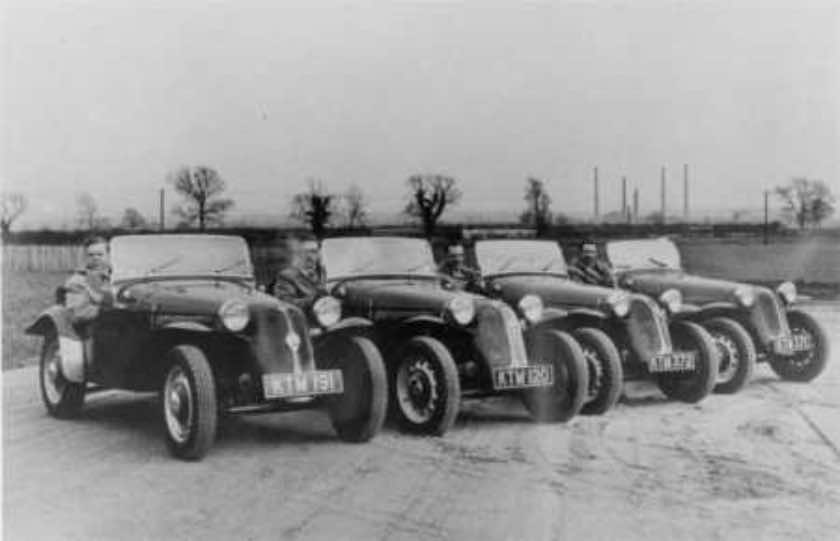
From the Dellow Register we hear that Falcon president Ron Warrens’s old Dellow Mk2 KTM 191 is for sale. This was one of four cars bought by a large firm of agricultural implement manufacturers whose salesmen had to cover some really rural terrain. 

The Company in question was Fords (Finsbury) Ltd. of Chantry Avenue, Bedford.  Fords was a maker of milk bottling equipment, putting those foil caps on the bottles, which were installed in small farm dairies. Their advertising literature of the time was headed “The Fellow in the Dellow”. 

KTM 191 went on to have a distinguished trials career in Ron’s hands before Richard van der Fransen bought it . In 1970 he sent it back to Lionel Evans (who made the original bodies) to have it re-skinned. Sadly Rick is most un-well and has decided to part with Ron’s old car provided it can be found a good home.

The four “reps” Dellow’s in a typical Bedfordshire setting. All four are still very much alive and kicking, although KTM 372 has emigrated to the USA.
Ron and bouncer Alan Preston stand either side of KTM 191 in company with Derek Fleming (Primrose), H . W. Tucker-Peake (Tucker-MG) and John Tucker-Peake (Minor with Ford Consul power). The Falcon’s are pictured on the way home from the1962 Exeter Trial.

We have been publishing stuff about Classic Trials on the Web since 1995 and always appreciate feedback. Comments, Corrections, Criticism & Concerns are all welcome. You can leave a comment to have your say here on this web site or our Social Media

Edinburgh 2004

Start

Tom Goggin was in charge. The signing on process took some time as there were a considerable number of route amendments posted on the wall which had to be copied down. There was also notice of a minimum 16 psi for all classes throughout the trial,  apart from Bamford, although it was to transpire that very few of the Chief Officials knew about this and there were hardly any pressure checks.

Agnes Meadow

Only for Class 0. It was a shame for the rest of us to miss out on some green laneing and it must have been boring for the marshals.

Wigber Low

The first cars were there more than an hour early but the section was open and being nice and dry didn’t cause to many problems even with a restart. Myke Pocock had problems with his Skoda’s new rear suspension soon after the start. Unfortunately the repairs didn’t stand up to the rigours of the first section and Myke and Josie decided to spend the rest of the day spectating. The hill wasn’t friendly to Clive Booth either and he recorded a stop in his Dellow.

Clough Wood

There was a long wait for the first cars as there must have been at least 50 bikes still waiting for their go. Waiting in the queue Neil Bray noticed oil dripping out of his half shaft seal and for the rest of the trial tried to park on the level whenever possible.

Stuart Harrold and Chris Phillips were running the restart as the Troll’s back axle wasn’t ready. They reported that it was mostly down to positioning if cars got away or not and was particularly un-friendly to Lieges, most of which failed, Simon Robson being a notable exception.

Deeprake

The observed section in this quarry complex was just off the main road making life difficult for the marshals to keep queuing cars out of the way. Fortunately the section wasn’t very difficult. Competitors then had a long trip on the quarry roads to a nice simple special tests complete with a traffic light system. Quite a few competitors had problems with this as they started when red changed to Red and Amber and didn’t wait the five seconds or so for these lights to go out and the green to come on. Neil Bray was just one who jumped the start and was delighted when the test was scrubbed from the results.

Putwell

The organiser considered this to rough for the lower classes, who missed out on the superb views across to The Monsail Head Hotel. Fred Gregory was the first car to arrive and stuttered away from the start and fail to get over the step, only for the marshals to call him back, move the start a bit further back to give a run at the step and let him have another go, but they gave him a fail anyway! Fred was starting to worry about strange noises coming from underneath his Rickman Ranger which he thought was his new exhaust rubbing against the prop shaft. Despite the fact that it was a bit rough most other competitors recorded cleans.

Calton

There was a time when the ruts at the top made this a real stopper but its pretty tame these days where the biggest test was to see if the marshals could survive the biting wind.

Haydale

Veteran Biker Tom Beckerleg was in trouble here with an oiled plug on his Aerial which he reckoned was the oil scavenge pump not working properly. Tom slipped down the field amongst the cars but decided to carry onto the breakfast halt and see how things went. The main challenge occurred before the actual gradient started as it was the flat muddy rutted track that presented difficulties. Kevin Barnes, competing in class 2 with his famous Singer, didn’t have enough momentum , got stuck and needed a tow.

Breakfast

After a nice descent of Winnats Pass came breakfast at The Poachers Arms. The staff were taken by surprise when the first bikes arrived more than an hour early and they never managed to catch up.

Haggside

Haggside was it’s usual stony self with the restart just around the first corner as usual. There was a very pronounced step and competitors needed to either stop just inside the box and have a run at it, or go almost all the way through and get their rear wheels over. Later in the trial there was some aggro with a female rambler who got rather excited over the cars and threw the section begins board over the hedge.

Holding Control

Back on the A57 Alan Bellamy was in charge of the holding control for Bamford which was in a long lay-by alongside the reservoir. Unfortunately the best laid plans of mice and men go awry sometimes and he was having difficulty with non-competing cars parked there. As the event went on, and the delays for Bamford built up, it was necessary to open up another temporary holding control, courtesy of Travelling Marshal Simon Robson, and delay departures from The Poachers Arms for up to ¾ hour. Fred Gregory had retired by now as he found one of the rear springs on his Rickman Ranger had collapsed so he and Peter Stafford did a little spectating before going to the pub in Buxton.

Bamford Clough

Bamford was back on the agenda for everyone, except the girls in class 0, thanks to some very hard work by an MCC team led by Ian Bates. Their efforts were well rewarded as they had got the section just right. Not damaging provided you were sensible but not so easy as to make it un-interesting.

Early competitor Mike Pearson took a cautious approach but misjudged the severity of the gradient over one of the steps and stopped baulking Michael Leete who was following. Once Mike was in the lay-by marshal Paul Eamer kindly let the Beetle have a go from where he had come to a halt and Michael was tickled pink to climb Bamford with a  restart.

Fellow Falcon John Parsons was not so lucky when the throttle pedal on his Buggy flipped when he lifted of for one of the bumps and without power that was that. Peter Thompson was having problems with his Manta’s exhaust and was in desperate need of a piece of steel for repairs. He found an unusual solution, cutting it from the wing of a fellow competitors 2CV!

Alistair Queen was back in a Skoda and celebrated by storming up Bamford to the sound of crashes and bangs from underneath as his Rapid is still a little on the low side. Alistair had run out of ground clearance on Clough Wood and from then on his passenger had stayed in the front and Alistair didn’t drop below 21 psi.

PCT Champion Barry Parker recorded his first stop of the day in his Audi 80 and Keith Oakes had the misfortune to break his gearbox. Although Keith had to retire he had the good fortune to have a recovery man who had two spare ones lying in the back of his garage! Like Mike Pearson, Peter Manning paid the price for a lack of momentum and didn’t make the summit

Great Hucklow

The early cars met a big queue of bikes here as the restart on the deviation was proving difficult and many of the riders were falling off in the rock strewn morass. It was a challenge for the cars as well but Dudley Sterry showed how it should be done with a storming climb, albeit at the expense of David Walls hat!

Ian Davis wasn’t so lucky and try as he may he couldn’t get his buggy away from the restart. Neither could fellow Buggy driver Simon Woodhall who knocked the car out of gear when applying the handbrake and slid back into a hole. Another Simon had problems here when the Robson Liege broke first gear and had to retire.

The lower classes were allowed a straight attack at the deviation. Still on for a Triple Giles Greenslade threw his Beetle at the hill and stormed through. Michael Leete was more cautious and paid the price when he didn’t have the momentum to get over one of the many big rocks.

Litton Slack

The route card contained dire warnings of penalties for anyone stopping to reinflate their tyres in the lane at the top of the hill. This all turned out to academic as none of the cars cleaned the section. It would probably have been on for some of the Class 8 hot shots but the 16psi limit and a restart for 6, 7 and 8 put paid to their chances.

It was only Bikes that gained the summit. Amongst them John Lee’s who eased his big Triumph Twin off the re-start before turning on the power and storming to the summit.

Running later in the trial conditions became a bit easier and Colin Sumner was delighted to get to the A boards in his Morgan to win Class 5 and so were Simon Groves and Verdun Webley

It was raining when Giles Greenslade arrived and the Beetle didn’t get very far. Costing him his triple as a couple of competitors in class 4 got beyond the A boards. Triple wise things are more straightforward for Golf maestro Dave Haizelden and we can congratulate him on winning another one, tremendous achievement.

Old Long Hill

While 6, 7 and 8 went off to the challenge of Corkscrew the lower classes joined the girls on the gentle pastures of Old Long Hill where John and June Blakeley presided over a surprisingly slippery section down in the valley. It was good to see President Gerry Woolcott here, chatting to competitors.

Corkscrew

The former Jenkins Chaple was as tough as ever and caught out quite a few including Ed Nikel, Clive Booth and Dave Nash who had problems getting the long body of The MGeetle around the sunken hairpins.

Excelsior

This is a nice little section between stone walls. The early part of the section was muddy and quite rutted before rising on a stony surface after a ninety right. It proved to be a stopper fro quiet a few of the Class one’s and lower slung cars in other classes, including Brian Alexander’s diminutive Fiat.

Moneystones

This cuts the corner of the junction between the B5054 and A515. This was class 0 only which was a shame as although it isn’t a competitive section would have provided a nice bit of extra green laneing for the rest of the entry.

Moneyash Special Test

Another nice simple test finished off the trial after which it was just a short run to the finish. For most apart from Ed Nikel. Ed hit a hidden rock on the exit deranging the front suspension and had problems getting home when the recovery said it was a RTA and excluded from his cover!

Club Supper

The day finished with a mass club supper at The Pavilion Gardens. MCC President Gerry Woolcott made a short speech thanking the organisers and marshals that was just right for the occasion and went down very well.


We have been publishing stuff about Classic Trials on the Web since 1995 and always appreciate feedback. Comments, Corrections, Criticism & Concerns are all welcome. You can leave a comment to have your say here on this web site or our Social Media
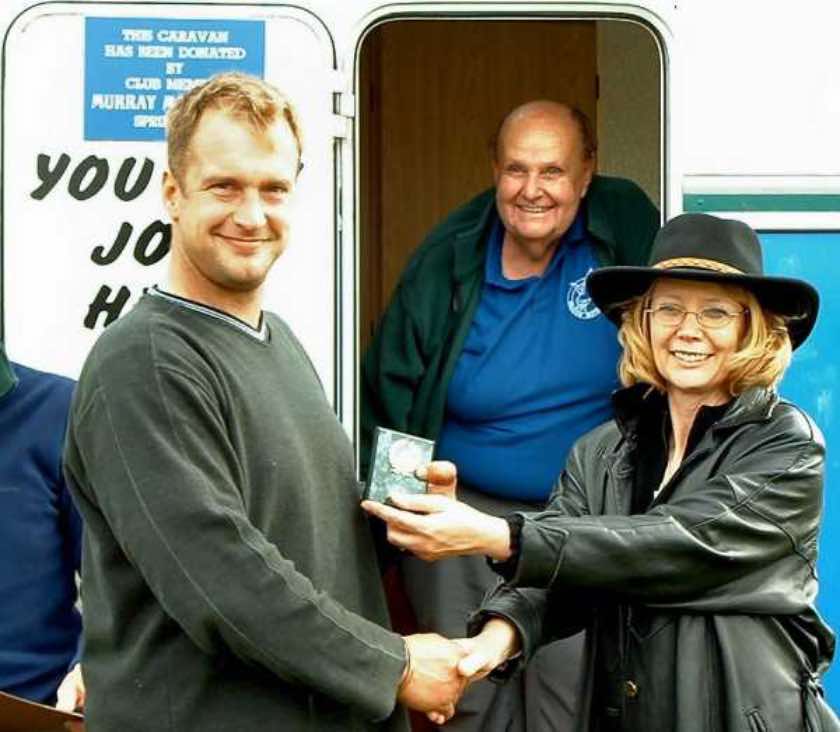
2004 London to Edinburgh Centenary Trial

Mike Hayward Reports

The idea appealed to me from the first time I heard word of an event to celebrate 100 years of the Edinburgh Trial. This must have been eighteen months ago and quite a lot of changes took place in that time. I thought the original idea was to start near Borehamwood on the A1. Great, just down the road from home. Somewhere down the line, the powers that be decided that a start from Popham would be appropriate. Why I don’t know, and what relationship Popham has to the Edinburgh, I don’t know that either. Oh well, what’s another 100 miles. The next thing to change was the date. Originally planed for the Whitsun weekend, which I would have thought would have given everyone the chance to enter, the powers that be decided to move the start to a Tuesday, so as to restrict the entry to those retired or with spare holiday entitlement. I fall into the latter in case you were wondering. 

When the entry form arrived the biggest decision of all had to be taken. Shall I enter?. Of course I will, this is one of those once in a life time things. Next, which Car to enter. My Mkiii rear wheel drive Escort hasn’t gone down well with the MCC Committee and this isn’t the time or place to try and upset them. Next choice my XR4i. Expensive to run. I estimate £180 + in fuel alone. That leaves me with Sapphire, my two year old Ford Focus. Not really the period of car I’d hope to enter this sort of event with, but I estimate a saving of £80 in fuel and that’s a saving you can spend on a half decent room for the night. So the Focus it is then. Passenger next. Michael Leete was unable to take part due to work commitments, so I asked Mum if she’d like to go. Her eyes lit up, so that was a yes then. 

So with hotels booked, everything was in place, even the weather was kind. We arrived at Popham at around 3pm to be greeted by Chris Phillips who was directing operations in the car park. With all the formalities over we were soon lining up to start our big adventure. 

First car away was Peter & Deborah Lawley in a Toyota Privs, a bifuel, drive by wire, 21st century, technological master piece. This was followed by a varied selection of the automobile manufactures art including, Morgan’s, Dellow’s, a Liege, Mazda, Fiat, VW, Skoda, Ford, Marlin, MG, not forgetting the bike manufactures art represented by, Royal Enfield, Triumph, Honda, Vincent, Suzuki and BMW. 

The route out of the Popham car park was different to the normal route. This time we went towards the airstrip and turned left into the field where Special Test 1 was laid out. The instructions said “start on line A finish on line B”. it didn’t say anything about the wiggle woggle between the cones. On the way out we met Peter Mountain who was the first victim of the Popham Services being closed, and had run out of petrol before he’d left the airfield. Richard Hoskin had a spare can and Peter was soon on his way again.

There were a few problems with the route instructions to get to the first control at Fair Mile, and several drivers and navigators struggled to make sense of a “R” that should have been “L” and a missing roundabout. However most crews made it to the control (eventually). The route then continued through Marlborough, Malmesbury and out into Cotswold Country. Following a route that would normally take competitors to Axe, but instead turned right at the cross-roads to Observed Section One, Old Hollow. Old Hollow was a hill used by Falcon Motor Club in the Guy Fawkes trials of the 1960’s. So as a Falcon member, this hill was of special interest to me. It was surprisingly slippery as well as steep, a damp surface with a sap covering from the overhanging trees caught out a few. After Old Hollow, the route led us through Dursley, passing the foot of “Crooked Mustard” and the top of “Crawley” and eventually to the Strensham Services on the M5 for a 1 hour break. 

Forty Seven miles further on and we were into Clee Hill Country to attempt Section 2, “Farlow” The only surprise here was how long the organisers had made the section. Farlow was my first ever Classic trials hill and I made a mess of it only getting to the Seven marker if my memory serves me correctly. This time the section was all tarmac, as were all the sections, and we cleaned it. The route led us past the “Boyne Arms” through Much Wenlock and Stone, and into Derbyshire to tackle Section 3, “Wetton Low” and the first restart. There was time for a bit of ‘shut eye’ before attempting the section and I must have been half asleep still when I stopped with the front wheels just in the box. which was situated on the apex of the hairpin, needless to say we failed the restart in a cloud of tyre smoke. 

Breakfast at the Hucklow gliding club was to be followed by Special Test 2. But this was cancelled because of all the cars in the car park, there was no where to lay it out. We left Derbyshire and headed towards Holmfirth checking in at the Heydon Control before passing the back of Nora Batty’s house as we passed through the town. There was some slight confusion in Huddersfield when my navigator misread the instructions and I think we went wrong just after Keighley but we ended up on the right road to Kettlewell and Coverdale through more spectacular scenery to Section 4 “Park Rash”. This section was longer than the previous sections and was very steep with the now obligatory hairpin. The restart was placed on the straight leading to the hairpin and we had no trouble getting away and cleaning the section. I stopped at the top to take some photos and it’s then you realise how steep the hill is. We watched a few bikes and cars make their attempts but sadly didn’t see Richard Hoskin’s attempt in his 3 wheel Morgan, as Richard was called back to the start line and both Richard and passenger, Andrew Hall, got out and started looking under the rear of the car. 

A further 28 miles brought us to Section 5 “West Witton”. This had a restart with a difference. The restart box was just around a hairpin but was down hill so if you went too fast you’d over shoot the line and fail. We took it steady and had no problem stopping. The re- start Marshall promised us he’d make it harder next time!! 

“Arn Gill” is on the Askrigg to Muker Road and was the last Observed Section. A straight climb with a restart half way up presented no problems for us. After “Arn Gill” there was a further 67 mile run into the lake district to Hartop where the trial finished for the night. By the time we got to the hotel we had travelled 591 since leaving home on Tuesday. 

Thursday morning started out damp as the remaining crews reassembled at Southwait Services (Southbound) on the M6. that was to consist of a drive to Edinburgh and started out in spectacular style with a 1905 foot climb of Hartside. We then followed the A689, A69, and B6318 to Brampton where another error in the directions saw competitors passing and re passing each other trying to sort out the way ahead. Once back on the right route we ran along side Hadrians Wall and then on to the truly magnificent B709 to Innerleithen. 36 miles of empty road with wonderful scenery and a road surface so smooth it looked as if were new. Coffee and scones at Innerleithen Golf Club were most welcome before the final part of the journey, mainly along main roads to the finish at Hopetoun House, just west of Edinburgh. We were greeted at the finish by the smiling face of fellow Falcon member, Peter Manning, who was on holiday and offered to do his bit for the MCC whilst he was in the area. 

I read in the event programme after we got home, that the aim of the celebration was to give the drivers “bigger mileage, much of it on lesser but really enjoyable roads” and I have to admit that the MCC succeeded in that aim. We covered a total of 1175 miles from Lunch time Tuesday to arriving home Tea time Friday. As we live next to the A1 our return journey was back down the A1. It took about seven hours, a bit different to 100 years ago. 

Mike Hayward

PS – I Thought you might like a break-down on the results from the Centenary Trial. 8 cars hit a marker (Cone) on the first special test. 9 failed Old Hollow either by stopping or footing. No one failed Farlow. 12 failed Wetton Low. 2 Failed Park Rash. 4 stopped (or should that be didn’t stop) on West Witton, and everyone cleaned the last hill. Congratulations to Class C winner, Falcons very own Peter Thompson in his Opel Kadett.


Peter Mountain Reports

A few minor anomalies on the route card kept the crews alert, reminds me of the route cards 10 or 15 years ago. No use following the car in front, they were probably lost as well! 

As Mike Hayward reported, we ran out of petrol just after the Popham special test; the petrol gauge has never worked since I got the car in 1968. Luckily Richard Hoskin was carrying a gallon of fuel in this three wheeler. Whatever happened to him, he seemed to disappear during the night run. 

I remembered (too late) that Morgan handbrakes do not work on hills, so failed at least one restart, probably more. 

Later I was reminded how efficient modern cars are; the Morgan averaged only 22mpg over the whole event and only 20mpg on the way home. We would have used less fuel in my Omega which is twice as heavy, automatic and has a litre bigger engine; Peter Lawley was probably doing more than 50mpg in his hybrid Toyota. 

What must it have been like in 1904?, with poor roads, poor petrol, acetylene lights, punctures, infrequent fuel, etc. 

As you saw in the photo, we had one minor mechanical malady, the accelerator cable got shifted and the revs would not go below 1500, easily cured with a cable tie, but during the wettest part of the trial. Navigator Jim took the attached photo of sunrise at Great Hucklow. 

Edward Stobbs hustles his 2CV special along at thoroughly indecent speeds for 602cc and only 3 wheels. When we were following him there was no urge to overtake and when he was following us he had no problem keeping up. 

Nice to see a familiar face at the finish; Peter Manning took the attached photo of us and the weatherstained Morgan at the end. There were many familiar faces on route as well, all marshalling; thanks to all the officials. 

On the way home I navigated & whilst taking an unplanned “scenic route” we came across this delightful road just off the A68 (see photo). 

I think there ought to be a special award for masochism, both Dellow drivers would qualify; 1100 miles in a Dellow is quite a round trip. 

Peter Mountain


We have been publishing stuff about Classic Trials on the Web since 1995 and always appreciate feedback. Comments, Corrections, Criticism & Concerns are all welcome. You can leave a comment to have your say here on this web site or our Social Media

My Lands End by Pete Barr

It would be a brave person who would say on this web site that one MCC trial is better than the others but with all the experience of one Exeter and five other non MCC events behind me, this year’s Land’s End has to take some beating. Just the plain logistics of organising the event are mind boggling to a newcomer and to end up with a finished product as satisfying as this reflects huge credit on all concerned. It seems usual to recognise the efforts (mostly voluntary) of organisers, officials and marshals at the end of a piece like this so, just to break with tradition, let me start by offering my thanks to everyone who contributed to Land’s End 2004. 

It is clear even to a relative newcomer that there is some disquiet around at the moment. I don’t want to contribute to that debate as I don’t know enough about the issues to make informed comment. What I would like to say is that something right is happening for such a minority sport to attract 450 vehicles, drivers and passengers to an event that certainly gave me a lot of pleasure and, by the look of the faces at the top of Blue Hills 2, did the same for a lot of other people. 

Anyway, enough of the contentious stuff and lets get down to the trial proper. Along with my passenger Adam we arrived at Anthea’s at about 8.00 pm in plenty of time for scrutineering and signing on. Anthea’s is a great spot for breakfast – even mid evening. 

I’m a founder member of the Cornish Bug’ers Trials Team and so was sad that one third of our number wasn’t able to make the start. Andrew Rippon, whose 1914cc Baja Bug is always likely to be a strong scorer had been struck down by a ruptured appendix three weeks previously and it will be some time before he can drive a car on the road, much less up Warleggan! The third member of the team is Jon Mildren who, like me, drives a class 4 VW 1303. Jon arrived just after us with his father Sid. Sid first competed in the Land’s End on a bike in 1953 and so knows a thing or two about this trial. He even brought along his programme from that first trial to show us while we were drinking tea in Anthea’s. As things turned out we were not about to pose a threat to hot shots like the FWD All Stars but more of that later. 

We left on time and had a leisurely drive through Devon via places that easily roll off the tongue of someone born in Torrington Cottage Hospital – places like Holsworthy, Black Torrington, Sheepwash and Hatherleigh all loom in my particular legend. The only disappointing feature was the state that Devon County Council has let some of its main roads fall into. We checked in at the Devon route check and then had an uninterrupted run to North Petherton. One question that interests me is that on the Exeter one can pick the route to the start proper – why can’t this happen on the LE? Is it to do with equalling out the mileage? 

We made it to Graham’s Transport Stop in good time. I used to be a regular customer here more than twenty years ago so this trial was turning into a bit of a trip down memory lane. Scrutineering seemed bear a remarkable resemblance to what had happened 98 miles previously – the lights were checked and that was about it. Not even a check to see if there were two return springs on my carb. We signed on again and then it was in to the café and another breakfast for those who could manage it. 

By the time we left Grahams at 01.58 the car park was virtually empty. We followed the route card (another excellent feature of the trial) for 28 miles to Felons Oak and got the first section out of the way with, I hope, a minimum of bother. I say “I hope” because I am writing this before the results are published and don’t want to take anything for granted. This first section seemed fairly straightforward apart from the restart boards which seemed to me to be about three feet apart and with just enough room to get either a front or a back wheel between them. On leaving the section we made our only slight navigational error which meant that we did a half circle before picking up the correct road. On this half circle we passed Jon and Sid, their heads buried under the VW’s deck lid after it had just died on them. The fault was eventually traced and repaired but by this time the closing car had caught up with them and they were left with no option but to head back to West Cornwall.

We met up with Giles Greenslade in the queue for Stoney Street. One of the things I most appreciate about trialling is the support and advice that the experts are prepared to share with novices like me. Giles is one of the best for this and, given his record over recent years, we would have been foolish not to take notice of what he was saying! The advice worked and we shot up the section in good style although I couldn’t help but be aware that in the past it has had to be cancelled when a marshal drove his four wheel drive over the sheer drop on the left. I didn’t have time to look but Adam said it was pretty serious. Probably a section that is best driven at night. 

We then encountered the toughest part of the trial, which didn’t involve any observed section. Rather the drive over to Culbone Inn and from there to Beggars Roost in a thick Exmoor fog. This required top concentration as the visibility was very poor and the lanes narrow and twisty. The Culbone provided a very welcome coffee and bacon rolls for those who could manage yet another breakfast. From here we carried on through the mist and fog nearly all the way to Barbrook and the famous Beggars Roost. The route card was explicit about stopping to do tyre pressures on the road and so this is what we did. The section was claiming a number of victims which meant that the delay was about an hour. The effect was that every few minutes twenty or so cars would fire up their engines to move forward a few yards. If any of the residents of that street happen to be reading this – I’m sure that all the drivers who were around at about 5.30am would join me in hoping that we didn’t cause you too much disturbance. 

I have to own up to a touch of complacency on Beggars Roost born partly from having cleared the section on the Exmoor trial in January and partly from reading the reports from last year’s LE when conditions were much different. I paid the price of only lowering my pressures to 15psi when, with a good position on the restart, my wheels span and, struggling for grip, I slid elegantly the wrong way. Expletives followed and we returned to the start and joined the route at the bottom. 

The run over to Riverton was much better as it was light by now and the fog had cleared although we were over 90 minutes behind our due time. We caught up a bit without breaking any speed limits and soon were queued up under the bridge awaiting our go at one of the best hills on Exmoor. This was another one that I’d cleared on the Exmoor but, given my performance on Beggar’s Roost, the confidence had been a bit dented and I needed a good climb to patch things up. Although I’d got up here before it was hardly in the best style especially on the left hairpin where I’d had a coming together with the top bank and only just managed to rectify things and get through to the end. This time we set off round the right hander, up the rough bit to a muddy sharp right and then on a gentler gradient to the hairpin. This time we got it all set up spot on, got the tail swinging out and put the power down to get a good line. The section doesn’t end here though and there is still some work to do before you arrive gratefully at the “section ends” board. All in all a satisfying climb and a good confidence restorer. 

Feeling pretty cheerful we set off for the Torrington holding check, got our control card signed and set off trying to make up some time but mindful of the ¾ rule which I think I understand having read it through many times now. From here the route took us right through my old stomping ground, past pubs where I learnt how to drink (and occasionally how not to) down to Sutcombe. The friendly marshal at the start told us that most cars were getting up with no trouble. With a minimum of delay we were off on the straightforward climb to the restart placed high up the section. This time we got a good position and 12 psi was enough to get the grip we needed to get away cleanly. A thumbs up from the marshal at the top confirmed our success and we pulled up to inflate the tyres. 

One of the main reasons that I have got involved in trialling is to do with a near life long obsession with air cooled VW’s in all their various forms. It was an added bonus then that from here on we travelled much of the way with Phil and Tina Pontin in their bright yellow Chenowth rail and Ed and Steve Nikel in their red buggy. By the time we had got to Blue Hills I knew that the rail had been in and out of Phil’s family for many years and that of all the class 8 cars it is probably the most user friendly in inclement weather – it even has heat! Ed built his buggy in the mid 70’s and used it a lot before putting it out to grass. In the last few years with the encouragement of his family he has pulled it out of retirement and produced a highly competitive car in that most competitive of all classes. Both cars run pretty much standard 1600 twin port engines and it was a pleasure to check them out and chat with their owners while waiting in queues. 

Darracott is another famed LE section that I’d a lot about but nothing can ever really prepare you for the reality. First though we had to wait for the travelling marshal before being led down to the start of the section proper. Without the restart I don’t think it would be too testing but we struggled to get away. I think we went a bit sideways before we did get going. Rumour has it that the restart marshal hereabouts is a hard man to convince so I’ll be interested to see if this section put paid to our chance of a medal. No time to worry about that though as it was straight on to first timed test. We had made a clear decision that we were going for accuracy and that any time between ten and thirty seconds would be just fine thanks. Even so I managed to miss first gear on line ‘B’ however I think we were OK. 

From the top it was on to Widemouth check and then the best road section of the route. The route card tells you to “Follow minor and hilly road for 3.9 miles”. Too right. Much of this is steeper that the Class 0 route at Blue Hills with some hairpins that wouldn’t be out of place on a WRC stage – good fun. 

We reached Crackington in the company of some none competitors in Peugeots who thought that they would tag along to see what all the fuss was about. When they saw where we were going they pulled over and decided discretion was the better part of valour. A lot of thanks here to Paul Bartleman for his ready advice about the best way to tackle this hill in a class 4 car. Put succinctly it went something like, “keep your foot to the floor and stay in the ruts”. Thanks Paul – it worked. What a great section and a real buzz to get to the top. 

Treworld was picturesque rather than taxing. Gently down into the stream which was quite deep, get the power on and then a fairly straightforward climb through the gate to the top and that’s the North Cornwall bit completed. A short run brings us to Hallworthy cattle market and a one hour compulsory rest stop. Time to check the oil, fill up with gas and, you guessed it, eat another breakfast. Collect the control card and away – we are on the final leg now and should make up a bit of time. Drive over Bodmin Moor down past Colliford Lake on the way to Warleggan. I marshalled here last year and as far as I can remember only one car and one bike failed. Should be fairly straightforward – so why are a dozen or more cars being very efficiently marshalled at the bridge. When we eventually get to the start of the section proper we discover that the rain has taken its toll and it’s much rougher than before. The nearer we get to the start and the more cars I see coming back the more air I let out of the tyres until we are just off the minimum pressure. When it comes to it we take off smooth to the right hander and then the ruts and rocks start and go on, and on and we can see how Warleggan used have a reputation as a stopper. Still we clear it and head off for one of the major tests of any Lands End – wet or dry. Before that though we realise, slightly sadly, that the highway persons we had been led to believe would be extracting money from us seem to have got fed up waiting and gone home for tea. 

We are on home territory now and head towards Cardinham and another go at Hoskin. So far the score is Hoskin 1, Pete 1 so this is anyone’s game and I for one wouldn’t bet on the result. At the bottom there is a short wait and we are greeted by the smiling face of Greg Thomas who has been at the section for eleven hours by now. A brief chat with Greg before we go for it. We get a good start and build enough momentum on the first slope to get past the yellow restart, then the red and just make the whole section. Grip is at a premium and in normal circumstances I would have been four or five psi lower but hey, who cares, we got up there. 

Pump up and off to Bishop’s Wood where we have the second timed test followed by a section that I know ruined many a chance of a Gold last year in the higher classes with its evilly placed restart. On the test we follow the same principle as on the first test and complete it accurately in 25 seconds – that’ll do us. The first part of the section to the track is straightforward and good fun. Then we get to the ramp. I’ve got far too much speed on but and have also read too much about how cars were stopped here last year so decide to go for it. The result is that, as my skateboarding sons would say, we “get air” – lots of it in fact and really fly. This is all good fun but probably doesn’t make for arriving in Newquay with an undamaged car. Next year I’ll be a touch more circumspect. We pile out of the end of the section with the marshal there struggling to see our number but still on for an award. 

We are now on the final run to Blue Hills and stop off at the Perranporth route check just to get our card signed. I’d been to Blue Hills as a spectator before but nothing can really prepare you for the sight as you come down the other side of the valley. Even though it was late the sections were still packed with spectators and the track leading to Blue Hills 2 makes a dramatic scar picking out the route. 

Down at the bottom we were greeted by the friendly face of Graham Brazier. Graham was checking tyre pressures as one of the BH 1 team headed up by Dennis Greenslade. Graham is on of the real characters of trialling and other forms of motor sport. His ’59 Beetle is used for historic rallying and is a beautifully prepared car. He also keeps threatening to return to trials with a supercharged Beetle – we are waiting! Over at the restart things were being managed by Nigel Allen who has done most of the preparation of my car as well as being responsible for Giles’ and a number of other well known names in VW circles. This added an edge to the section for me as Nigel does a fantastic job and I certainly didn’t want to fail in front of him. We gingerly picked our way round the loop and slowly put on the power as we approached the cobbled ramp through some fairly thick mud. A bit of wheel spin up the ramp but we had enough momentum to get up the top and the sharp right turn isn’t too much of a problem as the track at the top is quite wide. Through the gate where we were waved on to the section ends board by Dennis. 

That was the taster – now for the real thing. I don’t mind admitting to all you experienced people that I was pretty pumped up by now and had used up about two weeks adrenalin ration. Because we were towards the end of the field there was no queue and little time to think about the final section. We had lots of advice from other class 4 competitors about keeping the pressures up for BH2 and this went completely out of my head. Firstly I pulled up at the wrong start line and having been waved on by the marshals any thought of stopping to put air in just went. I’d dropped the pressures quite low to get up the ramp on the previous section so the result was that on that rocky and fairly dry start I just got too much grip and blew it big style. Martin Harry (another VW aficionado) fixed us onto the winch and off we went, still to some applause from the crowd which was a buzz. We knew by then that Giles and a number of other class 4’s had made it so next year I’ll be back, certainly one year older and hopefully (but no guarantees) wiser. To say that the tow up on the winch was an anti climax is the understatement of the weekend but we were cheered up by being met by fellow Cornish Bug’ers Andrew and Lorraine who had stayed for hours waiting for us which was much appreciated. We looked around for the promised marshal to sign our control card so that we could prove we hadn’t dawdled at the top but there didn’t seem to be anyone. Mindful of the organisers’ concerns we got going anyway and headed back to Newquay to sign off and claim a bronze having definitely failed Beggar’s Roost and BH2 – just that nagging doubt remains about Darracott so roll on the provisional results!

Whatever the final result that was a great 24 hours. The added bonus for us was the short drive home from Newquay to be followed by food (no bacon, eggs, chips, beans etc!), quite a lot of wine and a lapse into unconsciousness. 

Thanks then to Adam the passenger (whose motivational skills played a major part in us doing as well as we did, to say nothing of how quickly he learnt the art of finding grip), all the people who were so kind with their advice (especially Giles and Paul), Andrew and Lorraine for that long wait at Blue Hills and again the organisers and marshals. Next year the Cornish Bug’ers will be a force to be reckoned with!


We have been publishing stuff about Classic Trials on the Web since 1995 and always appreciate feedback. Comments, Corrections, Criticism & Concerns are all welcome. You can leave a comment to have your say here on this web site or our Social Media