You have stumbled on a delightful box of tricks, Classic Trials & other perverse stuff from Michael Leete. MCC ACTC and other trials. VW Beetles, Dellows, Marlins, or even Suzuki X90's
In the the Tucker-Peake tradition they start young in the Osbourn family.
I have been trialling on and off for about fifteen years mostly in class one cars with differing levels of success and many trips home via Britannia Rescue ! My dear wife also loves the trialling experience, so what do you do when children come onto the scene? Trialling and young children don’t really go together do they? …. or do they??
We do love the Lands End Trial, it has to be my favourite, probably because I was brought up on going up to Blue Hills every Easter to see my Uncle try to scratch his way up the gradient in his Mini! Anyway my wife and I agreed that we would take our two boys, Bradley 4, Jacob 2 and Morvah the dog to Cornwall to see my family the hard way!
I asked my wife Candece to pack a small bag of clothes for us all, and when she had I checked it and halved the amount again to keep weight to a minimum, even the child seat was the lightest we could find. The dog had to use her ballast behind the rear seats and the potty doubled as her drinking bowl.
So on the Friday afternoon we set out to Popham, one small bag of clothes, 4 nappies, one dog, two children, one wife and myself. The run to Popham was lovely in the warm sunshine we almost needed air conditioning. After signing on and trying to help Stewart Ikin with his electrical problem we set out again for North Petherton, a nice steady run across the beautiful scenery of Salisbury Plain, somewhere along the route the boys fell asleep, we checked in at North Petherton and had the car checked with the boys still asleep in the back.
As we set off for the trial proper Candece and I wondered how the boys would cope with the rough hills. We went up through Fellons Oak without any problems, boys still asleep, and we tackled the rough Stoney Street (that really felt rough !) but it didn’t wake the boys they actually woke in the rest control before we went up to Beggars, good I thought, we need all the bouncing we can get from the re-start, I put the Skoda low in the re-start box which was a mistake, but we did manage to get away and out of those deep pits. The boys must have been so tired from their bouncing that they went back to sleep and totally missed the hairpins of Riverton, again with the dry conditions it was tempting not to go too fast.
On to Sutcombe to see the first signs of daybreak, so I threw a boneo into the back for the dog and could hear that she was enjoying that as we bounced our way over the sea of rocks from the re-start. The clutch was starting to feel a little on the hard side after that and I knew that we had the Daracott re-start to come. We stopped in the box on the re-start, the flag went down and so did our hopes of climbing any more sections in the driest Lands End for a long time. We managed to make it out of the section but the burnt out clutch finally gave way on the main road so after discussing the possibilities of changing it in the layby (yes it did cross my mind) we telephoned Britannia Rescue who took us the rest of the way to St.Ives.
So would we take the boys again? Well until they become a real weight liability yes, and they loved it. It wasn’t the easiest way to travel to visit my family but it has to be the most enjoyable way to visit Cornwall. I have to say thanks to Colin Perryman for the advice on the clutch and bell housing, I now have a Sachs clutch and a vented bell housing for the Exeter.
Patrick Osborne and Family
We have been publishing stuff about Classic Trials on the Web since 1995 and always appreciate feedback. Comments, Corrections, Criticism & Concerns are all welcome. You can leave a comment to have your say here on this web site or our Social Media
Please help spread the word and share this on your Social Media:
I finally got the Dellow going, but as usual work got in the way & car preparation was left to “last minute motors”. On the Good Friday morning I had the petrol tank out to solder the drain plug back in. Anyway, that’s my excuse for not testing the car fully loaded.
Jim & I set off at 4.30 for Popham and got to Reading before we realized that the burning rubber on right hand bends was ours. The new exhaust was great unladen, but too big for the wheel arch with a full crew, tools and tank of petrol & was cutting a groove in the tyre. Nothing for it but to screw the dampers up & go home. Spent all day on Saturday modifying the new exhaust to side exit in front of the wheel.
Regards
Peter
Please help spread the word and share this on your Social Media:
We had the Lands End that you missed. I was sick at most sections and on the roads joining them. By the end of the event I was feeling great but complaints were coming in about some of the restart lines being a bit sticky ! Ann, my wife was taken down with the same “BUG” for 24 hours and stayed in the hotel bedroom believing she was going to die until Monday. Fish and chips be blowed – t`was a “BUG”.
Anyway what of the event – Beggers caught a few out with a hole and some loose at the restart (VW`s included). Hoskins was disappointing but gave some, the chance to see what its like at the top. Blue Hills what can you say – I have heard every excuse for not getting up from “the sun was in my eyes” – “they put a bend in it and did`nt tell me” – “the restart box was a bomb crater” to this year —— “THERE WAS A CLOUD AT THE TOP THROUGH WHICH I COULD NOT SEE ! “
I saw some of the action, listened to the reports and walked the section upon Sunday morning, with Arthur. Blue Hills two was horrendous. The surface was very loose to a depth of six to nine inches, this being made up of very fine dust mixed with rock and stone. The section from the start to the left turn was cut into steps of about a cars length and would have made the climb that much more difficult since each step had to be driven up and over. I do not believe that these had been made by anything other than the trials traffic and the very dry conditions. The same material on the track could be seen falling out of the bank side. While we were walking a dust cloud swirled around us. Any competitor that cleaned this section deserved an award. Miss it and weep – we did, taking a very low slung Triumph TR3 around the class “O” route, and what a joy. Well done to the organising team.
Regards Jonathan Laver.
Please help spread the word and share this on your Social Media:
Hmmmmm – what was it like for me? I guess it was spoilt a bit by suffering from what was nearly a migraine for the last few hours – it was only a determination to get my own back on Bluehills 2 after footing a few yards from the top and losing a Gold last year that kept me from turning tail for Newquay!
Left Exeter at 4pm for the ride down to Plusha on the TTR250 – a nice atmosphere down there and a very congenial Chief Official, Bob Slatter, which got everyone in the right mood for the trial ahead. Met a few old (and young!) friends and made a new one, Tony Mogford from Truro on his Yam XT350 who I was to bump into on various occasions during the event as we were only 4 numbers apart. Tony impressed a group of us by explaining the ¾ rule at Culbone Control in a way that we understood. However, I couldn’t explain it again now in the cold light of day! Also, thanks for the camera batteries Tony; I wish I had remembered to use it more.
It is odd to be troubled by dust at this time of year, but following three sidecars to Felons Oak wasn’t fun. Felon’s itself is a nice little warm up section just to get the concentration going. Despite being sure that I had my road book correctly marked with restart sections there was a great temptation to stop at the yellow restart boards just in case… Glad I didn’t, but I wasn’t alone in needing reassurance from other m/c competitors that the restart wasn’t for us.
I love Stoney Street, but don’t let your tyre pressures down beforehand unless you want a “snakebite” on your inner tubes. The run from there to Culbone in moonlight is almost magical and I am determined to see it in daylight one day. As a vertigo sufferer my next big challenge was Countisbury Hill, you will only know what I mean if you are a fellow sufferer, no trail riding in the Picas for me sadly.
It was good to get a friendly welcome from the officials at Beggars. Again, I wonder what it looks like around there in daylight? Riverton was a challenge last year, especially at the almost hairpin right, and I was expecting the worst this year but my Spring trail riding on dry ruts has helped my technique and I stayed clean. I really dislike the Torrington Holding Check, a long wait in the cold. The good burghers of the town could at least spare us a few pence of electricity to see what we are doing in the Gents.
Got the tyres muddy for the first time at Sutcombe. Daracott is beginning to wash out so to me it seemed a lot better than in 2002 when it seemed over improved. I know a couple of fellow competitors thought it was rougher last year but there you go. I missed my number being called at Widemouth Bay and had my control card put to the back of the marshal’s box and waited another half an hour to be called again. I was a bit chilled at that point and will certainly listen more carefully another time.
Crackington was great. Last year I struggled and had to really push my boots hard into the pegs to prevent involuntary footing. It looked relatively solid so decided that I would give it the beans this time and managed to accidentally get a bit too much air a couple of times, a very satisfying and enjoyable climb.
Treworld unnerved me. I hadn’t done it before and couldn’t really work out what was going on in between the trees, as each competitor’s engine note appeared to vary a great deal from its predecessor. I later learned that Tony Mogford (he got ahead of me by kneeling in front of the marshall at Widemouth so didn’t miss his number being called!) manage to loop his XT at the restart which explained one odd set of noises at least. Neil Browne’s BSA 951cc twin-engined monster (#81) sent shivers down my spine – no mistaking his exhaust note as he charged up the hill – luvverly. I stopped OK in the restart box and then slipped backwards with my front wheel locked (before the marshall put his flag up) but managed to stay in the box. Got away OK so was still on for a Gold – phew!
Warleggan was surprisingly easy but no Highwaymen! Mind you the Authorities in Bourn must have filled their coffers with the novel “congestion charge” at a quid a vehicle. I won’t mention my special tests as the times will be a joke but no way was I prepared at this stage to get too gung-ho and foot or fall off dicing with those cones, not with the lock on the TTR anyways. Hoskin was fun and the restart so much easier than last year when it was very heart in mouth. Bishops Wood is a lovely section. A slight queue that allowed me to warm up a bit in the sunshine and chat to the marshalls. I was in a very good frame of mind and couldn’t resist giving the TTR a bit of wellie over the suspiciously muddy-looking take-off ramp, surprised there wasn’t a photographer there; I bet there would have been some good pics especially with the cars.
Regrettably my slight headache started to thump shortly after Bishops Wood and the ride to Bluehills a real struggle. Instead of hanging around at Blue Hills, as I did last year when I think I let my nerves get the better of me, I rode straight to the start of Section 1 following Mike Robinson on his Serow. Mike entertained us by coming out of the loop a bit wide and having to use the opposite bank as a berm to get around the corner without footing and finishing of with an impressive little wheelie.
I was soon at Blue Hills 2, my Nemesis in 2002. This time I took a wide approach to the entrance of the top loop and it seemed to work. Last time I tweaked the fast button over much and had to foot to keep the TTR in line, this year I chugged the last bit willing the little TTR to keep going, which it did to my great relief. I had cleaned Blue Hills 2 – Wahoo!
I am sorry if I was a little curt to any riding friends at the top but all I wanted to do then was to get back to Newquay and sign off pdq. I have claimed a Gold and hope the marshalls’ scorecards agree my optimism.
Another great event and thanks to all the organisers but particularly to the marshals, who were all to a man (and woman) very friendly and non-officious – brilliant.
Thanks also to my fellow Devon TRF Group members Mike Holden (#512) and Roger Cantle (#511) for their company at the Bay after the event and giving the TTR and me a lift back home to Longdown.
Brian Sussex
#74 – Yamaha TTR250
We have been publishing stuff about Classic Trials on the Web since 1995 and always appreciate feedback. Comments, Corrections, Criticism & Concerns are all welcome. You can leave a comment to have your say here on this web site or our Social Media
Please help spread the word and share this on your Social Media:
It was a dry Lands End this year and dust was a big problem on some of the sections. It certainly wasn’t a Falcon friendly event with many members falling by the wayside and retiring.
This years Lands End Trial was really two separate trials following a roughly parallel course. The “normal” trial (shown in blue) and “Class 0” (shown in Green).
It had been very dry in the West Country prior to the Lands End. In fact it was reckoned to be some five weeks since it rained. As a result there was a lot of dust about and some of the sections were pretty rough.
The start had been bought forward as part of the organiser’s efforts to get the event to finish at an earlier time and all the Popham starters left in daylight. Clive Booth didn’t join them as he decided not to start after a horrible vibration on the way down from Hatfield. Closer investigation revealed that the pivot bearing on the rear A frame was completely worn away, allowing the axle to move about, so Clive decided not to start, taking the Dellow Rep home to pick up the daily driver and head back West to spectate on Beggars, Crackington and Blue Hills. Clive had better luck than Peter Mountain who didn’t even make the start in his newly re-built Dellow!
There was plenty of room at the North Petherton grouping control, where the Liege’s were all parked together, including the “old number one” machine of Peter Davis, loaned to MCC Committee man Alan Foster for the occasion. It didn’t quite have the grunt of the Foster Morgan +8, especially as the promised blower didn’t materialise and the two SU’s weren’t in the greatest tune!
The approach road to Felon’s Oak was very dusty, a sign of things to come. There was plenty of grip, and the section wasn’t on the doctoring list, so it didn’t present to many problems. The road to Minehead wasn’t an easy one for John Parsons as the steering started to go a “bit funny” on the corners. By the time the Buggy got to Minehead it was almost un-drivable and there was a horrible noise coming from somewhere at the back. Leaving the town JP pulled into the nearest lay-by, got the jack out, and soon found that one of the inner rear wheel bearings had completely disintegrated. There was no way this could be repaired so John and Dot limped back to Minehead and were on a recovery truck back to Stoke Hammond by 4am.
Stoney Street was very rough in the dry. It didn’t present to many problems for the cars, but all was not well for one of the crews as Mike Hayward had started to feel really poorly. Michael Leete found a convenient lay-by to stop for a while and they continued, but Mike felt worse and worse and the Beetle turned for home when the route crossed the A361, but not before failing the Beggars re-start when Michael stopped far to low in the box.
There was a holding control at The Culbone Inn where there was some frantic work amongst the Liege community, with various clutches being adjusted. Simon Robson had to get his handbrake working before Beggars after having to hold the car on the clutch at Felon’s Oak. Simon wasn’t the only one grovelling under the car trying to fix his hand-brake in the dark as he was soon joined by Andrew Brown whose had given up on the Stoney Street startline but unlike Simon he couldn’t get his fixed and had to do the rest of his re-starts “on-the-clutch”.
Beggars was pretty rough in the dry, with a lot of loose rocks, especially in the re-start area. Colin Perryman got a pucture here but still got away OK and went on to claim a gold. Ross Nuten was in trouble as his Dellow was using-up more brake fluid than petrol. Verdun Webley donated a litre can but this was soon used up and Ross became yet another Falcon turning for home for an early bath.
Daylight was starting to break as the cars arrived at Riverton which didn’t present to many problems for the cars, although some of the bikes found the ruts at the top a bit deep and John Lees got a foot knocked of the peg. Simon Robson was able to dive underneath his Liege again to check the back axle, which had been leaking earlier in the trial. All was well and the crew carried on but began to slip further and further back down the field as they kept stopping to check the car.
Sutcombe saw the end of Verdun Webley’s Lands End. The axle twisted on it’s mountings, ripping the UJ out of it’s lugs, breaking one of them in the process. Verdun and Mike Pearson dived under the car to assess the damage and it was soon apparent that it wasn’t repairable without new parts. An Easter holiday with the ladies was planned so they had to go on down to Cornwall. Phoning home Dorinda and Frances were just on their way so they diverted to pick up the stranded crew, leaving the Marlin at Sutcombe. Over the weekend Verdun made a tour of the Cornish scrap-yards and managed to find the necessary parts, stopping back at Sutcombe on the way home on Tuesday to fix the car and drive it home.
Verdun Webley and Roger Hooper leaving Popham Airfield in their MarlinsNick Farmer on Crackington in his MG Maestro (picture by Tim Hellings)
Up until now Patrick Osbourne had been going well in his nicely prepared Skoda, complete with children asleep in the back! Unfortunately the clutch suffered a bit on the Sutcombe re-start. They continued but there was another re-start to come at Darrcott and this finished the clutch completely. They managed to limp out of the section and telephoned Britannia Rescue to take them down to St Ives for their family holiday.
Crackington had been doctored as usual, but only the class eights had to re-start. It wasn’t a formality though and Dave Nash and Neil Bray spun to a stop in the doctored bit. Team Liege had some problems here when Chris Sewell sputtered to a halt. The fuel tank outlet had fractured, but they continued with the bouncer holding things together by hand until they found a shop that sold super-glue and fixed everything back together!
Class Eight competitors arrived at the foot of Treworld to be greeted by a friendly marshal asking them if they had read their route card! Closer examination revealed that only the yellows had to stop here, so the class eights were able to blast up without any difficulty, although at the expense of a ruined rear tyre for Dudley Sterry.
Warleggan wasn’t too much of a problem, and neither was Hoskin, where the yellows had a much easier re-start than usual and were able to blast up. There were quite a few clean sheets when the cars arrived at Bishops Wood but this was to change on the Yellow and Red re-start. Like last year it was on the steep bank after crossing the track, but this time it was right on the steep slope, positioned so that even if cars stopped just in the box the rear wheels were still on a steep slope, which seemed to have experienced an extremely local shower of rain! This was where the MCC slimmed out the Triple list and only the real Supermen retained their clean sheets. For the record the following are now allowed to call themselves Clarke Kent :- Dudley Sterry, Tony Young, Eric Wall, Tim Whellock, Roger Bricknell and Tommy Kalber.
Action on Bluehills 2 by John Salter & John Lees
John Looker and Keith Vipond in Class 6John and Shirley Beaumont in their very special ReliantDudley Sterry/David Wall Tim & Anne Whellock John Bennett did quite a bit of damage when he hit one of the banks in his delightful Renault.
The route wound it’s way towards the coast, an ever-increasing dust cloud announcing the approach to Bluehills. No problem on “One” but “Two” was a different issue. There was an enormous amount of loose dust, rock and stone on the re-start area making it very difficult for the restarters to get away. Even if they did their problems were not over as the spinning wheels threw up huge clouds of dust that the tail wind blew past the cars so the drivers couldn’t see the corners at the top properly!
In consequence the banks relieved a fair amount of bashing, and early runners Mike Relf (Opel Manta) and John Bennett in the immaculate class 4 Renault, did quite a bit of damage to their cars. Clive Booth was spectating here and thought the Liege’s went really well, being nimble enough to negotiate the deviation with ease. Dave Nash and Neil Bray weren’t so lucky and were unable to get away on the restart. As the cars went through so much of the loose material was blown away, but then they started to dig holes, and by the time Dave Haizelden came through as the last car it looked as though the section had been cluster bombed!
With the dry weather and the earlier start time the event finished pretty much on time and competitors were able to “enjoy” the delights of their Newquay Hotel! Or not as the case may be as both Dave Nash/Neil Bray and Simon/Matt Robson were so disgusted by theirs they refused to stay there. Dave drove home and Simon managed to take over Brian Osbourne’s room as the MGB had broken it’s back axle. Popular opinion is that the trial itself was enjoyable and well organised. All it needs next year is some rain in the weeks before the event and to move the finish back further West!
We have been publishing stuff about Classic Trials on the Web since 1995 and always appreciate feedback. Comments, Corrections, Criticism & Concerns are all welcome. You can leave a comment to have your say here on this web site or our Social Media
Please help spread the word and share this on your Social Media:
It was another Super March Hare. Conditions were good and the sections were mostly well thought out, giving a challenge to the more experienced but allowing novice cars and drivers to have a good day. There were five clean sheets; overall victory going to Andy Curtis in his Buggy on special test times.
March Hare winner Andy Curtis in his VW Buggy
The Start
Fred Gregory and Pete Stafford eye up the Robson LiegeJason Crowleys immaculate Fugitive
38 crews gathered at The Watling Street Café, just of Junction nine of the M1, on 9th March to do battle with Falcon’s March Hare Classic Trial. Organisers John Parsons, Mike Pearson, David Sheffield and Arnold Lane had attracted a nice mix of experienced competitors, newcomers and some cars that aren’t usually seen on the usual Classic events. The event had taken another major step forward, dropping some of the sections on private land and adding another four byway sections.
Half Moon Lane
Byway – Starts with deep, muddy water which gets carried up the hill where there was a slippery re-start for 7 & 8. The section was run the other way round this year
Richard Tompkins struggled with his Fuel Pump before the offEd Nikel about to blast his way through the water
Competitors hardly had the chance to get their engines warm before arriving at the start of the first section, marshalled by the Herts VW Club.
The water caught out quite a few competitors who didn’t give it enough respect. John Rowland and Peter Manning coughed to a stop in Citroen and Midget respectively. Richard Tompkins was running the 1040 lump in his Imp but was in trouble even before the start of this first section. The car had been running fine on the road but as soon as it ventured onto the entrance track it popped and banged to a stop. Richard got the motor fired up and set of through the water but fuel starvation soon set in and the crew were stuck with a stationary Imp in the middle of the water and needed a tractor tow to get out! Fred Gregory was another to stop right in the middle of the water and needed the assistance of the tractor.
As cars went through the section they drew water up the hill, making the re-start area slipperier for the higher numbers and catching out quite a few of the restarting classes seven and eight’s, including Matt Robson who rolled back before re-starting. Geoff Hodge didn’t get away cleanly either; Geoff was having his first run in the ex-Reg Taylor RDT Special. The hill wasn’t very friendly to Reg as Clive Booth also failed in the Reg Taylor/Geoff Jackson built Dellow Replica.
Half Moon Lane saw the first retirement of the day when Dennis Beale heard all sorts of terrible noises from his transmission. Closer investigation revealed a split gaiter, letting all the mud and water in, and the crew wisely retired rather than risk further damage.
Nortonstreet Lane
Byway, long straight climb on loose stones with the left hand rut getting deeper towards the summit, Classes 1&2 have a straight run through, 3 to 8 had two re-starts, the second where the ruts were at the deepest
Keith Pettit took a high line on the re-startOnly to slip sideways into the bushes!
The section wasn’t too difficult this year as it is well drained and was bone dry. The second restart had plenty of grip but was tricky if you didn’t have the car positioned correctly. It was possible to straddle the line without the wheels in the ruts. However, you soon slid back into them, as Keith Pettit found out when the rear wheels of his Frogeye Sprite went sideways into the ruts while the front wheels stayed out. Keith needed all his skill on the throttle to get his crabbing car past the section end boards but he just made it.
The Owen’s weren’t so lucky. Owen Turner failing in his K series engined Imp and so did Owen Briggs in the VR6 engined Whinney special, which was giving some electrical trouble, a bit of a disaster with electronic fuel injection!
Whitehall Lane
Byway – Tree Lined Lane with a very good surface now the council have resurfaced it and removed the fallen trees
Alun Lewis on the special test (picture by Mike Hayward)Jason Crowley’s Fugitive was a little muddy by now! (picture by Mike Hayward)
It was out with the foot-pumps here as there was a 20-psi minimum pressure to mitigate against the councils new surface, which is now rather better than the neighbouring M1! Mike Hayward was running a simple downhill special test before a nice gentle observed section. Andy Curtis really flew through the special test, breaking the 10-second barrier and setting a time more than two seconds faster than Owen Turner in his Rally prepared Imp.
Duncan Weaver and Paul Meyting were in a bit of trouble with their Morris Minor at the end of the section but managed to get going again although they were destined not to finish.
Cress Bed Lane
Byway – A straight, stony, tree lined gully with a re-start for classes 3 to 8
James Bounden sees the light at the end of the Cress Beds tunnelAndy Curtis showing a clean pair of heels to the opposition.
There were no problems on Andy Clarke’s re-start on this nice little section, which has been the opener on the last two March Hares.
Richard Tompkins was back in the fray after his problems at Half Moon Lane. The recovery tractor had towed the Imp out of the section but Richard soon stuttered to a stop again on the exit track. Michael Leete towed them out to the tarmac road where Richard found the problem. His new electronic fuel pump had very flexible rubber mountings. This caused the pump to move about on the rough stuff whereby it stopped working. Richard fixed the pump solidly to the bulkhead and all was well for the remainder of the trial!
Water Tower Lane
Byway, just across the road from Cress Beds. Starts with a very Muddy, rutted, waterlogged track, leading onto a gradient through a tree lined gully with a re-start for classes 3 to 8
Dave Nash and Alistair BrayJohn Looker and Keith Vipond
It was a good job there had been a bit of a delay at Half Moon Lane as Chief Official Arnold Lane had found the exit blocked by a load of Mountain Bikers parked cars which needed bouncing out of the way before proceedings could start. Once things got going start-line marshal Stuart Cairney watched with amusement as competitors tried to get into the correct rut ready for their assault on the waterlogged first part of the section. This caught out quite a few competitors, including Keith Pettit who needed the help of the recovery vehicle.
The mud and the re-start weren’t very Imp friendly and Richard Tompkins, Ed Nikel and Owen turner all suffered on the mud and the re-start. Jason Crowley was another one to struggle, his Fugitive being more at home off-road racing where it is allowed rather larger wheels and tyres! Jason was one of the many competitors attracted to the March Hare by the extensive Internet publicity.
Offley Rise
Byway, track along a field edge, with a very muddy exit road alongside a farm
Patrick Osbourne and familyColin Perryman discussing Skodas
This was the first time this section had been used and the organisers had the start half way up the hill after the tricky bumps just as the track leaves the road. Reg Taylor was in charge to see both his creations, driven by Geoff Hodge and Clive Booth, make a clear run, as did the rest of the entry. There were problems though as John Rowland got his clean at the expense of a puncture and needed help form his fellow competitors to lift the car out of the ruts to change the wheel.
Brickhill
Two sections on Private Land. The first was a trip through the trees followed by a steep climb just after a corner on deep sand with a re-start for 7 & 8. The second section went up the sandy gully where the ruts were quite deep, followed by a steep gradient with a re-start for 7 & 8
Herts VW Club marshalled Half Moon Lane and BrickhillClass 3 winner John Bell emerging from the trees on Brickhill 1Colin Biles fighting his way through the sand on Brickhill 2John Looker and Keith Vipond needed a push start after lunch
The two Brickhill sections caused problems for quite a few competitors in the lower classes. Quite a few didn’t survive the run through the trees where Jason Crowley had problems in getting his long wheelbase Fugitive around some of the corners. Ted Holloway struggled in his Sierra as well, first straddling a fallen tree then falling foul of the deep sand. This was also the downfall of Patrick Osbourne who lost his clean sheet in his smart green Skoda.
JP and the Herts VW Club, who had dashed across from their early morning stint at Half Moon Lane, marshalled Brickhill. John had spent hours laying out the sections on the Saturday, only to find all his work destroyed by some bikers by the time he arrived on the Sunday. Fortunately, Brickhill was the designated lunch-halt so competitors enjoyed the fare from Tom Goggins chuck wagon while JP hurriedly re-marked the sections.
Unfortunately, there wasn’t time to do justice to marking the second section, causing one or two drivers to be confused with the route. There were problems for a few lower down though as the sandy gully did require a full blooded assault and some of the less experienced drivers couldn’t get through. Colin Sumner did well to get the low-slung Morgan through the ruts only to drop a one right at the end to loose his clean sheet. Ed Nikel also failed at the one marker and sadly, this was the end of his trial, as he had to retire with a badly slipping clutch.
Ivinghoe
Special Test and Section on Private Land. The section was all about a tricky restart on a grassy bank.
John Rowland drove one of the two Citroen 2CV’s on the event.Simon Groves was another to struggle with Petrol Pump problems
Andy Curtis flew through the special test again but was just piped on time by Jason Crowley and Owen Briggs who set the fastest time.
On the observed section, the re-start was cunningly placed and it was necessary to get the positioning absolutely correct. Most of the competitors that went deep got away cleanly but those that stopped early struggled.
Edlesborough Hill
Two sections on Private Land – The first started in the field, going through the gate and through the trees before diverting into the bomb hole with a re-start for 7 and 8. The second section was all about a tight right hander on a steeply rinsing gradient, again with a re-start for 7 & 8
John Looker and Keith Vipond enjoying open air motoring!Fred Gregory and Pete Stafford went better on dry land!
There was plenty of grip on the notorious Edlesborough surface as the wind had dried out any surface moisture. It wasn’t possible to see much from the start so Falcon regulars were at an advantage in knowing what was round the first corner! A few of the lower classes were caught out by the surface on the lower reaches and failed the first section.
Reg Taylor was in charge of the second section and saw Geoff Hodge fail to get away from the re-start in his old RDT Special, as did last years winner Ross Nuten in his Dellow who lost his clean sheet.
John Barber 1 & 2
Two sections marked out on private land at Kensworth under the control of Robin Howard. The second went up the gravel track before diverting through the muddy patch over by the fence
Katy Tucker-Peake on her way to a class winDuncan Weaver battled with overheating all day and had to retire after Kensworth.
The first section was all on grass. Although it looked straightforward, there was a sharp left hander under some trees whose shade retained the surface moisture. This defeated all the FWD cars apart from Andrew Burt and a few in the other classes as well.
From the start, competitors couldn’t see how slippery the upper reaches of the second section were. Many soon found out and spun to a stop, including Katy Tucker-Peake who had gone very well during the morning but hit problems with grass surface at Ivinghoe and Kensworth. John Looker was to drop his only marks of the day here. John and Keith Vipond had been going well up to now, enjoying their day despite loosing their windscreen when a stone came up from a passing car and having to keep the engine running as the dynamo was charging the battery properly because of regulator problems.
Hawridge Lane
County Road – Downhill entrance road, the section started just before a mud hole, followed by a rising gradient through a tree lined gully with a restart for classes 3 to 8
Colin Sumner on his way to winning Class 5 in his Morgan (picture by Andrea Lane/Murray MacDonald)
This was another section that became more and more slippery as the day went on, as successive cars drew water up the hill. Andy Clarke’s re-start was sited just where the track formed a vee. Again, strategy was everything. Competitors who straddled the vee with the car level fared best, those who went either one side or the other hit trouble and the restart caught out a number of distinguished drivers, including Fred Gregory, Matt Robson, Peter Morley, Ross Nuten and Owen Briggs.
Simon Groves had to retire here with terminal fuel problems, as although the car would run when level, the petrol pump wouldn’t supply the carburettor on any sort of slope. The trial had also lost Duncan Weaver by now as he had given up the battle with his over-heating Morris Minor and gone straight to the finish after Kensworth.
Hill Farm
County Road – Tree Lined Track that had been used on the March Hare back in the 50’s
The sponsor checking the route is clear for the next car!Normally we picture Neil Bray under a Skoda, this time it’s Neil and Alistair Bray watching Dave Nash under a Skoda!
With no restart and an easy start line, Hill Farm was a nice gentle end to proceedings that was cleaned by all the survivors. The run in to the finish was not without drama for Gary Booth whose Buckler cried enough at the days exertions and spluttered to a halt in Berkhamstead and was towed to the finish by Michael Leete with the help of other competitors.
The Finish
The field were a bit spread out at the end but quite few crews stayed on to sample the transport café fare at the finish where the quantity and price of the food certainly put the local Little Chef to shame.
Andy Curtis was the well-deserved winner on special test times from the five clean sheets. Andy was the only clean run in class eight and had some really fast special test times. Katy T-P won class one, representing the third generation of the famous trials family, which have done so much for Falcon, MCC and the ACTC for many more years than most of us can remember.
John Bell won class three with a clean sheet which was really nice as John has supported the March Hare ever since it returned to a road trial. Peter Thompson was second, only dropping 11 in a good run. Colin Perryman had to retire last year but made up for it this time with a clean sheet in class four. Michael Leete was second in class after another clean run but was slower on the timed sections.
Colin Sumner only lost 5 marks in class five to run out the winner in his low slung Morgan, ahead of the three Spridgets. John Looker was the only car in class 6, just missing a clean sheet when he came to a halt on the second Kensworth.
James Bouden had the only clean run in his Marlin to win Class 7 after John Ludford had problems on the second Brickhill. A special mention here for Pete Crawford who was third in class seven and best Falcon in his early Triumph engined Marlin. With Andy Curtis winning overall Ross Nuten took the class eight victory, dropping 12 marks, the same as Clive Booth, Ross taking the class based on the special tests.
Looking Back
What a wonderful trial. Of course, the sections can’t be compared to events in other parts of the country, there aren’t enough suitable hills for that. But John Parsons and Mike Pearson are establishing The March Hare as an event with its own style in its own right. An enjoyable event that is suitable for novice drivers or novice cars run in a friendly and relaxed way with enough bite to challenge everyone’s skill.
We have been publishing stuff about Classic Trials on the Web since 1995 and always appreciate feedback. Comments, Corrections, Criticism & Concerns are all welcome. You can leave a comment to have your say here on this web site or our Social Media
Please help spread the word and share this on your Social Media:
There was one clean sheet on the Cotswold Clouds and it was achieved by Kyrle organiser, and Man of the Moment, Adrian Marfell, in his Fiat Twin cam engined rail. The Moss Bros were only just behind, both only dropping one mark with Nigel beating Ian on special test times.
Overall winner Adrian Marfell kept cool and achieved the only clean sheet of the event.A happy David Foreshew emerges from Nailsworth Ladder and would have won the trial if he had climbed Highwood Two.Ian Moss came close to victory in his Imp, dropping only one mark in a superb drive. (Picture by John Salter)Nigel Allen fixing his collapsed suspension
The Stroud club had excellent conditions for The Cotswold Clouds. It was dry on the day, but bad weather during the previous week made the sections nice and muddy, without turning into a quagmire. Needless to say there was a full entry for this historic and very special event which stands on it’s own, not wanting or needing the “status” of any championship.
Roger Fox led the field away from the Gordons Garage for the short run to Crawley Hill. His Citroen AX wasn’t running very well and he soon had to stop and dive under the bonnet. This left Simon and Matt Robson to run first car on the road for much of the event. The little yellow Liege must have been rather over-awed by the experience because it promptly failed Crawley, one of the very few to stop on this gentle opener.
Team Robson soon made up for this by being one of only two class seven’s to clean Crooked Mustard, something they never achieved in their Skoda days. The majority of the class eight’s cleaned this demanding hill but only Ian Moss in his smart new yellow Imp got up from the lower classes. John Bell deserves an honourable mention for getting to the four marker. However, the red Escort was soon to blot it’s copybook by failing Axe with no less than three punctures! The problem was after the step, where there must have been some nasty sharp rocks buried in the mud as there were numerous punctures, including Ian Davis, whose VW Buggy picked up two, a front and a rear.
There was plenty of grip on Nailsworth Ladder, but it still caused problems for the majority of the class ones and only the “super-quartet” of Dave Haizelden, Paul Allaway, Michael Collins and Adrian Tucker-Peake cleaned the section. These four certainly set a high standard and not only have fantastic scraps between them but are challenging for overall wins on many trials. The sevens and eight’s had to restart of course and neither Clive Booth nor Owen Briggs got away, although fellow Falcon Simon Robson was clean. This was a particular shame for Owen as he had coaxed his self built special “Winney One” up Mustard.
Clerk of the Course Tim Lakin had devised a handicap system for Ham Mill. The Blues had a clear run, the whites a restart on the exit from the right hander and the yellows and reds before the corner with a step to contend with. Most competitors cleaned the section but the restarts caught out a few including Falcon’s Clive Booth and Michael Leete.
There was a new variation for Mackhouse, which gave a downhill approach before the muddy blast up through the trees. Classes seven and eight had a re-start on the slope so the downhill approach didn’t help very much. Even so a fair few of the class eight’s cleaned the section, but not Nigel Moss who like most of the entry stopped short of the final muddy rise for a one. This cost Nigel overall victory as Adrian Marfell cleaned the hill. Has Nigel done the same he would have won as he was faster on the special tests.
The lunchbreak was at Tesco’s as usual, although most competitors didn’t stay long as the delays at Crooked Mustard had put the timing a bit behind. Unlike some of the MCC events there didn’t appear to be a ban on toolkits, so Michael Leete helped Ian Davis change the tube in one of his punctured wheels. The Bulls Cross special test was just up the road with a downhill stop line, which fooled both Jim Scott and John Ludford.
Freds Folly was across the road. Like Axe this is a hill that has become more difficult over the years. It’s a long gentle climb through the trees, then comes a right hander after which the ruts get deeper, the gradient steepens and the mud starts! The difficulty is that with the right hander you can’t take much of a run at the last bit as if you go too fast you jump out of the ruts and under-steer into the trees. With their low diffs the hill wasn’t very friendly to class three and only John Bell and Dave Miller got their Escorts to the summit, in John’s case after a near 360 on the lower reaches! In class seven Simon Robson found an early number a decided disadvantage as he cleared some of the mud away for the later numbers, failing at the four marker.
Owen Briggs, baring his chassis tubes for all to see in the MCC Committee’s favourite car, is pictured by Pete Hart on Merve’s Swerve on Owen’s first one day trial. “Whinney” attracted a lot of attention at the start. Can we expect more VR6 powered specials in class 8 soon?With the exit road blocked the marshals had to push failures up Mackhouse.Another super picture by John Salter as David Wall leaps away from the Nailsworth restart.ndrew Brown failing to smoke his way of the restart at Nailsworth Ladder. (sorry Andrew but it is a nice picture by John Salter)
The crowds had gathered for the entertainment at Merve’s Sweerve, which was under the control of Allen organisers Pete and Carlie Hart. The stars were definitely Paul Allaway and Dave Haizelden who both got their Front Wheel Drive cars over the muddy hump. Ian Davis and Owen Briggs both went clear but otherwise Merve’s wasn’t Falcon friendly and Michael Leete, Simon Robson and Clive Booth all floundered on the big bump for a humiliating reverse in front of their peers!
It was back into the woods for the Highwood Special Test and two observed sections. The challenge on Highwood One is another quagmire at the top of a hill! It wasn’t so muddy this year and it is possible to build some speed on the approach so there were cleans in all classes this year. Highwood Two was just up the track. There were different start lines for the various classes but nobody had a real run at the steep bit this year. The overall lead of the trial changed here. Up until now there were six clean sheets and the leading order was decided by the special test times reading:-
David Foreshew (GVS) 23.35
Mike Workman (GVS) 23.78
Paul Bartleman (Troll) 24.24
Dudley Sterry (MG J2) 24.34
Adrian Marfell (VW Special) 26.91
Peter Fear (Dingo) 31.40.
Everything was change here, as apart from Ian Moss only class eight’s Adrian Marfell, Nigel Moss and Carl Talbot got to the summit, most people having to make the terrifying reverse back down the section. As Nigel had failed Mackhouse and Carl the Highwood Special test, this gave Adrian the lead of the trial that kept to the end.
Things were drawing to a close now. Climperwell didn’t present any problems so it was all down to the finale at he two Bulls Bank re-starts, where competitors were greeted by Stuart Harrold and Chris Phillips, with the news that “the restart are evil and competitors in all classes are failing”. Thanks guys! Adrian got away OK but the restarts did affect the results in some classes. Stephen White failed Bulls Bank Two, passing the lead in Class Two to Bill Bennett. John Bell’s successful climb of Freds Folly faded away when he couldn’t get away from “Two” either, leaving class Three to successful restarter Paul Eamer. In Class Six Terry Ball failed Bulls Bank One putting him back to the same hill score as Mike Hobbs but Terry hung onto his lead on special test times.
Most competitors got to the finish at The Old Lodge Inn on Minchinhampton Common at a reasonable time, as there were no real delays after lunch. Well-done Adrian Marfell on another well deserved victory. And well done Tim Lakin and the Stroud team for another successful, enjoyable and well judged Cotsold Clouds.
We have been publishing stuff about Classic Trials on the Web since 1995 and always appreciate feedback. Comments, Corrections, Criticism & Concerns are all welcome. You can leave a comment to have your say here on this web site or our Social Media
Please help spread the word and share this on your Social Media:
Terry Ball won another excellent Clee Hills Trial, finishing a mere two marks in front of Adrian Tucker-Peake and David Haizelden. Competitors enjoyed some superb sections in excellent trialling conditions on a well-balanced trial where the first special was down in 5th place.
Richard Peck beginning his assault on Hungerford shortly before his retirement.John Ludford got a little stuck on Round OakGiles Greenslade cleaning Round OakAdrian Tucker-Peake challenged for the overall lead.
There had been a fair amount of rain the week before the trial but it was reasonably fine on the day as competitors gathered in the car parks of the Boyne Arms in Burwarton for the Clee Hills Trial. The drama had already started for a couple of competitors, who had troubles on the way to the start. David Turner had a broken rear window when a passing police car threw up a stone that shattered the glass.
Giles Greenslade was in worse trouble when the steering went funny and closer investigation revealed the steering box had become detached from the beam. One of the securing bolts had sheered and the box was flopping around. Giles quickly had the petrol tank out and with the help of Michael Collins and several other competitors rigged a jury repair with the aid of exhaust clamps and jubilee clips. It wasn’t very elegant but it was good enough to get him round the route, shepherded by David Sargeant and Michael Leete.
Simon Woodhall had put a lot of thought into avoiding delays and had organised alternative routes to “spread the load” on Round Oak where there had been considerable delays last year. The plan was that later numbers would do the last two sections first, while the early runners went to do battle with Farlow. This is a relatively short section for The Clee, with mud and ruts presenting the challenge. It was the downfall of quite a few fancied runners, including Roger Bricknell, Mike Hobbs, John Looker and Keith Vipond, yet half the class ones breezed to the summit.
There was a long run to The Craven Arms where the route divided. Odd numbers tackled Round Oak while evens did the Rattlinghope, Gatten’s Gamble, Adstone loop. This started with a trip over The Long Mynd, in the reverse direction to usual. There were fantastic views and fantastic unguarded drops. The views continued at the top of Rattlinghope, which was cleaned by the entire field. Gattens Gamble was more challenging as the start was on a steep muddy bank which stopped all the class fives and few others as well, including the DAF of Fred Mills and Derek Reynolds whose Variomatic transmission wouldn’t play ball.
Adstone was next, after a hairy downhill approach road with extremely deep ruts on the right, which leaned the cars right over into the trees lining the track. The section itself wasn’t too difficult, but it did catch out Peter Thompson in his Opel Kadett. Peter had been on of the competitors who did Round Oak first, and by the time he got to the Rattlinghope, Gatten’s Gamble, Adstone loop he was behind the course closing car. The marshals had gone on the first two section but he went over the first one anyway.
Later numbers faced an hour and a half in a queue at Round Oak. There were a lot of failures on the first part of the section that had to be dragged our backwards with a Land Rover, which took a ling time. It’s worth describing this fascinating section, which you either love or hate! The first fifty yards or so is more or less flat, which is very rutted and muddy. The ruts weave about a bit and the track drops away into a ditch. Too much power in the wrong place and you slip into that ditch. Then there’s a ninety left and the track gets a bit steeper and the ruts deeper! There were a lot of failures including Mike Chatwin and Tony Rothin in class eight and all the Marlins in class seven. Round Oak wasn’t very kind to class there and Dave Turner was the only competitor to come out the top. Most of the Beetles got up and plenty of ground clearance was a definite advantage. The hill saw the end of the trial for a couple of the Austin Sevens when both Barry Clarke and John Bamber broke their transmissions.
The ruts at the top of Hungerford were pretty deep this year and the class eights had a restart just before as well to slow them down. None of them could build up enough momentum to get through without a tow and neither could any of the class sevens, even without a restart. Four of the Beetles did, Giles Greensalde, Keith Vipond, Richard Peck and eventual winner Terry Ball and so did Adrian Tucker-Peake in his Peugeot 205. The bottom corner was a problem for some and Peter Thompson gave the bank a fair old wack to the detriment of the bodywork. But Hugerford is about more than the section. Getting through the ruts on the escape road is a challenge equal to any section! In fact it was to much for some Land Rovers who were out green laneing and one of them rolled over, delaying the trial.
Rob Cull was in charge of the diff test just before a rather Mickey Mouse special test. Just up the track the routes divided. Class eights tackled Majors Leap, which stopped most of them. The rest of the entry had to try and get round the hairpin on Ippikins Rock, with a restart right on the corner itself for some of the classes, although there was some confusion as this wasn’t in the route card. Andrew Brown and Peter Thompson were some of the few front engined rear drive re-starters to get round. Classes one and two did much better without a restart and all but one were successful.
It was dark when the later numbers reached The Jenny Wind. This was a total stopper and four was the best score anyone got. The hill was the end of Richard Peck’s trial when he retired from the Clee with suspension breakage for the second year running. Last year it was the back, this year the front. Harley Bank was next on the agenda. A long, long section, with quite a bit of mud towards the top. The class eights had a diversion, which stopped them all, and only Adrian Marfell got any where near the top and even he only got to the two. The other classes had an easier route but it was still tough going for many.
Classes seven and eight tackled Meadowley, although it was cancelled after it was closed prematurely, but not before Andrew Brown got within spitting distance of the summit.
The final sections were on the Boyne Estate, very muddy and marked out in the woods. They were rather out of character with the rest of the event and not so popular with some of the later numbers who tackled them in the pitch black. The finish was just around at the Boyne Arms and Terry Ball was soon announced the winner in front of Adrian Tucker-Peake and David Haizelden. It was The Jenny Wind that decided it, with Terry getting all the way to the four while Adrian stopped at the Seven. Adrian managed to get one mark back on Hillside but it was Terry’s day and he was the worthy winner of an excellent Clee Hills Trial. There were a few organisational glitches. The last couple of sections weren’t universally popular, but it was a very good event. Most of the sections were long and not to damaging as even when the ruts were deep it was mud rather than rocks that jammed underneath. There were plenty of friendly marshals and some beautiful countryside.
We have been publishing stuff about Classic Trials on the Web since 1995 and always appreciate feedback. Comments, Corrections, Criticism & Concerns are all welcome. You can leave a comment to have your say here on this web site or our Social Media
Please help spread the word and share this on your Social Media:
The 2003 Exeter ran very smoothly, despite all the rain the week before and being very cold on the night. However, some of the hills were very rough and will surely generate more debate on damaging sections. It was a very different trial depending what class you were in. The sevens and eights with high power to weight ratios thought it was easy, the lower classes thought it was hard!
Andrew Brown smoking to a halt on Simms (picture by John Mac)
Even on the journey to the start it was clearly going to be a cold night. Mike Pearson had bike competitor Richard Nixon in the passengers seat so he should be hardy enough! It was really nice to see David Alderson at the start. He was well wrapped up, as it was a bit cooler than Turkey! David was driving Peter James’s Troll. The plan was for Peter to navigate, but unfortunately he hasn’t been very well recently, so David had another passenger. Ed Nikel didn’t start as the Imp had a bad water leak that he couldn’t fix in time. Neil Bray appeared with Dave Nash in a very smart Skoda Fastback. It looked really super but why was it in class seven? The answer came with a peak under the bonnet where three point something litres of Mr Rovers V8 resided under the hood. It’s a very neat installation. All the external trim and bumpers are in place and everything fits neatly under the original silhouette. The suspension was raised quite a bit, although not as much as Neil’s normal “YEG” and he was soon to find lack of ground clearance to be a big problem.
The run down to the Haynes Motor Museum in Sparkford was classed as a Touring Assembly. This meant that competitors were free to devise their own route to the start. There were quicker ways to get to the start of the Trial proper than specified in the Route card and quite a few took advantage of this to get to Haynes early, fitting in some extra rest rather than go round the museum in the middle of the night. It was un-eventful for most, but not Clive Booth who hit a deer to the detriment of his Dellow Replica’s nose cone. Later numbers taking the official route regretted it when they arrived to find all the hot food had all gone!
Windmill Hill – The first hill may have had an unfamiliar name to many, but Lands End competitors recognised it when the got there, as it was the lane normally used to exit from Sugg Lane. It was dry and well surfaced so didn’t present any problems. Sugg Lane was different though, muddy with a lot of water running down the descent. This certainly kept the bikers alert, as did the cold on the forty-mile down to Bovey Woods.
Normans Hump – This was the usual hill, with the start line facing straight at the gradient, so there was no confusing stuff, like steering, to complicate life. That was for the cars, which could stay in the ruts. Life was different for the bikes. John Lees managed to stay in the middle for a clean climb, but this was easier said than done and most ended up in one of the ruts, whether they wanted to or not. Brian Sussex was one of many to fail this way although he cleaned everything else to gain Silver.
It was tough for the cars as well. The bottom part of the hill had very deep ruts with huge holes and a lot of loose rock. There was plenty of grip, it was just a case of how confident you were that your car would hold together if you went up at any speed while the underside was abraded away! Added to this classes six, seven and eight had their usual restart at the cross track. This reduced the possibility to attack the steep bit immediately after and this bought both Fred Gregory (Rickman Ranger) and Neil Bray (Skoda V8) to a halt. Ross Nuten had problems as well, he found his diff had locked up and he decided to limp home while the Dellow was still mobile.
Normans wasn’t kind to Imps and both Richard Tompkins and Stuart Cairney stopped when they ran our of ground clearance. It was possible to get up in one of Linwood’s little marvels, as Ian Moss proved when he flew up in his smart new yellow Imp. In class seven Simon Robson was the only Liege to get to the top. Most of the Marlins made successful climbs, but Verdun Webley fluffed to a halt with fuel starvation at high revs, a problem that was to bedevil him through most of the event and even riding mechanic Arnold Lane couldn’t cure the problem.
Clinton Bottom – Frankly I am not sure what version of Clinton this was, although it wasn’t the longest one as we started at least part way up the hill. There was no restart and after Normans Hump it was as smooth as a Billiard Table! It was still a problem though and Stuart Cairney was one of many failures. After Normans Stuart decided to pump the tyres up to 25 lbs and took off at maximum revs. He still found too much grip the car dropped into one of the many holes, practically stalling the motor and loosing so much momentum that Stuart stopped soon after.
Leaving the woods Stuart noticed an ominous clunking noise from the rear. Stuart checked the car over by jacking each rear wheel in turn and running it under load by applying the handbrake. The clunking noise could clearly be heard as soon as the handbrake was applied. Consensus was that one of the crown wheel teeth was damaged so he sadly retired from the event and went down to Simms as a spectator.
Waterloo – A few words of explanation for those that don’t know this hill. It starts on a gentle gradient with an open gate a few yards ahead. The only thing is that you don’t go through the gate, there’s a 90 right immediately before. Once round this blind corner a steep slope immediately confronts competitors. This was a real problem this year as there was a lot of loose material on the surface and grip was at a premium. It was the downfall of many of the cars, including Neil Bray and Fred Gregory, who to add insult to injury picked up a puncture on the escape road!
The initial slope also defeated the West Country class one trio of Michael Collins and David Haizelden in their Golf’s and Paul Allaway in his Astra. Along came Adrian Tuker-Peake a few cars later and he stormed up. It will be interesting to see if a second FWD cleaned the hill to make it count for the class.
Stretes – This was a nice simple hill with a special test at the top, which provided a welcome “rest” before the unknown quantity of the next hill.
Higher Rill (Sandy Lane) was only a few yards up the road from Stretes. It has not been used on the Exeter for some time. Tucker’s notes in the MCC book say it was “In use in 1931 for stop-and-restart (9 failed). Approaches too bad for 1965 event”. In 2003 the approach was interesting but the hill itself presented few problems.
Bulverton Steep – The route passed through Sidford for the second time on the way to the woods at Bulverton Hill for two sections. Bulverton Steep started with a sharp ninety-left on a steep gradient. This was muddy and slippery and it was very easy to under-steer off into the trees, as John Bennett in his smart Renault Gordini was to prove.
Derek Reynolds and Fred Mills at the top of Passaford Lane. Both of these crews came all the way from Tyneside to compete.Tony Branson and Sally Bolam at the start of Bulverton Steep
Passaford Lane – There was quite a run along the forestry tracks to reach the next section at Passaford Lane where there was delay for mid-field runners while David Spraggetts stricken Morgan was removed from the section. The hill itself wasn’t too difficult, even though it started to rut up at the top as the event went on.
Exeter Services – There was a nice run to the rest halt, with a marvellous view out to the sea at Sidmouth. There were dire threats of exclusion if anyone as much as looked at a spanner at Exeter Services, so many nipped out on the road outside, or went down to the lorry park, to check over the mechanicals, or in Fred Gregory’s case get some help changing a tube. There were problems for some as a Midget had gone up the bank and overturned just before the halt. It looked terrible as the car had no roll cage and the screen was flattened, but the crew appear to have survived with only a few scratches so the main damage will be to the blood pressure of the MCC committee!
Fred Gregory and Simon Robson qeue in front of the appropriate “Unsuitable For Motors” sign at the foot of Tillerton
Tillerton Steep – Classes seven and eight had it easy here, they had to restart! The lower classes had a clear run and could drive over the terribly rough and rocky middle section as fast as they liked, or their car would stand! Most had sufficient speed to get through but Richard Tompkins took things easy to spare the car and paid for his lack of speed with a stop. Fred Gregory, Neil Bray and Verdun Webley were among the re-starters to fail the hill and in Neil’s case he wasn’t to go much further. The car was handling really strangely after the hill. Neil found the nearside rear suspension-mounting bolt was half out, allowing the wheel to move back and forth.
By this time Michael Leete and Mike Hayward had stopped to help and with a lot of heaving, shoving and hammering helped Neil and Dave Nash get the bolt back in against the tension of the suspension rubber. A quick run up the road revealed the car still had a problem; the offside wheel was very badly buckled. Jacking the wheel up revealed a broken driveshaft and the V8 Skoda was added to the retirement list.
Neil Bray’s Skoda V8 Drive Shaft
Fingle – There was a diff test just before the section. The old hill itself wasn’t a problem but the corners were noticeably cut-up compared to usual.
Wooston Steep – Only seven and eight had to go up the steep bit this year. The problem appeared to be the slippery bit just after the re-start and this stopped quite a few. It’s a delicate balance between grip and bogging down and sadly Andrew Brown didn’t get it quite right on his new tyres. Stuart Harrold and Chris Phillips had plenty of grunt and plenty of grip in their Troll and accelerated all the way up to the hairpin right. Falcon’s Ian Davis, Mike Pearson and John Parsons all had successful climbs as well, but in class seven neither Simon Robson, Verdun Webley or Fred Gregory could get past the slippery section on the lower slopes. The lower classes had it easy of course, turning left and finishing just before the gradient really started.
Bob Thorpe and Colin Shepherd tackling the left hander half way up Simms!Nigel Hilling in his 1172 Pop.As a good Stroud member Andrew Brown didn’t back-off!Paul and Caroline Martin in their Marlin
Simms – Competitors had a chance to mentally prepare themselves for Simms with a 25 mile run onto Dartmoor. The old hill was in fine form again. It’s all about momentum here. Cars with a high power to weight ratio were able to build enough speed to blast over the step but those without enough speed found there was very little grip on the slimy, slippery rock. There were plenty of triallers here to watch the fun, including Duncan Stephens and Ed Nikel and retirees Stuart Cairney and Mike Furse. They saw a spirited and successful climb by Stuart Harrold, re-starting very high on the left, flooring the throttle and driving straight up the middle. There was a lot of leaping and banging before Stuart had to brake the Troll at the stop board. John Parsons in the VW Buggy gave it some of the same treatment but Mike Pearson’s more considered approach in his Dellow Replica wasn’t successful and he spun to a stop. This was annoying as Nick Wollett had a successful climb just before in his Dellow and Tim Wellock immediately afterwards in the Fugitive.
Ian Davis was on song and set for a clean climb when his throttle cable broke on the restart. He tried to get up on tick-over but this wasn’t possible so Ian had to slide down back to the bottom to fix it. When all was well mechanically he persuaded the marshals to let him have a go up the hill itself “for fun” and he drove up easily. None of the class Seven Falcon’s were successful, Simon Robson, Fred Gregory and Verdun Webley all spun to a stop and so did ACTC rights of way officer Andrew Brown in his Marlin. The saloon car classes’ struggled and Michael Leete stopped on the slab. It was certainly possible to clean the hill in class four as Ian Moss proved in his “new” car. He stormed up at a time when there was very little grip. Ian’s Imp was immaculate at the start but by Simms was showing some battle scars with stress-induced ripples around the rear wheel arches.
Tipley – After Simms it was left at the crossroads at the top and down the track to Tipley. The gradient isn’t too severe here and there aren’t any corners, this hill is all about its rocks. There weren’t any loose ones and although it was very rough it was possible to ease off and pick your way around the bad bits.
Slippery Sam – It looked innocuous at the bottom and the restart was pretty easy but boy were the corners at the top rough. They had really cut-up on the inside and there was a lot of loose rock as well. Unlike Tipley it wasn’t easy to select your own line and cars cleaned the hill to the accompaniment of crashing and banging as the rocks tried to hammer their way through the floor-pan! There was worst to come. Competitors are well used to the lakes of red clay on the exit road. However, the big problem this year was overhanging branches. Goodness knows what it was like on a bike, especially a chair with the bike on the right. Even cars running at the end of the field had to fend of the overhanging briars, which was very unpleasant in an open car.
So that was Exeter 2003. There was of course a Class 0, which is an excellent idea, taking in some of the less damaging sections of the main event, together with some unique sections, including the escape roads on Waterloo, Simms and Wooston. The whole thing was rounded off by the usual evening at The Trecarn Hotel, a very nice finish to the event where the sections were re-run over a glass or two
We have been publishing stuff about Classic Trials on the Web since 1995 and always appreciate feedback. Comments, Corrections, Criticism & Concerns are all welcome. You can leave a comment to have your say here on this web site or our Social Media
Please help spread the word and share this on your Social Media:
1959 March Hare Trial – Sapsed’s Stopper – The final section on which everything appeared to depend for the results is tackled determinedly by I. C. Wilson (Wilson-Ford)
Unlike Falcon’s Guy Fawkes, which was based in The Cotswolds, its March Hare was a local Trial, using hills in the Herts, Beds and Bucks area. The first running of the March Hare was in 1958. But a trial was first held in June 1956 and again in 1957 when it was known as the Midsummer Trial. The trouble with running a Trial in midsummer is that you can’t see the tracks for the brambles growing along side, which means a lot of hard work clearing the tracks before you can run the event. So in 1958 the date was moved to March and given the name “The March Hare”. Tucker (H. W. Tucker-Peake – The driving Force behind Falcon and the MCC for so many years) was Clerk-of-the-Course and arranged two starts, one in Royston, the other in Hatfield. The finish was at the club’s headquarters, “The Chequers” in Woolmer Green. The main award, the appropriately named “Mad Hatter”, for Best Performance went to, N. Tyler, Best Category 1: F. Freeman, Category 2: A. Hay, Category 3: K. Hobbs. There was one serious incident that was reported on the 1958 March Hare when some competitors cars blocked the road at Hill House and a local resident was upset when the navigator of one car refused to move it.
As with the Guy Fawkes the March Hare seemed to change every year. In 1959 the Trial started from Lisles Garage in Woolmer Green and finished at the Kings Arms, Berkhamsted. Telegraph Hill was introduced to the route. This was, and indeed still is, a very steep hill on The Icknield Way Roman Road between Lilley and Pegsdon. It must have been one of the toughest hills in the trial. Today it’s part of a nature reserve. Another hill that must have been used about that time was Jeremiah’s Nob (also known as Jeremiah’s Hump) a chalk track in Barton-le-Clay which was quite easy in the dry but quite impossible in the wet. Another hill that was included was a hill Tucker called “Harlington” because it was at Harlington! Today it has a nice slab of concrete half way up which would make a good place for a restart. Back in 1959, the hill was just a nice muddy climb. It’s reported that “There was a smaller entry than the previous year but early morning rain did improve some sections”. The Mad Hatter award again went to N. Tyler.
There was another new start, Jacks Hill Cafe, in 1963. Jacks Hill is on the old A1 north of Stevenage. This was a traditional “Greasy Spoon” Transport cafe. Over the years, the building has played a big part in Falcon’s history. The Start of the March Hare in 1963, it later became a Night Club and bar called “The Silver Hall” and not only hosted Falcon’s annual dinners for a few years but became the club’s headquarters as well. Today it is still a part of the clubs history. Under the name of “The Big Pub” it’s the start and finish venue of the March Hare.
In 1964 The March Hare started in Hemel Hempstead, and finished in Berkhamsted. Starting in Berkhamsted meant that the route must have used “Tunnel Hill” in Nettleden and Hill Farm near Cholesbury. It is possible that the route also included “The Crong” near Dancers End.
In 1965 the 59 competitors in the March Hare Trial started from Stevenage to follow a 30 mile course to finish at the Roebuck Hotel. Seven sections were at Latchford Farm, and despite the good weather and apparent easiness of the course, only slightly more than a third of the entry were clean.
The March Hare of 1966 had the tea stop dropped from the route to avoid route troubles. What sort of troubles isn’t reported. The start was at Zenith Motors Stevenage with a route 15 miles long and finishing at Latchford Farm near Puckeridge.
You will have noticed that The March Hare’s road mileage was becoming shorter and the venues less. The trend continued in 1967. The first hill may have been called Bury Lane as its the continuation of a lane of the same name that runs from north of Datchworth to Watton Road, which links Knebworth to Bragbury End. This is now a Bridleway/Footpath. After Bury Lane, the route then included Leatherfield Common followed by Kings Hill. Leatherfield Common is south of Bennington and just north of Blue Hill and is a tree lined mud covered track between two fields. Kings Hill is a little further west, between Haultwick and Levens Green, and passes through a Ford before a short climb on a mud covered stony track. A road section followed this, to Latchford Farm, Colliers End, where the remaining sections were held.
By 1968 the trial had become a single venue event, which that year was held at Ringshall Farm near Hemel Hempstead. Despite the fact that only a single venue was used, the trial was still run under Classic rules. Class winners were, P. Marr, B. Walsh, P. Kerridge, F. Jackson, D. Piper, P. LeCouteur. Special Award to C. Morre1l, Best Lady Miss Ann Robbins. Other Falcon award winners were H. Frost, R. Robbins (both lst), M. Dockray, M. Murray, B. Butler. E. Walsh, Mrs. M. Knight (all won 2nd class awards)
The March Hare Trial was held at Ringshall Farm again in 1969. Class Winners that year were Class 1 P. G. Kerridge, Class 3 C. N. Morrell, Class 5 J. Ventur.
In 1970, the March Hare was held on the 2nd November as, the Guy Fawkes was held in March (very confusing). The venue was Tring Park, a picturesque venue on the outskirts of Tring, which became very popular with competitors. The 1971 event also took place in Tring Park but it had returned to a date in March.
It was touch and go as to whether the 1972 March Hare would take place as there was snow on the ground. Tucker took the decision to let the event run. It was a brave decision but in the end the weather got worse and the event had to be abandoned with one and a half inches of snow on the ground. Enough hills were run however to get a result:- Best Falcon, P. Le Couteur, Venus Cup, M. Furse, 1st Class Awards, D. Greenslade, C. Morrell, W. Hone, J. Tucker-Peake, D. Ovey, A. Davies.
The following year the conditions were completely different, Very dry. Despite Tuckers best efforts to stop the competitors, there were still seven clean sheets from the entry of sixty six. The result was decided on a tie deciding test with John Tucker-Peake the eventual winner in his 1600 cc Ford Pop. Laurie Knight took the award for best invited club in his 1500 cc Ford Escort fitted with a down-draught SU carburettor. Other class winners were Ian Blackburn. (Singer Le Mans). M. Clarke. (VW), J. Bonnett. (Morris), R. Walker (Mini) and Jack Frost. (Beach Buggy), who beat J. Whalley. (Ford Special) and Mike Furse (also in a Ford Special) in the tie deciding test. Cliff Morell was the best Imp on the day dropping 10 marks.
The missing committee minutes are no help again, in recording events until 1977, when The March Hare trial took place at Bury Farm, Houghton Conquest. Secretary: Alan Davies. Clerk-of-the-Course: David Maitland, Scrutineer: Simon Robson, Chief Marshal: C Brown. There were 32 entries, but one was sent home for misbehaviour!
By 1981 The March Hare Trial had been dropped from the calendar of events due to a lack of venues to run the event. With the loss of Tring Park, we had only one good venue at Bury Farm, Houghton Conquest and that was lost due to problems between the landowner and some of the clubs that used it to run events there. I have found an entry form for the 1980 March Hare to be run under Classic Regulations at Bury Farm. But as I can’t find any results or reports, I can only assume the event had to be cancelled.
Falcon was out of the trials scene for a few years, until 1995 when a one of the other local clubs became un-friendly to triallers and a number of renowned local enthusiasts joined Falcon, bringing with them years of organising experience and a host of contacts with local landowners. Soon Trials returned to the Falcon calendar and on 3rd March 1996 the March Hare took place on Edlesborough Hill.
The 1998 event was given the name “The March Hare Mini Classic”. The event was again held on Edlesborough Hill, only instead of having 8 or more hills laid out, there were only four. These were much longer than the previous years PCT type sections. The idea was to make them more like Classic Trials sections. The organisers (Mike Pearson & John Parsons) tried to run everything as close to Classic rules as possible. The morning went brilliantly with 8 challenging hills and two special tests for the 26 starters to enjoy. Unfortunately after lunch, rain made all the hills un-climbable and the event had to be abandoned. The special test times were used to decide the winner from the three clean sheets of, Fred Gregory (Dutton Melos ), Ian Davis (VW Buggy) and Henry Allen (Racecorp). Ian Davis was the winner with Fred Gregory, Tom Goggin and Murray MacDonald all winning their classes.
After the success of the first Mini Classic, the possibility of running another event, linking several venues together was discussed. By the time the year 2000 event took place four venues had been linked to road sections to make the event even more of a Classic Trial. The start and finish were at Brickhill on the 18th April. The competitors then followed the 62-mile route calling in at Mile Tree Farm, Edlesborough and Kensworth, returning to Edlesborough and Miletree Farm and Brickhill for a second time, to complete 14 hills and 2 special tests. Thirty starters enjoyed a smoothly run event, sponsored for the first time by Murray Macdonald’s company, Murray’s VW Spares, with favourable comments from most of the competitors.
It was felt after the 2000 event, that if we were to run a proper Classic Trial, a more suitable Start Finish venue should be found. The Big Pub, on the old Al Trunk Road at Jacks Hill had the space, but was a long way from the venues we wanted to use. The answer was to find some sections between Jacks Hill and the other venues to the west. A new route was planed taking in two sections in Whitwell. Cress Bed Lane and Water Tower Lane. Both lanes were used in the fifties (they were probably named differently). Cress Bed Lane is not very challenging in the dry but is a nice opening to any trial, as is Water Tower Lane which was again used in the March Hare of the Fifties. This hill is a lot longer than Cress Bed Lane and despite being only a few yards further up the hill, is more mud covered than Cress Bed Lane, which has a more stony covering. The route then headed out to Mile Tree Farm and Brickhill. After Brickhill there was another new section used as a special test at Ivinghoe before continuing to Edlesborough and Kensworth. After Kensworth, Half Moon Lane, at Markyate, was added before the competitors returned to Whitwell to climb Nortonstreet Lane and return to The Big Pub and the finish. Norton Street Lane was again used in the March Hare of the fifties but it had a lot more mud on the hill than it does today and as a result was much more of a challenge to the competitors.
Well that was the plan. However, delays in submitting the route to the RAC MSA, because the local Route Liaison Officer didn’t reply to our request’s for approval, forced the organisers to run the event became as a navigational scatter. Not what the organisers (John Parsons, Mike Pearson joint Clarks of the Course, or Verdum Webley, Secretary) or the competitors wanted at all. However 30 cars started from the Big Pub, with most of the competitors returning some hours later having enjoyed the hills, but not finding their own way to them! 2000 winner was Mathew Sharrett.
Having been caught out the previous year, the organisers of the 2001 “Murrays March Hare” started to prepare early in October. All was going well, with the route submitted and approved and the entry getting close to the maximum permitted (fifty). With a month to go to the big day, Foot and Mouth disease reared its ugly head again and the event was cancelled.
All that hard work was not wasted as we now had an approved route ready for the 2002 event and with three new sections added in Devils Pit, south of Barton-Le-Clay and a lunch halt at Ivinghoe everything was set for another March Hare Trial.
However, the 2002 event was not without its problems. The Big Pub decided not to open early for us, which meant that there were no loos or food available at the start. The 4-wheel drive people had churned all the sections at Devils Pit up, and it was very difficult to find three sections to lay out on the Saturday before. The day itself went without a hitch. There was a shortage of marshals on some hills but we just managed to scrape through. The weather was very kind as well and didn’t start to rain until after the last car had reached the finish. There were 32 entries and 28 starters with Ross Nuten the overall winner cleaning every thing in his Dellow.
That’s the story so far but it isn’t finished yet as Falcon’s March Hare is still going strong and there will soon be much more to add to The History Book.
We have been publishing stuff about Classic Trials on the Web since 1995 and always appreciate feedback. Comments, Corrections, Criticism & Concerns are all welcome. You can leave a comment to have your say here on this web site or our Social Media
Please help spread the word and share this on your Social Media:
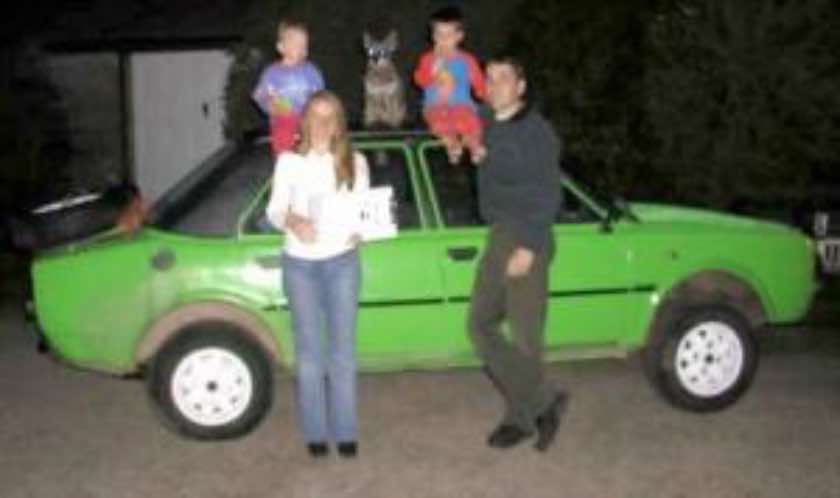
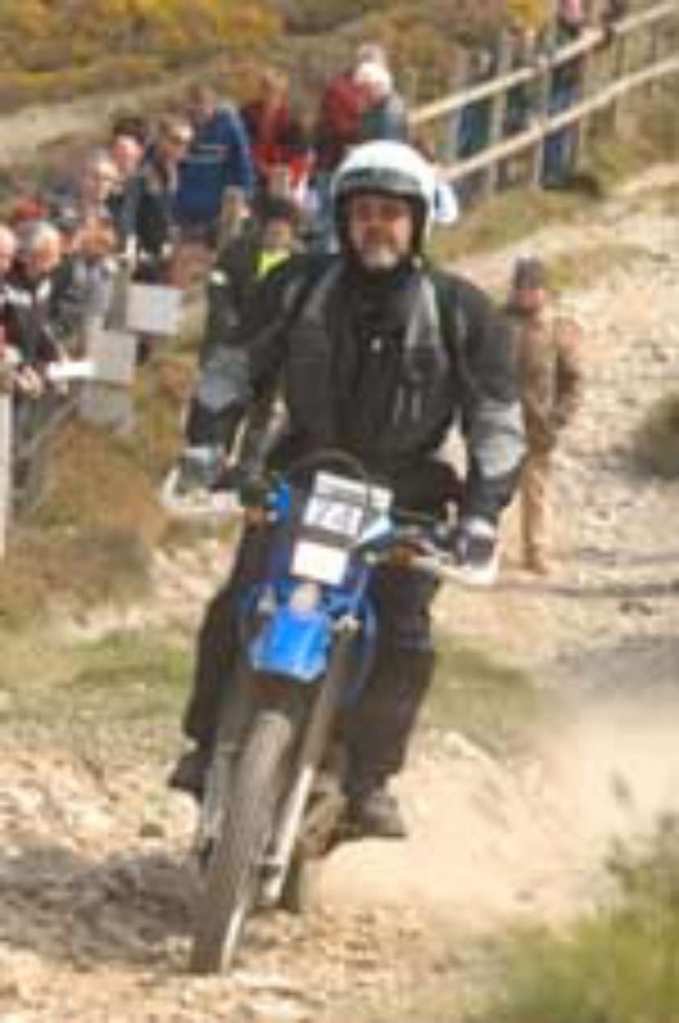


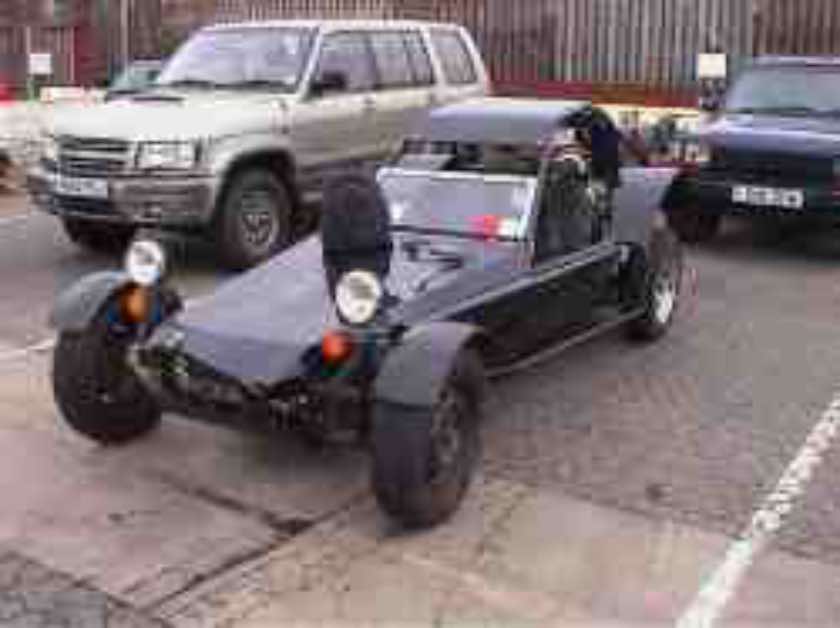
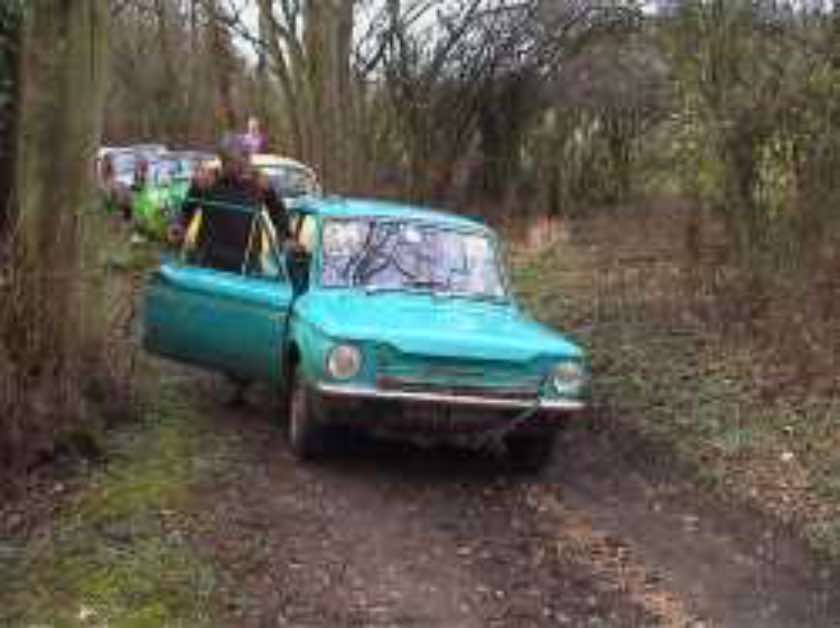


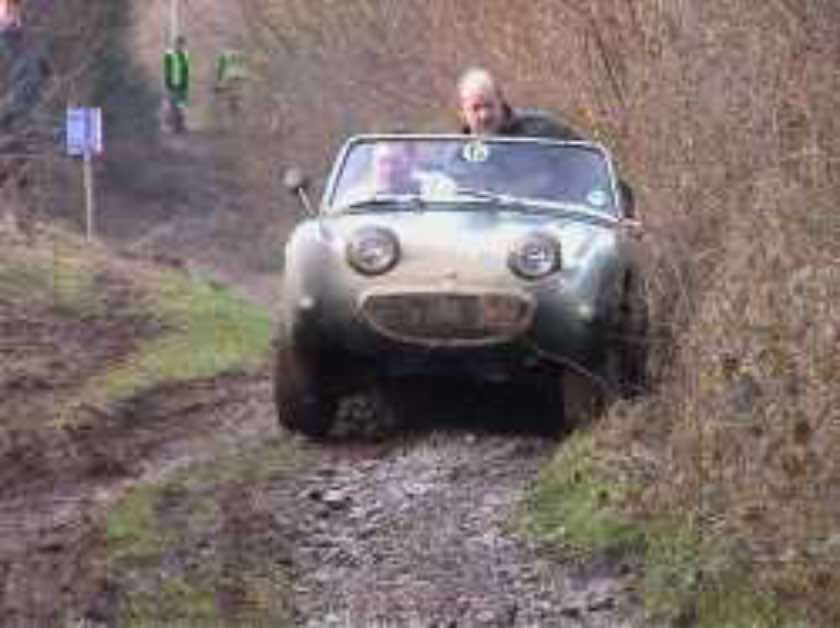



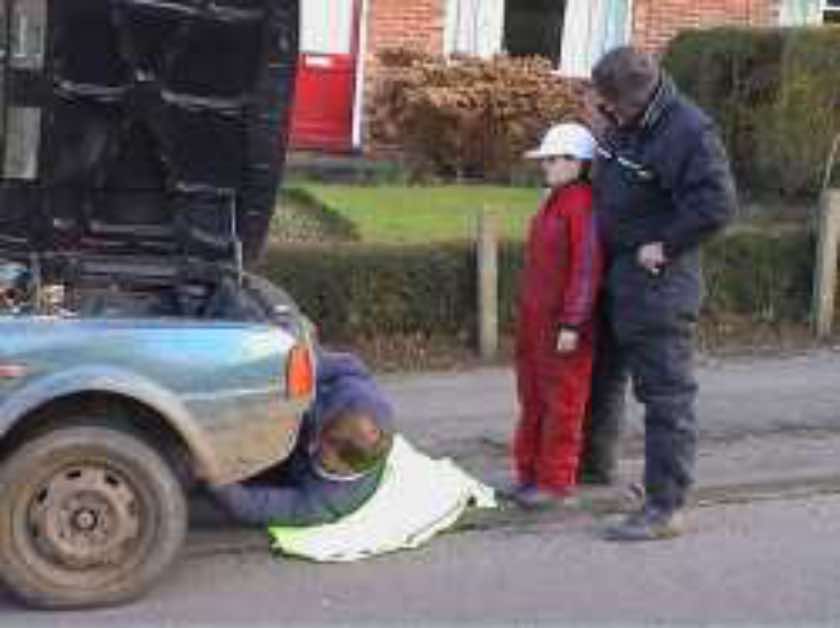






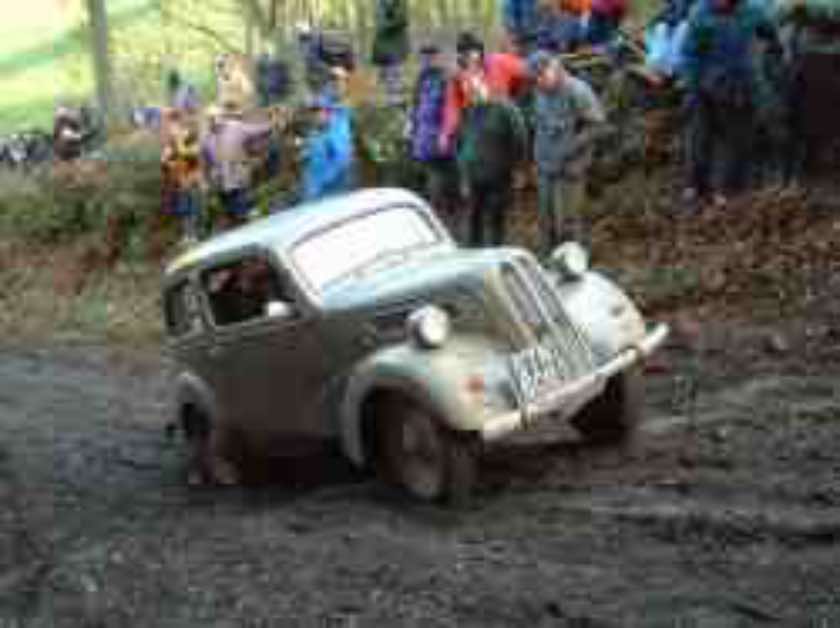


 Classical Gas