No Rush for Gold on Lands End

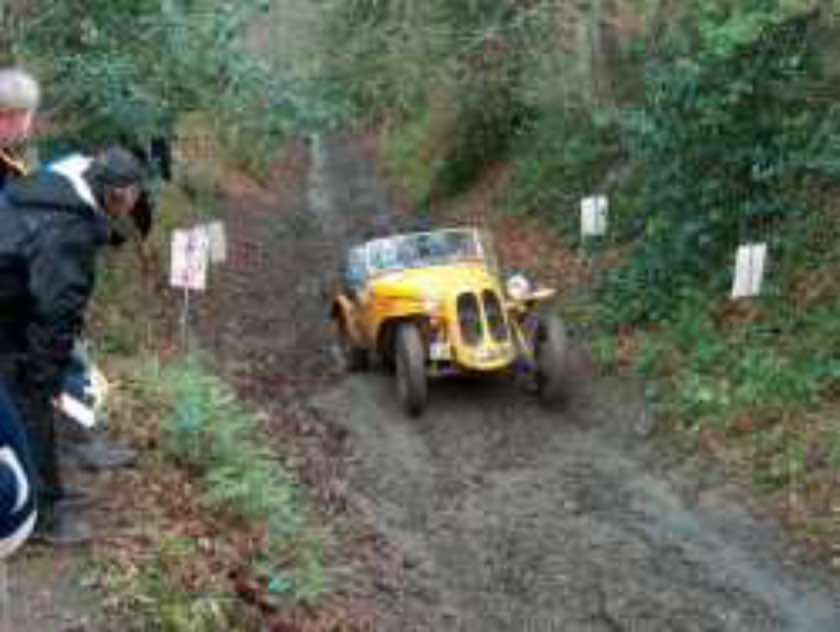
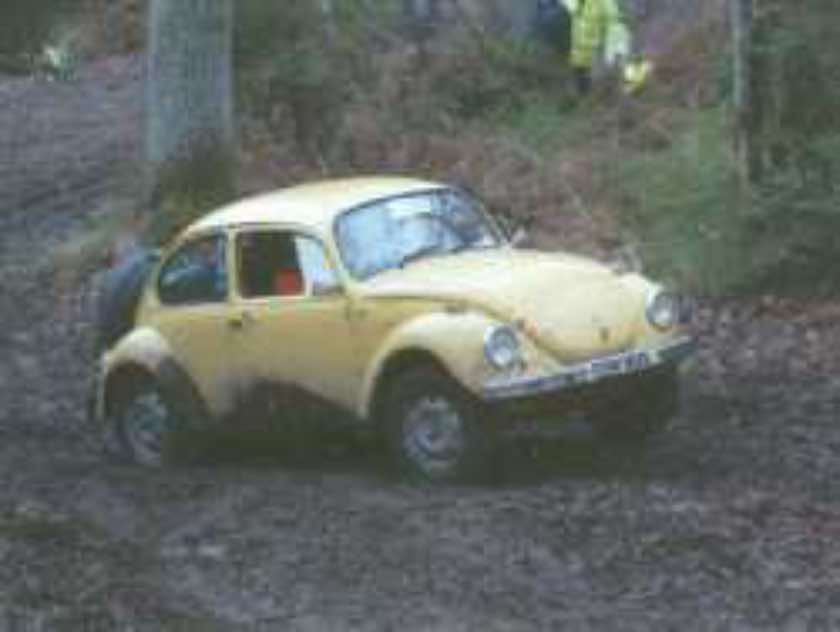
The 2004 Lands End wasn’t a particularly tough trial. Most of the sections were relatively easy but there were two big obstacles for those aspiring to gold. The ever-difficult Hoskins, and a tricky restart on Bluehills 1 for the higher classes as a spoiler. All this meant that there might be fewer than 20 competitors who cleaned all the sections.

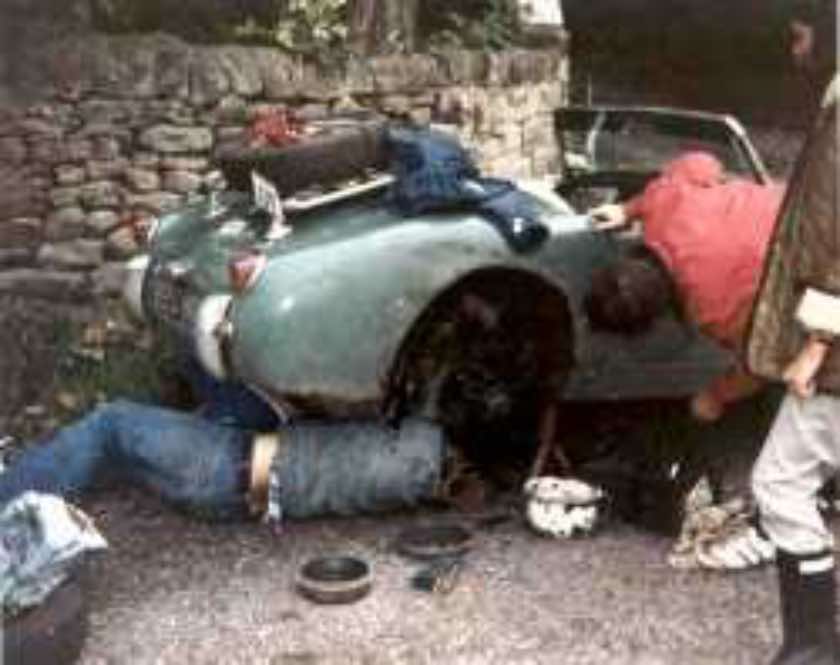
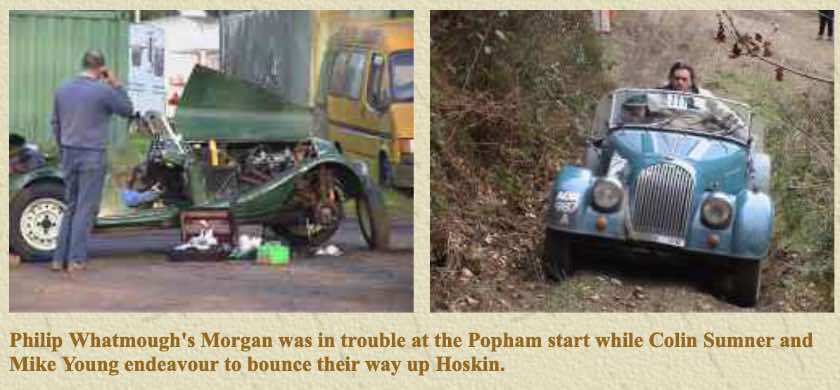
Good Friday was a nice sunny day and Popham car competitors had the unusual experience of wearing their sunglasses for both the start and finish of the trial. Scruitineering was a bit different to usual, with the marshals coming to find cars in the back field rather than competitors get checked on the way in. As usual a few were having early problems. Philip Whatmough had the brakes of his Morgan +4 in pieces; assisted by Ian Blackburn who is normally associated with his unique Singer. Neil Bray arrived at the start to find he had his first puncture of the day and it took the combined resources of about six people, including a spectating Stephen “man in black” Bailey, to break the bead. Ian Davis fell foul of the scrut when after 17 years the MCC have decided that the buggy’s dynamo belt isn’t properly guarded! 

Neil wasn’t the only one with tyre problems. Pete and Carlie Hart were no more than five miles away from home, on their way to the off at Michael Wood Services, when they had a flat which they fixed when they got to the start with the aid of David Foreshew and his bead breaker. 

The weather stayed fine on the route to the North Petherton Control near Bridgewater. In Stuart Harrold’s case it was accompanied by the ever increasing rumble of a failing front bearing which mysteriously cured itself as the trail went on! There was some confusion at the control as a lot of people didn’t read their route card, arrived to find the petrol pumps closed and had to retrace their steps to the M5 services a mile or so back down the road. 

It was soon time to leave for Felons Oak where there was some confusion about the route to the section. The instruction in the route card said “SO no DP – SO up lane to”. The turn left had an MCC no entry sign so competitors dutifully went straight on to come to a dead end an irate householder as you had to turn right to find the section! The restart for cars was nice and dry but a couple of steps have developed making it very important to stop in the right place. Ted Holloway and Simon Groves were amongst the few to fail here. The motorbikes didn’t have to restart here but a few did anyway which was unfortunate. Peter and David Manning arrived at Felons Oak to find they had Brian Alexander’s time card and had to retrace their steps to North Petherton to swap it for their own. This put them about 100 cars back down the field and they had a slow journey over the moors. 

Stoney Street was quite rough this year, especially near the top where a number of pipes cross the track and are sticking up more and more each year as the rocks either side get eroded away. Sadly Ed Nikel didn’t get this far. Ed had been struggling with a miss-fire, then the lights disappeared and he was forced to retire. 

Leaving Stoney Street the route headed up onto the moors and into a dense mist, which was a real problem. Competitors formed into groups with the followers having a much easier time than the pathfinder. Veteran Aerial rider Tom Beckerleg was running amongst the cars as he had machine problems back at the Plusha start when he couldn’t get the engine started at scruitineering. Tom and John Lees soon found that the chain drive to the mag had jumped off and got the venerable Aerial on the road. Peter Mountain had his wipers stop working crossing the moors and Jim had to operate them by hand as they fought their way through the murk, only for them to fix themselves when the sun had burnt away the mist! 

Beggars Roost wasn’t too bad for the early numbers, but cut up as the event went on, causing more and more failures and a delay soon build-up. Beggars wasn’t entirely straightforward even for the early numbers. Clive Booth and John Alssop struggled to get away. Simon Groves cleaned the section OK but by the time he got to the main road his newly fitted clutch had well and truly gone. Simon managed to get the stricken car to a garage and fitted a new clutch, only to find a terrible vibration. As he couldn’t find the cause, let a lone cure it, Simon had no choice but to retire, although he limped down to the finish. The many failures had caused a queue all the way back down to the garage by the time Mike Pearson came along at the end of the field. Unfortunately when the time came for his assault on the hill Mike stalled the engine getting away from the re-start. He got going quickly and didn’t roll back but was concerned about how the marshals would view this and was on tender-hooks until the results came and he could see he had been given a clear. 

Riverton wasn’t too difficult and on to Sutcombe where the restart has become very cut-up and it could be very difficult to get away if you didn’t stop in exactly the right place. Riverton wasn’t so easy for Ian Davis though. First the car had to be bump started then the lights failed on the section. After his earlier mechanical problems Tom Beckerleg had been running back amongst the early cars, who were very disappointed to see him record his only fail on Riverton. Fellow British bike fan, and reader of this column, John Lees struggled a bit with his Triumph twin but recorded a clean and went on to a class award. 

If some of the early sections have become rougher that certainly wasn’t the case at Darracott, which appears to have been resurfaced, and even the Class 0’s were due to have a go. However four of them had failed by the time Ken Green came along and after a mobile phone conversation with the C of the C it was cancelled for class 0. The section was followed by a nice simple special test after which Dave Nash stopped to repair no less than three punctures he had accumulated so far in the event. Dave’s unique MGeetle was going well, with no troubles from a re-built type three engine, which allows a flat parcel shelf under the rear window. Dave wasn’t the only Falcon to be suffering from tyre problems. Richard Tompkins was another to have multiple punctures and had to miss out a couple of hills when he diverted to a tyre depot and got over taken by the course-closing car. Ian Davis had finally traced his electrical problems to a faulty earth although he struggled with the indicators later on. 

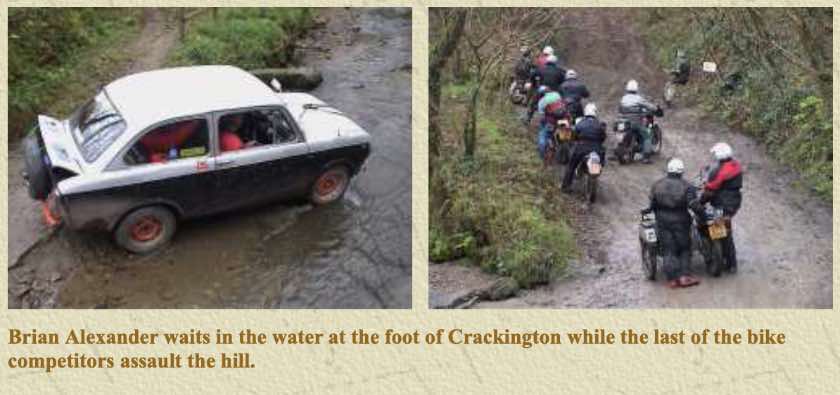
The special test at the top of Darracott was cancelled after the marshals gave verbal instructions different to the route card and there was further confusion at the Widmouth Holding Control. The first bike competitor was due to leave at 5.05 am. However, for some reason marshals held an ever-increasing number of bikes and only let the first one away at 5.45. They then let competitor’s go at one-minute intervals. This was fine until one of the car competitors persuaded one of “those who must be obeyed” to speed things up. This was all very well until Crackington where the holding control was cancelled and marshals at the old hill were getting cars arrive much more frequently than they could let them up the hill and a horrendous jam developed. 

It didn’t seem that the traditional extremely local shower of rain had been as heavy as usual. Only the red cars had to restart, but even so there were a fair few failures. Michael Leete was delighted to power his way through on the minimum 10-psi pressure, albeit at the expense of a puncture. Neil Bray successfully restarted Primrose to clean the hill but heard later that the marshals had failed him for taking too much time to get away. Running close together neither Dave Nash nor Peter Thompson managed to get through, nor did Keith Oakes who was having an un-characteristic bad day in his Dutton Phaeton.

Ian Davis had a different problem. Arriving at the section in splendid isolation he was beckoned to the start line and asked the start marshal if he had time to let the tyres down. No problem. But no sooner had he started than Robin Moore comes over ‘I’m chief marshal. You haven’t got time for that. I’m going to invoke the 30 second rule’. OK technically he may have been right but with no cars behind Ian thought that a little harsh. 

Later in the event it appears that the marshals allowed multiple cars on the hill in an attempt to reduce the delays and this caused a number of competitors to get baulks when the preceding car came to a halt. Pete Hart, Mal Allen and Murray Montgomery-Smith were running close together and all suffered this fate.

The river at the foot of Treworld was running very full and plenty of water was being carried up the lower reaches of the hill. The yellows had to restart here and Simon Robson was failed for not doing so. Tony Branson got his Marlin away in fine style only to stop a few feet from the top when the engine had a fit of the sulks. Sadly Treworld was to see the end of Peter and David Manning’s trial when the teeth on the crown-wheel stripped so it was ride home on an RAC truck for the Midget. Class 8 didn’t have to stop but Peter Mountain was one of many who very nearly did! 

A very welcome rest was a few miles up the road at The Wilsey Down Hotel where the facilities are accessed through a cattle market where men with sticks normally drive beasts to their fate, steel hurdles keeping them straying from the path set by their masters. During breakfast one wag was heard to enquire if this was a message! 

In the past the rest halt has been followed by a quite long main road run, enabling competitors to catch up time. This year the route lay through lanes and villages and even the early cars were running behind time at this stage if the event. Warleggan isn’t a difficult section but it’s a bit rough and the challenge is easing your way over the rocks while keeping the car in one piece. Stuart Harrold and Chris Phillips didn’t have any problems as their Troll has sufficient grunt so they can ease off over each bump and accelerate to the next. By the time Mike Pearson came along at the end of the field he had to queue for 45 minutes and found the hill dreadfully rough causing a lot of punctures. 

Hoskins has developed a reputation for being the Lands Ends main stopper in recent years and this was justified once again as car after car had to reverse back down. Peter Mountain was one of those but then along came Dudley Sterry to show it could be done. Class eight had a very tricky restart in one of those areas that had once again experienced an extremely local rain shower. Stuart Harrold and Chris Phillips mastered the section. Stuart got out of the polished ruts well over to the right in the red restart box, got away well but then had to get back into the ruts so it was engine on the rev limiter and a great deal of bouncing/side to side woggling by Chris and they crawled to the top and out of the section for a clean. Running near the front of the field Clive Booth couldn’t get away and neither could Mike Pearson in the other Reg Taylor/Geoff Jackson built Dellow Rep. Mike got off the restart but wheel spin set in almost immediately and he went no further. Reg Taylor himself was running his Anglia in Class 0 but had to retire when his fuel pump packed-up. Class 0 competitors appeared to be enjoying themselves but it was far from damage free and Alan Foster stove in both the rear wings on his Morgan +8. 

After a Special Test, came the Bishops Path section where the restart for yellow and red cars had been moved back a bit. Pete Hart was delighted to get away. Fellow class Seven competitors Tony Branson and Simon Robson both failed with different opinions. Tony reckoned that the section was doable and fair while Simon reckoned it was too Mickey Mouse for The Lands End. 

With the nice weather the slopes around Blue Hills thronged with spectators. Bluehills One had Dennis Greenslade in charge with Graham Brasier taking care of the start. There was a restart on the slab onto the road for red and yellow cars and bikes and poor old class three cars for some strange reason. Blue Hills One is one of those sections that is very easy to fail if you don’t put the car in exactly the right place and with the restart it was very tricky indeed and didn’t go down well with competitors some of whom thought it was bit unfair. Ross Nuten was one of the early failures, bringing his total to three failures on the event. Ross enjoyed his Lands End, being much more confidant in the car now it has a Fack Diff. Ian Davis was another one to come to grief as was Mike Pearson. 

Things were a bit confusing between Bluehills One and Two as what happened bore little resemblance to the route card and it wasn’t clear where the section actually started. The hill itself was just right, challenging but far from impossible and it went down well. 

With the delays later numbers were arriving at the finish up to three hours late after waiting for a long time at Beggars, Riverton and Warleggan. The facilities there were good and there were plenty of the MCC hierarchy around if you wanted to express your opinion about the event. 

All in all a good event, even if one or two of the hills had controversial restarts. It was very noticeable how much the mileage has reduced in recent years and I for one do not think this is a good thing. The Lands End is about more than the sections and I would like to see it go back to going further west. However, that and some of the restarts apart, well done to all connected with the organisation for an enjoyable and well-balanced Lands End Trial.


We have been publishing stuff about Classic Trials on the Web since 1995 and always appreciate feedback. Comments, Corrections, Criticism & Concerns are all welcome. You can leave a comment to have your say here on this web site or our Social Media

My March Hare Adventure by Mike Hayward

My March Hare adventure started a few weeks before the event, when Michael Leete invited me to accompany him to West Yorkshire to look at a Dellow he was going to buy. Having done the deal and on the way home we talked about it’s role in Michael’s competition calendar. 

He decided there and then to make the Southern Autos PCT at Brickhill the shake down event and then enter the March Hare. He asked me if I would like to be the passenger for these events. I said yes provided it was OK with the March Hare committee. 

It was a little bit cold in the paddock at Brickhill and I began to wonder if I had enough clothes on. But down in the valley it was totally different as the cold wind was blowing above us. Very quickly it was our turn to attack the first section and things couldn’t have gone better, a clean and another clean on the next two hills. What a start. Those of you who were there know that half way around round two, we retired having found all the things wrong that you hoped you wouldn’t but knew you inevitably would. Worn out plug leads, points etc. etc.. 

Three weeks later, and the day of the March Hare. The day dawned bright and cold but without the predicted overnight frost. Our journey to the start was via the lanes of Hertfordshire rather than the main roads. Our route took us via Old Knebworth, Codicote passing a section near Nup End that was used in the March Hare of 1963, on through Wheathampsted, Harpenden to the A5 and the Truck Stop at Frias Wash. 

We joined the queue for scrutineering hoping everything would be OK. It was except for a blown side light bulb. We caught up with all the gossip over a true truckers breakfast and we were ready for the off. 

The route then took us back towards Stevenage via New Mill End and Peters Green to a holding control just outside Whitwell. We continued through the village to the first section Nortonstreet Lane, a relatively easy climb without the predicted ruts that were present last year. 

On through St Pauls Walden and Preston to Section 2 and a regularity test at Whitehall Lane. I have to admit my education never included how many yards to a mile, only meters to a kilometre. Michael managed to work it out somehow and we went through the section in about 50 seconds. 

We then continued on our way this time taking in the delights of the Luton southern bypass to arrive at Section 3, Half Moon Lane. By then it had started to rain and there was only a short queue waiting to find out how deep the mud bath would be this year. The answer, as we discovered, was not very, but the restart was a real test of the drivers skill. Michael placed the Dellow and with a little bit of wheel spin we were on our way again, with snow now falling. 

Four miles further on the snow had stopped but the Marshals standing on the hill at Kensworth looked rather cold. Our attempt at the two sections laid out on the hill were not very good although I was surprised we got round the first corner on Section 4. While we were there, we witnessed the climb of the day by Ian Davis who stormed up the very slippery slope to clean Section 4 and ultimately go on to win the event overall. 

The sun was out again when we arrived at Edlesbrough for three sections on the slippery hill. Our attempts matched those of the competitors in front of us. Ian Davis was again showing us all how it should be done. Lunch was taken after the third section at Edlesborough and time to catch up with the news from the other competitors. 

Most of the entry was at Brickhill and the queue for the Special Test was nearly out the gate. Plenty of time then to take photos. We did alright at Brickhill, cleaning all three sections, all with restarts and all in bright warm sunshine. 

Thirteen miles south and a totally new venue to me, came Ivinghoe. After the second Special Test there was another short wait until we could attempt the hill. This gave us enough time to fix the exhaust clamp which had come undone along the road from Brickhill. We were told that the restart had been taken out, so it was then a straight forward climb. Full revs were used to get us over the first steep bit of the section and then it was a long drive along the bank to the next little ridge where the restart should have been. 

Continuing, the route then took us via the outskirts of Tring through Wiggington and Cholesbury to Section thirteen, Hawridge Lane, where we had quite a long wait in the lane before the section, caused by a vehicle coming the other way. I had expected some water in the bottom of the valley but there was only mud. The restart however was placed with tree roots all around and caught out a lot of drivers, ourselves included. Clive Booth was the man to show us all how to do it this time. Apparently he just stopped and then drove off the line without drama. 

The route then took us back over Cholesbury common to the last section Hill Farm. to be greeted by a happy John Newberry and Ian Lawson who had thawed out from their time on the Kensworth bank. Hill Farm presented no problem and we were then heading for the finish via Berkhamsted, Water End and Flamsted. The results were posted while we had a cup of tea and the trophies presented soon afterwards. Congratulations to Ian Davis on a well deserved win and to the entire organising team including all the marshals and a “Thank you” to Michael Leete, for a very enjoyable day. 

Mike Hayward.


We have been publishing stuff about Classic Trials on the Web since 1995 and always appreciate feedback. Comments, Corrections, Criticism & Concerns are all welcome. You can leave a comment to have your say here on this web site or our Social Media
My March Hare by Chris Clarke

A novice’s view of the March Hare Trial 2004

The final part of Murray McDonald’s invaluable advice on trials preparation for the VW Golf was a suggestion that the March Hare would be a good shake down event for the car and crew. On the day, we arrived at the start with some trepidation, having left Bristol at an ungodly hour, completed the formalities and fortified ourselves with the food on offer in the café. The very clear instructions lead us to the start of the first section, Nortonstreet Lane. Here we got about 50 yards along the track before I remembered that the tyres were still fully pumped up – too late to do anything except keep going, hang on and hope. More by luck than judgement we made it to the end and continued to Whitehall Lane, where we were just about able to do the average speed calculations in time before setting off, relying on the Golf’s rather wobbly speedometer to complete the section without penalty. We attempted Half Moon lane with the drivers window down, big mistake, as you are only supposed to get the outside dirty, but again we made it to the end. 

At John Barber 1&2 things didn’t go as well. When we arrived some cars were driving around at the top of what looked like a small mountain covered in red tape, but by the time we started it been raining for about 5 minutes and either because of this or just sheer incompetence, we got absolutely nowhere at all. Most of all, I felt that we had let down the person who had so laboriously strung out the tape, having only used the first 3% of it, and sympathy for those marshals who were standing outside in the terrible conditions. On to Eddlesborough Hill where we continued to struggle, only just making it to the start of the 2nd section. However, with the drying ground and some helpful advice from a fellow competitor we made it round the 3rd section – what a feeling of achievement! 

The hot tea available at the lunch stop was very welcome and after this and the improving results from Eddlesborough we approached Brickhill with some optimism. The lack of reverse gear gate (just having the parts in the garage is not enough) was a disadvantage in the special test (that’s my excuse) and seeing the first two cars in the first section disappear into what seemed to be a bottomless pit quickly reversed the earlier optimism. However, once on the move, it was possible to squeeze between the pit and the marker post and no one was more surprised than us to find ourselves passing the last marker. On the next section I discovered that it is not a good idea to go too fast downhill, as it doesn’t carry you up the next bit, just off the section, useful experience for the last one which seemed to go up and down for ever.

At Ivinghoe I (I didn’t say we as my passenger claims he knew exactly what to do) made a complete hash of the steep bit and so missed the chance to drive about at the top of the hill, which looked quite good fun. However we succeeded on the last two sections, Hawridge lane and Hill farm, despite the road being so narrow it was difficult to get out of the car to let the tyres down. Whilst pumping them up I thought for a moment that someone was throwing small stones at me, only to realise that it had started hailing – the weather on the day was best described as variable. 

Whilst driving to the finish we suffered the first serious brain fade and took a wrong turning, only to be followed by a small convoy of fellow competitors with a lot more faith in our navigation than was justified. At the finish, brains restored by more café food, we were both pleased and surprised to be awarded the novice trophy. This was the icing on what had been a thoroughly good day – friendly but challenging competition, well organised and an excellent introduction to the sport – we look forward to the next one. 

Chris & Nick Clarke


We have been publishing stuff about Classic Trials on the Web since 1995 and always appreciate feedback. Comments, Corrections, Criticism & Concerns are all welcome. You can leave a comment to have your say here on this web site or our Social Media
Ian Davis Wins Murrays March Hare in 2004

Rain, Snow, Sunshine, Falcon had it all on Murray’s March Hare. At one time it looked as if a Trojan would win in the end it was Ian Davis in his VW Buggy, but only just as Ian’s victory was decided on special test times over Elizabeth Tucker-Peake in her Peugeot 205 Gti

The Start

David Malin leading class 3 away from the start under the eye of John Parsons.

There were 40 crews entered but with Richard Dawe (Midget) and mark Rosten-Edwards (Escort) non-starting  38gathered at The Watling Street Café, just of Junction nine of the M1, on 7th March. This was John Parsons and Mike Pearson’s last event as organisers. Next year they will be handing over to a team led by Arnold Lane so they can have a go themselves.

Norton Street Lane

Byway, long straight climb on loose stones with the left hand rut getting deeper towards the summit, Classes 1&2 have a straight run through, 3 to 8 had a re-start.

March Hare winner Ian Davis at the top of Norton Street Lane

With potential PR problems the first two sections were cancelled and Joint Clerk of the Course Mike Pearson was on hand at nearby Norton Street Lane. The section was relatively easy this year, the surface has improved and the ruts were not as deep as last year and Edward Holloway was the only failure in his Sierra.

Whitehall Lane

Byway – Tree Lined Lane with a very good surface now the council have resurfaced it and removed the fallen trees

It wasn’t so long ago that this section was totally impassable. Then along came the council’s road gang and now it’s probably smoother than the nearby M1! It’s so smooth that it’s not competitive as an observed section so it was run as a regularity under the eager eye of sponsor Murray MacDonald. It took a bit of mental gymnastics to work out what was required but fortunately most managed it and it didn’t affect the major awards!

Half Moon Lane

Byway – Starts with deep, muddy water. After this there was a tricky chicane with a restart for 7 & 8. The section continued through a series of bends and some quite deep ruts. Most of the marshals were from The Watling Club.

As the entry made its way west again the rain started which was to liven things up on the grassy sections at Kensworth and Ivinghoe. 

There were no problems at Half Moon Lane for the lower classes but Dave Nash had laid out a tricky restart immediately after the water for 7 and 8. A chicane forced cars to the left so that it was very difficult to get going with the wheels straight. This stopped five of the class 7’s and Ed Nikel in class 8.  Fred Gregory had to retire here when a loose exhaust finally parted company with the car leaving Fred and Pete Stafford to spectate at Edlesbrough on the way home.

John Barber 1 & 2

Two sections marked out on private land at Kensworth with Ian Lawson and Alan Davis in charge.

The rain really livened up conditions at the two Kensworth sections, especially for the later numbers. It wasn’t that easy for the early numbers though so credit to John Wilton who cleaned both of them in his Trojan, the only person to do so. Steve Potter got up the first hill in his Trojan as did Andrew Burt and Elizabeth Tucker-Peake in class one. Peter Manning, Keith Pettit and Peter Thompson and Ian Davis were the only other competitors to reach the summit here.

In Peter’s case his success put him in the lead of class three which he was to maintain throughout the day.

Edlesborough Hill

Three sections on Private Land – The first started in the field, going through the gate and through the trees before diverting into the bomb hole with a re-start for 7 and 8. The other two were on the top of the hill using well proven routes through the bushes.

The weather was still helping to toughen up the sections and there was even a little snow before competitors arrived at Edlesborough. This made conditions really slippery on the hills notorious surface where all grip seems to completely disappear at the slightest sight of moisture!

The result was that nobody cleaned either of the first two sections. The third one was possible though and the Trojans and all the class ones except John Rowland made the most of their early numbers to get cleans while there was still some grass on the surface. In class three Simon Groves was fighting back and his clean bought him within five marks of Peter Thompson.

In Class Five Peter Manning had fallen behind Keith Pettit in the regularity on section two but honours were restored with a clean here, enough for a class win at the end of the day.

Brickhill

Three sections on Private Land. The first was a trip through the trees followed by a steep climb just after a corner on deep sand with a re-start for 7 & 8. This was followed by a tricky trip up the bracken. The third section went up the sandy gully where the ruts were quite deep, followed by a steep gradient with a re-start for 7 & 8

There was a lunch beak after the Edlesborough sections to give the marshals time to reposition themselves for the afternoon sections. These commenced at Brickhill with Herts VW Club in charge. Things commenced with a special test, which was to give Ian Davis his event win when he was more than four seconds quicker than Elizabeth Tucker-Peake.

Peter Morley was struggling with the engine of his ex- Fred Gregory Dutton Melos. It looked like fuel starvation and a faulty fuel pump was suspected before peter realised the tank was dry! The rain had stopped now and the sandy surface that characterises Brickhill soon dried out giving everyone the opportunity to have a fair crack at the hills.

In class Seven Matt Robson and Jim Bounden both failed the restart on hill 10 which gave Keith Oakes the Class Seven lead.

Ivinghoe

Special test and Section on Private land, the section was all about a steep bank at the start after the restart was cancelled.

Ian Davis heading towards victory at Ivinghoe.

The weather was getting brighter by the time competitors tackled the second special test at Ivinghoe. Eliazabeth Tucker-Peake clawed back a little time but not enough for Ian Davis to loose his lead. The fastest time here was set by Keith Pettit, just a fraction quicker than Andrew Burt in his Subaru Justy.

The following observed section started with a very steep grassy bank followed by a relatively flat track before the final tricky rise with a restart to catch the unwary. This had to be cancelled after the fist few cars, as there was a danger of those who couldn’t restart slipping sideways down the hill.

Even so Ivinghoe caught out quite a few competitors, including the Trojan of John Wilton, but not enough for him to loose the lead in class two. Surprisingly the bank at the start, which was a lot steeper than it looked,  caught out a number of the class 7’s who failed to tackle it with sufficient speed.

Hawridge Lane

County Road – used the other way to last year with a tricky restart on tree roots for the higher classes.

The penultimate section wasn’t to difficult without a restart, although it was necessary to carry a bit of momentum over the tree roots which caught out Ted Holloway and the experienced Reg Taylor in class three and Simon Benoy in his Imp.

For the re-starters in the higher classes positioning was everything and there were plenty of tree roots to catch the unwary. Andy Clarke was in charge here and sponsor Murray MacDonald was on hand to watch the action. Murray reported how the shorter wheel base cars had the most difficulty as getting the front wheels just over the line still bought the rear ones into the “root zone”. All credit then to the Buggy’s of Ian Davis and Andy Curtis and to Clive Booth for getting away OK.

Hill Farm

County Road – Tree Lined Track that had been used on the March Hare back in the 50’s

The last section wasn’t a problem and everyone cleaned it OK, a nice way to end the day.

The Finish

From left to right – Hazel MacDonald (sponsor), John Parsons (Joint Clerk-of-the-course), Ian Davis (The Winner!), Dave Nash.(Secretary of the Meeting).

Back at the A5 truck stop Dot Parsons and Francis Webley soon produced the results and Ian Davis was presented with his trophy. It was a close thing and decided on special test one where Ian was six seconds faster than Elizabeth Tucker-Peake.

Class three was decided by Peter Thompson as Simon Groves could not claw back the 11 lost on John Barber 1. Keith Pettit won the Spridget battle in class five. Colin Sumner had a good run in his Morgan but was another to suffer on John Barber 1, dropping him out of contention.

In Class Seven there was a day long battle between Keith Oakes (Dutton Phaeton) and Jim Bounden (Marlin). This was decided in Keith’s favour only after Jim failed the restart on the second Brickhill section while Keith stormed to the summit.

Ian Davis had established an early dominance in class 8 after he was the only competitor to clean John Barber 1, a climb that will never be forgotten by those of us to witness it! This section was also to decide the class win when Andy Curtis got to the ten marker while Clive Booth lost twelve. Andy held onto these two marks all day to win the class.

Looking Back

First to say that it was fantastic that the battle for overall victory took place between two of Classic Triallings’s oldest and well known families. Ian being a third generation of the Davis family and Elizabeth’s father-in-law was of course John T-P.

Marlins were the most popular car with five taking part. There were also five Dellow’s and derivatives there-off with three of them bearing the handiwork of Reg Taylor. Reg himself was driving his RDT Anglia so Reg takes the car builder award. His partner in crime Geoff Jackson was marshalling at Edlesborough with Christine running the control.

In conclusion it was another excellent March Hare Trial. These events take a tremendous amount of organisation but judging by the happy smiles of the competitors at the finish it was all worthwhile.

Overall WinnerIan Davis (VW Buggy)18=
Best FalconPeter Manning (Midget)29
Best NoviceChristopher Clarke (Golf)42
Class 0Graham Skeggs (Ford Fiesta)68
Class 1Elizabeth Tucker-Peake (Peugeot 205)18=
Class 2John Wilton (Trojan)28
Class 3Peter Thompson (Opel Manta)24
2nd in Class 3Simon Groves (Escort)29
Class 4Simon Benoy (Imp)28
Class 5Keith Pettit (AH Sprite)26
Class 7 Keith Oakes (Dutton Phaeton)36
2nd in Class 7Jim Bounden (Marlin)41
Class 8Andrew Curtis (VW Buggy)34
2nd in Class 8Clive Booth (Dellow Replica)36

We have been publishing stuff about Classic Trials on the Web since 1995 and always appreciate feedback. Comments, Corrections, Criticism & Concerns are all welcome. You can leave a comment to have your say here on this web site or our Social Media
Mike Workman Wins Close Cotswold Clouds

Local man Mike Workman won a closely fought Cotswold Clouds by one mark from Paul Bartleman and Andrew Martin. Once again they were chased by the amazing Front Wheel Drives of Dave Haizelden and Paul Allaway who were only the two marks lost on Crooked Mustard away from overall victory.

Stroud had good trialling conditions for this years Cotswold Clouds. There had been quite a bit of rain the week before the event but it remained dry on the day until just before the end. There was drama at the start for Colin Perryman, who forgot he wasn’t in his road car and filled his BMW’s tank with Diesel, leaving him with quite a job to get it flushed out so he could start. After a nice easy Crawley Wood the action started with Crooked Mustard where most of the class eights got up, although not Falcon’s Geoff Hodge or Ian Davis and surprisingly Stuart Harrold who got a twelve. Amongst the saloons class three did the best with a delighted Simon Groves cleaning the section on what was to be a class winning performance. 

In class six Mark Tooth and Jon Robillard came out of the top but none of the Beetles in class four succeeded, leaving it to Ian Moss in his superbly prepared Imp to show how it should be done. We have come to expect some fantastic performances in Class One these days and both Dave Haizeleden and Terry Coventry came oh so very close. 

Axe was not as difficult as in recent years and the big step seemed to have disappeared. The trial followed its usual route to Nailsworth Ladder where the restart caused problems for a lot of competitors in classes seven and eight. It had started to rain by the time later numbers arrived and Simon Robson couldn’t get enough grip to build the momentum to get over the step. This was very disappointing for Simon and Matt who had done well to clean Crooked Mustard in their Liege for the second year running. 

There was quite a delay on the common opposite The Bear Hotel where competitors queued for Ham Mill. As if the restarts weren’t enough there was a “mini Nanny Hearns” diversion at the left-hander to spice things up. The rain was coming and going now and the conditions were quite a problem for some competitors who couldn’t even reach the restarts. Michael Leete and Mike Hayward managed that part OK but came to grief on the new deviation. 

There are numerous variations of Mackhouse and this year it was a slippery, muddy climb through the trees with a restart for the higher classes. Restart or not almost everyone failed at the seven before a scary sideways slip down the camber. The most successful competitors were Simon Woodhall who got to the four in his VW Buggy as did Mike Chatwin although the excitement proved to much and he retired his Troll soon afterwards. We lost Peter and James Mountain here as well when the brazing on one end of the Panhard Rod came adrift and with the back end crashing and banging they decided to retire, which was a shame as they had conquered the fearsome Crooked Mustard earlier in the day. 

Freds Folly had a slippery restart in the mud for the higher classes, causing particular problems for the yellow and reds where even the all conquering Andrew Martin failed in his Melos. A few miles up the road the usual crowd had gathered at Merves Swerve where Allen Trial organisers Pete and Carlie Hart were watching over a new variation where a taped off deviation marked a tight left hander where many of those lucky enough to get over the hump understeered off into the greenery. It was possible though as half a dozen or so competitors proved, including Terry Coventry in class one. 

The trial was drawing to a close now, with the rain getting heavier as competitors headed into the woods for the two Highwood sections. Both of the sections seemed a little easier this year but the fearsome Highwood 2 remains a most daunting section. It seemed the rain had washed the mud away as there was plenty of grip, so much so that some of the less powerful cars ran out of grunt at the top. Class 8 had a tough start line which defeated most of front runners who were running at the front of the field but later numbers David Wall (Dellow Mk1) and Geoff Hodge in the Reg Taylor built RDT climbed out the top. Class 8 was decided here as when they arrived the top four had dropped an identical 7 marks, all lost at Mackhouse. None of them cleaned Highwood two but Mike Workman got the furthest to win both the class and the trial. 

After a relatively easy Climperwell competitors arrived at the two Bulls Bank sections to be greeted by a very wet Chris Phillips. All the leaders cleaned both and picked their way through the puddles to the finish at The Old Lodge Inn at Minchinhampton.


We have been publishing stuff about Classic Trials on the Web since 1995 and always appreciate feedback. Comments, Corrections, Criticism & Concerns are all welcome. You can leave a comment to have your say here on this web site or our Social Media
Andrew Martin wins Compact Clee

The first one-day trial was a close fought affair with Andrew Martin just piping Falcon’s Ian Davis to overall victory by one mark with Adrian Marfell close behind them in his Beetle. Andrew would have had a clean sheet but for failing to get away from line B on the Longville special test, along with most of the field! Ian managed this OK but dropped marks on The Jenny Wind and the restart on Harley Bank.

 This years Clee was back in Jonathan and Pat Toulmin’s hands from Simon Woodhall and Barbera Selkirk who have been looking after it for a couple of years. Both teams have been steadily improving the event since it restarted around ten years ago. This year it was organised with a very compact route based at Craven Arms. The entry was split into two. Classes 6, 7 and 8 headed North to Rattlinghope, doing battle with the frosty and icey road over The Long Mynd on the way. Going up was bad but Stuart Harrold reported that coming down was positively hairy! The majority of competitors were cleaned this first loop although Meadowley claimed a few scalps including Roger Bricknell, EricWall and Dave Nash who had Neil Bray passengering for him in The Skeetle, fearing that his MGeetle might prove to much for the purists in the MAC! 

Jonathan Toulmin had incorporated a couple of new sections. Walkmill had John Sargeant in charge and was a nice track up to the village of Wentnor. Medicot seemed awfully familiar and turned out to be the approach road to Clee regular Astone with some very deep ruts to conquer. 

Returning to Craven Arms the second loop was to decide the trial, particularly the controversial Longville Special Test. The track was smooth enough and it seemed simple enough on the route card. “With front wheels on Line AA, at drop of flag, drive forward until all wheels have crossed line BB. Reverse until all wheels have crossed behind line BB. Drive forward and stop astride line CC. 

The only thing was that line B-B was a steep slope of polished stones with very little grip and it was very difficult to get away. Nobody in class 7 made it and only a couple of the class 8’s, including Ian Davis, Paul Bartleman and Simon Woodhall who all retained clean sheets. 

The trial was decided in the next few sections. Ian Davis went into the lead when he cleaned the new section Easthope after a keen eyed marshal spotted Paul Bartleman making a momentary stop. Then Ian stopped on both The Jenny Wind and Harley Bank, which left him with 7 marks dropped. Meanwhile down in class 7 Andrew Martin had been cleaning everything in his Dutton Melos apart from the Easthope special test. This put him one mark in front of Ian and overall victory. 

The lower classes started with the eastern loop so The Longville Special test was their first section. Again this was a major problem for most of the competitors although Adrian Marfell managed to burn away while Michael Leete dropped right back before making a clean assault. Adrian did very well on the new Eastcote section and also managed the tight hairpin on Ippikins Rock, which was the downfall of all class 4 apart from Adrian and Giles Greenslade. Simon Groves also failed here putting him behind Harvey Walters and John Cox in class 3. 

Adrian did very well to clean The Jenny Wind the only car in the lower classes to do so apart from Dudley Sterry who was driving Barry Clarkes Austin Seven on The Clee. 

The loop over The Long Mynd didn’t cause to many problems for the lower classes although there was a surprise at Gattens Gamble when Ducley Sterry stopped at the six to loose the lead in class two to Jeremy Flann. 

Competitors arrived at the last section with Adrian Marfel leading the trial overall having only lost 4 marks at Eastcote. This is a real Beetle Hill, a pretty straight drag through the muddy ruts. All the Beetles went clean apart from one and that was Adrian who stopped at the four, dropping to third overall and handing the lead of the trial to Andrew Martin. 

The first competitors finished not much after 2 pm so JonathansToulmin’s plans to minimise delays were an outstanding success.


We have been publishing stuff about Classic Trials on the Web since 1995 and always appreciate feedback. Comments, Corrections, Criticism & Concerns are all welcome. You can leave a comment to have your say here on this web site or our Social Media
Golds Scarce on Exeter

Awards were at a premium on a tough Exeter Trial held in excellent conditions. It went down well with competitors despite some of the sections being pretty rough. The only real complaints seemed to come from car competitors in classes one, two and five who were denied an attack on Waterloo and Tillerton and the harsh judgements made once again on the Slippery Sam restart.

Start and run to Sparkford

It was clear and bright as competitors assembled at the three starts for the run down to Haynes Motor Museum at Sparkford. The route card had a recommended route but very few Popham starters turned off the A303 for the tour of Salisbury Plain and Devizes. Most just kept straight on with the aim of some shuteye in preparation for the day ahead. There were exceptions though, and Clive Booth and John Alssop preferred the scenic tour. Having returned to live in Ross-On-Wye Stuart Harrold had his first Cirencester Start and was rather surprised at the efficient and professional scruitineering after years of a more laid back style elsewhere. Down in the West Country none were more disappointed than Brian Alexander when he couldn’t even get to the Trewint start when his Fiat’s brakes locked solid. The only reported problems on the run in came from yours truly. Michael Leete arrived at scruitineering to find he had no petrol cap, having left it on the bonnet at Sparkford services just up the road. A quick about turn to the filling station Michael started to search the forecourt to no avail before a friendly motorcyclist shouted out he had seen it lying in the road about half a mile away! Scruitineering left the MCC confused over Dave Nash’s class 7 MGB and a list of remedial work for Ed Nikel’s ex-Matt Willmore, ex- Mike Pearson Buggy.

Sugg Lane

It was good to see the MCC using this nearby Hill, now discarded by The Lands End in pursuit of a politically correct shorter route. The Class 0’s had a go at this one as well, sharing a common road-book and mostly a common route. After descending Windmill Hill, used as a section last year, there was a long 40-mile road run through Axminster, crossing the track of the Seaton Electric tramway, before the next section. The tiredness was starting to creep in by now and there were many nodding heads and swigs of Red Bull on the way.

Gatcombe Lane

Another gentle section for the entire field although it claimed one of the magnificent Trojans and John Salters Vincent who retired soon after.

Normans Hump

With the class 0’s diverted away the competitive triallers entered Bovey Woods for the first show-down of the trial. They found Norman’s had plenty of grip but was very rough with lots of loose rocks. Dave Nash was in immediate trouble as he found the MGeetle didn’t have enough power for the gradient. Running the mandatory 15psi for class 8 Stuart Harrold expected to be free from punctures but arrived at the top to find the sidewall ripped out of his nice new tyre. Stuart Cairney was another one to puncture here although he didn’t find it until he got out onto the tarmac road, only to find the wrong socket on the extension despite having checked it in the morning! Jonathan Laver spun his wheels at the start and they kept spinning all the way to the top but he just made it out of the section. Dave Sargeant struggled with his engine, which he just couldn’t keep on the cam and he bogged down for a fail.

Clinton Bottom

I think this is the long version and was straightforward this year with no restarts and plenty of grip. Unlike Normans Clinton has corners and it can get a bit confusing coming over a hump and seeing tracks going in different directions. Jonathan Laver was a bit gentler with the right foot here and cleaned it without any trouble and so did a delighted Stuart Cairney.

 As usual though there was lots of activity on the road just outside the woods. Dave Nash was taking the opportunity to find out while the MGeetle was down on power, discovering that the ignition timing was about 20 degrees out. Dave’s problems weren’t over, as no sooner had he got going than a tyre went flat.

Waterloo

This is one of those hills that hasn’t changed much but has got much more difficult in recent years. The organisers seemed to recognise this and diverted classes one, two and five up the escape road, called Rockenhayne, with the class 0’s. Mind you quite a few others joined them as many competitors struggled to find grip on the loose services just after the 90 right. Fred Gregory was one of them when his exhaust came loose.

Stretes

The class 0’s were allowed to tackle this one which indicates it wasn’t too difficult, in fact its been used as a special test in recent years.

Higher Rill

The next section was only a few yards up the road with Mark Tooth in charge. Unusually it had a downhill start which meant you had to be a little careful not to under-steer into the bushes on the first corner but otherwise it was simple enough.

Back Lane

With the Class 0’s doing this first section in Otterton Woods under the eagle eye of the Dellow Register it wasn’t too difficult. They soon diverted back onto the main road while the more competitive classes wound their way through the trees to the next section. The route included that very difficult left hand hairpin at the bottom of a muddy descent. Peter Mountain was one of those to have trouble with this and bent the Panhard rod on his newly restored Dellow Mk1 on the process of the multiple reverses necessary to get round.

Passaford Lane

John and June Blakely were in charge of the start, which was positioned on the start of the hill itself so there was some concern about getting away. Fortunately almost everyone found enough grip for a nice muddy blast up through the trees.

Exeter Services

With no servicing in the car park quite a few competitors disappeared up the road for a bit of maintenance after handing in their control card. Michael Leete changed tubes on punctured wheels while Fred Gregory had a look underneath his Rickman Ranger as it was making horrible clonking noises. Fred and Steve Boakes soon saw that the UJ on the propshaft was on the way out and decided to retire and do some spectating rather than risk further damage on the hills. After fixing his punctured tyres, which were devils to get off the Rim, Dave Nash had a look at his slipping clutch. He couldn’t do anything and decided to press on. Earlier Dudley Sterry and David Wall were spied under their J2’s bonnet adjusting the clutch ready for the serious stuff in the second half.

Tillerton

After last year the organisers had hoped to do some repairs to Tillerton to make it a bit smoother. However, the best laid plans of mice and men go wrong sometimes and the work didn’t get done so it was scrubbed for classes one, two and five who were getting a bit disappointed at missing out on the action. With Angus Stewart on the start as usual things ran pretty smoothly and the hill didn’t claim that many scalps although Clive Booth lost the headlamp bezel from his Dellow Replica but was quite delighted to have somebody hand it back to him later in the event.

Fingle

The old hill was as enjoyable as ever but didn’t trouble the scorer too much. Perhaps next year it could be a special test. Start online A and stop astride line B. Perhaps next year line A could be the start of Fingle and Line B at the section ends board!

Hinchcombe Special Test

The first special test was on the approach road to Wooston Steep, alongside that rather nice looking fast flowing river. It was dead straight and pretty simple. Start on line A and stop on line B. Pretty easy though. Well no, just ask Ian Davis, revelling in the power of his new engine, who overshot the line in his VW or Stuart Harrold and Chris Phillips. On braking the Troll shot right, demolished the finish line boards and ended up with three wheels over the river bank. It took eight people to lift the car back on the track and at one point Stuart thought it would roll sideways into the river!

Wooston

Cars were going in more directions than Piccadilly Circus hers. The class 0’s went up a gentle little track to the left before the main hill. Personally I think that was shame because the Class 1 to 6 route was pretty easy, even for the class 6’s who had a re-start. The real men in classes 7 and 8 had to assault the steep bit and this ended the hopes of many including John Parsons who had been going really well up until now. The hill wasn’t Buggy friendly as Ian Davis also spun to a stop although later in the day Simon Woodhall proved it could be done. A Dellow Replica seemed to be the car to have as both Mike Pearson and Clive Booth sailed to the top in fine style whereas both Peter Mountain and Ross Nuten failed in their Mk1’s and Mk2’s respectively and Eric Wall was given a run back on the restart in his Mk1. Not surprisingly none of the Liege’s made the summit on this power-sapping slope.

Clifford Special Test

The second special test didn’t have the drama of the first one although it did involve a bit of shuffling backwards and forwards. Oh how I wish the special tests on a trial all followed the same format, or better still get rid of them all together. The MGeetle ended its trial here when Dave and Julie retired with a slipping clutch.

Simms

There was a different route to Simms this year with a compulsory stop in Islington Village Hall on the way so competitors could contribute to the church restoration fund. The hill itself was in fine form, finishing many of the clean sheets. Running towards the front of the field Clive Booth and John Alssop sailed up in their Dellow Replica but shortly after Mike Pearson ground to a halt in his similar car, as did Geoff Hodge in the third car from the Reg Taylor stable. Simms was Buggy friendly than Wooston and both John Parsons and Ian Davis stormed to the summit although later on Simon Woodhall was to stop in his big-engined version.  In class 1 Alan Cundy only had to get to the A boards in his Golf but cleaned the whole section nerveless. None of the FWD Allstars came out the top but they all got to the A boards for a clean on Simms and a gold medal although Michael Collins broke one of his drive shafts in the process. Class three was spectacular, both David’s Heale and Turner taking the corner in glorious four wheel drifts on their way to cleaning the section.

 In class four Giles Greenslade was the only Beetle to get to the top. Michael Leete lost his clean sheet here; all the others had come to grief on earlier sections. It looked as if Giles would be the only car in class four to clean the old hill until Adrian Booth came along and stormed up to put a smile on his face after a disappointing run through the night. There were very few cleans in class 7. It was possible though as Clive Kalber proved in his venerable Ford Pop. Only a couple of Marlins succeeded but Andrew Martin had no problem in his Dutton Melos. It was difficult though and even Roger Bricknell failed!

Slippery Sam

Thee was controversy her last year and it was to be repeated with Run Backs on the re-start being awarded to both Clive Booth and Stuart Harrold, costing both of them gold medals, the same fate befalling Nigel Moss for jumping the flag in his Troll.

The Finish

Most competitors arrived at the hotel in reasonable time. Very convenient for Ed Nikel’s passenger as brother Richard from Northampton was able to watch his local side play Torquay! The club supper was a nice occasion but a little to informal as everyone would have appreciated a few more words from the hierarchy and the opportunity to see some of their fellow competitors receive their awards. In conclusion the 2004 Exeter was a very nice trial, spoilt only by some unhappiness over the interpretation of the restart rules. It has probably saved the MCC a few bob on triples at the end of the year though!


We have been publishing stuff about Classic Trials on the Web since 1995 and always appreciate feedback. Comments, Corrections, Criticism & Concerns are all welcome. You can leave a comment to have your say here on this web site or our Social Media
Cars I have owned – Keith Pettit

In this case the tense of the title isn’t really right as Keith still owns all the cars featured in this article! Racing, Rallying, Autotesting, Classic’s,PCT’s – Keith has done it all with his Mk One Sprite’s

It was only last year that I discovered that Keith Pettit’s well-prepared “Frogeye” Sprite looked different on Autotests to when it was trialling. I soon discovered the simple reason, Keith has not one, but two, of these British Racing Green machines. He also has another classic “A series” motor, his trials prepared A35.

Very soon I was on the phone, asking Keith if he would be the next subject of my “cars I have owned” feature. He agreed and we got together with my tape recorder and his photo albums during lunch at Falcons July Autotest.

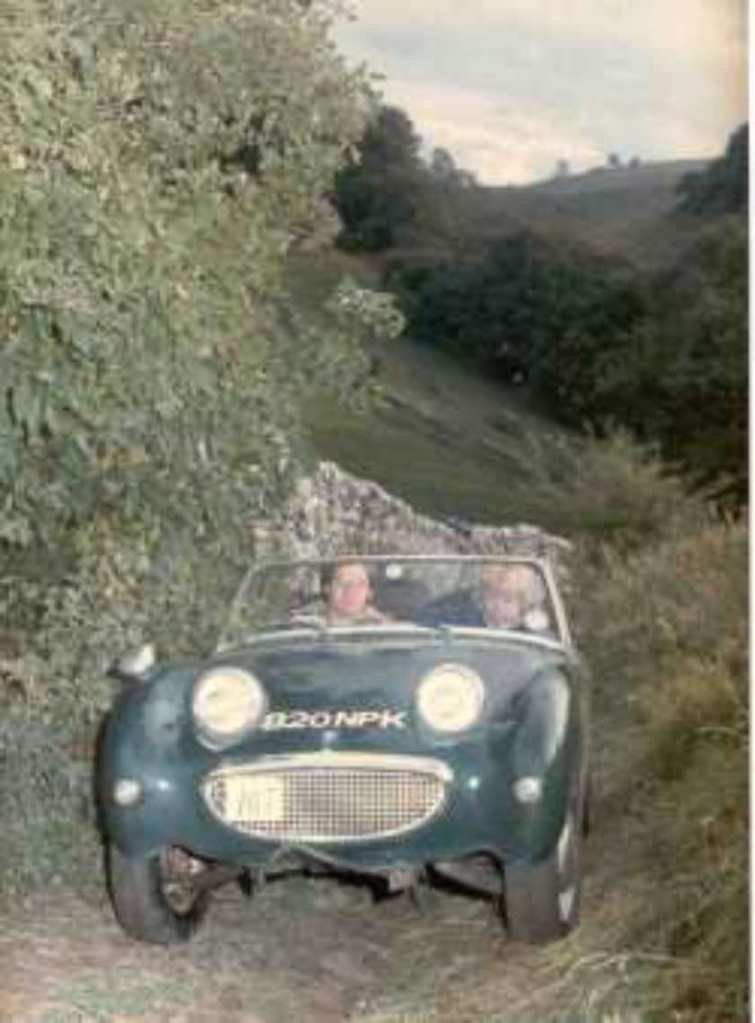
Frog

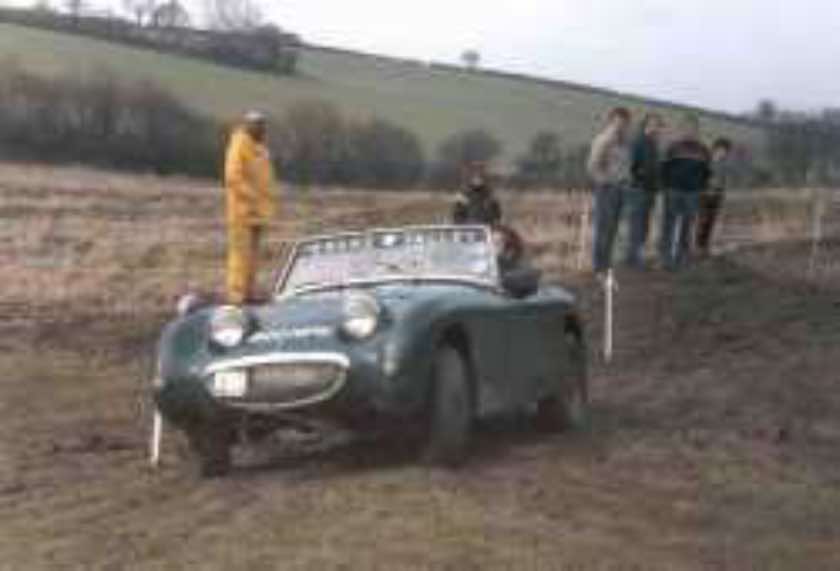
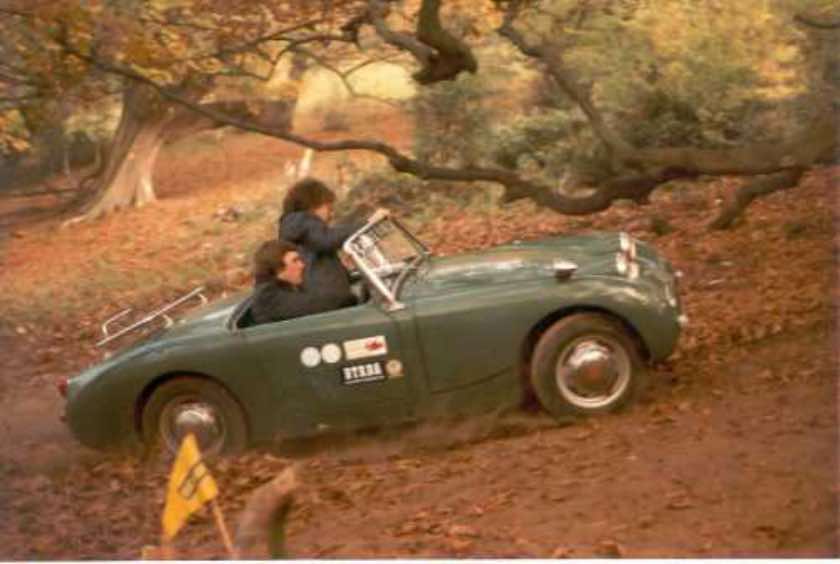
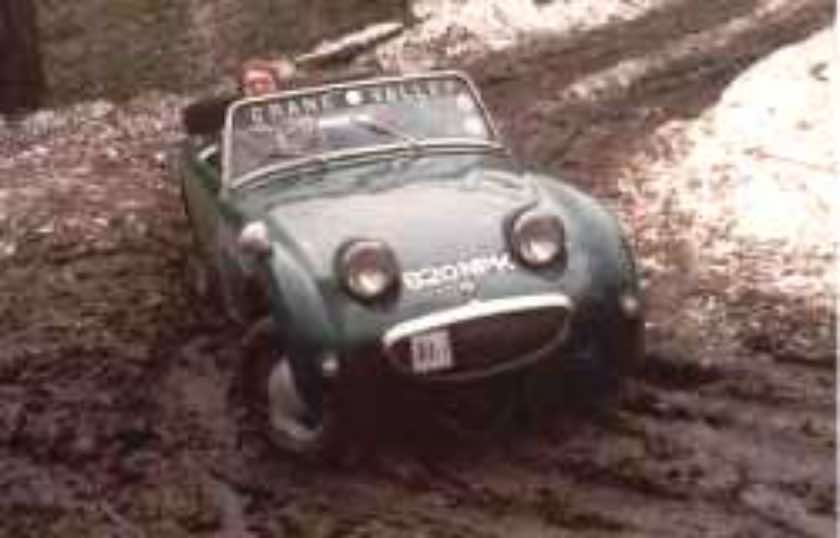
Keith bought his first Sprite, 820 NPK, known as Frog, back in 1975 when he was just 17 years old. It soon took to the hills as a Trials Car when Keith took part in PCT’s forming part of the local ACSMC championship. Many of these took place on rough army land, good practice for it’s MCC début on the 1979 Lands End when Keith was very happy to win a 2nd class award, as a Silver was known in those days.

Keith continued to concentrate on PCT’s, his Classic career confined to an annual excursion on the Lands End at this stage. These were not without success though and Keith was the class 4 winner in 1982 (not class 5 – remember the class structure was different in those days).  In between PCT’s Keith started autotesting, taking a number of FTD’s, before giving Frog a major re-build in 1983, prior to making a serious assault on the Classic’s in 1985. This was pretty successful, resulting in a class win on the Chase Clouds in 1985 before obtaining a coveted MCC Triple in 1986, along with the ACTC’s Mike Stephens award. This was a very full season for Keith and from an old copy of “Four Wheels Out” I see he competed in the Clee Hills, Chase Clouds, Kyrle and Exmoor Clouds in addition to the three MCC events and a full season of circuit racing! 

Although continuing with the MCC events Keith’s trials career now started to take a back seat as the smooth tarmac of the racing circuit beckoned. In the winter of 82/83, Keith had bought another Frogeye Sprite that was so much of a “basket case” that it had to come home on his truck. The registration number of this second car was 3189 AH, but it soon picked up the affectionate name of “Toad”.

  • 1976 MSAC Social Climbers – 1st Novice
  • 1977 Weavers Down PCT – 1st Class
  • 1978 ACSMC PCT – Class 3 Winner
  • 1979 Lands End – 2nd Class, ACSMC – Class 4 Winner
  • 1980 ACSMC – PCT Class 6 Winner
  • 1982 Lands End – Best in Class Four
  • 1984 FTD – Singer Owners Autotest
  • 1985 Chase Clouds – 1st Class
  • 1986 MCC Triple, ACTC – Mike Stephens Award
  • 1990 Exeter – Class 5 Winner, Lands End – Best in Class Five
  • 1995 Edinburgh – Best in Class Five

TOAD

The previous owner had started restoring it, and done some of the welding, but there was a lot for Keith to do to finish it. He paid a lot of detailed attention to the sills, box sections and prop shaft tunnel as these are the main structure in a Sprite, so important in an open car without a roof to brace things properly! Keith also put on new repair arches, another very important structural part of the car. The suspension turrets were in pretty bad shape and the radiator mountings had gone as well so Keith still had a lot of welding to do to get the car in the condition it is in today.

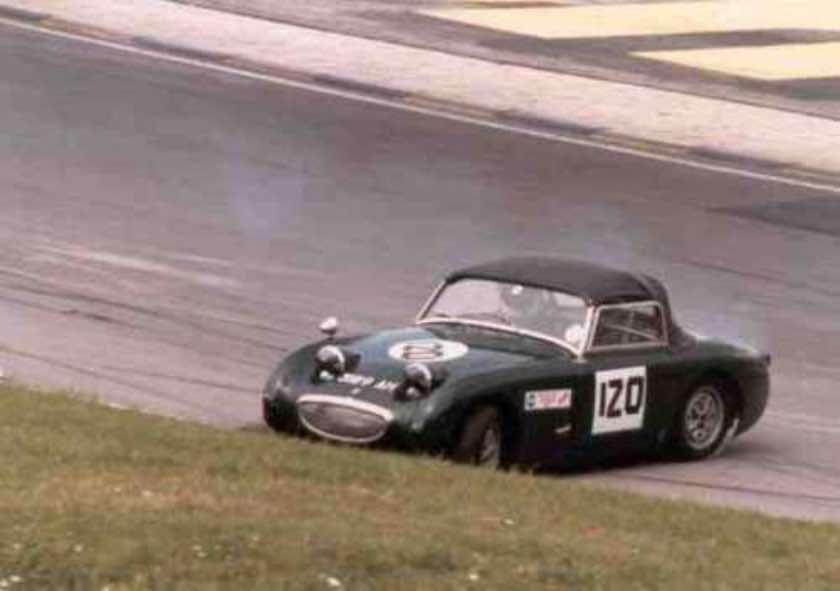
Keith kept his original Frog in trials trim while his new acquisition, Toad, took to the racetrack in the MG Car Club Midget Series. Keith’s first ever race was at Brands Hatch and in true trials tradition he scorned a trailer and drove the car to and from the meeting, although later in it’s track career it did sneak the occasional ride on the back of the businesses truck!

The new Austin Healey Series followed the MG championship in 1985. There were four classes. Two for “big” Healey’s, modified and un-modified, and two for Sprites where Keith competed in the un-modified class and was overall champion. Pursuing the AH championship involved around 8 races taking in most of the British circuits, of which Brands was Keith’s favourite, with Donnington second. The following year Keith was third in his class before packing up racing because of the ever increasing cost and taking up Historic Rallying in Toad. 

When he finished racing Keith changed the suspension for rallying, fitting different springs to raise the suspension and replacing the special Spax’s with standard shocks because of the regulations. Keith’s first rally with Toad was actually during his first year of racing, the 1984 Coronation Rally with Robert Ellis in the passengers seat and the came first overall.

With navigator Richard Dalton, Keith competed in the Historic rally championship for 3 or 4 years. Including the Rally Britannia, which was run at the same time as the RAC over some of the same stages. One of Keith’s favourites was over in Ireland where he competed in the Circuit of Ireland retrospective, which was a really good event, and Keith won a first class award in 1992.

One of the highlights of Keith’s Historic Rallying was the 88 Pirelli Classic Marathon, starting at Tower Bridge the route went down to Cortina in Italy and back. There were stages at Spa and Monza and an exciting trip over the Stelvio pass where the engine got really hot. The evening entertainment was pretty special as well, including a dinner amongst the cars at the Sclumff museum. The event finished at The RAC Club in Pall Mall after a final stage at Crystal Palace. The added excitement was that all this took place on Keith’s honeymoon as he had just got married!

Keith’s last Historic Rally was the 1993 Rally Britannia, after this the rules changed, mandating a steel bonnet. This would have made Toad far to heavy for the power output of the engine. Faced with the necessity to up-rate the power output, with the risk of unreliability, plus family commitments, Keith decided to call it a day, gave Toad a much needed re-spray before semi-retirement, just bringing him out for the occasional autotest.

Throughout it’s racing and rallying career Toad’s specification was very much determined by the championship it was competing in. In the MG series Toad ran on standard width wheels with either the hood up or a hard top. With the move to the AH series it was allowed to run with wider tyres and an Aero screen. When the Austin Healey series started in 1985 the body had to be kept standard so flared arches and so on were definitely out.

Toad had been running a 1275 lump for racing, which in fact is exactly the same engine it has today. Originally the 1275 motor was allowed by later the rules were changed mandating use of the original engines so Keith fitted a 948, which he used for around four years. As you can imagine Keith has become quite knowledgeable about “A series” engines over the years. Toad has a gas flowed head, a 731 cam from the Midget Series and this motor has always ran well. Carburettors are still the twin 1 ¼ SU’s from its racing days.

All the time Toad was racing and rallying the Frog was still being trialled pretty regularly. Frog has had a pretty full life in Keith’s ownership. As mentioned earlier he gave it a pretty major body rebuild about 3 years after he bought it as the wheel arches were starting to go, necessitating quite a bit of welding. Like many trials cars Frog has had quite a bit done to it to keep it going, with several attacks on the sill sections and a major job on reinforcing the rear arches and boot where the weight bouncing about in the back had threatened to start a crease.

Originally Frog had a steel bonnet and was used with that for MCC events and PCT’s before tackling other Classics with a Glass Fibre front end. Like with all Trials cars there have been lots of changes to the springs, involving raising the suspension with supplementary coil springs replacing the bump stops. This gives about another 1 ½ inches of ground clearance and can easily be removed for PCT’s. The front is the normal wishbones but with Imp rear springs to raise it up. 

In the early days of trialling Keith spent a lot of time underneath changing diffs before fitting the modified Ford Internals that most Midget people went to about ten years ago. This involves keeping the Leyland CWP, but replacing the sun and planets with Ford components. This has proved to be extremely reliable, even with only two planet wheels. Before this he broke a lot of planet wheels (which he used to re-build) the record was the year when he broke ten and won the ACTC Tractor Tug Trophy!

The A35 came more recently. It’s competition début was in 1997. Keith had owned the car for about 4 years previously, but it lay fallow while he enlarged the garage to accommodate the additional member of the family. It was built it in a year and competed on the Lands End with the family before tackling The March Hare and The Edinburgh where the prop shaft broke because the bodies of the coil-overs were bending and twisting. This caused the axle to rotate, straining the UJ, which of course protested and broke. This sent Keith back to the drawing board. He has now changed things to prevent re-occurrence but the car has not yet re-emerged in competition although it gets used on the road occasionally.

Keith is still enjoying his motoring and has lots of ideas for his cars for the future. I didn’t ask him, but I doubt very much if any of them are for sale!

  • 1984 Started Racing in MG Series, 1st Overall – Coronation Rally
  • 1985 1st Overall – Austin Healey Racing Championship
  • 1986 3rd in Class – Austin Healey Racing Series
  • 1988 Pirelli Classic Marathon
  • 1989 Circuit of Ireland Retrospective
  • 1991 Rally Britannia – 2nd Class
  • 1992 Rally Britannia, Circuit of Ireland Retrospective – 1st Class
  • 1993 Rally Britannia


We have been publishing stuff about Classic Trials on the Web since 1995 and always appreciate feedback. Comments, Corrections, Criticism & Concerns are all welcome. You can leave a comment to have your say here on this web site or our Social Media
Paul Bartleman wins Allen Trial

The rain god shone on Bristol Motor Club and there was a fair amount of the wet stuff descending from the sky to make the sections on the fringe of the Mendip Hills nice and muddy.

The Start

Competitors gather at the Start

There had to be a last minute change of venue when The White Hart Inn pulled the plug at the last moment and the start was moved to The Cross House Inn in organisers Pete and Carlie Harts home village of Doynton. The pub was right in the centre of the village with a super atmosphere and a nice car park un-spoiled by all those nasty trailers which were relegated to a muddy field several miles away.

The Route

This years Allen incorporated the usual favourite hills, including Birch Hill that was added last year. Perhaps the only despoilment is that it’s no longer possible to use Elwell, that lovely long section the other side of Winford. The route did go a slightly different way though, with the usual opener, Tog Hill, coming towards the end of the trial this year.

Bitton Lane

This was the usual section, entered by the side of a house on the A431 in the village of Bitton, the challenge being a restart on polished stones positioned on a left hand bend for all but classes one and two. It wasn’t as slippery as usual so tyre pressure limits were in force and only four competitors didn’t get away. Unfortunately these included both Simon Robson and Peter Mountain, competing in his newly restored Dellow Mk1 for only the second time.

So, the Allen wasn’t being very kind to Falcon Motor Club members driving open yellow cars! John Looker in his Yellow Beetle and Colin Biles in his Midget were the other competitors who didn’t get away. Classes four and five could now breathe a sigh of relief, as they had no more re-starts for the rest of the day.

Guys Hill

Next on the agenda came one of the Allen terror’s, Guys Hill with its deceptively slippery surface with separate restarts on slippery stones and tree roots for the yellows and reds. It wasn’t a doodle for the non restarting blues and whites though as the hill is much steeper than it looks and quite a few didn’t build enough momentum to carry them over the slippery tree roots on the upper reaches. Unfortunately these included Stuart Cairney, taking part in his first trial since the Exeter and shaking down a new transmission in his Imp. Stuart had a bit of drama just before the trial when he found fuel spraying out of his fuel lines all of which had completely perished during the Imp’s lay-off, sparking the question about the effects of un-leaded fuel on rubber. 

The yellows and reds had different re-starts and these were to have a big effect on the results as only three yellows, Roger Bricknell (Vincent), Andrew Martin (Dutton Melos), Mal Allen (Marlin) and one red, Paul Bartleman (Troll) got away to clean the section. Pete Hart was there to see Paul’s climb and his impressive trickle away from the restart. 

Sandy Lane Special Test

This was run downhill this year, approached by the local councils newly surfaced entrance road. Despite being the only class eight to clean Guys Hill Paul Bartleman was taking no chances and set the fastest time amongst the specials but it was beaten by a flying Andrew Martin in class seven which put him into the overall lead of the event.

Travers Hill

There was a diff test just before the section with Patrick Osborne’s uncle in charge. On this occasion competitors had a different face at the start as Jim Travers (after whose father Ted the hill is named) was marshalling on a bike trial elsewhere. The restart for yellows and reds was in its usual place on a rocky step and positioning was crucial for both front and rear wheels. John Parsons was well aware of the difficulty and went high on the bank to the left in an attempt to avoid both step and gradient. It was to no avail as the car slipped sideways as soon as he let the clutch out and he was stationary in the middle of the track with spinning wheels just like so many others. Simon Robson made up for his indiscretion on Sandy Lane, picked a good place and restarted successfully but neither Peter Mountain nor Clive Booth could get away. Clive was trying some new Continentals, which were proving very successful in mud, and disaster as soon as a rock came into view.

Travers Special Test

This started downhill, through a puddle to line B before a reverse to stop astride line C. This was a disaster for Andrew Martin who got a fail, which was to cost him the chance of overall victory. Patrick Osborne and Michael Leete both fumbled their changes to reverse gear. Earlier Patrick had problems on Travers when the coil lead came adrift just after the section ends board.

Chew Valley Lake Rest Halt

This couldn’t really be called a lunch halt as it came very early in the event, perhaps “Brunch Halt” would be more appropriate! Never less it was a welcome opportunity to have a social chat with other competitors and helps the organisers by regrouping and controlling the flow to the following sections.

Burledge

Another of The Allen’s major challenges was on form this year, with Nigel and Ian Moss in charge. It starts with a rocky surface on a gentle gradient with a big bump over a sunken pipe a few yards up the track just before a right hand bend. This slows things down, even for those who don’t have to re-start. Once round the bend the real challenge of Burledge comes into sight. It’s a rutted sunken lane, very muddy with the ruts getting deeper towards the top. The yellows and reds have a restart just as the ruts begin, the blues and whites have a straight blast, in as much as the dreaded bump over the pipe allows! 

As you will gather ground clearance is all-important at Burledge and it was very unfriendly to the Midgets and Morgan in class five, all of whom bottomed out early on. The Escorts were in similar trouble, David Heale getting furthest with a two. A BMW was the class three car to have here and both David Turner and Phillip Mitchell sped to the top on their larger diameter wheels with blowers whining. With Jim Scott and Colin Perryman marshalling the hill Stuart Cairney wanted to do well and got to the two after slip sliding away from the rocky start. Michael Leete and Dave Sergeant nearly got out the top for a one as did Patrick Osbourne. Dave could have cleaned the section if the throttle cable hadn’t became detached, but the class one honours were definitely Giles Greenslade’s as he stormed out of the section at enormous speed.

A fair sprinkling of class eights were clean but Tony Rothin didn’t get away from the restart and Stuart Harrold, Clive Booth and Peter Mountain all bottomed out. The class sevens all struggled a bit but Roger Bricknell made good use of the Vincents 15 inch wheels for a clean and Andrew Martin came out of the top as well, kicking himself for his indiscretion on the Travers special test. Clerk-of-the-Course Pete Hart looked in on the section just in time to see both Dave Haizelden and Paul Allaway clean Burledge as both proved yet again that they are little short of trialling supermen. 

Nanny Hurns

Run as a section rather than a special test this year Nanny Hurns gives lie to the Allen sections all being run on real roads. The organisers can be forgiven though as this strange little section is part of the character of the modern Allen Trial. For those of you that have never seen Nanny Hurns it’s an artificial deviation off a track. First there’s a more or less level sharp left hand bend, then a very steep bump where there is a great danger of bottoming out at the top before the downhill finish. The main problems came for the big engined Beetles who had the usual under-steer problem on the left hander and the low slung sports cars who bottomed out on the crest of the bump. So a special well done to the persistent Brian Osborn for his first ever Nanny Hurns clean in his MGB.

Mill Lane

This is the long section, going under the railway bridge just after the start. The big disappointment was that there was no big puddle this year, to drown out the electrics, and the entire entry cleaned the hill.

Little Uplands

It was Little Uplands again this year as the track to its big cousin was blocked with construction machinery! The section was its usual self with a tricky restart in the rocks for the yellows and reds. Most of the non-restarters made successful climbs but both Dave Sargeant and Patrick Osborne lost momentum amongst the rocks and stopped. The restart was certainly a tough proposition though and by far the majority who had to attempt it failed.

Birch Hill

There was a long road run off over 20 miles east across the M4 to Birch Hill with John Sargeant in charge. The hill was similar to last year, a relatively straightforward run up a stony track then a right left into a field and the challenge of a huge patch of clay. The lower classes were allowed a straight blast but yellows and reds had a restart just before the glutinous stuff under the eyes of MGeetle builder Dave Nash. None of the cars in classes four, five and six got through but Giles Greenslade got far enough to give him the class four win and the lead in the Crackington league of the ACTC championship. 

After cleaning Burledge both Dave Haizelden and Paul Allaway showed they are human by failing at the three but it was possible in a class one car as both Michael Collins and Nick Farmer proved and this was to give Michael Collins the class win. In class three both of the BMW’s failed to blast through the mire but both David Heale and Harvey Waters were successful in their Escorts reversing the fortunes of Burledge.

The status quo in 7 and 8 was preserved with the leaders all going clear and John Parsons and Clive Booth were happy to be successful under Dave Nashe’s gaze but Peter Mountain wasn’t so lucky. 

Tog Hill

It was back across the M4 and back to Doynton for Tog Hill, tackled in the dark for the later numbers, but presenting no problems and everyone was clear.

John Walker

The Allens usual finale was on form as usual. The first cars arrived a bit early at just gone 2.30 and were asked to hang around at the summit in order not to get back to the pub while the lunch-time crowd were still enjoying their meal! The water level in the stream was pretty low so there wasn’t the usual problem of drowning out the ignition and everyone apart from Brian Osborn and David Mallin went clear.

The Finish

Back at Doynton Paul Bartleman was found to be the overall winner with a clean sheet, beating Roger Bricknell on special test times. Things could behave been very different if Andrew Martin hadn’t failed the 2nd special test as he was fastest on the first one and went clean on the observed sections.

So concluded another successful Allen Trial. The wet weather and skill of Pete Hart and his team resulted in a competitive trial over some non-damaging sections as it was mud rather than rocks rubbing the underside of the cars that ran out of ground clearance. 

Michael Collins (VW Golf)2Class 1
Jeremy Flann (Austin 7)1Class 2
David Heale (Ford Escort)2Class 3
Giles Greenslade (VW Beetle)3Class 4
Mike Wordsworth (MG Midget)6Class 5
Terry Ball (VW Beetle)19Class 6
Roger Bricknell (Vincent)0Class 7
Carl Talbot (Morris Trialsmaster)5Class 8
Paul Bartleman (Troll)0Best Overall

We have been publishing stuff about Classic Trials on the Web since 1995 and always appreciate feedback. Comments, Corrections, Criticism & Concerns are all welcome. You can leave a comment to have your say here on this web site or our Social Media
Mechanics Trial by Michael Leete

Adrian Marfell won this years Mechanics Trial, but in a Beetle this time rather than his usual special. There were quite a few clean sheets so Adrian’s win was decided on special test times and he was fastest by a long way
Adrian Marfell with his Mechanics Trial winning Beetle

Unusually for my reports this one will be written in the first person as running at the front of the field I didn’t see much of what went on and didn’t stand waiting in many queues to chat to competitors and marshals! 

This was the second year Stroud had run The Mechanics as a road trial. It was born out of the clubs one off Anniversary Trial, organised by Andrew Brown and Rich Welch, but never ran because of Foot and Mouth. The event was taken over by the Hayward clan and run by taking The Mechanics Trial out on the road. With the Cotswold Clouds running in the area there must have been a great temptation to use some of the well-known hills. However, this was resisted and there was no duplication with “The Clouds” apart from the start and finish venues. 

Mike Hayward, (who is not related to the organising family) and I had entered “The Mechanics” last year but never even got to the start as my Beetles Brakes seized only a few miles from home. We managed a bit better this year, which was really good as we were especially looking forward to The Mechanics, which promised us new hills and a route in the area of Falcon’s old Guy Fawkes Trial. 

We were running only a few cars from the front so it was an early start, leaving Bedfordshire at 4.30am and arriving at The Little Chef just off the M5 at Stonehouse dead on 7 for our slap up breakfast. This was not to be, as along with Clive Booth and John Allsop we waited in vain for some sign of life, giving up at 7.30 in favour of a bacon bap at The Ryford! We were first in line at scruitineering and started to worry as there were was no scruitineer, no organisers and no other competitors. There were signs of life just before 8 and the formalities were soon completed and we were on our way with a few nice words from Ken Hobbs, thanking us for journeying out to the Cotswolds for the event.

Clive Booth and John Allsop in good form on the start line at Tin Pan Alley

It was right out of Gordon’s garage, as would be usual for the Clouds, but instead of turning left we went straight on, past the Little Chef that was now open, and crossing and re-crossing the M5 to the first hill. This first section was not the problem hill of last year where so many people got stuck, but Tin Pan Alley which May’s Wheelspin tells me was first used before the war on the Bristol’s Clubs Fedden Trial when it was called Tramps Paradise.

A very un-tramp like John and June Blakeley greeted competitors on this gentle warm-up hill. Like most of the hills it was a long and leafy lane and as an early number there were so many fallen leaves it was difficult to see the surface underneath.

A passengers eye view of Alf’s delight as Mike Hobbs waits on the start line.

Eric Wall greeted us a few miles up the road at “Alfs Delight” another long leafy section which finished by going over a carpet to get the mud off the wheels before emerging onto a very clean and tidy estate road that led us to the new Age Traveller encampment at the Crooked Mustard/Axe cross roads so familiar on The Cotswold Clouds. 

Things got a bit tougher at Boxwell where we approached through Scrubbets Farm. Looking at an old Guy Fawkes program from 1960 I see that the last two hills were “Axe” and “Scrubbets” and Mike and I reckoned that this was the same hill. It was approached with quite a steep downhill so the Guy Fawkes section could have been the Mechanics approach road. Anyway today’s section was easy enough, apart from the restart at the end which was on a big bump leading to a very sharp left at tee.

Robert Gregg hustles his Troll towards the tricky re-start on Boxwell

Waiting at the start we heard Mike Hobbs fail the restart in his Beetle and then David Bowlas do the same in his Midget and when we arrived we made it three in a row! Looking through the results afterwards we saw that around one third failed and two thirds got away clean, including both Dave and John Sargeant in their Beetles who were running just behind us.

Dave Sargeant approaching the summit of Wood Lane watched by some of the many spectators from nearby Nailsworth.

The route then led into the centre of Nailsworth and Wood Lane, a tree lined track with a grassy surface, that would have been tricky had it been wet, but didn’t trouble the scorer in the dry. The route then wound its way round the houses and cottages up and down some very, very steep single-track tarmac roads to Ferris Court where Simon Harris was in charge at the start of another hill used on the 1960 Guy Fawkes. Simon warned us that the exit track was extremely over-grown. The section was nice and long with two quite sharp hairpins, the first left, the second right and what I thought at the time was an easy re-start but from the results I see it stopped a few competitors, notably one Andrew Brown! 

We were soon back in Cotswold Clouds territory, passing Merves Swerve and down Catswood (used on the 1960 Guy Fawkes) where we stopped to observe the two minutes remembrance silence. At the bottom we went straight across to King Charles Lane, which again was very, very long with the track developing a deep vee gully towards the summit so it was important to keep up the momentum if you wanted to avoid toppling over!

Jim Scott marks Carl Talbot’s card as he heads towards the fallen tree on Greenway Lane

The route now headed north towards Cheltenham up the A46 to Greenway Lane where Jim Scott was on the start line and Stuart Cairney on the restart. The surface was smooth at the start but it became rougher and rockier then deviated off to the right around a fallen tree where there were two different restarts for the higher classes. It looked pretty fearsome as there was a steep step on the inside but by keeping right it was possible to avoid it and most of the experienced drivers went clean.

Mike Hobbs on Laverton

The distance between the sections started to markedly increase now and we went into the suburbs of Cheltenham coming out again on heading South east on the A40 towards Oxford turning off on the B4632 through Winchcombe to Laverton, a hill I’m sure I remember reading about but can’t find any reference to! It looked innocuous enough at the bottom but the ruts soon got deeper just before we reached a huge rocky step, which had experienced an extremely local downpour. The yellows and reds had a restart but we were able to go straight through so we just eased the Beetle over the bump for a clean. There was a very long exit track and as we were getting hungry and it was one o’clock we stopped for the best part of twenty minutes to eat our sandwiches. We didn’t see any competitors while we waited so there must have been some delays somewhere. 

The route wound through Winchcombe again and back north towards Cheltenham, interrupted only by a special test at Postlip managed by Bill Foreshew and his wife. This was another familiar name from the Guy Fawkes, featuring in the 1970 event, my first Classic trial as a competitor, bouncing for Pete Smith in his Anglia.

Bryan Phipps leaving it very late to turn into the hairpin at the top of Noverton Lane. To late as having lost his ballast on the restart Bryan compounded his problems by under-steering into trees immediately after this picture was taken!

The trial was coming to an end now but there was a sting in the tail at Noverton Lane with Tim Lakin at the start. It started easy enough with a gentle track through a wood but soon the gradient and the rocks started. There were separate restarts for whites to yellows/reds. Just as I slowed for our restart I heard a loud hissing and on the restart stuck my head out of the window to see a rear tyre going down. We tried to pull away but not to hard as we could see a horrendous rock step ahead and we didn’t fancy our chances getting over with a wheel down to the rim. Mark Linforth had a rescue crew here with a tractor and a Landrover and they dragged us up to a lay-by where we changed the wheel and took a few pictures. We saw that competitor’s troubles didn’t end at the step as there was a very sharp hairpin left just before the finish and this caught out a lot of drivers who under-steered into the trees. 

We weren’t the only Beetle to get a puncture here as both John and Dave Sargeant were changing wheels at the summit. All that remained was a special test at Burcombe Lane and an observed section called Viaduct before the finish on Minchinghampton Common. It wasn’t that easy though as we got well and truly lost, as did a few other competitors, and we were pretty certain that all was not well with the road book here. 

Mike and I signed off just before 4pm and headed straight for home, as I had to get up at 4 the next morning. We arrived back in Bedfordshire at 7pm having driven though a bit of rain! 

We enjoyed our Mechanics Trial. Lots of nice long sections, all on real tracks. OK Noverton Lane was a bit rough but as Andrew Brown says there was plenty of grip so you could pick your speed and line. Like a lot of the hills it could have been a very different storey in the mud! All round we really enjoyed our Mechanics Trial and we will be back next year.

Adrian Marfel (VW Beetle)0Overall Winner
Michael Collins (VW Golf)0Class 1
Nigel Green (Ford Escort)0Class 3
David Shaylor (Beetle)0Class 4
Peter Davis (Panther Lima)0Class 5
Gary Browning (Beetle)0Class 6
Steve Tucker (Imp)0Class 7
Carl Talbot (Morris Trialsmaster)0Class 8

We have been publishing stuff about Classic Trials on the Web since 1995 and always appreciate feedback. Comments, Corrections, Criticism & Concerns are all welcome. You can leave a comment to have your say here on this web site or our Social Media