Andy Curtis Wins Murrays March Hare

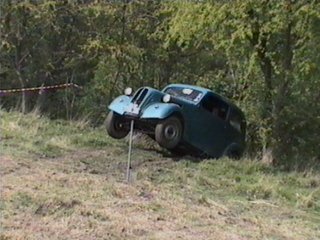
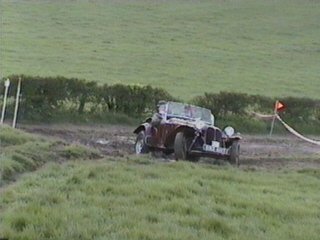
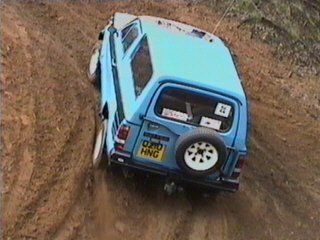
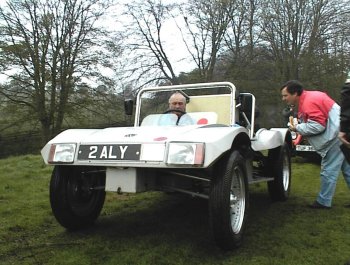
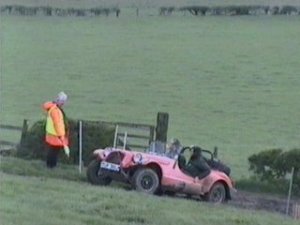
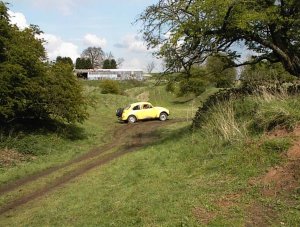
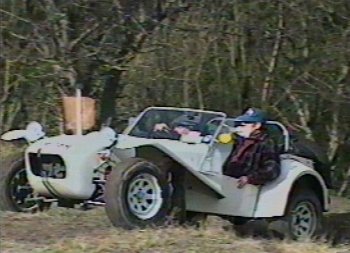
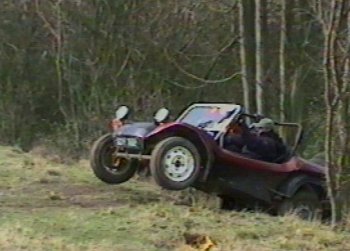
It was another Super March Hare. Conditions were good and the sections were mostly well thought out, giving a challenge to the more experienced but allowing novice cars and drivers to have a good day. There were five clean sheets; overall victory going to Andy Curtis in his Buggy on special test times.

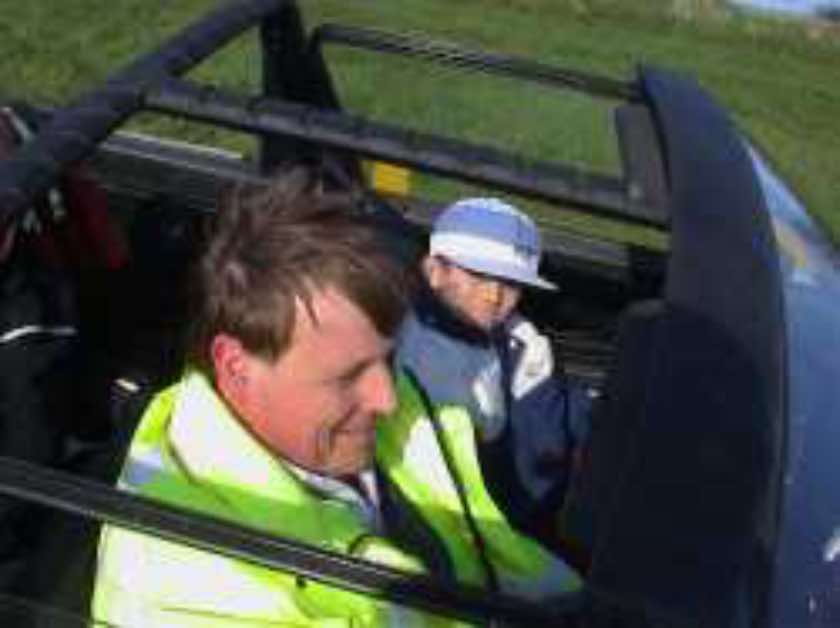
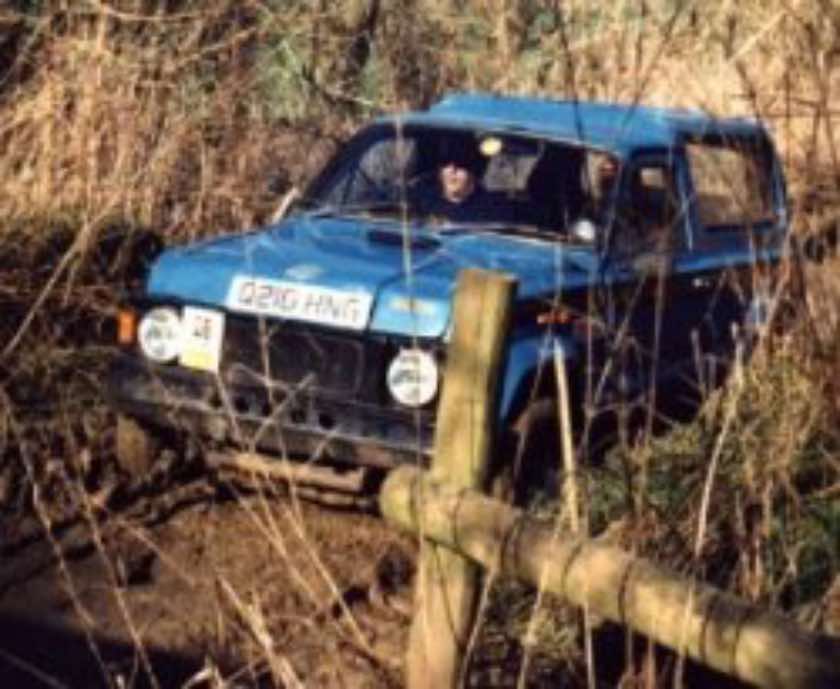
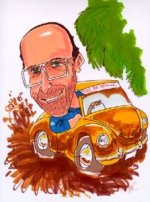
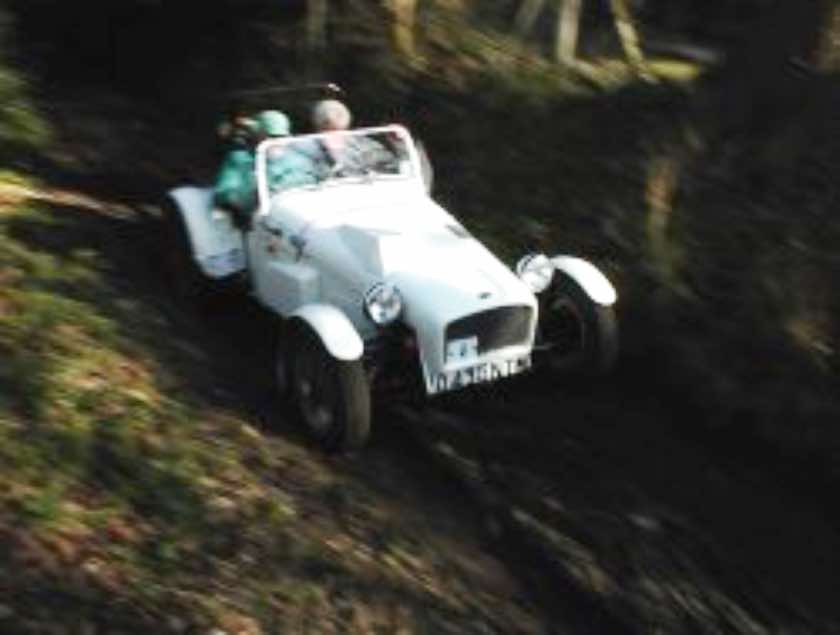
March Hare winner Andy Curtis in his VW Buggy

The Start

38 crews gathered at The Watling Street Café, just of Junction nine of the M1, on 9th March to do battle with Falcon’s March Hare Classic Trial. Organisers John Parsons, Mike Pearson, David Sheffield and Arnold Lane had attracted a nice mix of experienced competitors, newcomers and some cars that aren’t usually seen on the usual Classic events. The event had taken another major step forward, dropping some of the sections on private land and adding another four byway sections.

Half Moon Lane

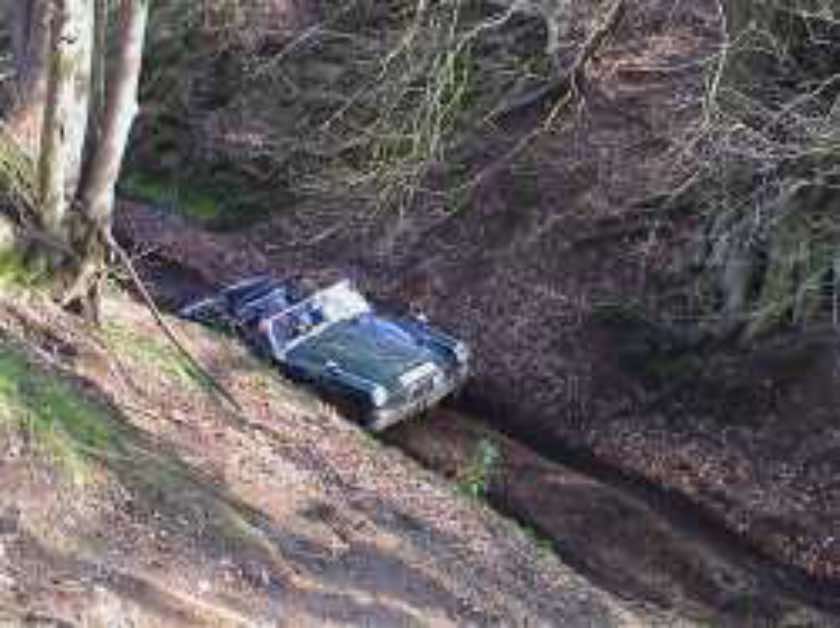
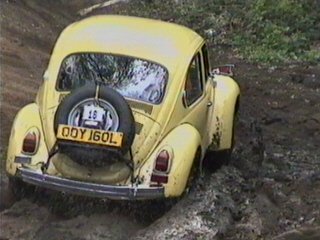
Byway – Starts with deep, muddy water which gets carried up the hill where there was a slippery re-start for 7 & 8. The section was run the other way round this year
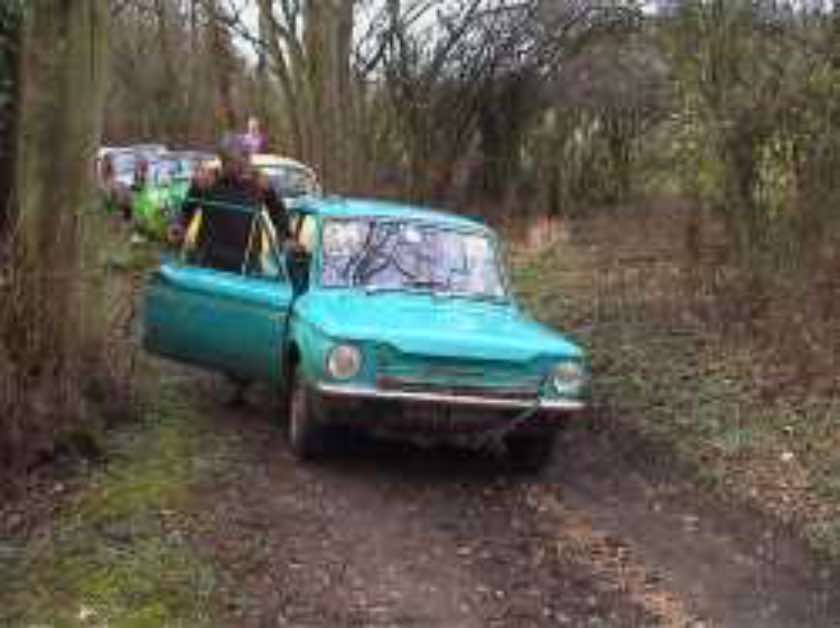
Competitors hardly had the chance to get their engines warm before arriving at the start of the first section, marshalled by the Herts VW Club.

The water caught out quite a few competitors who didn’t give it enough respect. John Rowland and Peter Manning coughed to a stop in Citroen and Midget respectively. Richard Tompkins was running the 1040 lump in his Imp but was in trouble even before the start of this first section. The car had been running fine on the road but as soon as it ventured onto the entrance track it popped and banged to a stop. Richard got the motor fired up and set of through the water but fuel starvation soon set in and the crew were stuck with a stationary Imp in the middle of the water and needed a tractor tow to get out! Fred Gregory was another to stop right in the middle of the water and needed the assistance of the tractor.

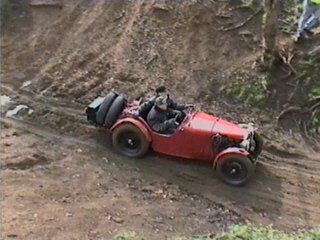
As cars went through the section they drew water up the hill, making the re-start area slipperier for the higher numbers and catching out quite a few of the restarting classes seven and eight’s, including Matt Robson who rolled back before re-starting. Geoff Hodge didn’t get away cleanly either; Geoff was having his first run in the ex-Reg Taylor RDT Special. The hill wasn’t very friendly to Reg as Clive Booth also failed in the Reg Taylor/Geoff Jackson built Dellow Replica.

Half Moon Lane saw the first retirement of the day when Dennis Beale heard all sorts of terrible noises from his transmission. Closer investigation revealed a split gaiter, letting all the mud and water in, and the crew wisely retired rather than risk further damage.

Nortonstreet Lane

Byway, long straight climb on loose stones with the left hand rut getting deeper towards the summit, Classes 1&2 have a straight run through, 3 to 8 had two re-starts, the second where the ruts were at the deepest

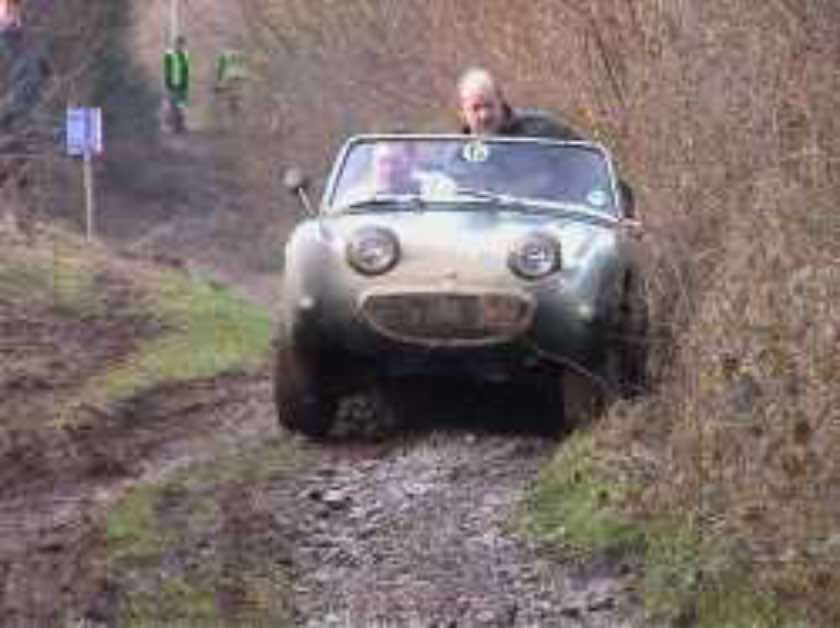
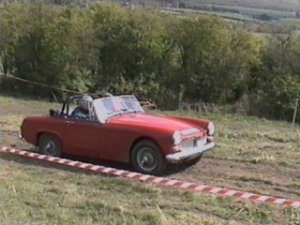
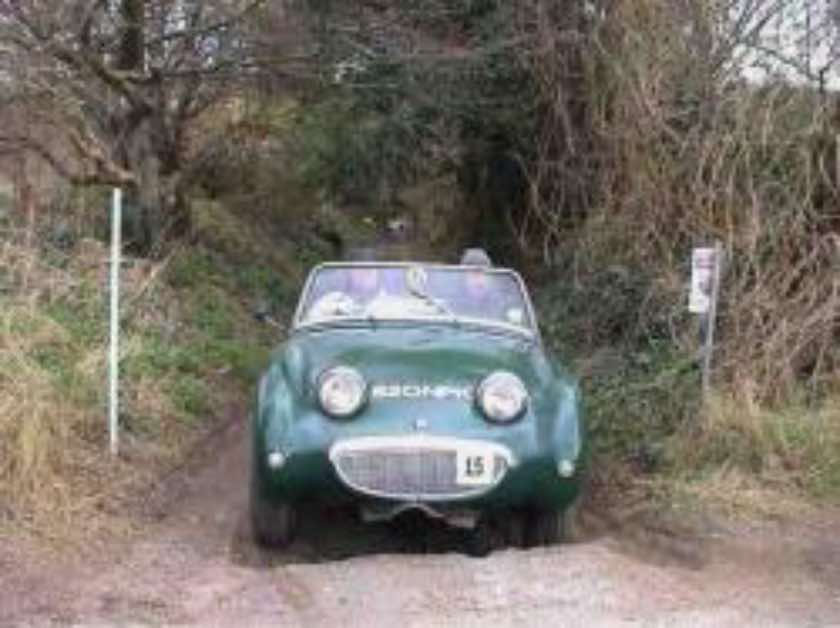
The section wasn’t too difficult this year as it is well drained and was bone dry. The second restart had plenty of grip but was tricky if you didn’t have the car positioned correctly. It was possible to straddle the line without the wheels in the ruts. However, you soon slid back into them, as Keith Pettit found out when the rear wheels of his Frogeye Sprite went sideways into the ruts while the front wheels stayed out. Keith needed all his skill on the throttle to get his crabbing car past the section end boards but he just made it.

The Owen’s weren’t so lucky. Owen Turner failing in his K series engined Imp and so did Owen Briggs in the VR6 engined Whinney special, which was giving some electrical trouble, a bit of a disaster with electronic fuel injection!

Whitehall Lane

Byway – Tree Lined Lane with a very good surface now the council have resurfaced it and removed the fallen trees
It was out with the foot-pumps here as there was a 20-psi minimum pressure to mitigate against the councils new surface, which is now rather better than the neighbouring M1! Mike Hayward was running a simple downhill special test before a nice gentle observed section. Andy Curtis really flew through the special test, breaking the 10-second barrier and setting a time more than two seconds faster than Owen Turner in his Rally prepared Imp.

Duncan Weaver and Paul Meyting were in a bit of trouble with their Morris Minor at the end of the section but managed to get going again although they were destined not to finish.

Cress Bed Lane

Byway – A straight, stony, tree lined gully with a re-start for classes 3 to 8
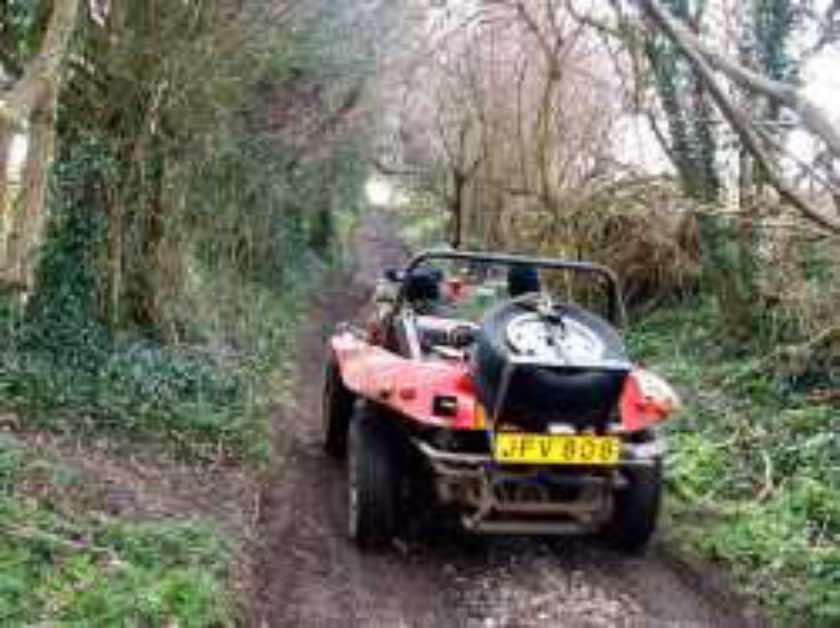
There were no problems on Andy Clarke’s re-start on this nice little section, which has been the opener on the last two March Hares.

Richard Tompkins was back in the fray after his problems at Half Moon Lane. The recovery tractor had towed the Imp out of the section but Richard soon stuttered to a stop again on the exit track. Michael Leete towed them out to the tarmac road where Richard found the problem. His new electronic fuel pump had very flexible rubber mountings. This caused the pump to move about on the rough stuff whereby it stopped working. Richard fixed the pump solidly to the bulkhead and all was well for the remainder of the trial!

Water Tower Lane

Byway, just across the road from Cress Beds. Starts with a very Muddy, rutted, waterlogged track, leading onto a gradient through a tree lined gully with a re-start for classes 3 to 8
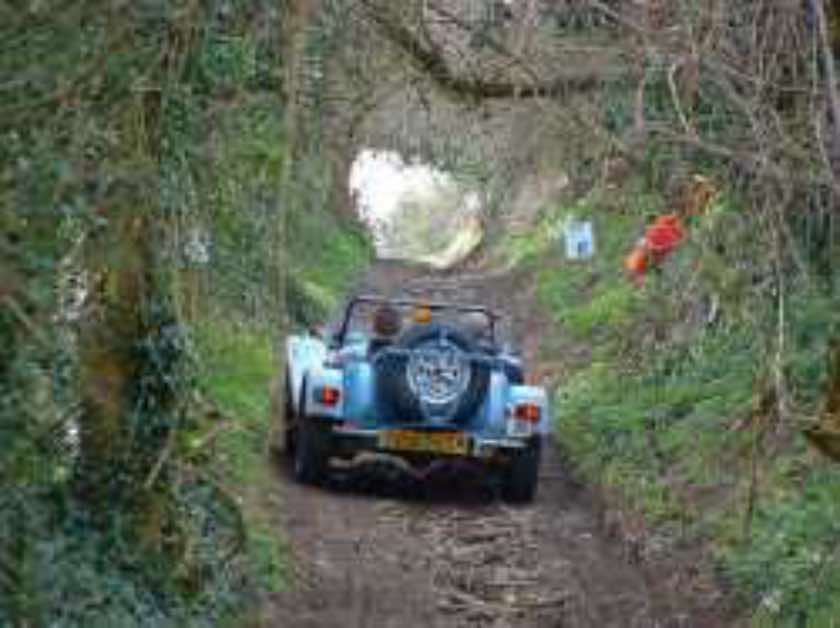
It was a good job there had been a bit of a delay at Half Moon Lane as Chief Official Arnold Lane had found the exit blocked by a load of Mountain Bikers parked cars which needed bouncing out of the way before proceedings could start. Once things got going start-line marshal Stuart Cairney watched with amusement as competitors tried to get into the correct rut ready for their assault on the waterlogged first part of the section. This caught out quite a few competitors, including Keith Pettit who needed the help of the recovery vehicle.

The mud and the re-start weren’t very Imp friendly and Richard Tompkins, Ed Nikel and Owen turner all suffered on the mud and the re-start. Jason Crowley was another one to struggle, his Fugitive being more at home off-road racing where it is allowed rather larger wheels and tyres! Jason was one of the many competitors attracted to the March Hare by the extensive Internet publicity.

Offley Rise

Byway, track along a field edge, with a very muddy exit road alongside a farm
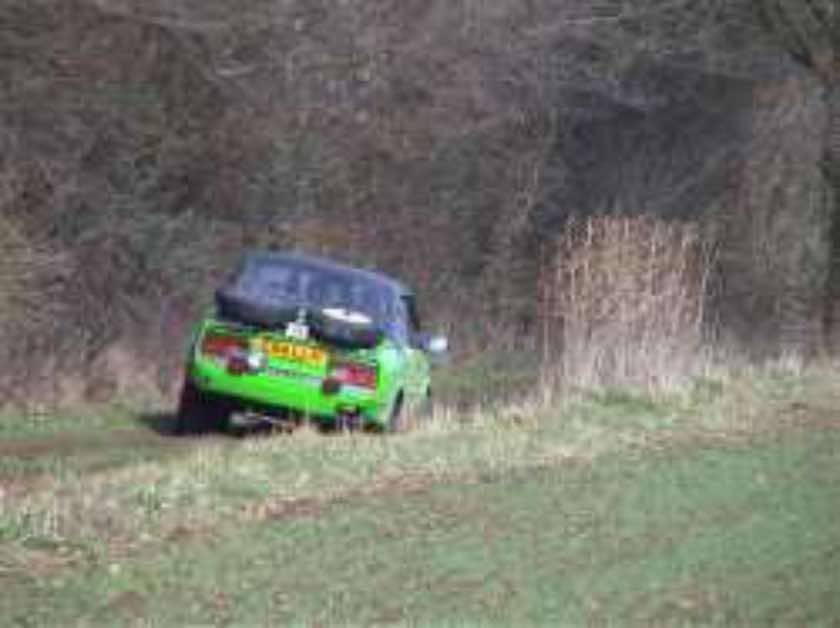
This was the first time this section had been used and the organisers had the start half way up the hill after the tricky bumps just as the track leaves the road. Reg Taylor was in charge to see both his creations, driven by Geoff Hodge and Clive Booth, make a clear run, as did the rest of the entry. There were problems though as John Rowland got his clean at the expense of a puncture and needed help form his fellow competitors to lift the car out of the ruts to change the wheel.

Brickhill

Two sections on Private Land. The first was a trip through the trees followed by a steep climb just after a corner on deep sand with a re-start for 7 & 8. The second section went up the sandy gully where the ruts were quite deep, followed by a steep gradient with a re-start for 7 & 8
The two Brickhill sections caused problems for quite a few competitors in the lower classes. Quite a few didn’t survive the run through the trees where Jason Crowley had problems in getting his long wheelbase Fugitive around some of the corners. Ted Holloway struggled in his Sierra as well, first straddling a fallen tree then falling foul of the deep sand. This was also the downfall of Patrick Osbourne who lost his clean sheet in his smart green Skoda.

JP and the Herts VW Club, who had dashed across from their early morning stint at Half Moon Lane, marshalled Brickhill. John had spent hours laying out the sections on the Saturday, only to find all his work destroyed by some bikers by the time he arrived on the Sunday. Fortunately, Brickhill was the designated lunch-halt so competitors enjoyed the fare from Tom Goggins chuck wagon while JP hurriedly re-marked the sections.

Unfortunately, there wasn’t time to do justice to marking the second section, causing one or two drivers to be confused with the route. There were problems for a few lower down though as the sandy gully did require a full blooded assault and some of the less experienced drivers couldn’t get through. Colin Sumner did well to get the low-slung Morgan through the ruts only to drop a one right at the end to loose his clean sheet. Ed Nikel also failed at the one marker and sadly, this was the end of his trial, as he had to retire with a badly slipping clutch.

Ivinghoe

Special Test and Section on Private Land. The section was all about a tricky restart on a grassy bank.
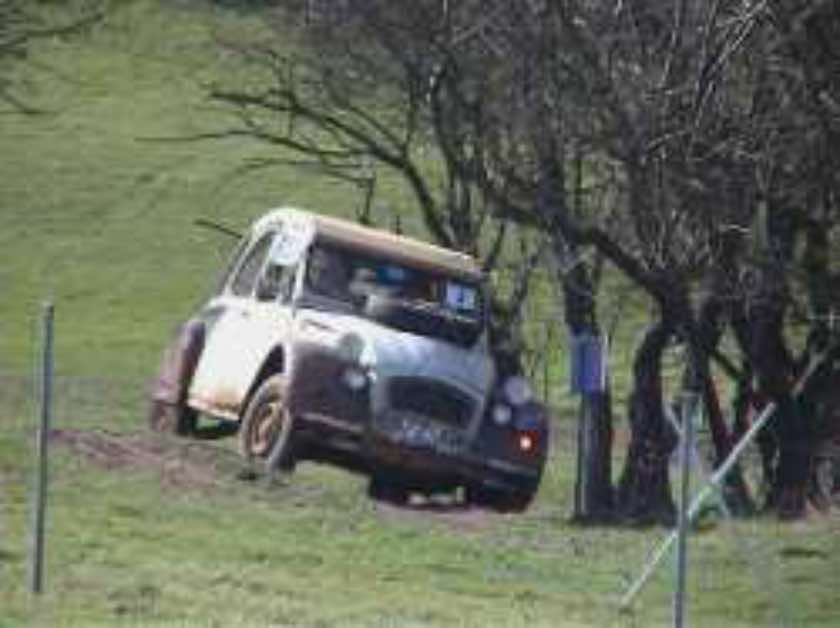
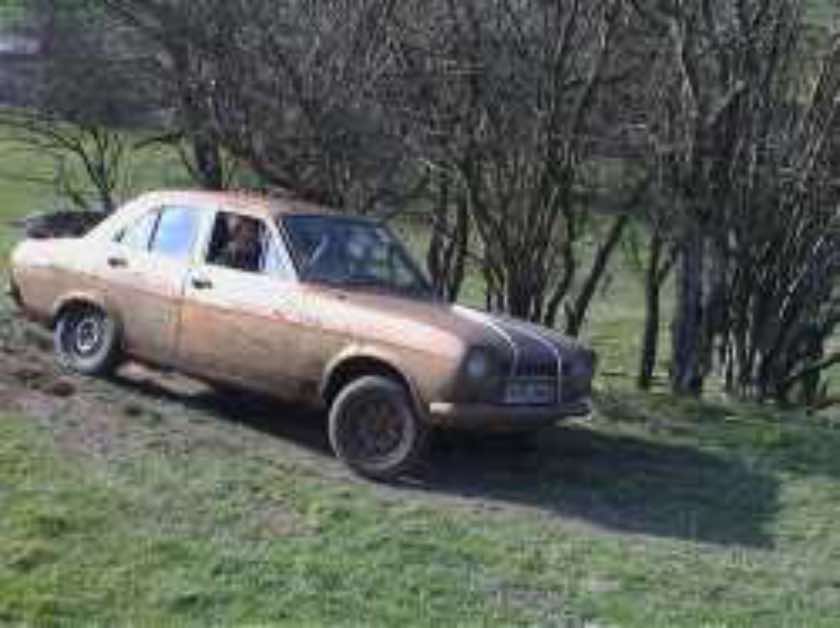
Andy Curtis flew through the special test again but was just piped on time by Jason Crowley and Owen Briggs who set the fastest time.

On the observed section, the re-start was cunningly placed and it was necessary to get the positioning absolutely correct. Most of the competitors that went deep got away cleanly but those that stopped early struggled.

Edlesborough Hill

Two sections on Private Land – The first started in the field, going through the gate and through the trees before diverting into the bomb hole with a re-start for 7 and 8. The second section was all about a tight right hander on a steeply rinsing gradient, again with a re-start for 7 & 8
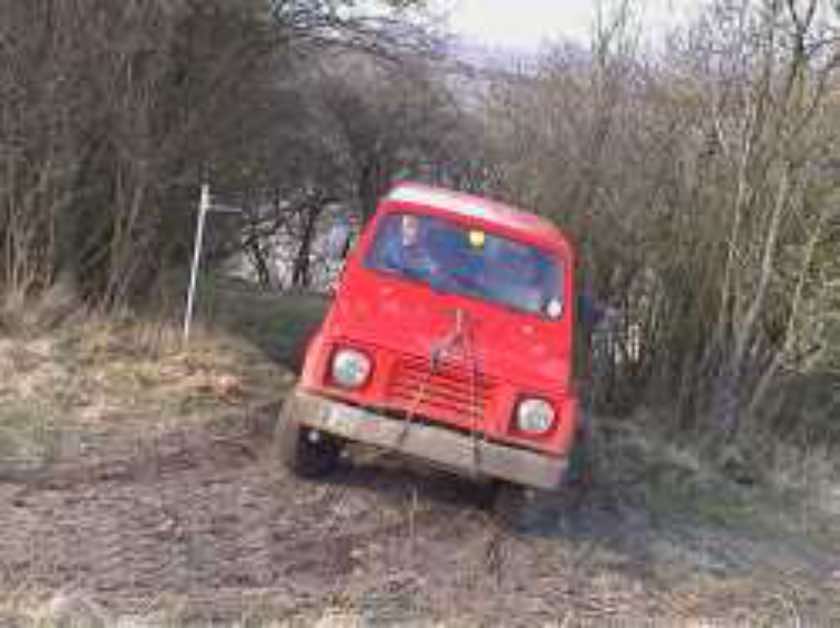
There was plenty of grip on the notorious Edlesborough surface as the wind had dried out any surface moisture. It wasn’t possible to see much from the start so Falcon regulars were at an advantage in knowing what was round the first corner! A few of the lower classes were caught out by the surface on the lower reaches and failed the first section.

Reg Taylor was in charge of the second section and saw Geoff Hodge fail to get away from the re-start in his old RDT Special, as did last years winner Ross Nuten in his Dellow who lost his clean sheet.

John Barber 1 & 2

Two sections marked out on private land at Kensworth under the control of Robin Howard. The second went up the gravel track before diverting through the muddy patch over by the fence
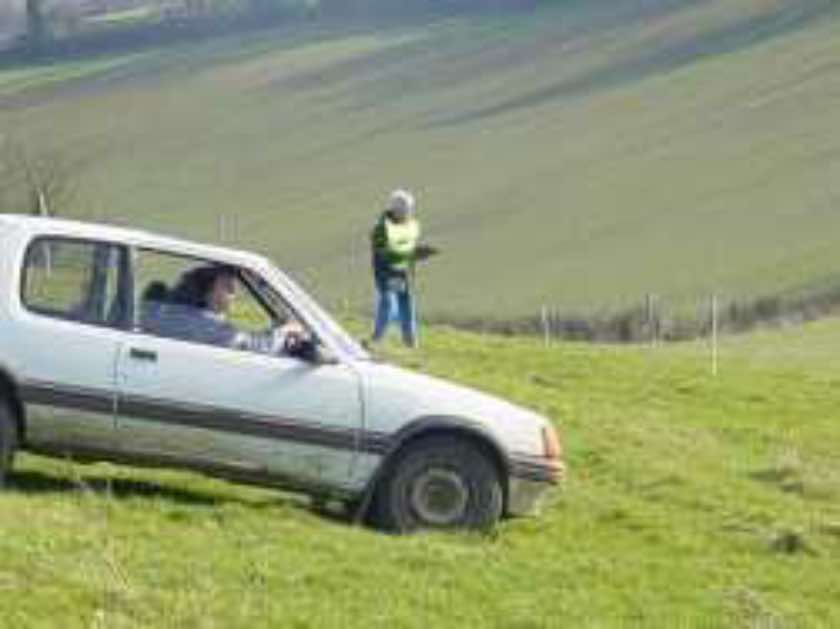
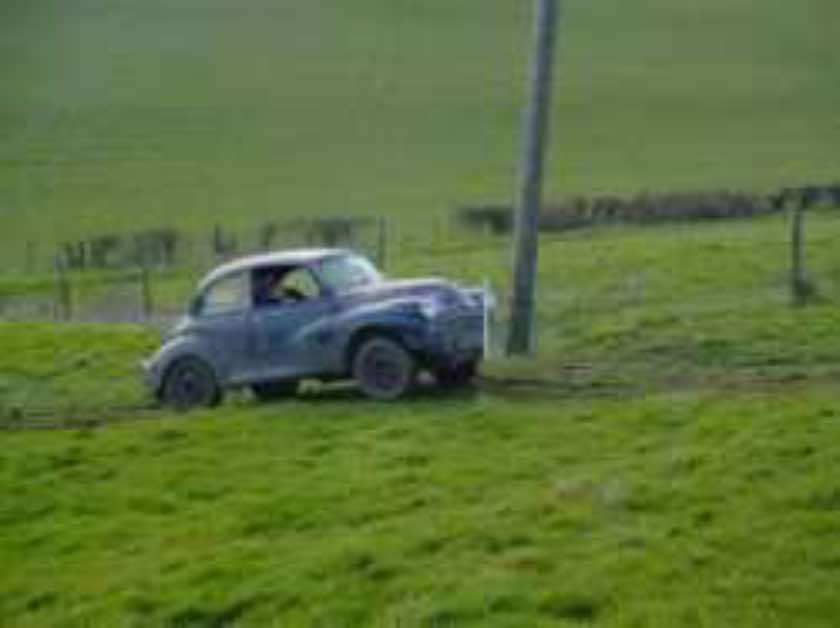
The first section was all on grass. Although it looked straightforward, there was a sharp left hander under some trees whose shade retained the surface moisture. This defeated all the FWD cars apart from Andrew Burt and a few in the other classes as well.

From the start, competitors couldn’t see how slippery the upper reaches of the second section were. Many soon found out and spun to a stop, including Katy Tucker-Peake who had gone very well during the morning but hit problems with grass surface at Ivinghoe and Kensworth. John Looker was to drop his only marks of the day here. John and Keith Vipond had been going well up to now, enjoying their day despite loosing their windscreen when a stone came up from a passing car and having to keep the engine running as the dynamo was charging the battery properly because of regulator problems.

Hawridge Lane

County Road – Downhill entrance road, the section started just before a mud hole, followed by a rising gradient through a tree lined gully with a restart for classes 3 to 8
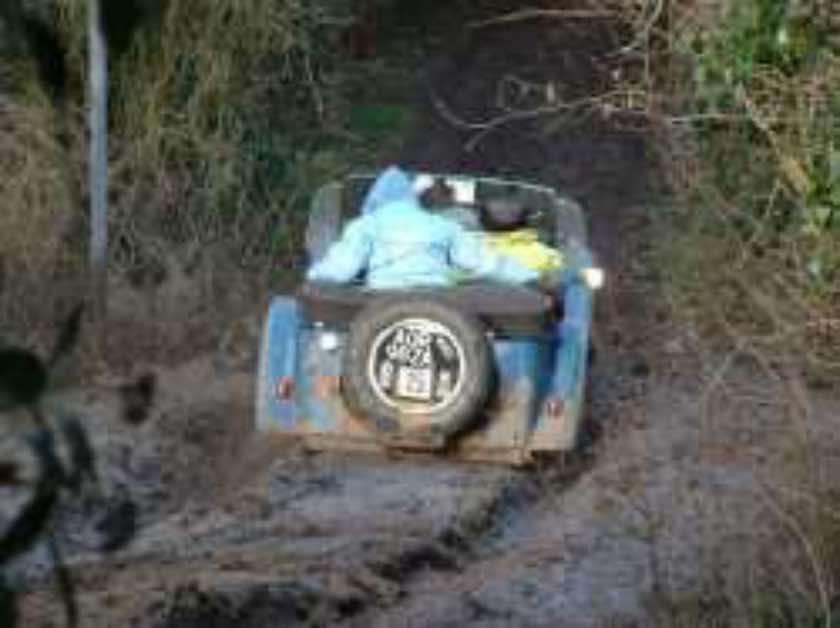
This was another section that became more and more slippery as the day went on, as successive cars drew water up the hill. Andy Clarke’s re-start was sited just where the track formed a vee. Again, strategy was everything. Competitors who straddled the vee with the car level fared best, those who went either one side or the other hit trouble and the restart caught out a number of distinguished drivers, including Fred Gregory, Matt Robson, Peter Morley, Ross Nuten and Owen Briggs.

Simon Groves had to retire here with terminal fuel problems, as although the car would run when level, the petrol pump wouldn’t supply the carburettor on any sort of slope. The trial had also lost Duncan Weaver by now as he had given up the battle with his over-heating Morris Minor and gone straight to the finish after Kensworth.

Hill Farm

County Road – Tree Lined Track that had been used on the March Hare back in the 50’s
With no restart and an easy start line, Hill Farm was a nice gentle end to proceedings that was cleaned by all the survivors. The run in to the finish was not without drama for Gary Booth whose Buckler cried enough at the days exertions and spluttered to a halt in Berkhamstead and was towed to the finish by Michael Leete with the help of other competitors.

The Finish

The field were a bit spread out at the end but quite few crews stayed on to sample the transport café fare at the finish where the quantity and price of the food certainly put the local Little Chef to shame.

Andy Curtis was the well-deserved winner on special test times from the five clean sheets. Andy was the only clean run in class eight and had some really fast special test times. Katy T-P won class one, representing the third generation of the famous trials family, which have done so much for Falcon, MCC and the ACTC for many more years than most of us can remember.

John Bell won class three with a clean sheet which was really nice as John has supported the March Hare ever since it returned to a road trial. Peter Thompson was second, only dropping 11 in a good run. Colin Perryman had to retire last year but made up for it this time with a clean sheet in class four. Michael Leete was second in class after another clean run but was slower on the timed sections.

Colin Sumner only lost 5 marks in class five to run out the winner in his low slung Morgan, ahead of the three Spridgets. John Looker was the only car in class 6, just missing a clean sheet when he came to a halt on the second Kensworth.

James Bouden had the only clean run in his Marlin to win Class 7 after John Ludford had problems on the second Brickhill. A special mention here for Pete Crawford who was third in class seven and best Falcon in his early Triumph engined Marlin. With Andy Curtis winning overall Ross Nuten took the class eight victory, dropping 12 marks, the same as Clive Booth, Ross taking the class based on the special tests.

Looking Back

What a wonderful trial. Of course, the sections can’t be compared to events in other parts of the country, there aren’t enough suitable hills for that. But John Parsons and Mike Pearson are establishing The March Hare as an event with its own style in its own right. An enjoyable event that is suitable for novice drivers or novice cars run in a friendly and relaxed way with enough bite to challenge everyone’s skill.

Overall WinnerAndy Curtis (VW Buggy)0
Best FalconPete Crawford (Marlin)8
Class 1Katy Tucker-Peake (Peugeot)17
Class 3John Bell (Escort)0
2nd in Class 3Peter Thompson (Opel)11
Class 4Colin Perryman (Skoda)0
2nd in Class 4Michael Leete (VW 1302s)0
Class 5Colin Sumner (Morgan)5
Class 6John Looker (VW)4
Class 7 James Bounden (Marlin)0
2nd in Class 7John Ludford (Marlin)4
Class 8Ross Nuten (Dellow)12
2nd in Class 8Clive Booth (Dellow rep)12

We have been publishing stuff about Classic Trials on the Web since 1995 and always appreciate feedback. Comments, Corrections, Criticism & Concerns are all welcome. You can leave a comment to have your say here on this web site or our Social Media

The History of The March Hare Trial

by Mike Hayward

1959 March Hare Trial – Sapsed’s Stopper – The final section on which everything appeared to depend for the results is tackled determinedly by I. C. Wilson (Wilson-Ford)

Unlike Falcon’s Guy Fawkes, which was based in The Cotswolds, its March Hare was a local Trial, using hills in the Herts, Beds and Bucks area. The first running of the March Hare was in 1958. But a trial was first held in June 1956 and again in 1957 when it was known as the Midsummer Trial. The trouble with running a Trial in midsummer is that you can’t see the tracks for the brambles growing along side, which means a lot of hard work clearing the tracks before you can run the event. So in 1958 the date was moved to March and given the name “The March Hare”. Tucker (H. W. Tucker-Peake – The driving Force behind Falcon and the MCC for so many years) was Clerk-of-the-Course and arranged two starts, one in Royston, the other in Hatfield. The finish was at the club’s headquarters, “The Chequers” in Woolmer Green. The main award, the appropriately named “Mad Hatter”, for Best Performance went to, N. Tyler, Best Category 1: F.   Freeman, Category 2: A.  Hay, Category 3: K.  Hobbs. There was one serious incident that was reported on the 1958 March Hare when some competitors cars blocked the road at Hill House and a local resident was upset when the navigator of one car refused to move it. 

As with the Guy Fawkes the March Hare seemed to change every year. In 1959 the Trial started from Lisles Garage in Woolmer Green and finished at the Kings Arms, Berkhamsted. Telegraph Hill was introduced to the route. This was, and indeed still is, a very steep hill on The Icknield Way Roman Road between Lilley and Pegsdon. It must have been one of the toughest hills in the trial. Today it’s part of a nature reserve. Another hill that must have been used about that time was Jeremiah’s Nob (also known as Jeremiah’s Hump) a chalk track in Barton-le-Clay which was quite easy in the dry but quite impossible in the wet. Another hill that was included was a hill Tucker called “Harlington” because it was at Harlington! Today it has a nice slab of concrete half way up which would make a good place for a restart. Back in 1959, the hill was just a nice muddy climb. It’s reported that “There was a smaller entry than the previous year but early morning rain did improve some sections”. The Mad Hatter award again went to N. Tyler. 

There was another new start, Jacks Hill Cafe, in 1963. Jacks Hill is on the old A1 north of Stevenage. This was a traditional “Greasy Spoon” Transport cafe. Over the years, the building has played a big part in Falcon’s history. The Start of the March Hare in 1963, it later became a Night Club and bar called “The Silver Hall” and not only hosted Falcon’s annual dinners for a few years but became the club’s headquarters as well. Today it is still a part of the clubs history. Under the name of “The Big Pub” it’s the start and finish venue of the March Hare. 

In 1964 The March Hare started in Hemel Hempstead, and finished in Berkhamsted. Starting in Berkhamsted meant that the route must have used “Tunnel Hill” in Nettleden and Hill Farm near Cholesbury. It is possible that the route also included “The Crong” near Dancers End. 

In 1965 the 59 competitors in the March Hare Trial started from Stevenage to follow a 30 mile course to finish at the Roebuck Hotel. Seven sections were at Latchford Farm, and despite the good weather and apparent easiness of the course, only slightly more than a third of the entry were clean.

The March Hare of 1966 had the tea stop dropped from the route to avoid route troubles. What sort of troubles isn’t reported. The start was at Zenith Motors Stevenage with a route 15 miles long and finishing at Latchford Farm near Puckeridge. 

You will have noticed that The March Hare’s road mileage was becoming shorter and the venues less. The trend continued in 1967. The first hill may have been called Bury Lane as its the continuation of a lane of the same name that runs from north of Datchworth to Watton Road, which links Knebworth to Bragbury End. This is now a Bridleway/Footpath. After Bury Lane, the route then included Leatherfield Common followed by Kings Hill. Leatherfield Common is south of Bennington and just north of Blue Hill and is a tree lined mud covered track between two fields. Kings Hill is a little further west, between Haultwick and Levens Green, and passes through a Ford before a short climb on a mud covered stony track. A road section followed this, to Latchford Farm, Colliers End, where the remaining sections were held. 

By 1968 the trial had become a single venue event, which that year was held at Ringshall Farm near Hemel Hempstead. Despite the fact that only a single venue was used, the trial was still run under Classic rules. Class winners were, P. Marr, B. Walsh, P. Kerridge, F. Jackson, D. Piper, P. LeCouteur. Special Award to C. Morre1l, Best Lady Miss Ann Robbins. Other Falcon award winners were H. Frost, R. Robbins (both lst), M. Dockray, M. Murray, B. Butler. E. Walsh, Mrs. M. Knight (all won 2nd class awards) 

The March Hare Trial was held at Ringshall Farm again in 1969. Class Winners that year were Class 1 P. G. Kerridge, Class 3 C. N. Morrell, Class 5 J. Ventur. 

In 1970, the March Hare was held on the 2nd November as, the Guy Fawkes was held in March (very confusing). The venue was Tring Park, a picturesque venue on the outskirts of Tring, which became very popular with competitors. The 1971 event also took place in Tring Park but it had returned to a date in March. 

It was touch and go as to whether the 1972 March Hare would take place as there was snow on the ground. Tucker took the decision to let the event run. It was a brave decision but in the end the weather got worse and the event had to be abandoned with one and a half inches of snow on the ground. Enough hills were run however to get a result:- Best Falcon, P. Le Couteur, Venus Cup, M. Furse, 1st Class Awards, D. Greenslade, C. Morrell, W. Hone, J. Tucker-Peake, D. Ovey, A. Davies. 

The following year the conditions were completely different, Very dry. Despite Tuckers best efforts to stop the competitors, there were still seven clean sheets from the entry of sixty six. The result was decided on a tie deciding test with John Tucker-Peake the eventual winner in his 1600 cc Ford Pop. Laurie Knight took the award for best invited club in his 1500 cc Ford Escort fitted with a down-draught SU carburettor. Other class winners were Ian Blackburn. (Singer Le Mans). M. Clarke. (VW), J. Bonnett. (Morris), R. Walker (Mini) and Jack Frost. (Beach Buggy), who beat J. Whalley. (Ford Special) and Mike Furse (also in a Ford Special) in the tie deciding test. Cliff Morell was the best Imp on the day dropping 10 marks. 

The missing committee minutes are no help again, in recording events until 1977, when The March Hare trial took place at Bury Farm, Houghton Conquest. Secretary: Alan Davies. Clerk-of-the-Course: David Maitland, Scrutineer: Simon Robson, Chief Marshal: C Brown. There were 32 entries, but one was sent home for misbehaviour!

By 1981 The March Hare Trial had been dropped from the calendar of events due to a lack of venues to run the event. With the loss of Tring Park, we had only one good venue at Bury Farm, Houghton Conquest and that was lost due to problems between the landowner and some of the clubs that used it to run events there. I have found an entry form for the 1980 March Hare to be run under Classic Regulations at Bury Farm. But as I can’t find any results or reports, I can only assume the event had to be cancelled. 

Falcon was out of the trials scene for a few years, until 1995 when a one of the other local clubs became un-friendly to triallers and a number of renowned local enthusiasts joined Falcon, bringing with them years of organising experience and a host of contacts with local landowners. Soon Trials returned to the Falcon calendar and on 3rd March 1996 the March Hare took place on Edlesborough Hill. 

The 1998 event was given the name “The March Hare Mini Classic”. The event was again held on Edlesborough Hill, only instead of having 8 or more hills laid out, there were only four. These were much longer than the previous years PCT type sections. The idea was to make them more like Classic Trials sections. The organisers (Mike Pearson & John Parsons) tried to run everything as close to Classic rules as possible. The morning went brilliantly with 8 challenging hills and two special tests for the 26 starters to enjoy. Unfortunately after lunch, rain made all the hills un-climbable and the event had to be abandoned. The special test times were used to decide the winner from the three clean sheets of, Fred Gregory (Dutton Melos ), Ian Davis (VW Buggy) and Henry Allen (Racecorp). Ian Davis was the winner with Fred Gregory, Tom Goggin and Murray MacDonald all winning their classes. 

After the success of the first Mini Classic, the possibility of running another event, linking several venues together was discussed. By the time the year 2000 event took place four venues had been linked to road sections to make the event even more of a Classic Trial. The start and finish were at Brickhill on the 18th April. The competitors then followed the 62-mile route calling in at Mile Tree Farm, Edlesborough and Kensworth, returning to Edlesborough and Miletree Farm and Brickhill for a second time, to complete 14 hills and 2 special tests. Thirty starters enjoyed a smoothly run event, sponsored for the first time by Murray Macdonald’s company, Murray’s VW Spares, with favourable comments from most of the competitors. 

It was felt after the 2000 event, that if we were to run a proper Classic Trial, a more suitable Start Finish venue should be found. The Big Pub, on the old Al Trunk Road at Jacks Hill had the space, but was a long way from the venues we wanted to use. The answer was to find some sections between Jacks Hill and the other venues to the west. A new route was planed taking in two sections in Whitwell. Cress Bed Lane and Water Tower Lane. Both lanes were used in the fifties (they were probably named differently). Cress Bed Lane is not very challenging in the dry but is a nice opening to any trial, as is Water Tower Lane which was again used in the March Hare of the Fifties. This hill is a lot longer than Cress Bed Lane and despite being only a few yards further up the hill, is more mud covered than Cress Bed Lane, which has a more stony covering. The route then headed out to Mile Tree Farm and Brickhill. After Brickhill there was another new section used as a special test at Ivinghoe before continuing to Edlesborough and Kensworth. After Kensworth, Half Moon Lane, at Markyate, was added before the competitors returned to Whitwell to climb Nortonstreet Lane and return to The Big Pub and the finish. Norton Street Lane was again used in the March Hare of the fifties but it had a lot more mud on the hill than it does today and as a result was much more of a challenge to the competitors. 

Well that was the plan. However, delays in submitting the route to the RAC MSA, because the local Route Liaison Officer didn’t reply to our request’s for approval, forced the organisers to run the event became as a navigational scatter. Not what the organisers (John Parsons, Mike Pearson joint Clarks of the Course, or Verdum Webley, Secretary) or the competitors wanted at all. However 30 cars started from the Big Pub, with most of the competitors returning some hours later having enjoyed the hills, but not finding their own way to them! 2000 winner was Mathew Sharrett. 

Having been caught out the previous year, the organisers of the 2001 “Murrays March Hare” started to prepare early in October. All was going well, with the route submitted and approved and the entry getting close to the maximum permitted (fifty). With a month to go to the big day, Foot and Mouth disease reared its ugly head again and the event was cancelled. 

All that hard work was not wasted as we now had an approved route ready for the 2002 event and with three new sections added in Devils Pit, south of Barton-Le-Clay and a lunch halt at Ivinghoe everything was set for another March Hare Trial. 

However, the 2002 event was not without its problems. The Big Pub decided not to open early for us, which meant that there were no loos or food available at the start. The 4-wheel drive people had churned all the sections at Devils Pit up, and it was very difficult to find three sections to lay out on the Saturday before. The day itself went without a hitch. There was a shortage of marshals on some hills but we just managed to scrape through. The weather was very kind as well and didn’t start to rain until after the last car had reached the finish. There were 32 entries and 28 starters with Ross Nuten the overall winner cleaning every thing in his Dellow.

That’s the story so far but it isn’t finished yet as Falcon’s March Hare is still going strong and there will soon be much more to add to The History Book.


We have been publishing stuff about Classic Trials on the Web since 1995 and always appreciate feedback. Comments, Corrections, Criticism & Concerns are all welcome. You can leave a comment to have your say here on this web site or our Social Media
Ross Nuten wins March Hare

Ross Nuten won Murray’s March Hare in his Dellow with the only clean sheet of the day. It was a close run thing, with Dave Nash fastest on the special tests, and only missing victory when he failed the Edlesborough re-start.

Falcon had 31 entries for the third running of The March Hare as a road trial in recent years. It was a nice varied entry, with a number of Classic Trial debutantes, fulfilling Falcon’s ambition of using the event as a way to get a taste of the sport. The machinery was pretty varied, the only certain thing that either a Dellow, or a Dellow inspired car, was going to win class eight, as all six entries came from that stable. There were four original cars, plus Clive Booths Replica that was constructed by Reg Taylor and Geoff Jackson and the RDT, which Reg constructed on Dellow principles a few years ago, but with a wider body and IFS.

Keith Pettit about tackling the step at the summit of Cress Beds on his way to win class 5

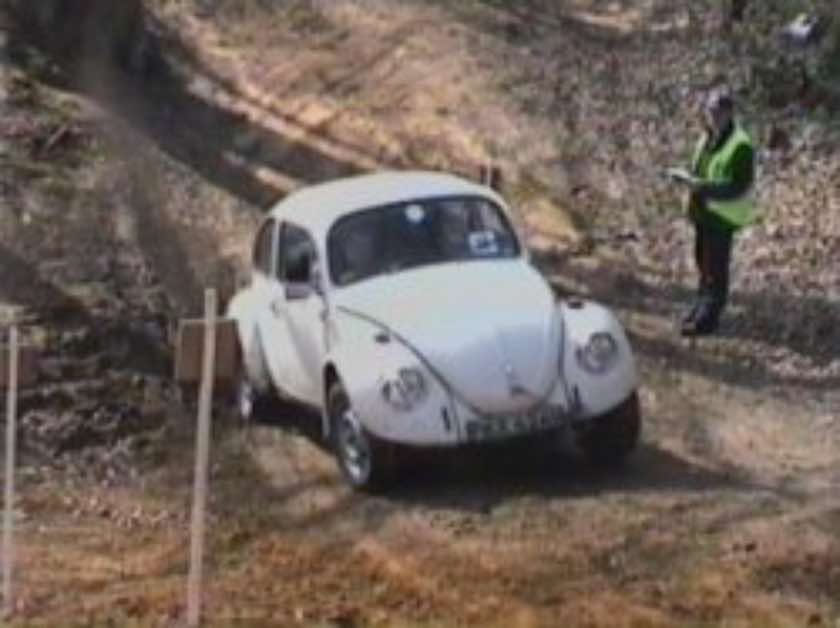
Nick Iken led the field away from the Big Pub, next to Neil Bray’s garage in Graveley, for a gentle run through the Hertfordshire Lanes to the first two sections at Whitwell. Cress Beds and Water Tower are on the same lane, which is bisected by a tarmac road so the section is split into two parts. There was a brief delay at the foot of Cress Beds while Julian Robinson got the Herts VW team into position. The short opener had a re-start which caught out Peter Morley who was driving in only his second trial, and first classic, in a standard Beetle.

Colin Perryman, going well on Water Tower, had to retire at Devils Pit

Then it was across the road to tackle Water Tower. The section starts with some really deep ruts, which weren’t too muddy. Most of the sections were pretty dry as the event took place in a bit of a dry window and the strong winds had dried the ground out appreciably in recent weeks. There was re-start again and this very long section claimed four victims.

Sponsor Murray MacDonald had organised three sections at Devils Pit in Barton, a venue mainly used for Four Wheel Drive off-roading. The first section had a tricky right hander at the start and caused problems for Colin Perryman when a drive shaft failed when he applied the power. Fortunately Colin was carrying a spare and set about changing it, only to derange the steering on the very next section. By this time Colin was running very late and decided to head for home. This section wasn’t very Skoda friendly as Neil Bray did exactly the same thing and had to spend half an hour doing an impromptu re-tracking job. Seeing all this back marker Simon Robson took things very gently in his Liege, lost momentum and failed at the nine.

Neil’s Skoda was fine on the drive to the next section at Mile Tree Farm, but didn’t go any further as a drive shaft broke. It was simple enough to change, except he wasn’t carrying a spare. No matter, Dave Nash lived nearby and nipped home to get a couple of Skoda drive shafts. No problem then? Well yes, there was a small one, Neil has modified his car to use Beetle shafts! The second section at Mile Tree claimed a number of victims where the re-start was positioned just before the steep final bank.

We were in the heart of Falcon trials territory now and organiser John Parsons had laid out two sections at Brickhill and these shaped the course of the event. The first one caused a few problems as the run up to the wood was slippery and neither Nick Iken nor John Rowland in class one managed to traverse the slippery patch. Michael Leete got over this part OK, but understeered off later in the section, to drop his only four marks of the day. Geoff May had been going well in his blown Dellow, despite (or because of?) having no rear shockers. One of the mountings had broken on the way to the start and rather than miss the fun Geoff solved the problem by disconnecting the other one as well.

Overall winner Ross Nuten, pictured at Edlesborough, was the only car to get a clean sheet

The section at Ivinghoe was all about the re-start where Arnold Lane was in charge on top of a very cold and windy hill. This was followed by a re-grouping control with Andrea Lane and Tom Goggin in the Falcon Chuck Wagon dispensing very welcome hot food and drink. While the competitors were relaxing, many of the marshals were travelling across country to officiate on the afternoon’s hills. These started at Edlesborough with Geoff Jackson in charge. This was un-believable, using almost every feature of this familiar PCT venue to produce one long section. The wind had dried everything out and conditions were very different to the Clubmans trial a few weeks before. It was here the event was decided, when Dave Nash dropped six, handing the lead and the trial to Ross Nuten.

At Kensworth the sections were named after John Barber, the land owner who sadly passed away recently. The first section was a pure grass slalom, with a nasty turn on a adverse camber which claimed the front wheel drive cars and some of the less experienced drivers. The second went straight up the stone track before venturing onto slippery grass beside the fence and most of the entry slid to a stop here.

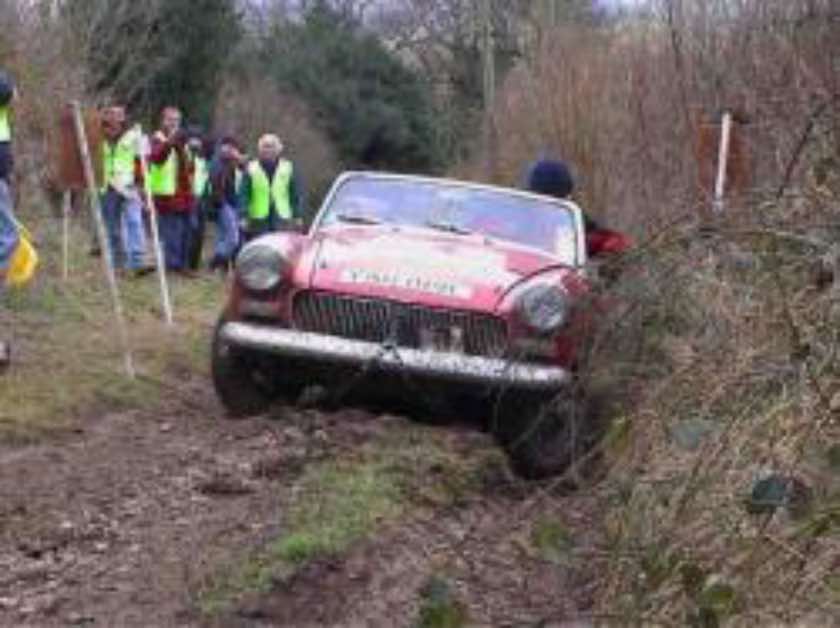
The trial was drawing to a close now, but it was back to county roads and there were a couple of treats in store. The first was at Half Moon Lane where Mike Pearson had drained most of the water out of the sump in deference to the lower slung machinery! It wasn’t difficult if you had the ground clearance but a lot of fun never less. Simon Robson failed when he stayed out of the muddy ruts and got stuck sideways when he was forced back into them and had to be bodily lifted out by JP, Verdun Webley and the crew. There was a further treat in store just after the section ended where it was very difficult to get through the mud.

David Sheffield and Owen Turner trying in vain to re-start on Norton Street Lane

The final section was back at Whitwell, this time to Norton Street Lane. This is a very long section, which is always changing as the water alternately, washes mud and stones down the track. The big challenge is at the top where Julian Robinson and Murray MacDonald had positioned a re-start on loose stones with a diversion for class seven and eight. The only problem with this was, that with their narrow track, the Dellows were able to stay out of the ruts to find firm ground! For those forced into the ruts it required a delicate foot on the throttle as John Bell discovered in his Escort, but John, who has taken part in all three March Hares since it became a road trial again, still won class three. Most of the low slung cars needed a pull from the Range Rover here, but it could be done, even with relatively little ground clearance, as Keith Pettit proved in his Frogeye Sprite.

There was plenty of Food and Drink available back at The Big Pub, where Ross Nutern was the well-deserved and popular winner. The many competitors who had taken part in their first road trial were full of stories of their adventures and hopefully their appetites have been wetted for the future. The organisers had put on a really good event that was tremendous fun for those taking part. Role on the next Murray’s March Hare.

Class 1Elizabeth Tucker-Peake (Peugeot)251st Class
Class 2Richard Scott (Riley)541st Class
Class 3John Bell (Escort)141st Class
Class 4Michael Leete (VW1302S)41st Class
 Ed Nikel (Imp)152nd Class
Class 5Keith Pettit (AH Sprite)101st  Class
Class 7Dave Nash (Skeetle)61st  Class
 Simon Robson (Liege)152nd in Class
Class 8Ross Nuten (Dellow)0First Overall
 Clive Booth (Dellow Rep)121st Class
 Geoff May (Delllow)162nd Class

We have been publishing stuff about Classic Trials on the Web since 1995 and always appreciate feedback. Comments, Corrections, Criticism & Concerns are all welcome. You can leave a comment to have your say here on this web site or our Social Media

Murrays March Hare by David Alderson

Sunday 12th March was a lovely spring day, clear blue sky, light wind and not too cold for the time of year, in fact everything Falcon MC could have wished for the second running of their Murray’s March Hare mini classic trial. Just one thing could have improved the day, a week of heavy rain beforehand to spice up the sections. Thirty crews, from the thirty-four entered, gathered at the “Hungry Bear”, Graveley for scruitineering and signing-on formalities. Falcon had drawn a varied entry, with representatives from all but class 6 turning out on the day. Peter Thompson led away in his Opel to section one at Cress Beds, where the dry stony surface favoured everyone, despite Murray MacDonalds marshalling team having introduced a restart part way up the climb. Under strict marshal control competitors crossed over the tarmac road at section ends to section two, Water Tower. Once again dry conditions had rather pulled the teeth of this long tree lined climb and it was clean sheets for all.

The road run to sections three and four at Mile Tree farm near Leighton Buzzard caused headaches, even amongst Herts/Beds based crews, many of whom were previously unaware of the maze of narrow lanes behind Luton airport. Two tricky sections were laid out amongst the worked out clay pits of Mile Tree Farm and almost two thirds of the entry forfeited marks here. Careful navigation through the section markers was essential on both sections and a tricky restart on section three required some thought. Notable casualties at Mile Tree were John Bell in his Escort, Keith Oakes’ Dutton, Reg Taylor’s Dellow like RDT, the Dellows of Ross Nuten and Clive Booth, and Hazel MacDonald in the Beetle.

A short drive west on the A5 bought competitors to Brickhill for two more sections and the first timed test of the day on Falcon’s prime trial’s site. Although the first of these sections was of relatively gentle gradient, the route wound it’s way tortuously amongst the trees, calling for accurate placing of the car to maintain a good line and continuous forward motion, there were further casualties. The first timed test followed immediately, with Richard Tompkins Imp claiming fastest time at 19.88 secs from Adrian Tucker-Peake in the Peugeot 205 on 20.62 secs. The other regular hot-shoes all managed to blot their copybooks by tearing off in the wrong direction looking for the hidden “B” line; seconds piled up as they corrected their mistakes. Andy Curtis, VW Buggy, effectively lost the trial here when he inadvertently crossed the “C” line and recorded fail. Before leaving, Brickhill there was a further long section in and out of the sand gully. Dave Turner blotted his copybook here, collecting a six in the Bee-Em. Eventual winner, Matthew Sharratt was so confident playing in the sand here that he followed the 7/8 deviation in his 1300 Beetle and still cleaned the section!

On now to Ivinghoe for Falcon’s now traditional brain teasing average speed regularity special test. Despite the required time/distance calculation being ridiculously simple, almost every crew completed the test with vague or troubled expressions on their faces. Michael Leete was the only competitor to hit the exact second and even he later admitted that it had been a fluke since both the Leete crew were still in the throes of mental arithmetic when they suddenly reached the stop line! The following Ivinghoe section contained a steep route deviation for classes 7/8 and a tricky re-start for classes 3-4-7-7-8. Poor Reg Taylor hit trouble again and despite considerable effort failed to encourage the RDT away from the restart. He was joined in his misery by the smart polished alloy, 16 inch wheeled, Dellow of Nicholas Woolett. More severe problems for Colin Stevens ensued when a stripped drive shaft meant retirement for the Skoda Carbriolet driver. Another short drive this time alongside the site of Queen Boadicea’s brave stand against the invading Romans just below Dunstable Downs, bought competitors to another of Falcon’s regular trials sites at Eddlesborough.

Two further sections here, both involving re-starts. The dry conditions at Eddlesborough meant plenty of grip despite the C of C’s efforts to include all the steepest climbs and most difficult adverse cambers of the site into the two sections. Once again, it was heartache for both Reg Taylor and Nicholas Woolett with most of the rest going away unpenalised. It would have been a different story if we had seen some rain at Eddlesborough, as all Falconers are well aware!

Time for a sandwich now, before moving on to the third Falcon pct site at Kensworth and two further sections. Cliff Morrell had laid out a tricky section in the main field, the re-start was perfectly placed and the long, steep grassy climb to the section ends was the undoing of several competitors including Keith Oakes, Adrian Tucker-Peake and pct expert, Robin Howard, in his Dutton. The second Kensworth section had a sharp sting in the tail and saw yet another fancied runner throw away the premier award by a silly mistake. The Alderson Troll dropped a three when it’s driver allowed the engine to drop off the cam within arms length of the section ends board. Passenger Boswell later maintained that it was the driver who had dropped off, not the cam! Previously clean Dave Nash in the Skeetle, Hazel MacDonald and Marlin mounted Jonathan Baggott all contrived to drop three points on Kensworth’s short but steep final bank, only two clean sheets remaining now.

Back onto the tarmac and heading south east now the trial took in a new find close to Markyate, glorifying in the name of Half Moon Lane, incorporating a long, chassis deep, quagmire middle sector. Those who up to this point had been planning to give the trials car a light rinse off at the finish were suddenly made rudely aware that it was going to be pressure washers at dawn after Half Moon! Roughly half the entry forced their way through unpenalised but the low slung Midgets of David Sheffield and Alan Shaw came to an abrupt halt at nine when they were joined by several others whose vehicles were less endowed in the ground clearance department.

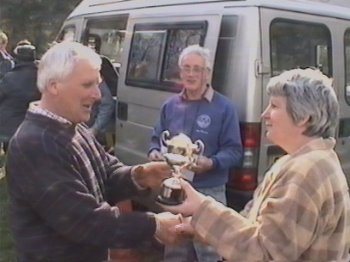
The final section at Nortonstreet Lane near Whitwell was again under the control of Murray MacDonald who had moved his crew over from their earlier section and set up another difficult re-start. To the delight of a sizeable gathering of spectators, Murray’s mob extracted a further bag of sixes from over a third of the entry, and this was on a dry day! Finally the trial returned to the Hungry Bear for signing off and results. Only Matthew Sharratt and Andy Curtis finished with clean sheets but as we know Andy had overshot the line at the Brickhill timed test so it was Matthew’s day and Murray MacDonald was delighted to present his trophy to the VW Beetle driver.

Andy Curtis took the Best Falcon award whilst the class winners were Adrian Tucker-Peake, John Bell, Hazel MacDonald, David Sheffield, Dave Nash and David Alderson. Once again, despite route problems and dry ground conditions, Falcon had produced an enjoyable little trial. The atmosphere as ever was relaxed and friendly, the deceptive nature of the sections took points from newcomers and experts alike. The trial is never likely to become a full blown “blood and guts” classic but that isn’t Falcon’s intention. Murray’s March Hare trial looks set to become a regular feature in the calendar. Give it a try next year, you’ll enjoy an excellent day out.


We have been publishing stuff about Classic Trials on the Web since 1995 and always appreciate feedback. Comments, Corrections, Criticism & Concerns are all welcome. You can leave a comment to have your say here on this web site or our Social Media
March Hare Mini Classic – Murray wins his Own Trial

Yes, sponsor Murray MacDonald won Falcon’s first road going Classic Trial after a daylong dice with Giles Greenslade, who resurrected his Sunbeam for the occasion. The class eight’s were handicapped with some tough re-starts, victory going to Dudley Sterry after a close battle with Anthony Young in his new Buggy.

The sun certainly shone on Falcon Motor Club for what was billed as a “Mini-Classic”. It wasn’t just the clerk of the weather that was on Falcon’s side. There was a handsome group of the trials elite to do battle with the Bedfordshire countryside. The organisers had hoped to have sections comprising some old tracks mixed in with visits to some of the clubs traditional PCT venues. Unfortunately the tracks had to be dropped in the rush to get a route approved, as they were all found to be adjacent to “black-spots” and although PR revealed no objection from the locals there wasn’t enough time to negotiate the use of the access roads. 

    The entry assembled bright and early at Brickhill where the first two sections were located. Anthony Young’s new VW Buggy was the main centre of attention. Its certainly some machine, the frame is made of light alloy, all plastic coated for protection. Most of the suspension comes from the States or is beautifully home-made. All drilled to reduce the un-sprung weight. A two-litre VW type one engine provides the motive power. The surprise is that it’s mid-engined, driving though a genuine Hewland trans-axle. Some tool! Nestling nearby was another formidable machine, no less spectacular, but a rather more familiar sight. Dudley Sterry had bought his MG J2 along, returning to do battle with the March Hare and try to regain the Falcon Trophy after an absence of some twenty-five years. There was another very welcome machine from way back then. Clive Kalber had come all the way up from Cornwall in the Runner Bean; the Capri based Ford Pop constructed by John Tucker-Peake in the early seventies. Other well known Classic drivers included John Bell in his Escort and Giles Greenslade, whose father Dennis was another March Hare competitor all those years ago. Giles wasn’t driving the familiar Greenslade orange Beetle. He was giving his old Sunbeam its first run in class three for many years. Giles dragged it out of the garage in the week, gave it a quick service and it was ready to go. He stepped back, took a look and didn’t like what he saw; the old car was far too tatty for such a special occasion. So it was down to the local DIY for a couple of cans of Dulux so it could look its best on the day! 

    The first Brickhill section started at the far end of the wood. It began with a straight slippery climb up to the tree line where it weaved around the trees before a re-start just before the hump at the top. This wasn’t the difficult bit. The problem was at the bottom. It needed a fair old bit of welly to get over the mud to the tree line where the grip started. A number of people were caught out here, including Robin Howard, giving his Dutton Sierra it’s first outing. Everyone survived this first hill and the field went on to the second Brickhill section. This started with a blast up the gully, turning left at the sandpit to climb the steep bank. The ruts in the gully were bread and butter to Classic regulars but a bit of a shock to the debutantes. They were the downfall of both Reliant Kittens. First Ken Martin put the fan through the radiator. He cleaned the section OK but the steam at he top indicated an early trip back to Farnborough for Ken. Along came Dave Smith, going like a good ‘un before “crack”, the axle case split in two and there was a second Kitten in the dead car park. But not for long, Dave sportingly offered Ken his radiator and they soon made one good Kitten out of the two broken ones. Ken continued with the trial, ending up second in class. 

    It was up with the tyres and out on the road for the run up to Edlesborough. There was quite a queue for the regularity section here, lucky for Giles Greenslade as it gave him time to fix a puncture. You had to drive at 7.5 miles an hour for 1,320 feet. The intellectuals, and those with schoolchildren as passengers, quickly worked out this should take two minutes and most of the entry crossed the line within a few seconds of this. However, the test did have another effect, it caused a bit of a queue and spread the entry out for the rest of the trial. There had been some rain the night before and grip was at its usual premium at Edlesborough. The first problem was getting to the start of observed section three and Dennis the landowner was there with his tractor to give a helping tow where needed. There was a tricky re-start at the end and only Murray MacDonald and Giles Greenslade, running at the back of the field, emerged with clean sheets. The next section had a sharp turn in the bomb hole. Murray and Giles cleaned this as well but this time they were joined by Simon Robson, John Bell and Ken Martin, making up for lost time in his repaired Kitten. 

    Cliff Morrell was waiting at Kensworth. There had been last minute problems when the hills had to be changed to preserve the grass in the far field. However, Cliff laid out a couple of good sections with his trademark of a tricky turn just where the gradient steepens. The first hill went up the side of the fence. It was very slippery, defeating everyone but Dudley Sterry and Clive Kalber, who both made superb climbs, Dudley’s blower howling in joy as he crested the summit. Clive wasn’t so fortunate on the next section, which went up the track behind the old barn, turning sharp right through the gate with a re-start in the cross ruts. These caught out quite a few people, including Clive and Neil Bray. 

    Mile Tree Farm was new to many people although it is the home of the CSMA’s annual trial. This was a long roller coaster section with many up’s and downs. Over half the entry failed to climb the final bank, including Giles Greenslade, which put Murray MacDonald into a three-point lead before heading out on the second circuit, which led back to Edlesborough. The two sections here had not been changed much since the morning, but the surface was much drier and grip was easier to find so the only failures were those who made silly mistakes, like Simon Robson, Fred Gregory and Colin Stevens. Sorry boys! 

    Back at Kensworth Cliff Morrell had made a few subtle changes, not many, but just enough for half the entry to fail the first hill again, although the second one was much easier. John Bell didn’t get this far as he was stopped at the side of the road with a hole in his diff casing. He wasn’t very pleased as he had broken his second “un-breakable” Fack on the Cotswold Clouds and it looked as if the damage on this third one had come from within. The second visit to Kensworth had also affected the leader board. Murray MacDonald had spun to a halt on the first section, dropping three and putting him back to equal first with Giles. He was to regain it back at Mile Tree though as Giles was one of many to be penalised nine when he bellied out on one of the humps, putting Murray into an unassailable lead. These humps were a bit of a handful for some of the lower slung cars and John Yorke did a bit of damage to the front of his Skoda. 

    Later numbers returned to Brickhill to do their thing in front of the early finishers. The penultimate section was a very long weave through the trees. It was pretty tight but still on for most people, except James Lindsay who wedged his Fugitive on one of the bends. The final section was another trip up the gully, followed by a nice blast round the sandpit, to finish off a really super day. Murray MacDonald was the worthy winner, although he acknowledged the class eight’s were handicapped with some tough re-starts and a high tyre pressure limit in the morning. Giles Greenslade had put up a good fight in the Sunbeam but the day had a final twist for him as the diff on the Sunbeam cried enough just half a mile up the road on the way home.

st OverallMurray MacDonaldVW 13026 marks lost
Best FalconClive BoothDellow Rep36
Best NoviceKeith OakesDutton51
Class 2/5Rob CullMG Midget33
Class 3Giles GreensladeSunbeam9
2nd in Class 3Ken MartinReliant Kitten33
Class 4Simon RobsonSkoda39
Class 7Clive KalberFord Pop “The Runner Bean”21
2nd in Class 7Mike FurseRacecorp27
Class 8Dudley SterryMG J215
2nd in Class 8Anthony YoungBuggy18

We have been publishing stuff about Classic Trials on the Web since 1995 and always appreciate feedback. Comments, Corrections, Criticism & Concerns are all welcome. You can leave a comment to have your say here on this web site or our Social Media
Murray’s March hare

by David Alderson

Having tested the waters with a successful single venue ‘classic’ regulations trial last year, Falcon Motor Club ventured forth again on the 18th of April extending the event to four sites just south of Milton Keynes linked by a pleasant 65 mile road route. Generous event sponsorship from Murray’s Independent VW-Audi Discount Store enabled the club to put together a tidy little trial. Add the cancellation of Silverton MC’s Championship Exe Valley trial, and Falcon was able to assemble a star-studded entry of thirty-two for their first serious attempt at a road trial for many a long year. Assembling for the start at Home Farm, Great Brickhill, competitors and marshals alike were able to enjoy sizzling bacon butties dispensed with a smile from the club’s own catering caravan whilst scrutineering and signing on formalities were completed.

Mike Furse in his Racecorp led of into the first two sections amongst the trees and gullies of the sandy Home Farm site. Surprisingly enough, despite the available grip, Section 1 took maximum penalties from eleven of the entry whilst Section 2 also contrived to extract marks from seven hapless souls. Out onto the public highway for the start of the day, the route meandered along the back lanes to Leighton Buzzard and then on to Edlesborough for the first special test and second pair of sections. For those unfamiliar with the Herts, Beds, Bucks area let me explain that it is not particularly hilly but is blessed with an assortment of sand pits and clay pits. The sand is extracted for various commercial uses whilst the clay is used to feed the areas traditional brick making industry. Situated on the lower plain below the Dunstable Downs escarpment, Edlesborough is a knob of chalky clay covered in patchy scrub and gorse bushes. The site is notorious for its complete lack of grip when wet and that is how competitors found it on the morning of the March Hare after the previous afternoons heavy rain!

Special Test 1 took the form of a quarter mile regularity set at 7.5 mph all on a loose slippery track incorporating both a ninety-degree right and ninety-degree left turns. Despite the notorious inaccuracy of trials car speedos five competitors managed to drop only one second penalties, the most distant attempt being some 34 seconds adrift of target. Straight into Section 3 on the aforementioned grass covered clay hillside. The Alderson Troll made the first attempt but brain fade caused an embarrassing failure when the Troll attempted to mount a bank, which could easily have been circumvented in the early part of the section. John Bell, another ACTC expert, followed suit in his Escort a few cars later. The section was sub divided at 12 – 9 – 6 – and 3. For a long time it looked as if three was going to be the best score. But right at the end of the entry both Giles Greenslade in his Sunbeam and event sponsor Murray MacDonald in his 1300 Beetle mastered the hill. Section 4, a little further over, had a restart for classes 7 and 8 followed by a steep bank, which proved impossible to climb from such a short approach. The other classes were more fortunate and John Bell made up for his previous faux pas by cleaning the section. Greenslade, MacDonald and Rob Cull, Midget, joined him.

Back out on to the highway, the route made its way round the back of Whipsnade Zoo to Kensworth, just south of Dunstable, for the third pair of sections on the steep grassy bank used so often for PCTs. A traditional climb up, drop down, then U-turn back up section was laid out with a restart on the last uphill leg. Only Dud Sterry’s MG and Clive Kalber’s ‘Runner Bean’ Pop managed cleans here although Ken Martin managed a three with his PCT prepared Reliant Kitten, as did Anthony Young in his new ‘Aly 2’ VW Special. The Macdonald/Greenslade duo joined them. Section 6 featured a hairpin back right obscured from the driver’s view behind a barn, followed by a restart. Both Clive Kalber and Neil Bray in the Skoda were caught out here along with George Francis in his very pretty Lancia Volumex powered Marlin running in class 8. 

A short drive through Dunstable and Hockliffe, back towards Leighton Buzzard brought the entry to the old worked out pits of Mile Tree Farm for Section 7 and the second special test. As the locomotives built up steam on the local narrow gauge railway adjacent to the site, trials cars were bounced and corkscrewed over and through the mounds and gullies of Mile Tree Farm. There were ten cleans on section 7 including the very smart Dutton Phaeton of Keith Oakes and Simon Robson’s Skoda. The traditional battle between the Falcon Skoda crews now leaning very much in Simon’s favour. James Lindsey also managed to persuade his long chassis Fugitive round for a clean but Giles Greenslade bottomed out the Sunbeam dropping three. The special test was a corker, more a timed section in the style of the MCC testing trial. Andy Curtis made the best time at 27 seconds in his Buggy but Simon Robson was on the same second. The next fastest were two seconds off the pace.

With the morning’s overcast clouds clearing and a drying wind lifting the gliders high above Dunstable Downs, the trial returned to Edlesborough for another crack at the previously slippery pair of sections. Joint Clerks of course, John Parsons and Mike Pearson decided to drop the mornings tyre pressure limits, 15psi for class 8 and 12 psi for class 7, allowing free pressures. Sadly this proved totally unnecessary as the site had dried out in double quick time, the result was a string of cleans on Section 8, only Simon Robson going wrong, with just Fred Gregory and Colin Stevens Duttons failing to get away from the restart on Section 9. The day’s second visit to Kensworth produced seven cleans from the up and down section with Mike Furse applying his intimate knowledge of the site to make the first clean climb. Mike has been PCT C of C here many times in the past and knew exactly where the grip would be on the restart. The Alderson Troll dropped another goolie here when the pilot lost his way amongst the marker posts! Everyone knew about the hairpin right on section eleven this time around so the organisers only managed to extract marks from Brian Sarney in his attractive class 2 Ford Y type tourer. Back to Mile Tree Farm for another roller coaster ride around the pits and the third special test, test two in the reverse direction. Making up for a lacklustre day on the hills, the Troll snapped round in 23 seconds for fastest time with Andy Curtis again following close on the same second.

And finally the trial returned to Great Brickhill for Sections 13 and 14 amongst the trees and sandy gullies. Despite double restarts for classes 7 and 8 on the last section almost everyone made it in to the finish with no further losses. As the Falcon catering caravan dispensed burgers, tea and coffee the results team beavered away in the club’s second caravan. Within an hour of finishing results were declared and awards presented. Class winners were Giles Greenslade, Simon Robson, Clive Kalber, Dud Sterry and Rob Cull. Best Falcon MC member was Clive Booth. The overall winner? None other than event sponsor Murray MacDonald! Well done Falcon MC, a pleasant day out which all competitors seemed to enjoy, already there are murmurings within the club for an even more ambitious route next year, perhaps some of the old, more traditional, Conquest trial sections can be resurrected?


We have been publishing stuff about Classic Trials on the Web since 1995 and always appreciate feedback. Comments, Corrections, Criticism & Concerns are all welcome. You can leave a comment to have your say here on this web site or our Social Media
Ian Davis won Falcons Mini Classic

an Davis put in the best performance on the Mini Classic at Edlesborough on 8 March. Ian was one of three drivers still clean when the rain came down. This made conditions so bad that the event was cut back to only two rounds. The result being decided on the special test times.

ohn Parsons and Mike Pearson chose Edlesborough for their mini-classic, only two weeks after the same team had run the RAC/BTRDA qualifier at Brickhill. The event was to some extent experimental, the idea being to create a “Classic” trial feel to a single venue trial, escaping all the complications of insurance and route authorisation. They were rewarded with an entry of 27, including quite a few cars we had not seen before.

Ian Davis bought along his VW Buggy. Yes, this is the same Ian Davis that was featured in Classical Gas a few months ago. Martin and Henry Allen were sharing a familiar car, the Mike Young built Racecorp, the brother to the Steve Boakes constructed car now owned by Mike Furse. I think Mike must have been instrumental in the next two entries. Keith and Margaret Oakes in their Buckler and Gary and Lucy Booth in their Buckler Mk 6. It was also nice to see Keith Pettit in his Austin A35 with 1275’s of BMC engine under the lid.

Quite a few of the cars were to be double driven, casing a problem if you were not able to see the sections in advance. This was solved by making the cars normal driver run first. The theory being that the “guest” had the handicap of an unfamiliar vehicle. The first section started in the field, twisting through the gate before going up the nearest path through the trees. Simon Robson was the first car, attacking the hill in his usual style, despite a having a very heavy cold. Simon got half way up before slipping back into the trees to the detriment of one of the rear door panels. This caused JP to re-route the section, giving Simon another run. It was still tricky and only eight cars went clean.

Hill two was not too difficult if you could follow the route, which was confusing, despite Mark Chilver’s efforts on point duty. It was nice of Mark to marshal while Sharon passengerd Robin Howard in his familiar Marlin. It was here that Sharon and Mark rolled their Imp while reversing down a hill a few years ago.

The next section gave us a taste of re-starts. Placed in different positions according to the class. By now the dew had gone and there was plenty of grip, although the line had been cunningly positioned and could catch the unwary. Then it was back down the hill to the start of the marathon hill four, twisting its way through the wood at the bottom before going up the gully and descending into the trees for a final assault on one of the steep banks. This was a nice section, not difficult, just fun to drive.

Finally came a special test where Chris Bonnett’s Peugeot expired when some of the front suspension came adrift, causing the drive shaft to pull out. Chris retired but was able to get the car mobile so he could drive it home.

At the end of the first round there were three clean sheets. Ian Davis in the Buggy, Fred Gregory with his Dutton Melos, sporting a new engine since its outing on the Cotswold Clouds and Henry Allen in the Racecorp. There were quite a few clean sheets on the second round, especially as we now knew where to go on hill two.

During lunch JP and Mike Pearson changed the hills ready for a planned three rounds in the afternoon. It was not to be, as no sooner had we started than the rain came down, making conditions so hairy that John had to bring proceedings to a premature halt. The special test times were used to resolve things between the three clean sheets. Overall honours going to Ian Davis. Fred Gregory, Murray MacDonald and Tom Goggin won their classes and Henry Allen came second in the well-supported class seven.

It was a shame about the rain but that’s always a risk, especially at Edlesborough. Lets hope the club perseveres and develops the concept.


We have been publishing stuff about Classic Trials on the Web since 1995 and always appreciate feedback. Comments, Corrections, Criticism & Concerns are all welcome. You can leave a comment to have your say here on this web site or our Social Media