You have stumbled on a delightful box of tricks, Classic Trials & other perverse stuff from Michael Leete. MCC ACTC and other trials. VW Beetles, Dellows, Marlins, or even Suzuki X90's
Keith and Claire Oakes had a full and enjoyable trialling year in 2005. This is their story.Keith getting advice from Michael during the Kyrle lunch haltTed Holloway in troble in the water on the Ilkeley Trial. Ted had to retire after only four sections.Simon Woodall storming one of the Ilkley’s grassy banks.
In the Kryle’s introductory notes it stated, our very steep hills near Monmouth will be “attacked” at the beginning of the trial. That was putting it mildly! When we had finished I felt I’d been in a war and staggered into the clubhouse in Ross-on- Wye shell-shocked! If you can imagine a metronome going at full belt, riding on the Pepsi Max at Blackpool and abseiling in a car to get from one section to another as the tracks were so steep for six hours or so. That’s the Kryle, no let up or rest. It makes the Lands End a stroll in the park! I was creamed crackerd, the Kryle is a must do trial, what an adrenalin rush.
At the lunch break Keith found oil on the sump tray. I thought oh no! Not a repeat of last year and have to retire. Keith thought it was an oil seal but managed to complete the trial. Due to time constraints only visual checks of the Dutton were made after the Kryle and all seemed ok (possible thought was seal leaked when hot. WRONG!!!). This was the start of an omen for the car on every trial we entered.
The Ilkley Trial took us to a part of Yorkshire we had never seen before. We were preparing to leave for the trial at 3am when Keith opened the garage door and announced he could smell our old friend “Gear box oil”. A few drops on the sump plate. I said “let’s go for it”, (I don’t mine coming back home with the RAC), and we had to keep topping up during the trial. Perhaps more serious than first thought! It’s true about Ilkley, glorious country side, people and of course the trial. A trial more gentle than the Kryle not so rough but also a must do event. This was the first time I used a tulip route card (it’s so easy) if thicko here understood it any pleb can! Glad we went, Keith won his class. This came as a shock to us as two hills we couldn’t even get off the start line! Falcon club member Ted Holloway in his Enigma Special had to retire on the fourth section out of twenty three due to gear box problems at Dob Park Splash, and then he had a long drive back to Bexleyheath London. If we do the Ilkley again I think we will stop the night before and after the trial as it’s a long drive home for us old pair.
Back home this time the engine & gear box were taken out, Keith found that the speedo drive core plug had fallen out!
We have been publishing stuff about Classic Trials on the Web since 1995 and always appreciate feedback. Comments, Corrections, Criticism & Concerns are all welcome. You can leave a comment to have your say here on this web site or our Social Media
Please help spread the word and share this on your Social Media:
Neil Bray’s restoration of a “C” Type Ford was much admired by the C & Y type register. So much that they persuaded him to restore another car.
A while ago I wrote about Neil Bray’s restoration of a Ford “C” type and subsequent Round Britain run. Neil got to know the members of the club very well and in a complex deal became the owner of a number of boxes of bits that were rumoured to be a 1937 Ford Y when they were all bolted together. Graham Miles had rescued them from no less than three lock up garages in Ipswich and the club had been looking for an enthusiast to assemble them and write a series of progress reports for the Y and C type magazine.
Neil’s new car had an interesting history. It was actually one of the last cars built when production ceased in favour of the model “7Y” in 1937. His first job was to un-pack all the boxes and lay the bits out in the clubs container. Graham had assured Neil that 98% of the bits were there and Neil was more than delighted to discover he was right! As I said earlier Neil’s acquisition of the car was a complex deal, part of which involved him completing the restoration to drive the car on the clubs 2004 Welsh Rally, so time was at a premium!
An earlier owner had started to convert the poor little Y into a hotrod and Neil soon discovered that the three cross members had all been removed in a failed attempt to fit a V8. All the bits were shot blasted across at Finish Line UK and Neil then had to solve the puzzle of which bit went where, and which way round, before bolting and welding it all together. It was important to get this exactly right otherwise the suspension mounting points would be all wrong. Inevitably the tin worm had been nibbling away as well and some of the rather thin sections had to be plated. The rear of the chassis was in a very bad way and had to be replaced with fresh U sections that Neil had fabricated.
The next job was to fit all the bits and pieces to the chassis in an un-restored state to make sure they were all there. The container yielded a main brake rod centre bracket, front suspension and a steering box with rather worn track rod ends. Neil then came to fit the gearbox, only to find that there were no rubber mountings in the container. Fortunately he was able to purchase some new ones from the club and the box soon went in along with the axle and torque tube. This as important as it defined the exact location of the rear cross member.
Now came a big decision, which motor to fit? What with Primrose and his “C” type restoration, Neil had acquired a few 8 and 10 hp power units over the years, so he went hunting amongst his stock. He had in mind his silver 8hp engine, which he knew was a runner, to get the car rolling. In digging around he noticed a 10hp lump with a large starter attached. This was acquired from Ross Nuten when Neil became the proud owner of Ross’s 1935 Morris 8 Series 1 2-door saloon.
Taking the engine into his workshop Neil soon discovered it was seized solid, so out came the plugs and in went a couple of cans of WD40. Coming back a week later it now spun, although not too freely. Removing the head and sump there was a lot of solidified oil but underneath there was a brand new engine that had never turned in anger! Out came the crank and pistons to reveal rings and white metal bearings in perfect order! All that was necessary was to lap the rust off the valve seats, clean everything up and apply a bit of paint.
Returning to the chassis Neil fitted the handbrake lever and attempted to sort out the brake rods. Four hours later he decided that while he had the right number of rods they weren’t a set, but the club soon sorted that out. Then it was back to the container to find the final bits and pieces. But there were no shock absorbers to be seen and what’s more no mountings on the chassis! The club came to the rescue again with a set of shocks and enough information to fabricate the mountings. Now for the body!
The Container revealed its secretsThe Chassis and BodyThe Chassis is complete. Now where is the body
Part 2
We left Neil’s Y as a rolling chassis waiting for it’s body. With a sound chassis what was left of the body shell was gently lifted on to it and bolted in place. Neil and his helpers then used scissor jacks and wedges to get all the gaps around the doors, bonnet etc right before the welding started.
The first job was to rebuild the rear wings and secure them to the chassis to hold the back half of the shell in the correct position. This was essential as the lower parts of the B posts were very rusty and were going to have to be removed completely and replaced by new fabricated sections. The bulkhead was next. Rust wasn’t a problem; it simply wasn’t there as the previous owner had removed it to create the space for a V8! Fortunately Neil had a spare bulkhead in his pile of bits and this was soon in place along with newly made toolbox panels.
The basic shell was now ready for paint preparation. It was rubbed down to bare metal, filled and painted with no less than five coats of primer ready for the colour to be applied. Here came a problem but not a technical one. Neil had his heart set on maroon but the powers that be in the Y and C club ruled that a 1937 Y had to be either Vineyard Green or Black. Searching through the paint catalogues a Datsun colour was found to be near to Vineyard Green and the decision made to paint the shell with that in two-pack.
Having sorted the chassis and the shell the time consuming work of fitting out began. A nice pair of running boards came, courtesy of Dave Tebb. They fitted perfectly and were soon painted black and fitted with the proper spec rubber. The windows were not so easy. Neil had looked at a lot of Y’s at rallies and had never worked out how they went up and down without falling out and the bare shell in the garage didn’t exactly provide much inspiration! A ring around Y and C club members turned up the wonderful John Argent of Hatfield. John not only let Neil look at his car, he let him take it away and dismantle it to work out how the windows operated . A truly super guy.
With the aid of John Argent’s car Neil soon worked out how to assemble the windows, after freeing off the seized winder mechanisms with heat and penetrating oil and obtaining new runners from Woolies of Peterborough. John’s car also revealed a lot of other detailed information about various brackets and braces that had been removed or rusted away when Neil got his car.
The next job was to tackle the woodwork. It was possible to repair the wood surrounding the rear window but the roof rails were too far-gone and were replaced with a kit Neil managed to acquire. The detail fitting out took a tremendous amount of time, doing lots of work, but seemingly achieving very little. The door panel’s were shot blasted, prepped and painted, the floor boards fitted and the gauges assembled to the dash which was then bolted in place.
With the Y taking real shape it was time to bolt on the wings and other detachable panels. Most of them had come with the car and been restored but the rear offside wing had been to far gone so Neil had a new one made by Ken Arthur, a superb craftsman who was making a complete body for a SS100 Jaguar at the time of Neil’s visit!
Neil kept thinking about the back axle, as although it had been fitted to the car it had not been checked. He had a spare axle, which from the outside looked nearly new, but Neil decided to do the right thing and strip and inspect it first. With tools borrowed from the Y and C club the job was started. The first thing was to spread the rear spring by welding a large nut on a gigantic G clamp tool and using this to compress it. This took forever and despite being really worried that the clamp would slip it was finally possible to undo the shackles and remove the spring. With the axle spit the crown wheel and pinion revealed a complete tooth was missing from the pinion and part of another was missing. Neil managed to locate a replacement CWP and bearings and reassemble the parts with the necessary pre-load.
The Y was now looking like a real car but oh there were so many little parts missing. Neil made a huge list and started searching. The clutch and brake pedals needed return springs. These were found during a trip to the local MG specialist where two clutch slave cylinder return springs for a Morris Minor 1000 were found to be exactly the right length. Walking round the show room Neil put his head inside an MGA to see the Pull Starter and Choke Cables would fit the Y so these were snapped up. They only had the letters C and S on them rather than the complete words that Mr Ford had but beggars can’t be choosers at this stage!
By now it was Christmas time. Only a few moths to go before the Y and C clubs 2004 Welsh rally. The deal was that for the car to be his Neil had to finish the restoration and take part in the event. Will he succeed?
There was a lot of work making and fitting new panels to the body and getting all the gaps right but finally it was ready for painting.There was a lot of work making and fitting new panels to the body and getting all the gaps right but finally it was ready for painting.
Part 3
Neil came back from a family Christmas holiday in Florida, fit and ready to get on with the Y. It was despatched to the electrician on 1ST February. A new loom was fitted and the components connected until he got to the semaphores. Neil particularly wanted the flashers to flash, and the semaphores to activate, on the same switch. Eddie the electrician had a board that would do this but it was 12 volt! A decision had to be made and quickly, so Neil decided that it would be best to convert the car to 12 volt. This involved removing and rewinding the dynamo. Then all the bulbs and the coil were changed for the 12-volt variety. The fuel gauge was a big headache. This was overcome by putting a bulb in the circuit, which dropped the voltage to 6 volt. Success.
The only thing that was left was the starter, which would spin much faster on the higher voltage, and those good old semaphores. They had to be either rewound or replacements found. With all this completed the car was taken from Eddie the electrician to Fred Pounds, the upholsterer, in Baldock. It arrived there on 14th February, spot on schedule. Neil had given Fred six weeks to complete the upholstery but as usual he had loads of work. Neil visited him every day to try to induce him into getting on with the job. He had to have excuses of course, but you can only remove the bumper for re-chroming a limited number of times! Neil had hoped to have the car completed by the Y and C clubs AGM, but that passed by. Never less Neil went along and was able to buy some hubcaps, oilcan and bracket, bumper ends etc. That gave him lots more excuses to visit Fred. And after much hounding he finally got the Y back. It was Thursday the 3rd June 2004.
Neil worked through the night, sorting split pins, adjusting brake rods etc. Friday saw Fred working on the upholstery while Neil and his helpers were working on the mechanical jobs. Fred was back working on the car Saturday morning. The moment of truth was Saturday the 5th June. It was 10.30 am, time for the first road test. Out of the garage and down the road. Then silence, as the car coasted to a halt with a dead engine, the distributor had disintegrated. Neil fitted a replacement but still no spark. The leads were changed and finally a new coil solved the problem and the engine burst into life. However, it was running very roughly. The carburettor was dismantled and in the end that had to be replaced. Finally at 4:30pm Neil left the garage to pick the kids from Stevenage and drove home in the Y.
Cruising at a healthy 45 mph Neil looked at the dash and noticed to his horror that the oil pressure had dropped to only 6 P.S.I oil. Saturday night was spent playing with the oil pressure release valve to finally produce 12 P.S.I when hot. Neil also noticed that the front of the car had sagged so a new front spring was needed, but time had run out. So with the car nearly finished, with no power, hardly any oil pressure and a low front end Neil phoned mentor Graham Miles. He advised Neil not to take the car on the rally to Wales but Neil felt he had got so close that it wouldn’t be fair to not give the Y a chance. Dave (MGeetle) Nash turned up on Monday morning and the pair set of for Wales Neil driving the Y and Dave the C. It was to be a real adventure. How far would they get…………
Fred the upholsterer didn’t have a lot to work with and was still working on the seats while Neil was finishing the mechanicals.Neil’s Y and C at Upper Caldecote, ready and raring to go on their long trip to Wales.
We have been publishing stuff about Classic Trials on the Web since 1995 and always appreciate feedback. Comments, Corrections, Criticism & Concerns are all welcome. You can leave a comment to have your say here on this web site or our Social Media
Please help spread the word and share this on your Social Media:
In the early 60’s Ron Warren published a booklet about Falcon Motor Club. Recently I managed to obtain a copy. It provides a fascinating insight into how different things were in those days.
1. The Beginning
1948 cannot be considered as a good year for motoring, lean days because petrol was still rationed as an aftermath of the second World War, but Motor Sport was making a slow come-back even if the cars were mostly of 10 years or more in age. A new car was indeed rare, but enthusiasts were meeting and talking motor sport, and it was from the talk of cars round a bar that the Falcon Motor Club was formed in 1948.
It was not long before the six founder members were joined by others and within a year the club was recognised by the R.A.C. and registered to promote competitions. To gain experience members would go and marshal for other clubs and the number of our events was very limited. When a kindly farmer would allow the use of a field, members would pay sixpence a time to have ago at a few simple driving tests.
In the Autumn of 1949 a closed trial was held and the major award was the President’s Cup, our first trophy presented to the Club by Mr. J. Frye who became the first President. To have achieved so much in such a short time was due to the inspiration of David Chiles the Competition Secretary (he was one of the six founders) who was supported by his wife Edna, who was the Secretary, and such stalwarts as the Tucker-Peake brothers, Herbert and John, Jeff Bradford, Cliff Smith, John Mosely, Ralph Smart, Bill Avery, etc., and the full support of all the members.
At this time motoring sport in Hertfordshire centred on just three clubs, Herts County were in the middle and Berkhampstead in the west were both pre-war clubs, whilst Falcon in the east were the youngsters of the trio, but such was the Falcon determination to get on, when Berkhampstead suggested we should have a sprint meeting at Tewin Water, a course which they used, this idea was not turned down.
At first, it seemed impossible because we had no equipment and no money. A special meeting was held and it was agreed to carry on and have a sprint meeting in June, 1950. The members were so keen they pledged an extra subscription in case of any financial loss.
Tewin Water was a private driveway used by farm vehicles and crossed by cattle, so fences would be needed to keep the cattle out and make car parks. With no equipment we had to borrow rope and posts, etc., and members dived into tool sheds for brushes, shovels and hammers and everyone pitched in including wives and girl friends.
2. The First Guy Fawkes
Needless to say with the spirit that existed the extra sub was not needed. The key to the club’s success can be summed up in one word – organisation. Whatever the event, the aim was always to have sound organisation, and the reward is our present fine reputation as good organisers.
That summer of 1950 saw the end of petrol rationing so road events could now be held and in the Autumn the Club took another step forward by making the trial a closed invitation event. (Today’s status is restricted). This trial was held on November 5th so naturally it was called the Guy Fawkes Trial. I remember this day so well because of the sunshine, it was glorious, so nice, in fact, that to make the re-start line better on Tatmore End a small water trailer was towed up just above the line and the contents were then released. Who said nice types!
With the route taking in parts of Hertfordshire and Bedfordshire it meant diving in the tool sheds again and on Sunday afternoons in late October members turned out armed with all kinds of clippers, axes, etc., to cut down the summer growth of brambles, nettles and such like along those parts of the route known as unmade roads.
No one minded the work, in fact, they were happy days because everyone turned out to help. In 1951 the programme was enlarged a little and amongst the events held was another sprint meeting at Tewin Water on Whit Monday, but by this time the Landowner had the idea he was on a good thing and started holding out his hand. The condition of the road was not very good. and at the end of the year the property changed hands. The new Landowner had been told of the revenue to be had by letting Motor Clubs have a speed event on Bank Holidays (we had been liaising with Berko and Herts County) so with the road in poor condition and lacking the funds to carry out the necessary repairs. we had to cancel our sprint in 1952.
Other events were developed and gradually our programme was getting larger. In Coronation Year on a scorching hot Whit Monday we had a sprint at Hundson. Closed invitation driving tests were also held there, but being a disused airfield the runways were deteriorating rapidly and parts were being broken up to reclaim farm land, so we had to move our speed meetings to Tempsford.. Although we were the first club to go there, other clubs soon followed, so did local driving instructors and the motor cycle boys, who are now referred to as coffee bar cowboys, and because of this later brigade Temsford was closed to all motor clubs after 1955.
3. Six Years On
Having passed the six-year mark, we had of course made some good friends and had had some changes in our Officers. I pipped David Chiles to the post by suggesting we have some Vice-Presidents and was very pleased to propose Jeff Bradford and Paul Sapsed as our first Vice-Presidents.
Jeff Bradford is often affectionately called the granddad of the Club. Anyone who watched our last Autocross will tell you that in spite of sixty odd summers, Jeff can still show younger members how to drive a sports car.
Paul Sapsed is remembered for his support to events and for his generosity to the club. Every motor club has its personalities and today we have our share. To start with we have four more Vice-Presidents. I have already mentioned the contribution to the club’s history of David Chiles and when he retired in 1958 he was one of three elected Vice-President. In ten years David had held office as Secretary, Competition Secretary, Chairman and Vice-Chairman.
Peter Elbra had played his part in the early years of the Club as a committee member and for two years our Secretary.
Peter Harper was by 1958 well noted for his achievements in International Rallies. To us he was also known as a former committee member and organiser of club events.
Although small in statue, Tommy Bridger has made his mark in the racing fraternity as a top notch Formula 3 driver. He also drove for Pop Moss and in recent times been successful in one of the well-known M.G.A’s of Dick Jacobs. When Tommy retired from the committee last year he was elected Vice-President No.6.
In our second President, Desmond Scannell, the club is fortunate in having another personality. For about twenty years Desmond was secretary of the British Racing Drivers Club and became known as one of the foremost organisers of motor racing in the world. Not all his motoring was connected with racing though, on two occasions he crewed with Stirling Moss and late John (Autocar) Cooper in the Monte Carlo Rally.
Very early on in this preamble I mentioned the Tucker-Peake brothers and no story could be complete without more of their contribution to the Club. From 1949 to 1953 Herbert Tucker-Peake was Chairman and since then he has been our Competition Secretary .
4. Personalities
John Tucker-Peake is now our longest serving committee member and like older brother Herbert is a first-class organiser or official. Both brothers are also committee members of the Motor Cycling Club.
Peter Allison, our present Chairman has been a steady and reliable member for a number of years now, Peter had only been on the Committee a short while, when he became Vice-Chairman and he has been Chairman since 1956.
No Club can exist on just sporting events, the social side is just as important and Bety Tucker-Peake (wife of H.T.P.) is now well-known as our Social Secretary and organiser of our Annual Dinner and Dance. The Dinner she arranges is so popular that tickets are soon sold out.
Anyone who follows motor races will know the name of Henry Taylor and we are proud that Henry’s first competitive event was as a Falcon member. Henry is still a member and is a former winner of the President’s Cup in the Guy Fawkes Trial.
One of our best Clubmen is Michael Lawrence, who is also a long serving committee member. Ever willing to give a. hand. Michael has put in some hard work for the Club. The word hard can be taken to mean just that, before our first Autocross. Michael and myself put up some 400 yards of fence so that 60 head of cattle could be moved to allow practising to start. When behind the wheel of his Lawford Special (which he built in a barn at home) Michael is a fearless driver and in 1960 had a tremendous year winning four major awards.
Derrick Fleming and Ted Dives drive their own specials in trials, whilst Allan Piggott is known as a rally expert. I must not forget Van Fortin, as a stop watch clicker or marshal, Van has been a regular for many years and is our most experienced marshal.
A study of the programme for a few events would reveal quite a number of regular names and of those I have not mentioned already names which spring to mind are Roy Robbins and his wife Ann, Reg Horsnell, Dennis Allen, Dennis Williams, John Sheldrick and many more.
If we had a cap for a backroom boy it would have to go to John Jarman, who has been one of our steady behind the scenes workers. For seven years John was treasurer and as well as making frequent and rapid journeys to the bank to halt that red line, John made our timing equipment and pas spent many hours with rolls of wire, lights and batteries getting ready for various events. He is the type of person who can be shown a trials section and you can go away knowing everything will go as planned.
5. 1961
In actual numbers Falcon is quite a small club when compared with others, but size can have its compensations and we have been able to stay a member’s club. Not being too big also means in running a fairly comprehensive programme that we have made many friends outside the club.
A valuable asset to the Club is our headquarters, The Chequers, Woolmer Green, where all members get a warm welcome from our hosts, Laurie and Kay Turness.
The programme for 1961 has 11 events, five of which are restricted and six closed. Starting with January we have the Mardleybury Rally named after the major award. The Mardleybury CUp was donated to the Club by Paul Sapsed and previous winners of this popular half-night rally race are:
1953 J. Jarman 1954 P. C. E. Harper 1955 A. Joyce 1956 D. R. J. Emmett 1957 P. D. Sapsed 1958 J. Sheldrick 1959 Mrs. A. Newland 1960 R. Winder
February is reserved for our Annual Dinner and Dance and presentation of awards, an occasion which is now very much apart of the club year, so motoring activities pass on to March when we hold a restricted trial called (you are so right) the March Hare.
This trial was first run as the Midsummer in June, 1956 and again in 1957, the major problem was in finding a course which was not overgrown, so in 1958 we moved to March to miss growing hedges, and now we have an appropriately named trophy in the Mad Hatter.
Previous winners are:
1958 N. Tyler 1959 N. Tyler 1960 M. Lawrence
In April a night rally has been held for some years and early in 1958 when organisers were being agreed on somehow a suggestion was put forth that the ladies should have a crack at a rally. The idea was taken up and so the Rally Venus came about and is now a regular fixture. Ladies the sole organisers of a rally, many a man has scoffed at the idea and many a man has entered for a laugh. Many a man has also scratched his head afterwards and grudgingly admitted that our ladies can organise a first class rally.
6. Autoscross
On the grapevine I hear they have some new ideas for this year.
Previous winners of the Venus Cup (presented by Miss Patsy Bickell) are:
1958 P. D. Sapsed 1959 P. D. Sapsed 1960 R. I. Winder
May will find us in Stevenage for our restricted Driving Tests. This event is known as the Falcontest and was first held under this name in 1959. To find a suitable venue for driving tests is a problem and this time we have a new and possibly unusual venue in the Football Ground at London Road, Stevenage. Actually, with the changes in Stevenage through the New Town this ground will cease as a football pitch at the end of the present season. However, a grass course should prove interesting and I expect competition to be keen amongst Falcon members competing for the Pictorial Cup.
1959 N. Tyler 1960 M. Lawrence and N. Tyler
Flaming June (we hope) and the permit will be closed for some friendly club driving tests which for several years have been held in a field at Woolmer Green by courtesy of Dudley and Tommy Bridger. With long summer evenings this has been a family affair with the children playing in the field while Dad gets tied up in knots and picnic parties under the trees.
1958 was quite a significant year for the Club for three reasons, the first was our tenth birthday, the second was an event run by the ladies, and number three our first Autocross. Ever since Tempsford closed we had been looking for a course not too far away to hold a speed event, but having had no luck for two years, we approached our farmer members and now hold an Autocross meeting in July. Apart from individual awards the main competition centres on club teams. Norman Tyler, who often delighted spectators with some hair raising runs in his Chandler Special presented the cup for the winning team.
Winning Cub teams are:
1958 Sporting Owner Drivers Club 1959 Cambridge 50 Car Club 1960 East Anglia Motor Club
7. Falcon Express
For several years a daytime rally was held in August or September. Being a time of the year when holidays are talked about, the competition was not too serious, the main theme being to have an event in which the family could take part. Last year the Royal Automobile Club brought in new limits on the number of road events we can hold, we had one too many so we changed the family rally into a Gymkhana, and we have one this year. A Gymkhana is good fun and the family can all take part. It is another occasion for a picnic as well, and the winner collects the Rally Cup-Presented by Ralph Smart:
1951 J. Jarman 1952 P. C. E. Harper 1953 R. Smart 1954 P. G. Elbra 1955 J. Christopher 1956 P. Angus 1957 P. D. Sapsed 1958 H. W. Tucker-Peake 1959 Mrs. B. Fleming 1960 E. Singer
September and the scene is Snetterton for the Falcon Express. Such a name makes one think of moving quickly and the original booking of Snetterton in 1959 was for a sprint.
This first booking came about after Tommy Bridger had seen the circuit managers, we were busy with our preparations when we received a smack in the eye. It transpired our date clashed with a National Hill Climb and the organisers objection to our sprint was upheld by the Royal Automobile Club. So we had a course and no event. Out of disappointment the idea was born to have driving tests with a difference. The rules say no test must exceed 200 yards in length, so with plenty of space we had tests of 199 yards. The competitors loved it and asked for more, so the Falcon Express has quickly become a regular fixture.
The major award for a Falcon member is the Duckham Trophy presented to the Club by the well-known Oil Company: Winners are:
1959 J. Sheldrick 1960 A. M. B. Piggott
October is blank this year but whilst members are taking things easy, a few of us will be burning the midnight oil in readiness for Novembers main fixture, the Guy Fawkes Trial. Very early in this story I referred to this event which is now our oldest fixture. The character underwent a major change in 1954, when a night route was first used together with the Cotswolds. Every year since then the entry has increased, reaching the 100 mark last year.
8. Guy Fawkes Develops
For me the Guy Fawkes is my favourite event, for four years I was Secretary of the Meeting and on my first run as a competitor in 1958 I was the lucky man with the only clean sheet and the President’s Cup.
Going back to early 1954 for a moment, and before the change in style in the Guy Fawkes, David Chiles had had the idea of a long event as far back as 1950, but the Committee wanted to wait a year or two before undertaking a full scale trial, so it was early in 1954 when a small party went exploring in the Cotswolds. Maps were carefully checked, and anyone who we knew who could possibly help was contacted, and so gradually a route was found, then letters were sent out to various clubs asking if they would like an invitation to such a trial. This idea appealed to other clubs, and the Guy Fawkes as we now know it was started. To be able to say that the Guy Fawkes is a ” Classic ” gives me a lot of pleasure, as it does to record that our Club although started after the War, has in the Guy Fawkes one of the only remaining links with pre. war trials.
The only other “Classics” are of course the “Exeter” and the “Lands End.” In these latter two events it must be remembered that the competitors compete against the Club, whereas in the Guy Fawkes competitors compete with one another, and we have an outright winner.
For the club the Guy Fawkes has brought us many friends. and many new members. It has also made the club known amongst motoring circles over a wide part of the country.
Trials of this nature have an atmosphere which is quite different from the average rally, time is the deciding factor in a rally. and competitors have not the time to stop for one another, but in a trial the time schedule is easier, because the observed sections decide the winner. So, the atmosphere during the event is , much more friendly, and the newcomer can be sure of some friendly advice when tackling his first observed section. A lot of firm friendships have developed from trials, and many of the regulars run together as a team. Three of us (H. Tucker-Peake, D. Fleming, and myself). who run together on M.C.C. events formed a team, and “The Falconers” are well known amongst trials folk, and when- ever we are out, the talk always turns to Falcon events. “The Falconers” are also the spearhead of the sub-committee which organises the Guy Fawkes. One of the tasks we have to do is a trip right round the route. On these occasions, Peter Allison usually joins us, not that the trip is any joyride though. The big problem is to find a new hill, and our searching has taken us many hours, when we are lucky enough, then we reckon to walk it first, to look for any snags, then if the hill is alright we have the route card to change, and a route card must be accurate, otherwise the whole entry can take the wrong road.
9. Guy Fawkes Hills
Mind you, on some of these expeditions whilst being long as regards hours, because we have to leave early in the morning, and only have time for a sandwich and an odd beer while making the most of daylight, we have had some amusing experiences. The first year we had a look at Axe, we were told,by the good people in the pub at the bottom that we would not be able to go up in a saloon car. We told them not to worry, we were used to driving up such hills. Unfortunately we got stuck, and having said we could get up, we could not go back, so we did some pushing and got up.
One year we did our route survey in a Mark VII Jaguar, and got stuck on the approach to Battlescombe, and the funny part was after a lot of pushing we found a very easy route out of the field.
Although we are always on the look-out for something new, the Guy Fawkes retains some hills which were used for pre-war trials, amongst the favourites are Postlip, which is a timed climb in the dark, Ferriscourt is a daytime timed climb, and Nailsworth Ladder is a first-class observed section, which always attracts a large crowd of spectators. Locals usually gather in large numbers on Fort I and Fort II.
As the event has grown, so the number of cups we have for the Guy Fawkes has increased. Previous winners of these cups are:
Presidents Cup :
1949 H. W. Tucker-Peake 1950 B. Brown 1951 J. C. Smith 1952 J. C. Smith 1953 J. C. Smith 1954 H. Taylor 1955 D. Price 1956 D. Price 1957 A. D. Joyce 1958 R. E. Warren 1959 D. G. Fleming 1960 M. J. Lawrence
10. The Guido Vase
Falcon Cup: Presented by Mr. and Mrs. D. Chiles.
1954 J. T. Skinner 1955 J. T. Skinner 1956 G. S. Edwards 1957 P. S. Banbury 1958 Miss D. Freeman 1959 P. Scott 1960 C. W. Ellison
Peregrine Cup: Presented by M. J. Lawrence.
1956 J. P. Davis 1957 G. A. Robins 1958 C. E. Warfield 1959 J. P. Davis 1960 G. S. Edwards
Kestrel Cup: Presented by D. G. Fleming.
1959 M. J. Lawrence 1960 M. Barker
Bouncer’s Bowl: Presented by Ron Warren.
1959 Mrs. Betty Fleming 1960 Miss Pat Masters
Another competition is now run in conjunction with the Guy Fawkes and is known as the Guido Vase. The course is not quite so difficult and the object of the Guido Vase is to give the newcomer the chance to gain experience before having a crack at the Guy Fawkes.
Previous winners of the Guido Vase, presented by Mr. and Mrs. H. Tucker-Peake are:
1957 F. A. Freeman 1958 R. H. Porter 1959 H. J. Norris 1960 W. W. Bridges
11. The Mudlark
November ends with the Zelly Cup Rally. The formula is similar to our other rallies and usually starts around 8 p.m. with the first man home by midnight, sometimes depending on the length of the route all have finished (or should have) by midnight.
Previous winners of the Zelly Cup, presented by E. M. Zelly Esq:
1953 P. G. Elbra 1554 P. G. Elhra 1955 P. C. E. Harper 1956 V. Prior 1957 P. D. Sapsed 1958 P. D. Sapsed 1959 P. D. Sapsed 1960 E. Singer
Last December saw the revival of an old event, The Mudlark. The main idea being an informal event with no time schedules, rather it is in the nature of a conducted tour of a few local trials hills with a small competition included. For the newcomer this is a wonderful] chance to have some practice before entering in a trial.
The cups listed in this summary of fixtures are by no means all we have, because we have 3 cups which are won on a points basis over the year, the year for these cups being Dinner to Dinner.
Everyone who is connected with any event either as a competitor, organiser, navigator or marshal is allocated a number of points, and committee man Ted Dives keeps a log of all these points. These Cups are as follows :
The Clubman Cup presented by Mr. H. Crowe goes to the most consistent member who has not won an award in the year.
1953 Mrs. B. Tucker-Peake, V. Fortin. P. Allison 1954 E. Dives 1955 E. Dives 1956 E. Dives 1957 R. Horsnell 1958 E. Dives 1959 R. Robbins 1960 Mr. and Mrs. H. Tucker-Peake
12. London Counties
The Angels Cup presented by Cecil Ritch.
1954 Miss J. Ritch 1955 Mrs. B. Tucker-Peake 1956 Mrs. B. Tucker-Peake 1957 Mrs. B. Tucker-Peake 1958 Miss G. Warren 1959 Mrs. B. Tucker-Peake 1960 Miss G. Warren
Joint Vice-Presidents’ Trophy presented by Jeff Bradford and Paul Sapsed.
1955 V. Fortin 1956 H. W. Tucker-Peake 1957 A. Piggott 1958 R. Horsnell 1959 D. G. Fleming 1960 R. E. Warren
Just before I started this booklet the Club was given another new trophy by North Central Wagon and Finance Co. (London) Ltd.
Quite early in this story I said we had three clubs in Hertfordshire. That was so when Falcon first started but by the mid 1950’s many new clubs had been formed including many Works Clubs.
With an eye to the future the Falcon Committee recognised the need for clubs to get together and so after the exchange of many letters and views spread over some eighteen months, I was able to call a meeting early in 1958. At a second meeting in July 1958, Falcon were one of twelve clubs who took part in the formation of the London Counties Association which now has nearly 40 member clubs. For 2 years I was Secretary of the Association and now serve on the Committee. Our Competition Secretary is Association Chairman for the third year running.
My little story may recall some pleasant memories for the club member. The newcomer may after reading these few lines realise that all motor sport organised by a club which is registered with the R.A.C. is properly organised by people who know and love their part as members of a motor club. Perhaps they would like to join us.
For the present, my tale is complete. but who knows in a few years time maybe I’ll have another story to tell from Behind the Falcon Badge.
We have been publishing stuff about Classic Trials on the Web since 1995 and always appreciate feedback. Comments, Corrections, Criticism & Concerns are all welcome. You can leave a comment to have your say here on this web site or our Social Media
Please help spread the word and share this on your Social Media:
Michael with Mike Hayward in his Dellow on The March Hare. The high bonnet line, outside fiddle brake and abscence of doors identify it as a Mk 1.As can be seen from this picture there is a lot of work to do to bring the car back to good condition.
I have had many years of enjoyable trialling in my Yellow Beetle since I bought it back in 1990. It’s been developed into a very capable Classic Trials car, but in recent years I found it lacking in two respects.
When I changed to a 1300 so I could compete in class 4 to reduce the number of re-starts I managed to obtain the ex-Robert Clough Triple winning engine. This is a great motor for classics, but is far to “peaky” for the local PCT’s,.
The family bought me a Nova for Christmas and I had fun in that until Murray arranged for me to passenger Dudley Sterry which decided me I wanted an open car. A Troll was my first choice and I had my eye on David Aldersons car before David Thompson snapped it up.
Then, on this years Clee Hills I suddenly decided to get a Dellow. Not an original spec car, an 1172 side valve and 3 speed box wasn’t appealing, No, I wanted a class 8 cross-flow car.
It was remarkably easy to find one. An e-mail enquiry to The Dellow register put in me in touch with Jim Harvey who told me there were two cars available that fitted my spec. One was in the West Country in good nick, the other in Yorkshire and a bit tatty. They were both the same price! Further questioning revealed that the good one had worn three registration numbers in its career and it didn’t have a chassis number. The tatty one had a complete provenance and that was the one that ended up in my garage.
It’s a Mk1 which means no doors, a high bonnet line at the front and that glorious outside fiddle brake. It left the factory on 8th December 1950 for The Regal garage in West Croydon who had it on their books until 2nd May 1951 when it was bought by a Mr Herbert Wilson. He sold it three years later and it went though a succession of owners until it ended up disused in a barn near Chichester.
It came to light again during a house clearance and was acquired by Porsche enthusiast Peter Wilson who had it converted to its present spec by his local agricultural engineer.
The conversion is functional rather than elegant. The Escort axle has a much wider track than the original so the wheels stick out. Most conversions use the narrower axle from a 105E. The other very noticeable thing is that the air filter sticks out of the bonnet which rather offends the purists.
Frankly a lot of the engineering on the conversion was not done very well and as the body has never been restored it is not a pretty car. That is part of its charm. It goes and I can use it but there is plenty of scope for me to exercise my mechanical skills.
In the time I have owned it I have completely stripped and rebuilt the brakes, introducing me to the joys of making brake pipes. Fifty years of grime and rust have been cleaned from half of the chassis and new paint applied. I have also done quite a bit of re-wiring and got some of the instruments to work.
It has had five competitive outings, two PCT’s, the March Hare and two autotests. I have discovered that under high bonnet temperature can cause it to refuse to start when hot, so I have fitted a decent electric fan which seems to solve the problem.
So I am certainly enjoying my Dellow but it will be a while before it ventures to far from home. First because it needs a lot more work before it can be trusted mechanically. The second is that I have to find a way to fit my lanky 6ft frame into it properly!
Following “Me and My Dellow” I had an interesting email from Nigel Brown which he has given me to publish here:-
Michael,
Very pleased to see you have joined the Dellow brigade. I ran my Mark 1 in various forms over the 17 years that I trialled it.
Gutless E93A on original SU’s.
E93A plus Shorrocks.
100E plus Willment OHIV on SU’s
100E plus OHIV plus Shorrocks
and finally 1500 pre cross-flow Ford on SU’s.
Sold ECL 787 in ”87 as I had got the Allard Special well sorted by then and I needed the money to help restore our C16th ruin of a cottage! I still have the (basket-case) Lightweight Dellow (and the above OHIV engine) that Tony Marsh built for speed events. Terrific photo of it on the grid at ’54 Silverstone over on the Dellow Register website.
Even with the well tuned 1500 my Dellow never ran hot on its original radiator. Yours looks to have been fitted with a very much smaller modern rad.
Terminology. Dellow’s don’t have “fiddle brakes”. NTF cars do – to operate either back wheel, Dellows never did. The outside handbrake on mine (when on original cables) operated front brakes when pushed forward and vice versa.
Wide axle. When Peter Le Couteur and I set about putting a “modern” axle in our Dellows we discussed and arrived at the following. 105E axle. In standard form the pinion flange is in fact offset to one side. By cutting opposite side casing only (around 2″ from memory) we brought axle width down and centralised pinion. We had just one halfshaft to respline, recut along shaft (using originals to register cutter) and then finally took the approx. 2″ off the end. This, with 4-to-5 stud adaptor plates we made, gave us exactly the same width rear track as the original axle.
If you have any queries and think I may be able to help, please don’t hesitate to email or phone me. You deserve a medal for the website, it is informative and unfailingly interesting. It is now the only way that I keep in touch with the sport.
Good luck with the Dellow.
Regards
Nigel Brown
We have been publishing stuff about Classic Trials on the Web since 1995 and always appreciate feedback. Comments, Corrections, Criticism & Concerns are all welcome. You can leave a comment to have your say here on this web site or our Social Media
Please help spread the word and share this on your Social Media:
In the last two years, Simon Groves has made his mark as one of the most enthusiastic, and successful, of Falcons Classic Triallers in his Gold Escort. Taking in events all over the country, quite an achievement when some of them are such a long way from his home in Ely.
Simon pictured on Nailsworth on the 2004 Cotswold Clouds by Chris Phillips.Again at Brickhill but this time on the 2003 March Hare Classic where he had to retire at Hawridge Lane with Petrol Pump problemsSimon pictured receiving an Autotest award from Andrea Lane with Tom Goggin in the background.Simon tackling one of Brickhills sandy hills in typically enthusiastic style.
Simon is from a trials family and can remember seeing Dad John, tackling the sections at Tring Park in his 105E Anglia, the famous supercharged Ford Pop being relegated to the garage by then. The pair had a go at Classics in a Beetle before Simon acquired his Escort in February 2002. It had started life as an 1100 Automatic, but was a 1300 Manual by the time Simon spotted it in the local free paper. It was soon put too good use as Simon immediately entered it on The March Hare. The bug had well and truly bitten and in 2003 Simon ventured out on events all over the country, winning the ACTC award for most promising newcomer.
2004 started, of course, with the Exeter and naturally, it was Simms that provided the challenge. Simon managed to coax the Escort past the A boards, but with a single SU it just didn’t have the grunt to get over the horrendous step.
The Clee Hills saw a good result, with Simon coming third in class to Harvey Waters and John Cox. None of them managed to succeed on the Longville special test, only Colin Perryman, in his BMW, backing down far enough to build sufficient momentum to get out cleanly. Ippikins rock was another thorn in Simon’s side on the Clee, as despite doing a real wall of death act, he couldn’t get the Escort around the famous sharp hairpin. Before Ippikins was Easctcote. Like so many competitors, Simon couldn’t get through the muddy bit at the bottom, but the queue gave him the chance to see how others got on. He witnessed a storming climb by Harvey Waters who nearly got out of the top. Listening to Harvey’s car Simon decided that his own Escort was definitely short of power and revs compared to the Cornish boys machinery, and in a class where the only way to compete in an Escort is to “thrash the nuts off it”, the SU would have to go in favour of twin 40’s.
There was still a single SU on the Escort for The Cotswold Clouds. This didn’t stop Simon storming the lower reaches of Crooked Mustard, and although he nearly got stuck on the final corner he kept going, crawling over the line to clean one of Classic Triallings most demanding sections. A fast climb of Axe followed, denting the wings as the Escort fishtailed its way to the summit, slapping the banks with its sides in the process. By Highwood 2 Simon was really flying and got to the two, gaining him a well deserved class win although the slide back down with all the wheels locked was a little scary. Climperwell was a bit dramatic and Sara was far from happy when the Escort jumped put of the ruts. Simon didn’t lift off, despite heading directly for a tree!
Up until now, Simon had always driven his car to events, but by The Northern, he had joined the trailer brigade and done quite a few changes to the car. Twin 40’s had replaced the single SU and harder springs were fitted to compensate for all the weight in the boot. To quote Simon “I did terrible”. The first section, Sandale, was a real shock. Simon got the car off the line and opened it up to give it a good blast. The Webbers sucked in copious quantities of petrol and air, a huge burst of power was delivered to the rear wheels, which dug in and found grip, causing the car to make three huge leaps into the air, and got stuck! It took Simon most of the day to get used to the different characteristics, of what was effectively a new car, and the only compensation of the day was the highest class three climb of “Where Eagles Dare”, which he thought was an impossible hill until Simon Woodhall drove out the top.
Falcon’s March Hare was next. Although Simon was getting used to the changes to the car, he couldn’t master the slippery conditions at Kensworth and watched Peter Thompson tiptoe up to win the class. The Land End was next. Simon had made some more changes to the engine, which was going really well, too well in fact as the clutch blew up after Beggars Roost. Simon had still been running a standard clutch after up rating the engine and on reflection, what he had perceived as wheelspin had largely been clutch slip, building up so much heat it just couldn’t cope with the restart. After the trial, he fixed the problem with a heavy-duty pressure plate.
After The Lands End, it was off to the Forest of Dean for the Kyrle. This is one of Simon’s favourite events, despite blowing a diff and first gear the year before. This year Simon was pleased to come third, dropping only 21, behind Dick Bolt and Harvey Waters who won on 17. The best memory of the event was climbing the notorious Jill, although he was not so fortunate on the parallel Jack. It was the nearby Burn Brae that cost Simon the class. This is the hill that starts by going though a stream, then embarks on a torturous route around the trees, the organisers varying the actual course year by year. It was quite tough this time and Simon could only mange to get to the eight while Dick Bolt climbed out of the top. However, Simon really enjoyed his Kyrle and decided that the Escort was finally sorted, giving him the opportunity to compete with the The Cornish Boys on equal terms.
During The Kyrle Simon had noticed that the Escort puffed oil smoke every time he revved it and decided to strip the motor down and change the rings. Unfortunately he didn’t put something together properly while John was at lunch, causing the engine to seize when it was started after re-assembly. The Ilkley and Testing Trial were coming up and Simon didn’t want to miss them so looked around with Dad and found a 20-year-old lump under a bench, and put this in for the long trek north. Simon led his class from the start, all the way through to the last section when he got stuck in the mud on the lower reaches and slipped back to third in class. Simon enjoyed The Ilkley, but reckons it has to move to another time of year, so it isn’t so dry.
After the summer break it was off down to the West Country for The Taw and Torridge, where the Fack diff cried enough early in the afternoon. Simon and Dad John replaced it with a standard one to get back to their trailer. John soon spotted that the axle casing was well and truly bent, so there was a lot to do before the next event. The diff was in fact on loan from John, as although Simon had one on order, and had paid a deposit, it had never come. A call to Julian Fack revealed that there was no prospect of a new diff in the immediate future. Julian offered to try to repair the broken one but Dad wouldn’t have any of that and decided to repair it with new pins and needle rollers. Unfortunately, he went off on holiday before it was finished and Simon particularly wanted to compete on The Exe Valley. He put in a call to Paul Bartleman who was really helpful and explained how to turn down a Transit Diff to fit in the axle casing. This was a worthwhile call as Paul also fixed Simon up with a passenger for Stroud’s Mechanic’s Trial.
Simon only did the Exe Valley with the Transit Diff, but it held together for a really enjoyable trial. It was pretty dry but the organisers had some contingency plans. At Upper Kingswell, the local farmer emptied 16,000 gallons of water down the hill to make things more interesting! Sticker Martin won overall in his Escort and although Simon had, the fourth best score in class three got a second in class award! The highlight was of course Simms. Although they had a straight run most of the class threes were failing until along came Sticker, Harvey Waters and Simon and they all got up! Simms was very rough though and Simon could well understand why repairs were necessary before The Exeter.
Verdun Webley got straight off a plane from Canada to passenger for Simon on The Edinburgh. They had a good run and were particularly pleased to be the first car after Dudley Sterry to get passed the A boards. They managed to pip Nick Farmer, in the ex – Dave Turner BMW, by one tenth of a second on the special tests to win the class so they were delighted.
The next weekend it was off to the Cotswolds for The Ebworth Trial, which Simon thought was fantastic, even though he only came fourth in class after the Cornish Boys. It was flat out all day long, although it was another event that Sara found a bit hairy, particularly when Andrew Brown had to sit on the wing to stop the Escort rolling over while reversing down one section. Next was a long drive west to do The Tamar where Simon came fourth in class, although only three marks behind winner Harvey Waters. The event had been badly affected by the local floods, which had meant the club had lost some of their usual sections.
Stroud Vice-Chairman Tony Underhill passenged Simon on The Mechanics Trial, kindly putting him up the night before for an evening of Trials Videos. Tony is Mike Workman’s usual bouncer and with his local knowledge, Simon won the class. The weather made The Mechanics pretty tough. Green Lane was a particular problem as the deviation around the fallen tree was horrendous and Simon couldn’t stop the Escort slipping into a hole, ending up with the rear suck in the mud and the front four feet in the air! Green Lane 1 clinched the class win. Simon held the motor on the rev limiter while Tony literally bounced the car to the summit.
Simon couldn’t get a firm entry on The Allen and didn’t want to make the long journey to Bristol as a reserve. So, The Camel the following week will the final trial of the year. Whatever happens on that Simon has really enjoyed his Season.
We have been publishing stuff about Classic Trials on the Web since 1995 and always appreciate feedback. Comments, Corrections, Criticism & Concerns are all welcome. You can leave a comment to have your say here on this web site or our Social Media
Please help spread the word and share this on your Social Media:
From the Dellow Register we hear that Falcon president Ron Warrens’s old Dellow Mk2 KTM 191 is for sale. This was one of four cars bought by a large firm of agricultural implement manufacturers whose salesmen had to cover some really rural terrain.
The Company in question was Fords (Finsbury) Ltd. of Chantry Avenue, Bedford. Fords was a maker of milk bottling equipment, putting those foil caps on the bottles, which were installed in small farm dairies. Their advertising literature of the time was headed “The Fellow in the Dellow”.
KTM 191 went on to have a distinguished trials career in Ron’s hands before Richard van der Fransen bought it . In 1970 he sent it back to Lionel Evans (who made the original bodies) to have it re-skinned. Sadly Rick is most un-well and has decided to part with Ron’s old car provided it can be found a good home.
The four “reps” Dellow’s in a typical Bedfordshire setting. All four are still very much alive and kicking, although KTM 372 has emigrated to the USA.Ron and bouncer Alan Preston stand either side of KTM 191 in company with Derek Fleming (Primrose), H . W. Tucker-Peake (Tucker-MG) and John Tucker-Peake (Minor with Ford Consul power). The Falcon’s are pictured on the way home from the1962 Exeter Trial.
We have been publishing stuff about Classic Trials on the Web since 1995 and always appreciate feedback. Comments, Corrections, Criticism & Concerns are all welcome. You can leave a comment to have your say here on this web site or our Social Media
Please help spread the word and share this on your Social Media:
In this case the tense of the title isn’t really right as Keith still owns all the cars featured in this article! Racing, Rallying, Autotesting, Classic’s,PCT’s – Keith has done it all with his Mk One Sprite’s
It was only last year that I discovered that Keith Pettit’s well-prepared “Frogeye” Sprite looked different on Autotests to when it was trialling. I soon discovered the simple reason, Keith has not one, but two, of these British Racing Green machines. He also has another classic “A series” motor, his trials prepared A35.
Very soon I was on the phone, asking Keith if he would be the next subject of my “cars I have owned” feature. He agreed and we got together with my tape recorder and his photo albums during lunch at Falcons July Autotest.
Frog
The Edinburgh, probably WolfscoteAn un-known PCT venueFrog’s early trialling was mostly at PCT’s. This first picture looks like it was taken at Tring Park. The Cotswold Clouds in the snow.
Keith bought his first Sprite, 820 NPK, known as Frog, back in 1975 when he was just 17 years old. It soon took to the hills as a Trials Car when Keith took part in PCT’s forming part of the local ACSMC championship. Many of these took place on rough army land, good practice for it’s MCC début on the 1979 Lands End when Keith was very happy to win a 2nd class award, as a Silver was known in those days.
Keith continued to concentrate on PCT’s, his Classic career confined to an annual excursion on the Lands End at this stage. These were not without success though and Keith was the class 4 winner in 1982 (not class 5 – remember the class structure was different in those days). In between PCT’s Keith started autotesting, taking a number of FTD’s, before giving Frog a major re-build in 1983, prior to making a serious assault on the Classic’s in 1985. This was pretty successful, resulting in a class win on the Chase Clouds in 1985 before obtaining a coveted MCC Triple in 1986, along with the ACTC’s Mike Stephens award. This was a very full season for Keith and from an old copy of “Four Wheels Out” I see he competed in the Clee Hills, Chase Clouds, Kyrle and Exmoor Clouds in addition to the three MCC events and a full season of circuit racing!
Although continuing with the MCC events Keith’s trials career now started to take a back seat as the smooth tarmac of the racing circuit beckoned. In the winter of 82/83, Keith had bought another Frogeye Sprite that was so much of a “basket case” that it had to come home on his truck. The registration number of this second car was 3189 AH, but it soon picked up the affectionate name of “Toad”.
1976 MSAC Social Climbers – 1st Novice
1977 Weavers Down PCT – 1st Class
1978 ACSMC PCT – Class 3 Winner
1979 Lands End – 2nd Class, ACSMC – Class 4 Winner
1980 ACSMC – PCT Class 6 Winner
1982 Lands End – Best in Class Four
1984 FTD – Singer Owners Autotest
1985 Chase Clouds – 1st Class
1986 MCC Triple, ACTC – Mike Stephens Award
1990 Exeter – Class 5 Winner, Lands End – Best in Class Five
1995 Edinburgh – Best in Class Five
TOAD
Yumping at Epynt while rallying.Toad had Aero Screens and Wide Wheels for the Austin Healey series.Rounding one of the many Alpine hairpins on the Pirelli Marathon
The previous owner had started restoring it, and done some of the welding, but there was a lot for Keith to do to finish it. He paid a lot of detailed attention to the sills, box sections and prop shaft tunnel as these are the main structure in a Sprite, so important in an open car without a roof to brace things properly! Keith also put on new repair arches, another very important structural part of the car. The suspension turrets were in pretty bad shape and the radiator mountings had gone as well so Keith still had a lot of welding to do to get the car in the condition it is in today.
Keith kept his original Frog in trials trim while his new acquisition, Toad, took to the racetrack in the MG Car Club Midget Series. Keith’s first ever race was at Brands Hatch and in true trials tradition he scorned a trailer and drove the car to and from the meeting, although later in it’s track career it did sneak the occasional ride on the back of the businesses truck!
The new Austin Healey Series followed the MG championship in 1985. There were four classes. Two for “big” Healey’s, modified and un-modified, and two for Sprites where Keith competed in the un-modified class and was overall champion. Pursuing the AH championship involved around 8 races taking in most of the British circuits, of which Brands was Keith’s favourite, with Donnington second. The following year Keith was third in his class before packing up racing because of the ever increasing cost and taking up Historic Rallying in Toad.
When he finished racing Keith changed the suspension for rallying, fitting different springs to raise the suspension and replacing the special Spax’s with standard shocks because of the regulations. Keith’s first rally with Toad was actually during his first year of racing, the 1984 Coronation Rally with Robert Ellis in the passengers seat and the came first overall.
With navigator Richard Dalton, Keith competed in the Historic rally championship for 3 or 4 years. Including the Rally Britannia, which was run at the same time as the RAC over some of the same stages. One of Keith’s favourites was over in Ireland where he competed in the Circuit of Ireland retrospective, which was a really good event, and Keith won a first class award in 1992.
One of the highlights of Keith’s Historic Rallying was the 88 Pirelli Classic Marathon, starting at Tower Bridge the route went down to Cortina in Italy and back. There were stages at Spa and Monza and an exciting trip over the Stelvio pass where the engine got really hot. The evening entertainment was pretty special as well, including a dinner amongst the cars at the Sclumff museum. The event finished at The RAC Club in Pall Mall after a final stage at Crystal Palace. The added excitement was that all this took place on Keith’s honeymoon as he had just got married!
Keith’s last Historic Rally was the 1993 Rally Britannia, after this the rules changed, mandating a steel bonnet. This would have made Toad far to heavy for the power output of the engine. Faced with the necessity to up-rate the power output, with the risk of unreliability, plus family commitments, Keith decided to call it a day, gave Toad a much needed re-spray before semi-retirement, just bringing him out for the occasional autotest.
Throughout it’s racing and rallying career Toad’s specification was very much determined by the championship it was competing in. In the MG series Toad ran on standard width wheels with either the hood up or a hard top. With the move to the AH series it was allowed to run with wider tyres and an Aero screen. When the Austin Healey series started in 1985 the body had to be kept standard so flared arches and so on were definitely out.
Toad had been running a 1275 lump for racing, which in fact is exactly the same engine it has today. Originally the 1275 motor was allowed by later the rules were changed mandating use of the original engines so Keith fitted a 948, which he used for around four years. As you can imagine Keith has become quite knowledgeable about “A series” engines over the years. Toad has a gas flowed head, a 731 cam from the Midget Series and this motor has always ran well. Carburettors are still the twin 1 ¼ SU’s from its racing days.
All the time Toad was racing and rallying the Frog was still being trialled pretty regularly. Frog has had a pretty full life in Keith’s ownership. As mentioned earlier he gave it a pretty major body rebuild about 3 years after he bought it as the wheel arches were starting to go, necessitating quite a bit of welding. Like many trials cars Frog has had quite a bit done to it to keep it going, with several attacks on the sill sections and a major job on reinforcing the rear arches and boot where the weight bouncing about in the back had threatened to start a crease.
Originally Frog had a steel bonnet and was used with that for MCC events and PCT’s before tackling other Classics with a Glass Fibre front end. Like with all Trials cars there have been lots of changes to the springs, involving raising the suspension with supplementary coil springs replacing the bump stops. This gives about another 1 ½ inches of ground clearance and can easily be removed for PCT’s. The front is the normal wishbones but with Imp rear springs to raise it up.
In the early days of trialling Keith spent a lot of time underneath changing diffs before fitting the modified Ford Internals that most Midget people went to about ten years ago. This involves keeping the Leyland CWP, but replacing the sun and planets with Ford components. This has proved to be extremely reliable, even with only two planet wheels. Before this he broke a lot of planet wheels (which he used to re-build) the record was the year when he broke ten and won the ACTC Tractor Tug Trophy!
The A35 came more recently. It’s competition début was in 1997. Keith had owned the car for about 4 years previously, but it lay fallow while he enlarged the garage to accommodate the additional member of the family. It was built it in a year and competed on the Lands End with the family before tackling The March Hare and The Edinburgh where the prop shaft broke because the bodies of the coil-overs were bending and twisting. This caused the axle to rotate, straining the UJ, which of course protested and broke. This sent Keith back to the drawing board. He has now changed things to prevent re-occurrence but the car has not yet re-emerged in competition although it gets used on the road occasionally.
Keith is still enjoying his motoring and has lots of ideas for his cars for the future. I didn’t ask him, but I doubt very much if any of them are for sale!
1984 Started Racing in MG Series, 1st Overall – Coronation Rally
1985 1st Overall – Austin Healey Racing Championship
1986 3rd in Class – Austin Healey Racing Series
1988 Pirelli Classic Marathon
1989 Circuit of Ireland Retrospective
1991 Rally Britannia – 2nd Class
1992 Rally Britannia, Circuit of Ireland Retrospective – 1st Class
1993 Rally Britannia
Toad arrives!The chamber pot put to good use while changing Frogs diffToad with some of the silverware
We have been publishing stuff about Classic Trials on the Web since 1995 and always appreciate feedback. Comments, Corrections, Criticism & Concerns are all welcome. You can leave a comment to have your say here on this web site or our Social Media
Please help spread the word and share this on your Social Media:
A relaxed chat at a Dinner table set me scrabbling amongst my books and many sessions trawling the Internet to find out more about Derek Fleming’s “Greyhound”
Derek Fleming driving his Ford “Greyhound” on an MCC event in the mid-50’s Derek bought the car for trialling while he was building “Primrose”, after damaging the under-side of hiis brand new Hillman Minx.
Sitting at the dinner table with Derek Fleming at the MCC Centenary Dinner we got to talk about his cars. Derek got into trials through fellow garage owner Tucker, and he started out competing in his brand new Hillman Minx. This went well, but inevitably, it suffered quite a bit underneath and when the petrol tank got damaged Derek decided to get another car for trialling while he was building Primrose.
An open pre-war Ford Tourer came Derek’s way, which he refers to as a “Ford Greyhound”. This interested me and when I got home, I looked it up on the Internet, without success! What I did find was a large amount of information on radiator mascots.
Back in the 20’s and early 30’s it was very popular to have a mascot on your radiator cap. Some manufacturers provided them as standard, but with Ford it was an accessory, a greyhound! So, “greyhound” was not really a clue to the origins of the car.
Comparing Derek’s car with the 1932 “Y” with body by Abbey Coachworks shows many similaritiesThe greyhound radiator cap was a popular accessory for Fords. It was available as an option from Ford, but a number of aftermarket companies also sold greyhound radiator caps for Ford cars. Each company rendered its own version of the greyhound so differences can be found.Derek in his “Greyhound” tackles Darracott in 1956. Compare the shape of the doors and the windscreen mounting with the two pictures at the bottom of the page. A standard “CX” Tourer is very different.
A phone call to Derek didn’t shed a lot more light on the cars history. He couldn’t remember who he bought it from, although he did remember it said “Greyhound” in the logbook. Derek reckoned it could have been a special body built on a standard chassis. But was it? Research on the Internet revealed that Ford started to produce the Y type in the summer of 1932. This was known as the short radiator model and it had a straight bumper. After this in October 1933 the ‘long rad’ model, with its longer radiator grille and front bumper with the characteristic dip was produced.
Ford never produced an open Y type but when the “C” came along they did produce a tourer version of the CX. However, you can see that Derek’s car is not one of these when you look at the shape of the bottom front of the door, and the way the windscreen mounts to the body. Anyway, Derek had pointed out that his car had a straight ribbed bumper. This was a clue to the cars age as it must have been an early short rad model. Derek also mentioned that he used the car with 16 inch wheels but this was a red herring. Ford produced their pre-war cars with 17 inch, Firestone shod, wheels. Mitchelin were promoting their 16 inch tyres and gave away a set of 16-inch wheels if you bought a full set of their rubber. This of course lowered the gearing!
So Derek’s car was not a CX, it was based on a an early Y type. Further trawling on the Net confirmed that Ford did not produce an open top car because it was thought that the chassis was too flexible, however several specialist coachbuilders produced a range of attractive model ‘Y’ tourers. After yet more surfing I found a picture of a 1932 Y with a Tourer body by Abbey Coachworks and I set about comparing this with Derek’s car. They are both short rad models with straight ribbed bumpers. The doors look the same, so does the windscreen mount.
In conclusion it looks as if Derek’s “Greyhound” was a 1932 or 1933 Y type produced in chassis form by Ford with a body built by Abbey Coachbuilders. What is certain is that the car gave Derek a lot of fun and not a little success. Derek attributes its climbing ability to its flexible chassis that ensured the wheels were always in contact with the ground, however rough and rocky terrain. There were disadvantages of course. The doors tended to fly open over the bumps unless they were tied shut!
The reason the chassis flexed so much was that the rivets had all come loose. When Derek sold the car to Ian Wilson he welded it up. It was nice and stiff afterwards, improving the handling on the road no end, but it never climbed very well again!
We have been publishing stuff about Classic Trials on the Web since 1995 and always appreciate feedback. Comments, Corrections, Criticism & Concerns are all welcome. You can leave a comment to have your say here on this web site or our Social Media
Please help spread the word and share this on your Social Media:
Mike Hayward’s Falcon Clubmates help him change the diff after Beggars on the 2000 Lands End. Hey! I didn’t know Mk 3 Escorts were Rear Wheel Drive!
As some of you may know this is not the only Classical Gas. There are two more on the Internet, plus a printed version which is distributed with The Falcon Motor Club magazine. This is the main Web Site, which contains much of the material in the printed version, an archive site where lots of old material is stored and a “Web Community” which anyone can join and post pictures and messages.
The heart of this is a message board and sometimes there are some quite long “debates”. Mostly they are pretty un-eventful but following The Gill Morrell Trial things heated up.
It started with Mark Rosten-Edwards putting forward the view that it was unfair that Mike Hayward’s ex-Autocross Escort should be allowed to run in class three. MCC Chairman John Aley chipped in, reminding us that the MCC allows cars to be reclassified “on merit” and suggested that Mike wrote an application to Mike Furse.
Mike thought this was a great idea, responding to say that a letter was on it’s way. This prompted a post from Escortier Jason Daniel putting forward the argument that if Mike was allowed into class 3 he should be allowed to modify his car by fitting coil-over shocks. By now we were into the intricacies of five link rear suspension, Panhard rods and comparisons with the Kalber’s “Runner Bean” Pop.
Simon Woodhall donned his ACTC hat and explained that although the MCC re-classified cars the ACTC certainly did not! This prompted some a series of posts getting into the different philosophies of the MCC and ACTC which got quite exciting at times but stayed just within the “permitted rules of engagement”. It was then pointed out that Class 0 was another route, although only the MAC is the only club to run this class in one day events.
We had 16 messages in all, the longest debate so far on the web community. It was all good clean fun and fully justified the Web Communities existence as a forum for un-edited debate. Me, I’m looking forward to passengering Mike up Bluehills without a re-start!
We have been publishing stuff about Classic Trials on the Web since 1995 and always appreciate feedback. Comments, Corrections, Criticism & Concerns are all welcome. You can leave a comment to have your say here on this web site or our Social Media
Please help spread the word and share this on your Social Media:
After a certain amount of uncertainty due to the foot and Mouth epidemic, The Buckler Register staged it’s 2001 Buckler Day and Road Run at the Memorial Hall Long Lawford Rugby. The weather was perfect close to 30c, and nine Buckler cars from bare frame to road legal turned up to take part. Our friends from the Ford Sidevalve OC also brought three cars, the tea pot never ran dry all day and a lot of interested people visited to chat and look at the cars.
Bucklers, and an interloping Dutton!, basking in the sunshine at Long Lawford.
It can fairly be claimed that this Buckler Day ranks with the 40th and 50th Anniversary days as one of the best events staged by the Register. In common with those other memorable days the weather was brilliant, also as in those events we had a road run. This in my view is important. Only by encouraging cars to be driven to and at events are we able to increase the number of road legal runners. Also on show were three examples of the Buckler chassis building art. The Mark V rolling chassis of MYG 10 was brought by Ken Green and Chris Hackney, the rebuild of this car should be fairly rapid as Chris is keen to have running it on the road in next years road run!! Brian Malin brought his hybrid Buckler chassis, which we think was intended to have a Ford V8, fitted. As part of the build up to the event my DD2 frame was collected from the lock up and Red Oxide applied by Messrs. Hackney & Green and Hibberd to the replaced tubes in order to make it look a little decent to illustrate what a light strong space frame should look like.
The roadworthy Bucklers present were Keith Ambrose in the pretty Peco DD2, 800 KBH, Keith retains the Pete Boswell trophy for another year for driving the car up from Bristol. Brian Malin, Mark V BLY 618, Ken Green Mark V DFB 140, the Boswell family brought their Mark VI JVS 347 from Thatcham. My own Mark VI NAC 344 making the shortest journey to the event. One of the things that made every Buckler owner envious was the Mk5 (KBL), brought down from Blackburn by Trevor Anderton, Henry Allen spotted this car in Lawford on Saturday, he ‘phoned me to say that Bucklers were arriving, it was a nice surprise to see the car with it’s very complete history.
Our visitors from the FSOC were Alan Hart from Shipston on Stour with a very pretty 1962 Ford 100E saloon, John Porter from Nuneaton with a Siva tourer. C. Hammond from Hillmorton came in his Shirley Mk 2 and Rob Daniels visited, but was unable to bring his Rochdale. Keith and Claire Oakes were invited and turned up with their Dutton trials car. Both Keith and Claire go back a long way to the 1960s with the Allen Bucklers in trials, right up until the Dutton arrived and began to do the business for them.
Everyone turned up pretty promptly, and when we had found parking for all the cars and trailers it was time for our Road Run to get under way. Rhona took the little green car for a spin round the village, sadly the car suffered a repeat of its prop shaft problems, which had led to it arriving on a trailer, so JVS was out of the run. Brian Malin disappeared in his Mark V to get petrol just as the run was getting under way and nothing further was seen of them until the run was over. Henry and I ambled off in NAC dispensing with the route card, as we knew the route, having traveled round it time or two. When we reached the Canal at Willoughby we paused for a few minutes and were joined by two Buckler Mark V’s. Ken and Chris in DFB and Trevor and Steven Anderton in KBL. The narrowboat Martin E arrived with my family aboard, so we had liquid refreshment and chat on board before resuming our wander round the leafy lanes.
A little while later we found a Buckler DD2 in a gateway and it’s driver round the corner in the pub, so we paused for lunch with Keith Ambrose. Also in the posh bit at the pub were Rhona and family but we settled for a very good and reasonably priced Ploughmans in the bar. During lunch I was lectured on the difference between a right and a left turn, funny how we all managed to end up in the same pub. I think my mistake had the cars running around a bit on the approach to Shuckborough, my claims of deliberate mistake didn’t go down too well. Then the highlight of the day for me. Our little convoy of Bucklers then set off toward Lawford and the finish, we all enjoyed the drive “home” it’s nice to drive our Bucklers but it’s much more enjoyable in company with three others. Trevor Anderton described it today as ultra relaxing.
Back at base in the Hall lots of interested visitors, both enthusiasts attracted through the Internet, and several locals who came and looked round. Tea and snacks went down a treat, plenty of chat, David Hayes drove down from Manchester and identified his Buckler car (so far unseen by the Register) as being a modified DD2 with alloy body. Geoff Roe from Nottingham spent the day with us and brought a piece of the original rear frame from the Carnegie Buckler Mark V for us to see. The welding was typical Buckler – funny shape though! By 4.30pm people were drifting away, the car park emptying, the washing up done, by 5.00pm we were cleared up and all the cars away by 5.30 pm.
A memorable event hopefully the first of many of it’s kind, ideal venue, superb weather, good turnout (on the day) a new car turned up. Trevor Anderton was presented with one of the Malcolm Buckler 50th anniversary mugs to mark his turning up with a “new car” and driving it round with us on the run. We also recruited two new members. Magic……
Please help spread the word and share this on your Social Media:
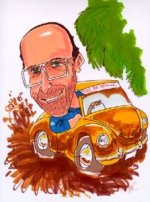
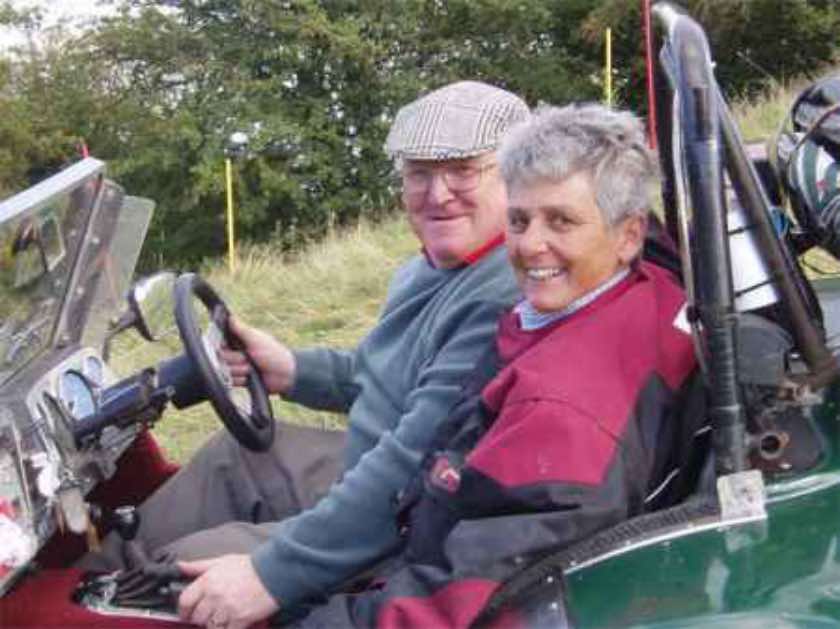
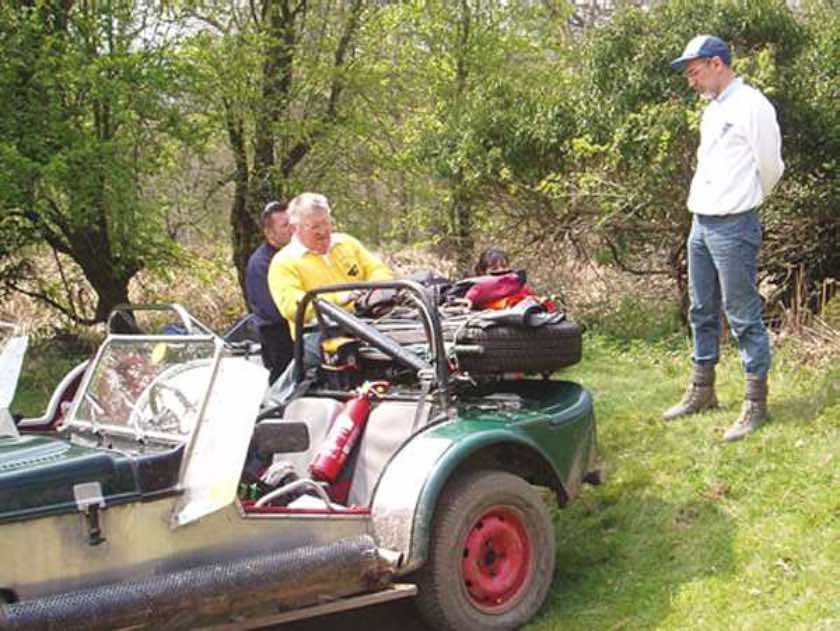
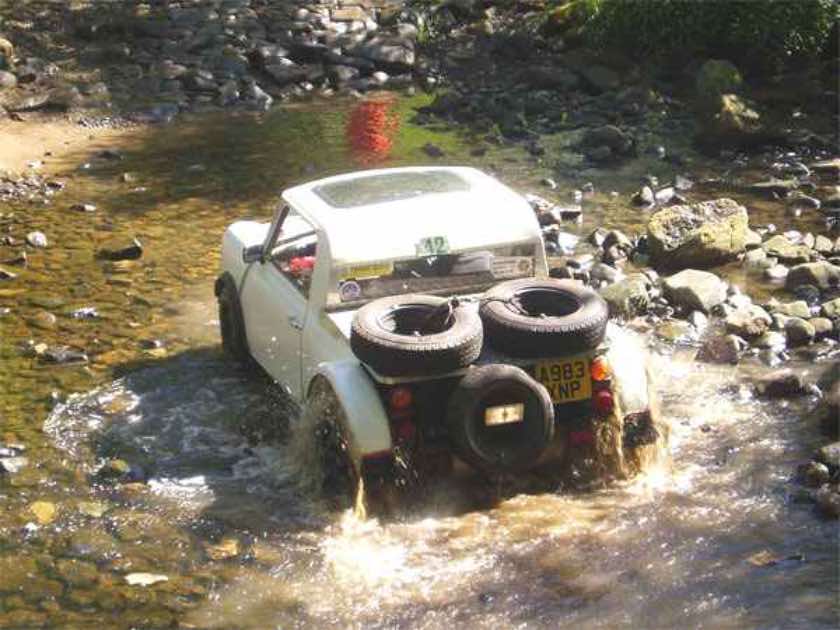
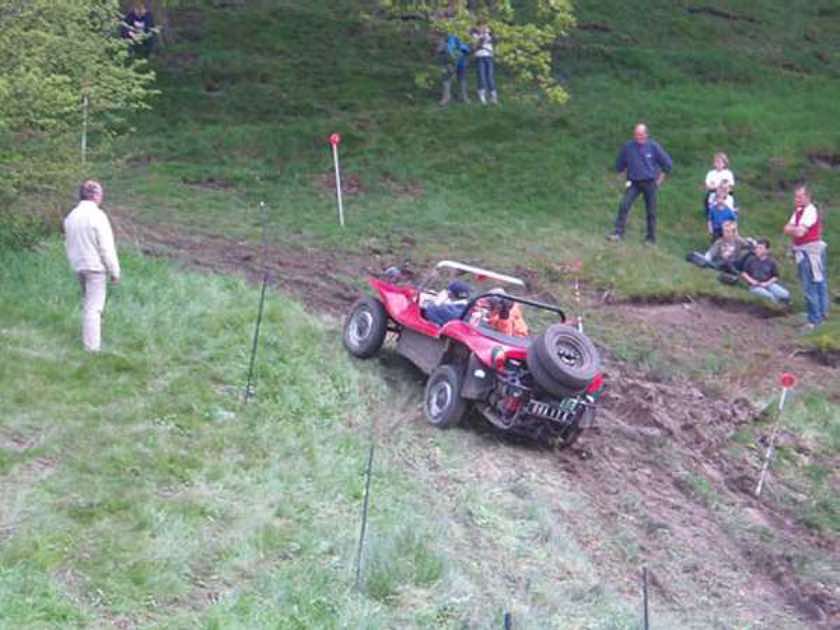



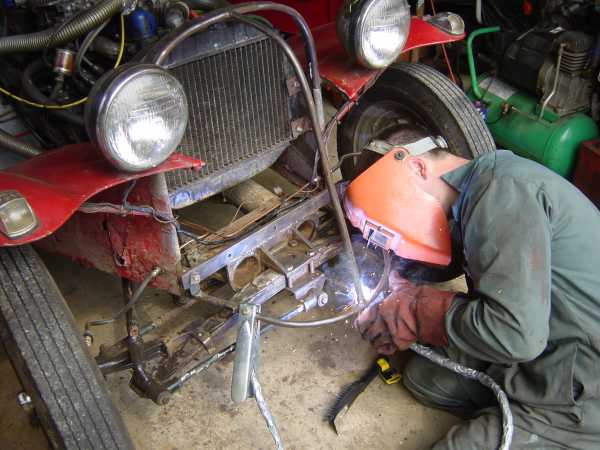


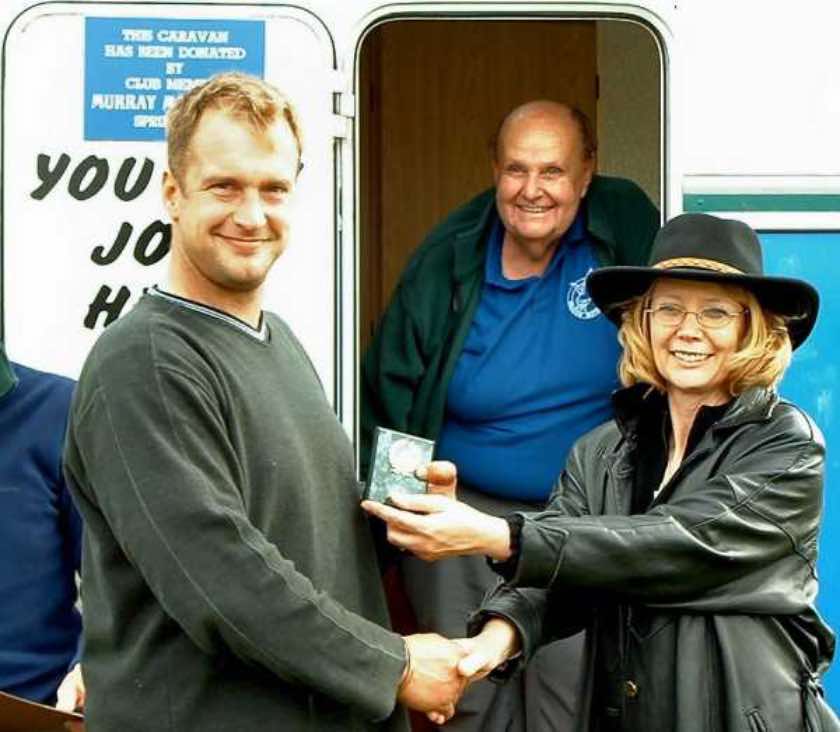

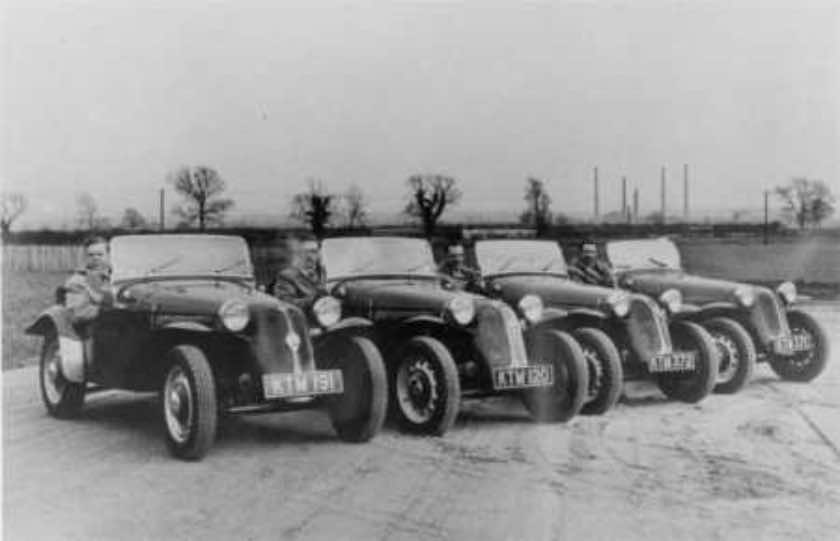

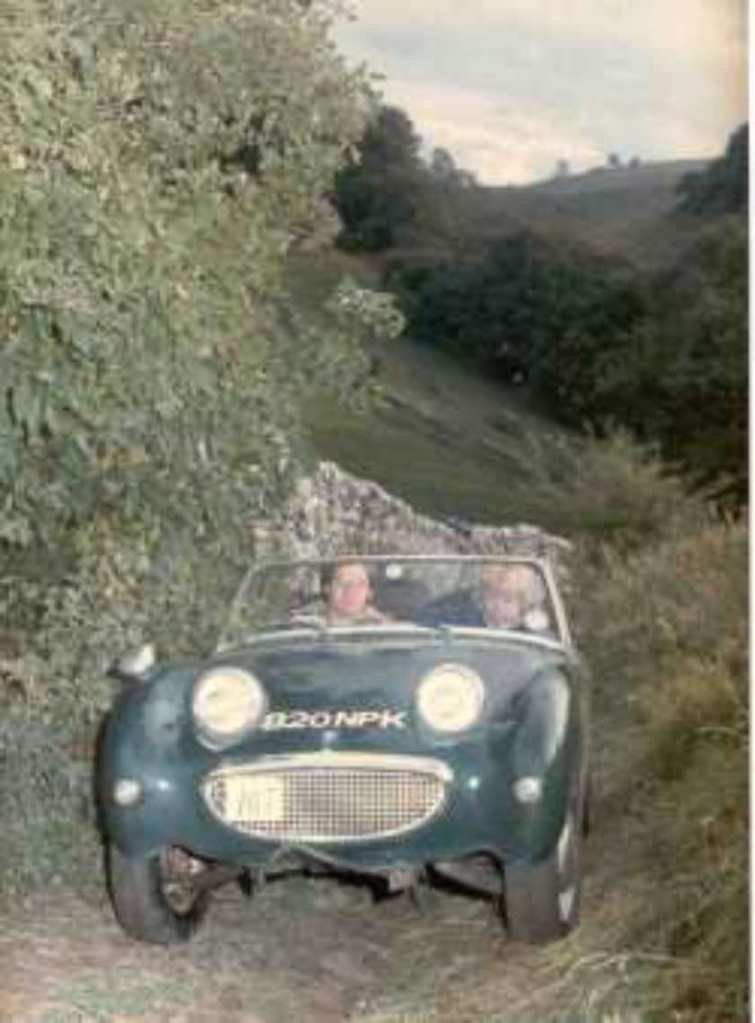
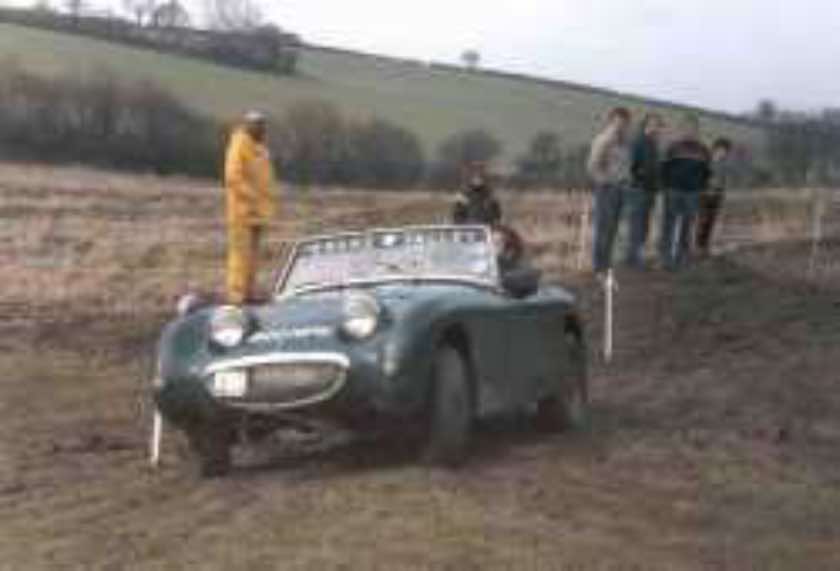
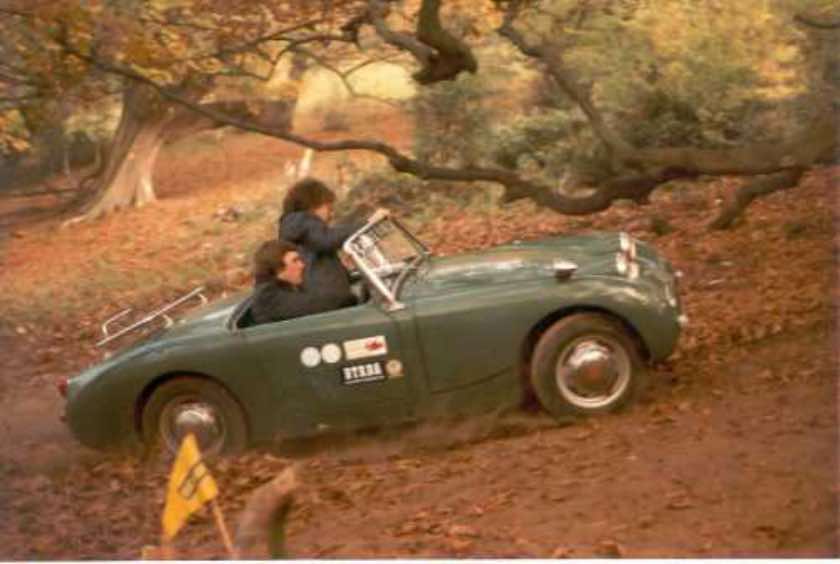
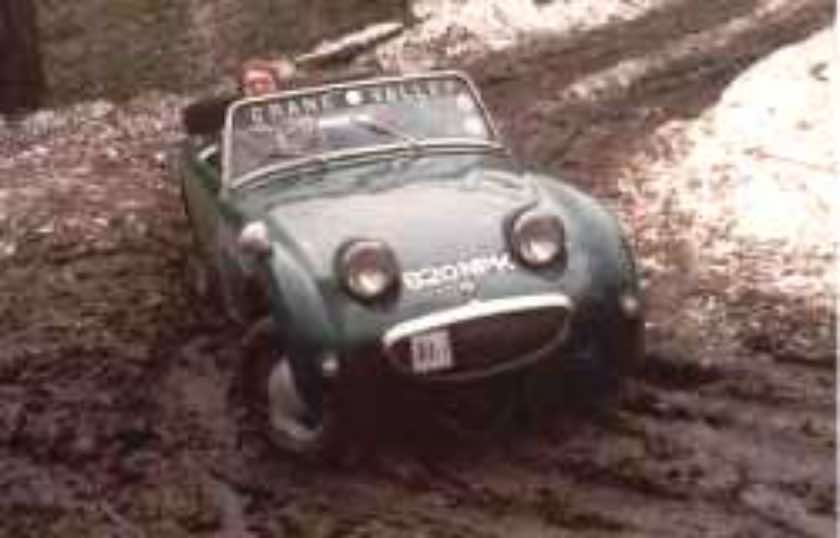

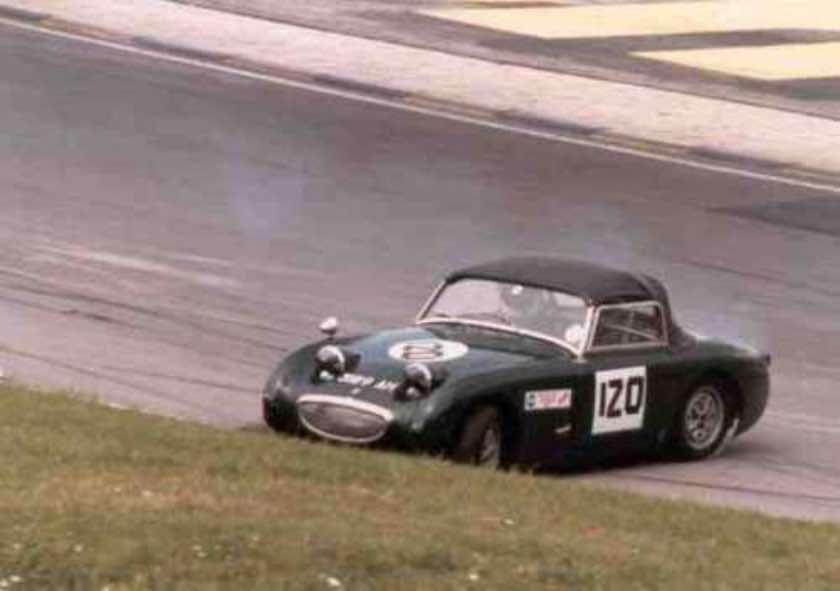
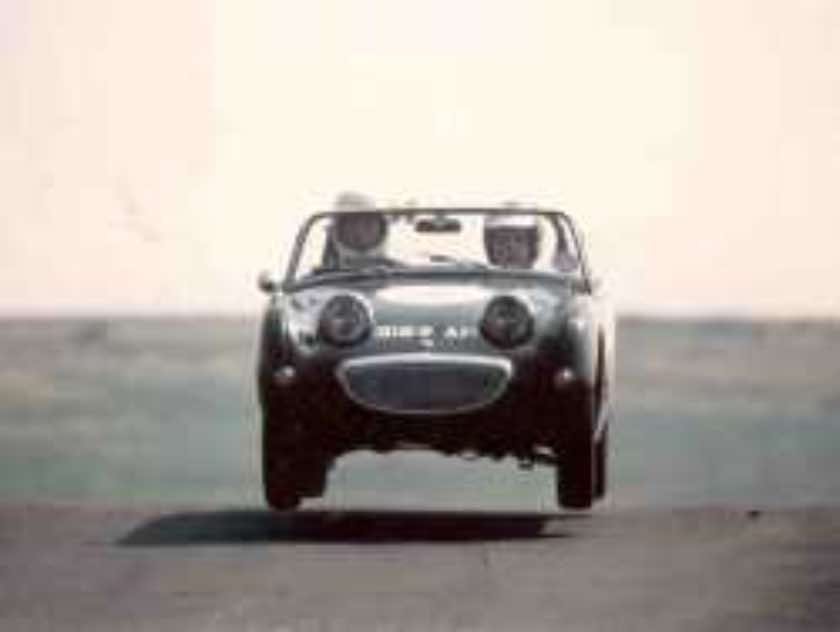


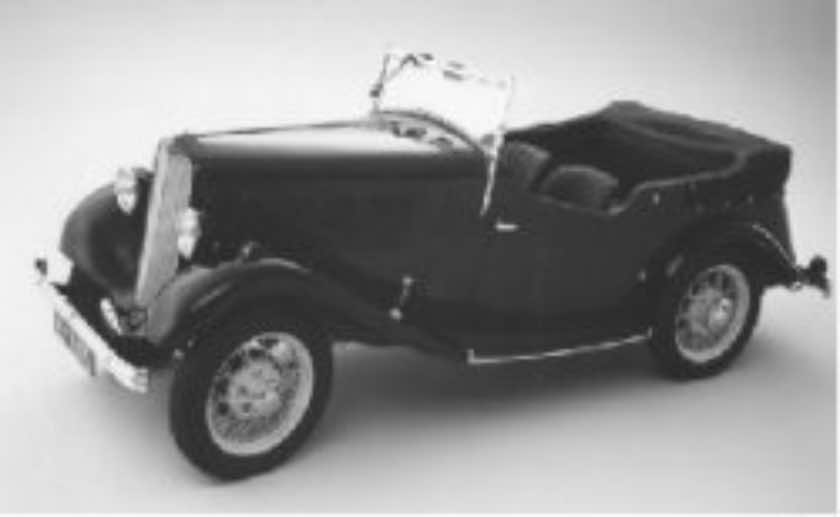
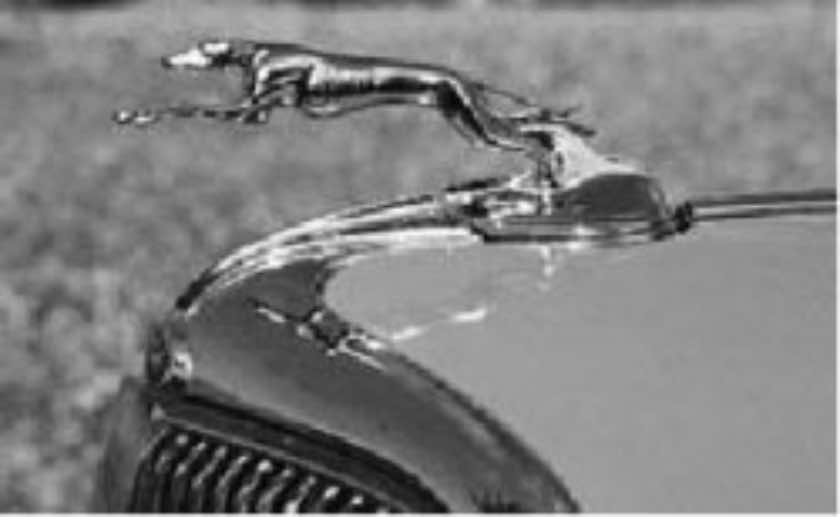
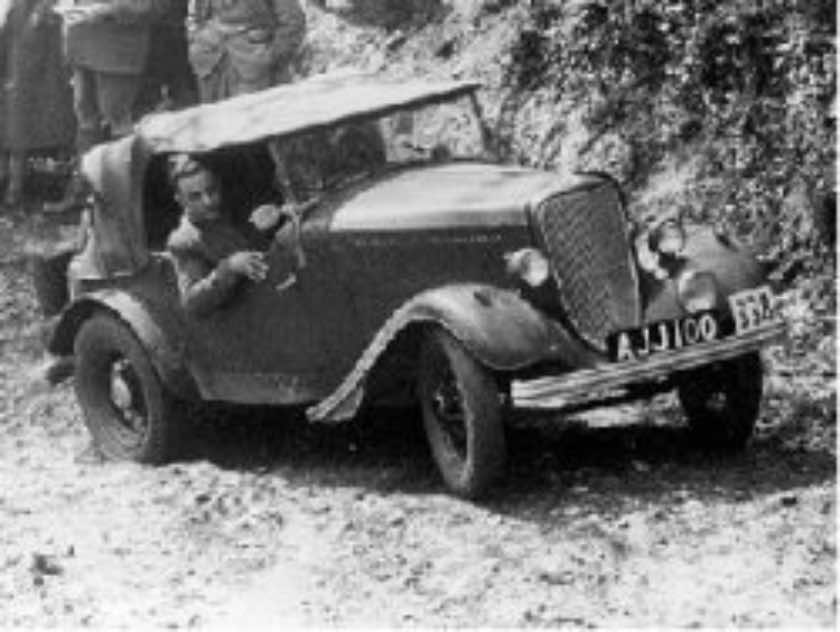
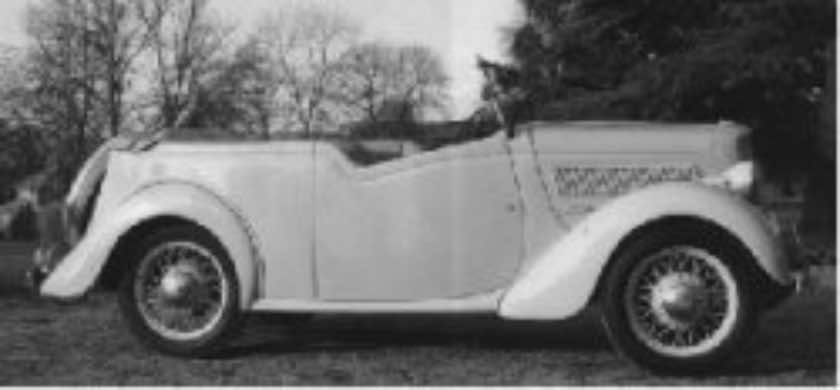


 Classical Gas