Stuart’s Exeter

by Stuart Cairney

Got car MOTd 3pm Friday and for the first time in a while actually managed 4hours kip before setting off for a 01.03 start from Popham  (ever mindfull of the recent discusions…) which made a heck of a difference I must admit.

Although I thought I’d read the route card properly, like many others I failed to spot the fact that only the route from Haynes onwards  was compulsory, not the route from Popham to Haynes museum. As it happened we didn’t miss any slots this time but with the fog as it was I would have probably opted for the 303 if I’d realised.

I have just swopped my emission type Dellortos for non-emission Dellortos allows much more adjustment of the bottom end which is usefull for PCTs). Although it seemed to be running OK I knew it was a bit rich down the bottom but had other preparation to worry about so thought it would be OK; which it was until we had dawdled our way for the last few miles to  Normans. By then the plugs had sooted up and we couldn’t get off the line due to the resultant missfire. Same thing on Clinton but we were invited to roll back and take a run up and consequently got to the top albeit having already failed – this blast seemed to clear things and from then on we went OK.

Tillerton seemed as rough as ever around the restart area which we fortunatley don’t have to stop at and on the road section soon after this we stopped briefly when we saw Ed Nickle parked up having had carb problems then somebody side swipeing his Imp and I gather he toubles were still not over as he eventually retired with a slipping clutch which apparently was caused by a problem with the thrust mechanism.

Comparing notes with Richard Tompkins later on we both agreed that Windout, with no restarts this year, was great fun in an Imp and a bit of a hooligan’s delight being all tarmac with slippery hairpins!

Colin Perryman blew his Skoda’s engine on Fingle.  On Wooston steep I was a little suprised to pass two ‘section ends’ boards till I realised that after our section had ended we joined the class 0 route at the fork just after the short steep downhill bit.

And so to Simms – I was determined to have a good shot at it and mindfull of the earlier problems changed the plugs before the attempt. We had a real good go at it but I probably went too far to the left, hit a rock with the rear wheel, punctured and stopped.
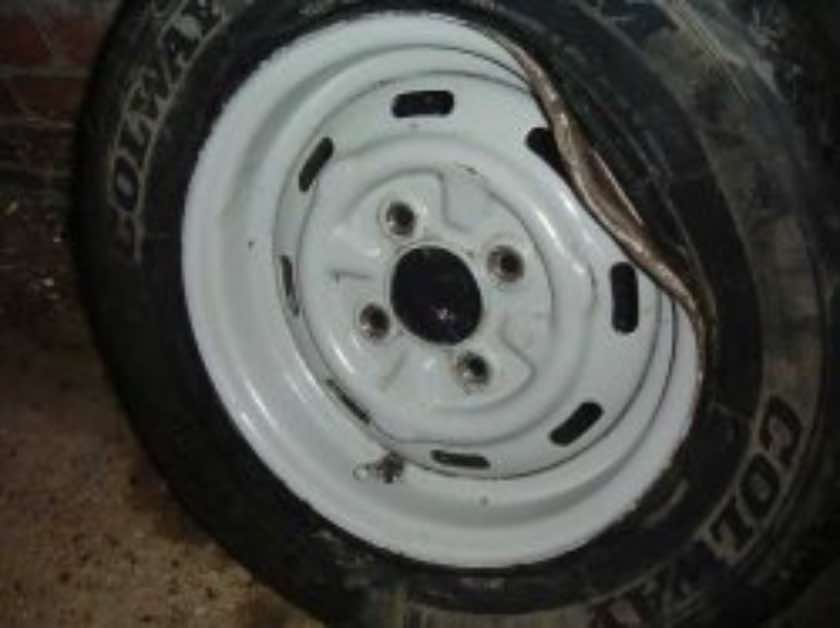
I attach a pic of the wheel which is the worst wheel damage I have incurred with the Imp. My tyres were nowhere near flat and well into double figoures at xx lbs(!) and the mind boggles at the force required to damage a rim like that with one hit.

Bill Roston was the only Imp to clean Simms, I believe, on his way to Gold. Tipley was quite rough and very slippery but without the restart which causes all the failures on the Torbay trial. Overall a really enjoyable event after the lay off which was still competitive without the restarts for us girlies!


We have been publishing stuff about Classic Trials on the Web since 1995 and always appreciate feedback. Comments, Corrections, Criticism & Concerns are all welcome. You can leave a comment to have your say here on this web site or our Social Media
Derek’s Greyhound

A relaxed chat at a Dinner table set me scrabbling amongst my books and many sessions trawling the Internet to find out more about Derek Fleming’s “Greyhound”

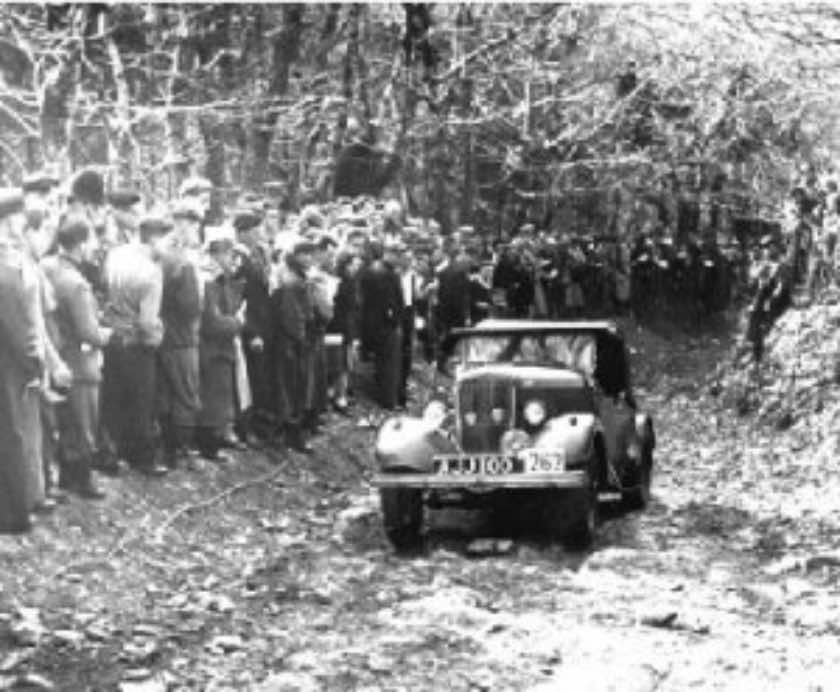
Sitting at the dinner table with Derek Fleming at the MCC Centenary Dinner we got to talk about his cars. Derek got into trials through fellow garage owner Tucker, and he started out competing in his brand new Hillman Minx. This went well, but inevitably, it suffered quite a bit underneath and when the petrol tank got damaged Derek decided to get another car for trialling while he was building Primrose.

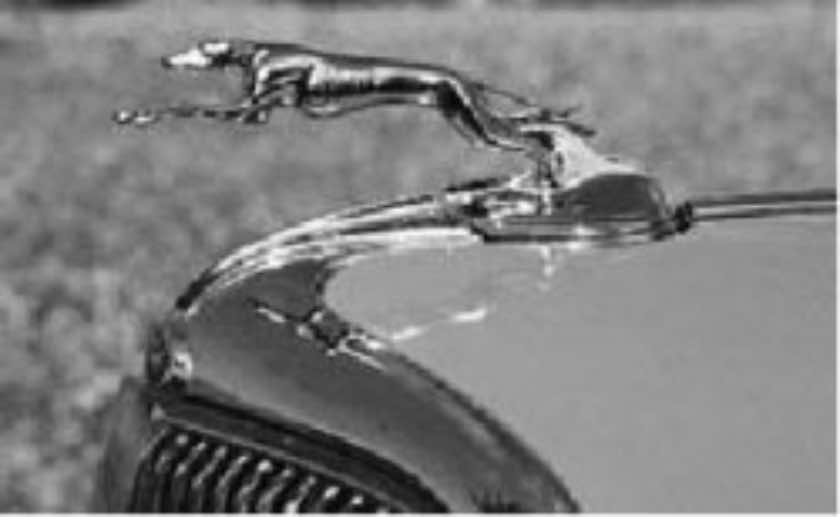
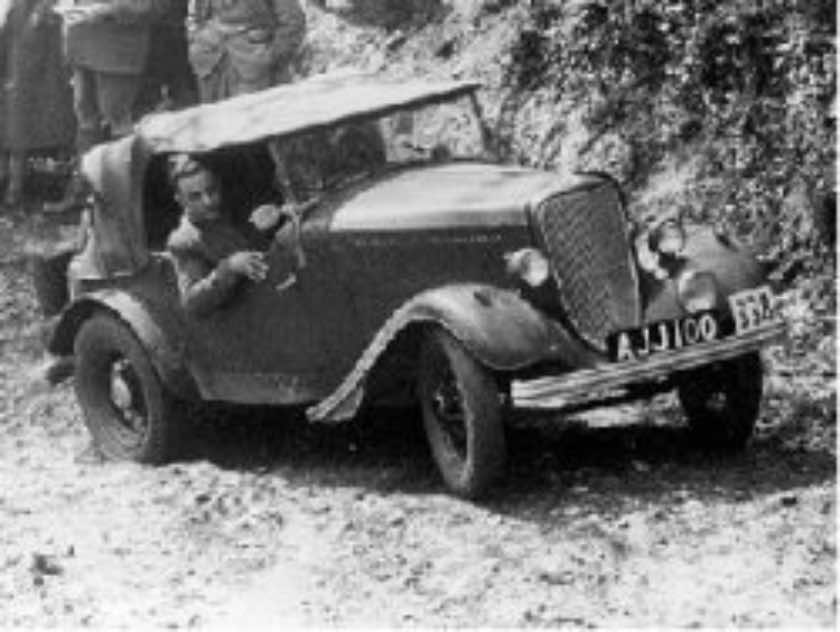
An open pre-war Ford Tourer came Derek’s way, which he refers to as a “Ford Greyhound”. This interested me and when I got home, I looked it up on the Internet, without success! What I did find was a large amount of information on radiator mascots.

Back in the 20’s and early 30’s it was very popular to have a mascot on your radiator cap. Some manufacturers provided them as standard, but with Ford it was an accessory, a greyhound! So, “greyhound” was not really a clue to the origins of the car.

A phone call to Derek didn’t shed a lot more light on the cars history. He couldn’t remember who he bought it from, although he did remember it said “Greyhound” in the logbook. Derek reckoned it could have been a special body built on a standard chassis. But was it? Research on the Internet revealed that Ford started to produce the Y type in the summer of 1932. This was known as the short radiator model and it had a straight bumper. After this in October 1933 the ‘long rad’ model, with its longer radiator grille and front bumper with the characteristic dip was produced. 

Ford never produced an open Y type but when the “C” came along they did produce a tourer version of the CX. However, you can see that Derek’s car is not one of these when you look at the shape of the bottom front of the door, and the way the windscreen mounts to the body. Anyway, Derek had pointed out that his car had a straight ribbed bumper. This was a clue to the cars age as it must have been an early short rad model. Derek also mentioned that he used the car with 16 inch wheels but this was a red herring. Ford produced their pre-war cars with 17 inch, Firestone shod, wheels. Mitchelin were promoting their 16 inch tyres and gave away a set of 16-inch wheels if you bought a full set of their rubber. This of course lowered the gearing!

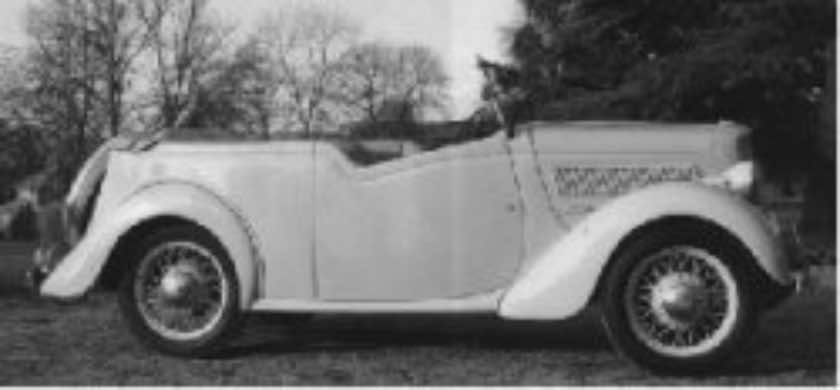
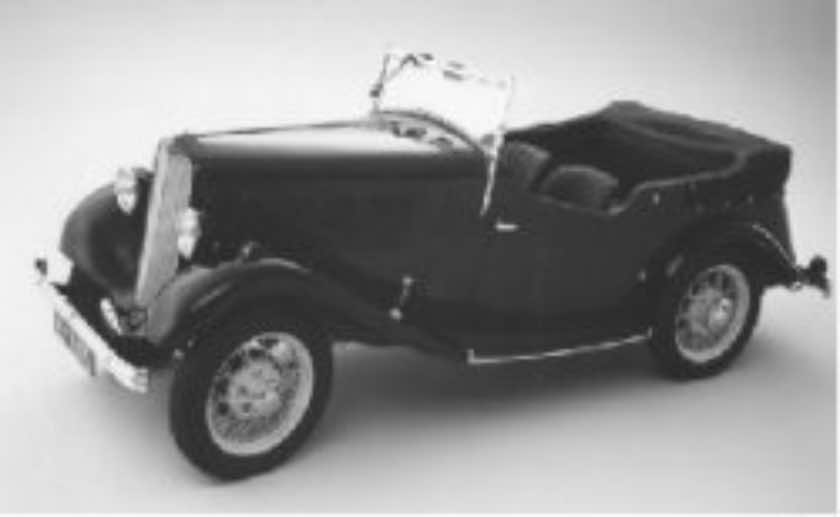
So Derek’s car was not a CX, it was based on a an early Y type. Further trawling on the Net confirmed that Ford did not produce an open top car because it was thought that the chassis was too flexible, however several specialist coachbuilders produced a range of attractive model ‘Y’ tourers. After yet more surfing I found a picture of a 1932 Y with a Tourer body by Abbey Coachworks and I set about comparing this with Derek’s car. They are both short rad models with straight ribbed bumpers. The doors look the same, so does the windscreen mount. 

In conclusion it looks as if Derek’s “Greyhound” was a 1932 or 1933 Y type produced in chassis form by Ford with a body built by Abbey Coachbuilders. What is certain is that the car gave Derek a lot of fun and not a little success. Derek attributes its climbing ability to its flexible chassis that ensured the wheels were always in contact with the ground, however rough and rocky terrain. There were disadvantages of course. The doors tended to fly open over the bumps unless they were tied shut!

The reason the chassis flexed so much was that the rivets had all come loose. When Derek sold the car to Ian Wilson he welded it up. It was nice and stiff afterwards, improving the handling on the road no end, but it never climbed very well again!


We have been publishing stuff about Classic Trials on the Web since 1995 and always appreciate feedback. Comments, Corrections, Criticism & Concerns are all welcome. You can leave a comment to have your say here on this web site or our Social Media