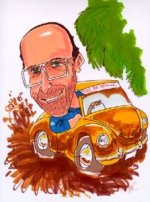
Jack was born and bred in Cornwall and his first recollection of motorsport was being taken to Bluehills on Easter Saturdays. This was in the mid 30’s and Jack remembers that the old hill was still used. There was no Bluehills One in those days. Competitors hairpined left up what is now the surfaced road.
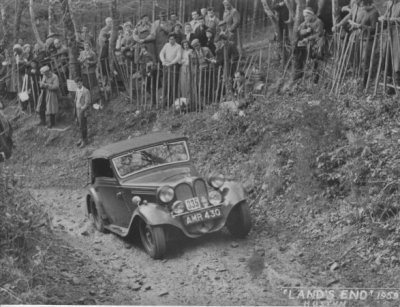
After the war Jack passengered a few times before driving his first Lands End in 1959. In those days you could drive a genuine road car and Jack used his special bodied 1934 BMW 316. It had a six cylinder, 12hp engine and had two Solex updraft carburettors, sucking up like an Austin 7. So there’s nothing new about doing Classic Trials in old cars!
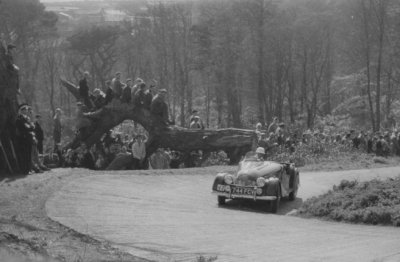
By now the bug had really started to bite. Jack was managing a specialist sports car garage just outside Truro. They were the Morgan distributors for Cornwall so Jack naturally took one trialling and it wasn’t your standard car either. In conjunction with Peter Morgan Jack specified an alloy body and bucket seats. The car was also unique as the first Morgan to have its sidelights mounted on the wings. Originally a special for Jacks car Peter Morgan liked the idea so much it became standard.
The Morgan looked superb in British Racing Green and was registered FCV 444. It had a Standard Vanguard Engine because although Triumph’s Sir John Black was an ex-Morgan apprentice he wouldn’t give Morgan the TR engine. However, Jack persuaded Chris Lawrence, the Morgan wizard of the day, to tune the Standard Vanguard engine. By the time he had finished the car went jolly well and the motor looked just the business with it’s twin Strombergs.
Jack competed with the Morgan for a while. The car had to work for it’s living as it doubled as the business’s demonstrator. On the sporting front the Morgan wasn’t only trialled. Jack used to do the Lands End, stay in Penzance and then drive in the Speed Hill climb at Trenwainton on the Sunday.
After the Morgan Jack trialled a spate of Triumph Heralds. Starting with a 1200 Duo Tone in 1961. Then a customer, who was also a member of the local Motor Club, bought a 1200 and fitted it with a Shorrocks super-charger. Another member had an original 948 Herald with twin SU’s. Not to be outdone Jack’s partner got hold of a convertible and had it fitted with a Brabham conversion, complete with a 1200 Coventry Climax motor. The three entered a team in the ’61Lands End and won the team award, beating the Morgan works team when Sid Margullis blew his diff!
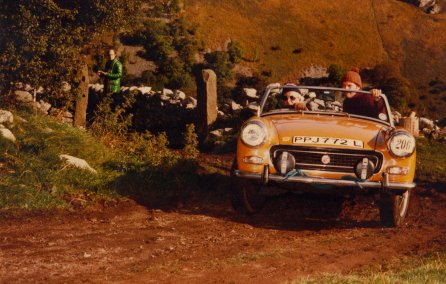
Next Jack dabbled with rear engined machinery when he bought a 750cc Renault CV4, the predecessor to the Renault Dauphine. This was a pretty little car but it was a bit short on power so Jack fitted a bigger engine from a Dauphine and souped it up with a Gordini head. They entered the Lands End but only got as far as Beggars where a drive shaft broke.
Then came a trials sabbatical as Jack moved up to Surrey and was out of action from 1963 to ’68/9. He came back with a couple of Midgets but wasn’t impressed with them. Then the garage took a BMW 2002 in part-exchange. Jack thought it would do the business on the hills but it blew its diff somewhere in darkest Devon. Jack was so disgusted he left it there!
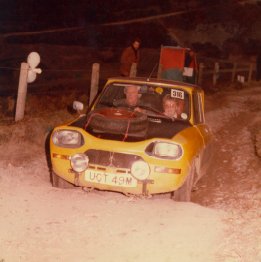
By now Jack’s garage was a Citroen distributor and he decided to take the marque trialling. However, they weren’t standard cars. There was a nice AMI Super. This came with an 1015cc motor. Jack swapped it for an 1,220 engine from a GSA and promptly won his class on the Exeter in 1983.

The Mehari was a utility vehicle originally designed for the French army. It was a tough car, built strong enough to travel slung underneath a helicopter before being dropped the last few feet to the ground. The design was based on the AMI platform chassis. Jack really liked the Mehari and had it for some time, but the chassis on his car wasn’t very good. He had an AMI that he wasn’t using, so he wiped the body of that and put the Mehari “top” in its place, even though it was designed for a twin rather than 4 cyl engine. The only problem was the necessity to remove the headlights to change the spark plugs!
Next came a couple of 2CV’s. Jack got on well with these on PCT’’s, finding they would outclimb practically any other front wheel drive car, even though they had a very restricted lock with a 40 ft turning circle. This was because of the swinging arm front suspension. The larger engined 602cc cars were pretty low geared, but the original 425cc machines had an incredibly low diff, something like 8:1, so Jack naturally fitted his larger engined car with the ‘box from the smaller engine.
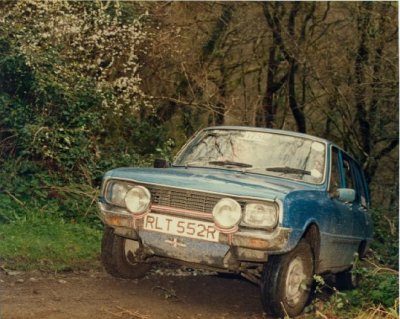
Then came the famous Mazda that Jack used for many years. There weren’t many of this model imported. It was very narrow and short to suit the Japanese tax system. It was actually smaller than a Hillman Imp, ideal for trials, especially after Jack replaced the 1300 motor with a with a 1400 and fitted the ultra low diff from a 1000cc car. Jack won several MCC awards with the Mazda and competed in hundreds of PCT’s. Before Jack got hold of it the Mazda had been owned by the actress Prunella Scales, who loved it dearly. Jack’s business took it in part exchange but Ms Scales kept track of it and was horrified to hear about the ordeals it experienced in its new career!
The Mazda is still going strong and was last seen running around as a shopping car. It never failed to get Jack home, even when the pin came out of the diff in Derbyshire. However, because the crownwheel overlapped the pin it couldn’t come out completely although it got quite beaten up.
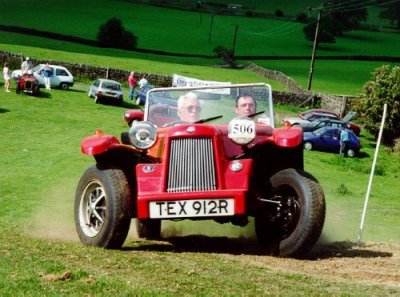
Finally comes the Tempest, Jacks current trial’s machine. This was selected as it could be used for trials and as an occasional second car for road use. Like me Jack believes that most cars specifically built for trialling are not really suitable for a trip down to the pub. However, Jack doesn’t believe the Tempest is man enough for classics, although a couple have been seen out with some success. So that’s the story so far. Jack is concentrating on PCT’s these days, very successfully, and has been in contention for the RAC title for the last couple of years.
Going back to classics we talked about how the events have changed. Immediately after the war entry lists were dominated by the E93A Ford Pop, complete with family, kids and suitcase on back! They did very well, often better than the specials. This was because in those days production cars could use Town and Country tyres. The Dellows had to use road pattern cross plies and a Pop with a decent driver could outclimb them. So it was hardly surprising that most of the entry comprised standard production cars. Jack feels very sad that these days production cars are in the minority and those that do compete have to be so heavily modified in order to cope with the rough conditions now the hills have deteriorated so much.
Apart from trials Jack competed in one or two speed events, remembering an “autotest” at Perranporth airdrome in 1962. It consisted of a third mile sprint down the runway. Round a pylon and back again. Very enjoyable, especially when Jack’s Morgan beat the TR’s.
We started to talk about some of the things Jack had seen over the years. Like when Sydney Allard charged around the Exeter on his new J2 Allard, only to find it was too wide for the bridge at Fingle! Then there was time for no more. Lunch was over and there was trialling to be done.
We have been publishing stuff about Classic Trials on the Web since 1995 and always appreciate feedback. Comments, Corrections, Criticism & Concerns are all welcome. You can leave a comment to have your say here on this web site or our Social Media
 Classical Gas